

Portrait of Hortense Mancini Duchesse de Mazarin, as Aphrodite
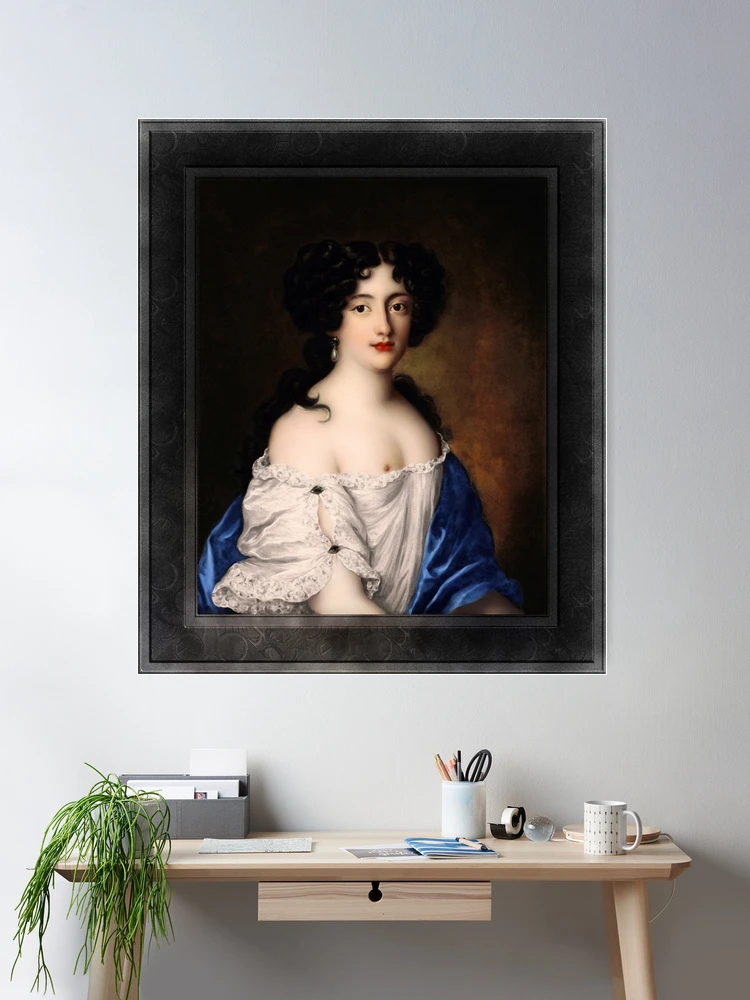
Jacob Ferdinand Voet's (1639 – 1689) “Portrait of Hortense Mancini (1646 – 1699), Duchesse de Mazarin, as Aphrodite,” criado em torno 1675, presents a striking and graceful depiction of Hortense Mancini, one of the most celebrated women of her time. Born into the illustrious Mancini family, she was the niece of Cardinal Mazarin, and her life was marked by intrigue, fortuna, e beleza. Voet’s painting exemplifies the opulence of the late 17th century, particularly the French court’s fascination with classical mythology, combining both her aristocratic status and mythological grandeur. Hortense Mancini is portrayed as Aphrodite, a deusa do amor, beleza, and desire, a figure whose essence permeates the entire composition.
Índice
Assunto e Composição
The central figure of the painting, Hortense Mancini, is the epitome of refined elegance. She is depicted with soft yet assertive poise, her gaze meeting the viewer with a sense of subtle confidence. Voet carefully captures her beauty, infusing the painting with a sense of nobility and mythological grandeur. Hortense’s classical features, including a high forehead, full lips, and well-shaped eyes, are meticulously rendered, adding an ethereal quality to the portrait.
Seu traje, a striking combination of rich fabrics, is an immediate visual focus. The loose, partially draped gown, made from a shimmering white material, is held together by delicate clasps, creating an illusion of effortless luxury. The gown’s neckline is open and flowing, its folds evoking the natural movement of fabric, which draws attention to the softness of the skin and the graceful contours of her body. The deep blue robe, draped over her shoulders and cascading down her back, contrasts beautifully with the white dress. It serves to highlight the goddess-like radiance that Hortense exudes, enhancing her role as Aphrodite.
Aphrodite is often depicted with flowing, cabelo volumoso, and here, Voet adheres to this tradition. Hortense’s hair, dark and luxuriant, is styled in soft waves, flowing over her shoulders and further emphasizing her divine femininity. Her curls, meticulously painted, frame her face in a way that enhances the sensuality and softness of her expression.
To further emphasize her connection with the classical goddess, Voet includes subtle elements of the mythological world. A delicate pearl earring is visible in her ear, symbolizing both her wealth and divine status, while her hands rest gently on her gown, one hand slightly raised as though inviting the viewer into her world of beauty. These small yet significant details further elevate Hortense from a mere aristocratic subject to a symbolic embodiment of love and beauty.
O pano de fundo e o cenário
The background of the portrait remains intentionally subdued, with deep, dark hues that allow the figure of Hortense to emerge almost from the shadows. Os ricos, velvety tones of the backdrop are characteristic of many Flemish and Baroque portraits of the time. The lack of a clear, detailed setting allows the viewer to focus entirely on the figure of Hortense and her symbolic role as Aphrodite. A interação sutil de luz e sombra ajuda a criar uma sensação de profundidade, com a luz iluminando sutilmente as dobras de seu vestido e seu rosto radiante, aumentando sua presença quase sobrenatural.
Embora o fundo permaneça neutro, a composição geral evoca o idealizado e mitológico, muito parecido com as representações romantizadas de deusas clássicas. Pé, assim como outros artistas de seu tempo, compreendeu que os retratos de mulheres aristocráticas muitas vezes não eram apenas representações da beleza física, mas também reflexos do seu poder, status, e papéis simbólicos na sociedade.
Estilo Artístico e Técnica
O estilo de Voet reflete a tradição barroca, com foco na opulência, detalhe intrincado, e intensidade emocional. Sua renderização de textura, particularmente na representação de tecidos, cabelo, e pele, é magistral. O jogo de luz nas diferentes superfícies – pérolas brilhantes, tecido aveludado, e carne macia - demonstra sua habilidade excepcional em capturar realismo enquanto ainda mantém uma imagem idealizada, qualidade quase onírica na apresentação do assunto.
O uso de suave, pinceladas mescladas criam uma transição perfeita entre luz e sombra, contribuindo para a sensação geral de harmonia na composição. A técnica de Voet é refinada e meticulosa, particularmente evidente na forma como capta a qualidade luminosa da tez de Hortense, que contrasta lindamente com os tons mais escuros do fundo. O detalhe em seu vestido, especialmente as dobras delicadas, destaca a atenção do artista à qualidade tátil do tecido, um elemento importante nos retratos do período barroco, onde a representação da riqueza era um fator chave na simbolização da nobreza.
Humor e tema
The mood of the portrait is one of quiet dignity, a delicate blend of sensuality and power. Hortense’s pose and expression suggest both vulnerability and control, inviting the viewer into a world where beauty transcends the ordinary. By casting her as Aphrodite, Voet elevates her image from that of an aristocratic woman to a figure of mythological significance. The themes of love, beleza, and divine grace are interwoven throughout the painting, as Voet uses classical references to elevate the subject beyond her earthly role.
The portrait also suggests the complex and often contradictory nature of Hortense’s life. While she was celebrated for her beauty and status, her life was also marked by personal and political struggles. As Aphrodite, she becomes an idealized symbol of love and beauty, but this idealization also creates a distance from the complexities of her reality. The contrast between the idealized image and her actual life serves to deepen the emotional resonance of the painting, as it highlights the tension between appearance and reality that is often present in aristocratic portraiture.
Conclusão
Jacob Ferdinand Voet’s “Portrait of Hortense Mancini as Aphrodite” is a stunning work that combines meticulous technical skill with deep symbolic meaning. Through the lens of classical mythology, Voet transforms Hortense into a timeless figure of beauty and love, elevating her to a status beyond the earthly realm. The rich textures, the dramatic use of light and shadow, and the serene yet powerful expression on Hortense’s face all contribute to a portrait that speaks to both her personal elegance and her mythological significance. It remains an exemplary piece of 17th-century portraiture, combining the baroque fascination with mythological symbolism with the personal grandeur of an aristocratic subject.
História da arte
This is a beautiful portrait of Hortense Mancini (French) or Ortensia Mancini (Italian), the niece of Italian Cardinal Mazarin (1602 – 1661), diplomat, politician, and chief minister of France to the Kings of France Louis XIII and Louis XIV from 1642 até sua morte em 1661.
She was the mistress of Charles II, King of England, Scotland, and Ireland; and was the fourth of the five famous Mancini sisters, who along with two of their female Martinozzi cousins, eram conhecidos na corte do rei Luís XIV da França como os Mazarinettes.
Neste retrato ela supostamente representa a deusa grega Afrodite, a Deusa que está associada ao amor,prazer, paixão, beleza e procriação.
Esta é uma reprodução retocada de arte digital de antigos mestres de uma imagem de domínio público.
Cortesia da biografia do artista Wikipédia.org
Poucos detalhes sobre a infância de Voet, treinamento e carreira foram preservados. Voet nasceu em Antuérpia, filho do pintor Elias Voet. Ele foi um dos quinze filhos; seu irmão mais velho, Carlo, mudou-se para Amsterdã e se casou em 1661 filha dos ricos Joan Coymans e Sophia Trip. Jacob deixou sua terra natal, Antuérpia, e viajou para Roma, onde residiu. 1663 para 1680.
Voet tornou-se membro dos Bentvueghels, uma associação de artistas principalmente holandeses e flamengos ativos em Roma. Voet drew a picture in charcoal of all the members of the Bentvueghels on the white-washed wall of an inn in Rome that was a popular meeting place of this group. The picture was treasured enough to be spared whenever the walls were repainted.
In Rome Voet’s skills as a portrait painter were much in demand at the Papal court and by the Roman aristocracy, including the prominent Colonna and Odescalchi families. He was patronised by Christina, Queen of Sweden, who was then resident in Rome. He painted her portrait as well as that of her friend, Cardinal Azzolino. Englishmen and other Europeans visiting Rome on their Grand Tour also commissioned portraits from Voet.
Em 1671 – 1672 Voet received a commission from Cardinal Chigi to paint portraits of young woman who were prominent in Roman society. He created a first series of 37 portraits of the most enchanting women of Rome (‘Galleria delle Belle’) between 1672 e 1678 for Cardinal Chigi’s dining room in his palace in Ariccia (in the Alban hills outside Rome). He later copied and even enlarged the series for other Roman and Italian noble families. This started a rage for portraits of young women in Rome and abroad.