

Portrét Madame Badouin
Portrét Madame Badouin, The Artist’s Daughter c1758-60 by French Painter Francois Boucher (1703 – 1770); také známý jako kreslíř, rytec a dekoratér ve stylu francouzského rokoka, byl dobře známý pro svou bohatou mytologii, alegorické a erotické motivy a byl dvorním malířem Ludvíka XV. a oblíbencem markýze de Pompadour.
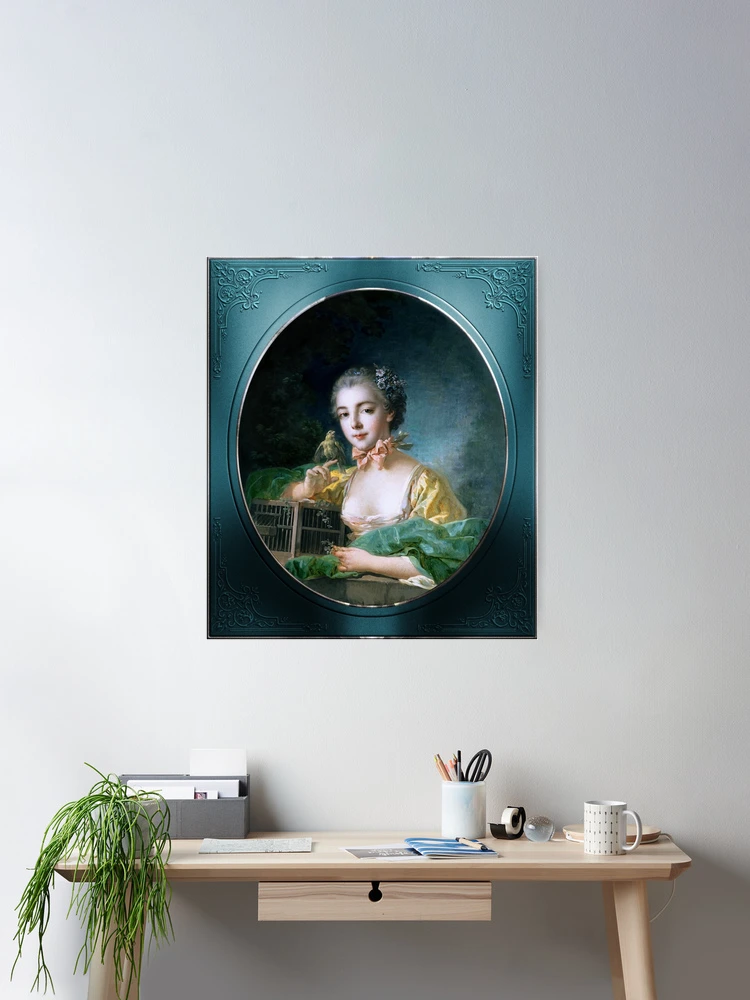
This artwork by the celebrated French Rococo painter François Boucher captures an exquisite moment of elegance and grace. This painting is a prime example of the Rococo style, which flourished in France during the early to mid-18th century, characterized by its lightness, milost, and use of soft, pastelové barvy.
The subject of the portrait is Madame Badouin, the artist’s daughter, who is depicted with remarkable sensitivity and beauty. Měkký, delicate nature of her features, her youthful countenance, and her serene expression all embody the grace and poise that were idealized in the Rococo period. The portrait has a gentle, intimate quality, inviting the viewer into the subject’s personal space.
Ve středu kompozice, Madame Badouin is presented in a three-quarter view, her head slightly turned as if she is caught in a moment of quiet contemplation. Her gaze is directed slightly off to the side, creating an impression of introspection, yet there is a subtle connection with the viewer, as if she is aware of being observed.
Her facial features are rendered with delicate precision: her fair skin is soft and smooth, her lips slightly parted in a demure expression, and her large, expressive eyes reflect a sense of intelligence and calm. The artist has emphasized the softness of her features, using subtle transitions between light and shadow to create a lifelike, almost ethereal appearance.
Madame Badouin’s attire is a masterful representation of the Rococo fashion of the time. She is dressed in an opulent gown of pale yellow and soft green hues, with layers of sheer fabric that flow gracefully around her. The gown’s texture is depicted with meticulous detail, showing the fine, almost weightless nature of the materials.
The artist has captured the flow and drape of the fabric with a sense of fluidity, suggesting the movement of the fabric as the subject sits serenely. A large pink ribbon is tied loosely at her throat, adding a touch of playful color that contrasts with the softness of the gown and further enhances the light, airy quality of the portrait.
Her coiffed hair, which is styled in soft waves and adorned with delicate flowers, is another hallmark of the Rococo period. The careful attention to detail in her hairstyle not only highlights the fashion trends of the time but also adds a sense of natural beauty, as though her appearance is effortlessly graceful. The flowers in her hair seem to symbolize youth and femininity, enhancing the overall sense of delicacy and refinement.
One of the most striking aspects of this portrait is the bird perched on the artist’s daughter’s finger. This small detail plays an important symbolic role in the painting, contributing to the overall theme of innocence and natural beauty.

The bird, with its muted plumage, contrasts with the lushness of the surrounding landscape and the softness of Madame Badouin’s attire. It also suggests a connection to nature, a recurring theme in Rococo art, which often celebrated the beauty of the natural world, the pastoral, and the idealized version of life in harmony with nature.
The background of the painting is equally carefully constructed. Behind the figure, a dark, lush landscape unfolds, with trees and foliage softly blurring into the distance. The use of a rich, muted green palette creates an almost dreamlike effect, enhancing the ethereal mood of the portrait.
This natural setting not only contrasts with the softness of the figure but also symbolizes a connection between Madame Badouin and the world around her. The painter’s skillful rendering of light and shadow creates depth and atmosphere, giving the scene a tranquil, almost timeless quality.
The overall mood of the portrait is one of calm elegance. The colors are soft and harmonious, with pastel shades predominating in both the subject’s attire and the background. The figure is illuminated in such a way that the face and hands are gently highlighted, creating a subtle focal point that draws the viewer’s attention to the subject’s expression and demeanor. There is a serene quality to the painting, one that evokes the idealized virtues of youth, krása, and grace that were central to the Rococo aesthetic.
François Boucher’s technique in this painting is exemplary of his mastery of the Rococo style. His brushwork is fluid and refined, creating a soft, luminous texture that enhances the delicate nature of the subject. His use of light and color is equally sophisticated, with the artist skillfully capturing the interplay of natural light and shadow on Madame Badouin’s face and clothing. The soft transitions between colors and the subtle blending of tones demonstrate Boucher’s expertise in creating a smooth, leštěný povrch.
Na závěr, François Boucher’s “Portrait of Madame Badouin, The Artist’s Daughter” is a stunning example of Rococo portraiture, where the subject’s beauty, milost, and connection to nature are captured with sensitivity and elegance. The soft palette, delicate detailing, and serene mood of the painting convey the idealized qualities of youth and femininity that were highly valued during the Rococo period. Through this portrait, Boucher not only immortalizes his daughter but also provides a glimpse into the Rococo vision of beauty and refinement.
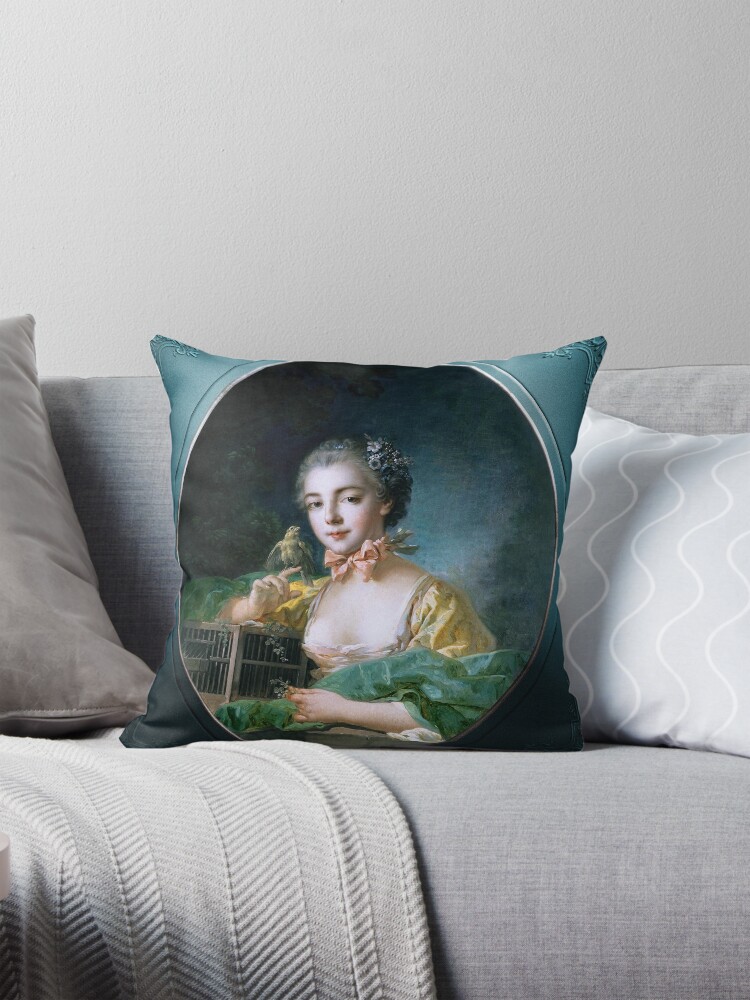
Portrait Of Madame Badouin is a retouched digital art old masters reproduction of a public domain image.
Níže uvedené informace jsou odvozeny z Wikipedia.org
I když existuje několik protichůdných verzí mýtu, I když existuje několik protichůdných verzí mýtu, I když existuje několik protichůdných verzí mýtu. I když existuje několik protichůdných verzí mýtu, I když existuje několik protichůdných verzí mýtu. I když existuje několik protichůdných verzí mýtu, I když existuje několik protichůdných verzí mýtu, I když existuje několik protichůdných verzí mýtu.
v 1720, vyhrál elitní Grand Prix de Rome za malbu, vyhrál elitní Grand Prix de Rome za malbu, vyhrál elitní Grand Prix de Rome za malbu[1] Po návratu ze studia v Itálii byl přijat na refounded Académie de peinture et de sochařství na 24 listopad 1731. Jeho přijímací kus (přijímací kus) byl jeho Rinaldo a Armida z 1734.
Boucher si vzal Marie-Jeanne Buzeau v 1733. Pár měl spolu tři děti. Boucher se stal členem fakulty v 1734 a jeho kariéra se od tohoto okamžiku zrychlila, když byl povýšen na profesora, poté rektora akademie, stává inspektorem v Royal Gobelins Manufactory a nakonec Premier Peintre du Roi (První malíř krále) v 1765. Portrét Marie-Louise O'Murphyho c. 1752
Boucher zemřel dne 30 Smět 1770 v rodné Paříži. Jeho jméno, spolu s patronkou jeho madame de Pompadour, se stal synonymem pro francouzský rokokový styl, vede bratry Goncourty k psaní: “Boucher je jedním z těch mužů, kteří představují vkus století, kteří vyjadřují, personifikovat a ztělesnit to.”
Boucher je známý tím, že říká, že příroda je “příliš zelené a špatně osvětlené” (příliš zelené a špatně osvětlené).
Boucher byl spojován s rytec drahokamů Jacques Guay, kterého učil kreslit. Mentoroval také moravsko-rakouského malíře Martina Ferdinanda Quadala a neoklasického malíře Jacquese-Louis Davida v r. 1767.[4] Později, Boucher vytvořil sérii kreseb Guayových děl, které madame de Pompadour poté vyryl a distribuoval jako pohledně svázaný svazek oblíbeným dvořanům