

O Nascimento de Vênus de William-Adolphe Bouguereau
O Nascimento de Vênus de William-Adolphe Bouguereau, A Filha do Artista c1758-60 do Pintor Francês François Boucher (1703 – 1770); também conhecido como desenhista, gravador e decorador ao estilo rococó francês, era bem conhecido por seu pródigo mitológico, motivos alegóricos e eróticos e foi o pintor da corte de Luís XV e um dos favoritos da Marquesa de Pompadour.
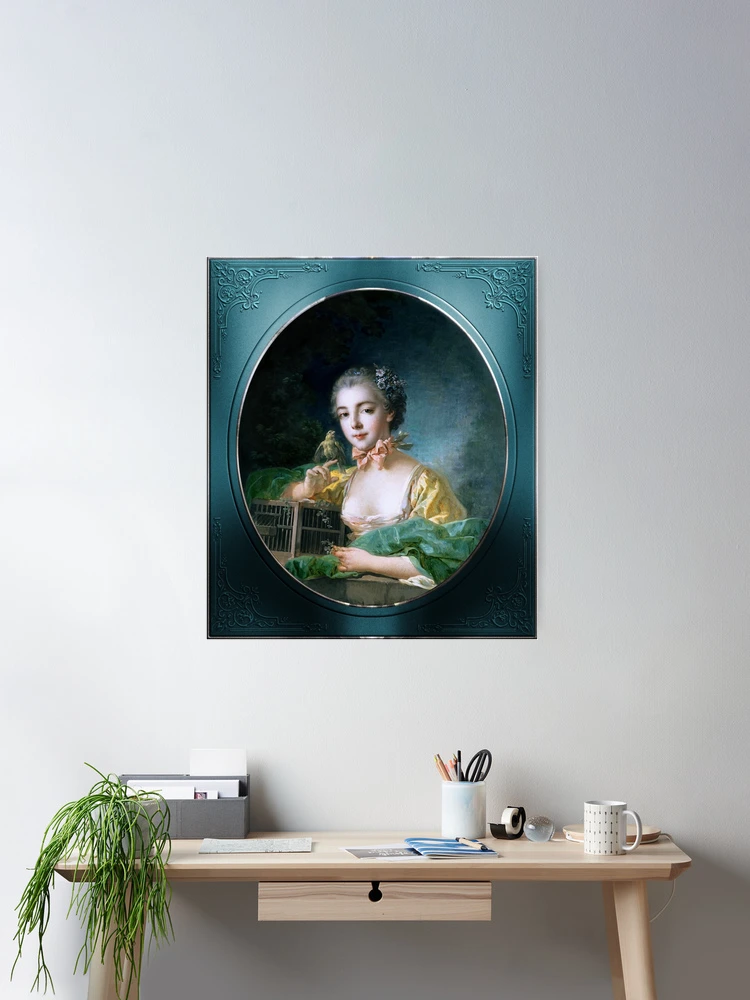
Esta obra de arte do célebre pintor rococó francês François Boucher captura um momento requintado de elegância e graça. Esta pintura é um excelente exemplo do estilo Rococó, que floresceu na França durante o início e meados do século XVIII, caracterizada pela sua leveza, graça, e uso de soft, cores pastel.
O tema do retrato é Madame Badouin, a filha do artista, que é retratado com notável sensibilidade e beleza. O macio, natureza delicada de suas feições, seu semblante jovem, e sua expressão serena incorporam a graça e o equilíbrio que foram idealizados no período Rococó. O retrato tem um toque suave, qualidade íntima, convidando o espectador para o espaço pessoal do sujeito.
No centro da composição, Madame Badouin é apresentada em uma visão de três quartos, sua cabeça ligeiramente virada como se ela estivesse presa em um momento de contemplação silenciosa. Seu olhar está direcionado ligeiramente para o lado, criando uma impressão de introspecção, ainda assim, há uma conexão sutil com o espectador, como se ela estivesse ciente de estar sendo observada.
Suas características faciais são renderizadas com precisão delicada: sua pele clara é macia e suave, seus lábios ligeiramente entreabertos em uma expressão recatada, e ela grande, olhos expressivos refletem uma sensação de inteligência e calma. A artista enfatizou a suavidade de suas feições, usando transições sutis entre luz e sombra para criar uma aparência realista, aparência quase etérea.
O traje de Madame Badouin é uma representação magistral da moda rococó da época. Ela está vestida com um vestido opulento em tons de amarelo claro e verde suave., com camadas de tecido transparente que fluem graciosamente ao seu redor. A textura do vestido é retratada com detalhes meticulosos, mostrando a multa, natureza quase sem peso dos materiais.
O artista capturou o fluxo e o caimento do tecido com uma sensação de fluidez, sugerindo o movimento do tecido enquanto o sujeito se senta serenamente. Uma grande fita rosa está amarrada frouxamente em sua garganta, adicionando um toque de cor lúdica que contrasta com a suavidade do vestido e realça ainda mais a luz, qualidade arejada do retrato.
Seu cabelo penteado, que é estilizado em ondas suaves e adornado com flores delicadas, é outra marca registrada do período Rococó. A atenção cuidadosa aos detalhes em seu penteado não apenas destaca as tendências da moda da época, mas também adiciona uma sensação de beleza natural., como se sua aparência fosse graciosa sem esforço. As flores em seu cabelo parecem simbolizar juventude e feminilidade, aumentando a sensação geral de delicadeza e refinamento.
Um dos aspectos mais marcantes deste retrato é o pássaro pousado no dedo da filha do artista. Este pequeno detalhe desempenha um importante papel simbólico na pintura, contribuindo para o tema geral da inocência e da beleza natural.

O pássaro, com sua plumagem muda, contrasta com a exuberância da paisagem circundante e a suavidade do traje de Madame Badouin. Também sugere uma conexão com a natureza, um tema recorrente na arte rococó, que muitas vezes celebrava a beleza do mundo natural, a pastoral, e a versão idealizada da vida em harmonia com a natureza.
O fundo da pintura é igualmente cuidadosamente construído. Por trás da figura, um escuro, paisagem exuberante se desenrola, com árvores e folhagens desfocando-se suavemente na distância. O uso de um rico, paleta verde suave cria um efeito quase onírico, realçando o clima etéreo do retrato.
Este cenário natural não só contrasta com a suavidade da figura, mas também simboliza uma ligação entre Madame Badouin e o mundo que a rodeia.. A hábil representação de luz e sombra do pintor cria profundidade e atmosfera, dando à cena uma tranquilidade, qualidade quase atemporal.
O clima geral do retrato é de elegância calma. As cores são suaves e harmoniosas, com tons pastéis predominando tanto no traje do sujeito quanto no fundo. A figura é iluminada de forma que o rosto e as mãos ficam suavemente destacados, criando um ponto focal sutil que chama a atenção do espectador para a expressão e comportamento do sujeito. Há uma qualidade serena na pintura, aquele que evoca as virtudes idealizadas da juventude, beleza, e graça que foram fundamentais para a estética rococó.
A técnica de François Boucher nesta pintura é exemplar de seu domínio do estilo Rococó. Sua pincelada é fluida e refinada, criando um suave, textura luminosa que realça a natureza delicada do assunto. Seu uso de luz e cor é igualmente sofisticado, com o artista capturando habilmente a interação de luz natural e sombra no rosto e nas roupas de Madame Badouin. As transições suaves entre as cores e a mistura sutil de tons demonstram a experiência de Boucher na criação de tons suaves., acabamento polido.
Para concluir, François Boucher “Retrato de Madame Badouin, A Filha do Artista” é um exemplo impressionante de retrato rococó, onde a beleza do assunto, graça, e a conexão com a natureza são capturadas com sensibilidade e elegância. A paleta suave, detalhes delicados, e o clima sereno da pintura transmitem as qualidades idealizadas de juventude e feminilidade que foram altamente valorizadas durante o período Rococó. Através deste retrato, Boucher não apenas imortaliza sua filha, mas também dá um vislumbre da visão rococó de beleza e refinamento..
Retrato de Madame Badouin é uma reprodução retocada de arte digital de antigos mestres de uma imagem de domínio público.
Informações abaixo derivadas de Wikipedia.org
Um nativo de Paris, Boucher era filho de um pintor menos conhecido Nicolas Boucher, que lhe deu sua primeira formação artística. Na idade de dezessete, uma pintura de Boucher foi admirada pelo pintor François Lemoyne. Lemoyne posteriormente nomeou Boucher como seu aprendiz, mas depois de apenas três meses, ele foi trabalhar para o gravador Jean-François Cars.
Dentro 1720, ele ganhou o Grande Prêmio de Roma de elite de pintura, mas não aproveitou a oportunidade conseqüente de estudar na Itália até cinco anos depois, devido a problemas financeiros na Royal Academy of Painting and Sculpture.[1] Ao retornar dos estudos na Itália, ele foi admitido na refundada Académie de peinture et de sculpture em 24 novembro 1731. A peça de recepção dele (peça de recepção) eram seus Rinaldo e Armida de 1734.
Boucher casou-se com Marie-Jeanne Buzeau em 1733. O casal teve três filhos juntos. Boucher tornou-se membro do corpo docente em 1734 e sua carreira acelerou a partir deste ponto quando ele foi promovido a Professor e então Reitor da Academia, tornando-se inspetor na Royal Gobelins Manufactory e, finalmente, Premier Peintre du Roi (Primeiro pintor do rei) no 1765. Retrato de Marie-Louise O’Murphy c. 1752
Boucher morreu em 30 Poderia 1770 em sua Paris natal. O nome dele, junto com a de sua patrona Madame de Pompadour, tornou-se sinônimo do estilo rococó francês, levando os irmãos Goncourt a escrever: “Boucher é um daqueles homens que representam o sabor de um século, quem expressa, personificá-lo e incorporá-lo.”
Boucher é famoso por dizer que a natureza é “muito verde e mal iluminado” (muito verde e mal iluminado).
Boucher foi associado ao gravador de pedras preciosas Jacques Guay, a quem ele ensinou a desenhar. Ele também foi mentor do pintor austríaco-morávio Martin Ferdinand Quadal, bem como do pintor neoclássico Jacques-Louis David em 1767.[4] Mais tarde, Boucher fez uma série de desenhos de obras de Guay que Madame de Pompadour então gravou e distribuiu como um volume lindamente encadernado para cortesãos favoritos