

Portrait of Maria Alexeevna Matavtina
Portrait of Makovsky’s Third Wife Maria Alexeevna Matavtina (1869-1919) c1900 by Konstantin Makovsky (1839 – 1915); specializing in Russian Historical paintings showing an idealized view of Russian life in past centuries.
Introduzione
U “Portrait of Maria Alexeevna Matavtina” by Konstantin Makovsky is an exquisite example of late 19th-century Russian portraiture. Painted around the turn of the 20th century, this artwork portrays Makovsky’s third wife, Maria Alexeevna Matavtina, in a sumptuous gown against a backdrop of warm, opulent colors. The portrait reveals not only the refined beauty of the subject but also Makovsky’s exceptional skill in capturing the grace, eleganza, and grandeur of Russian aristocracy during the Imperial era.
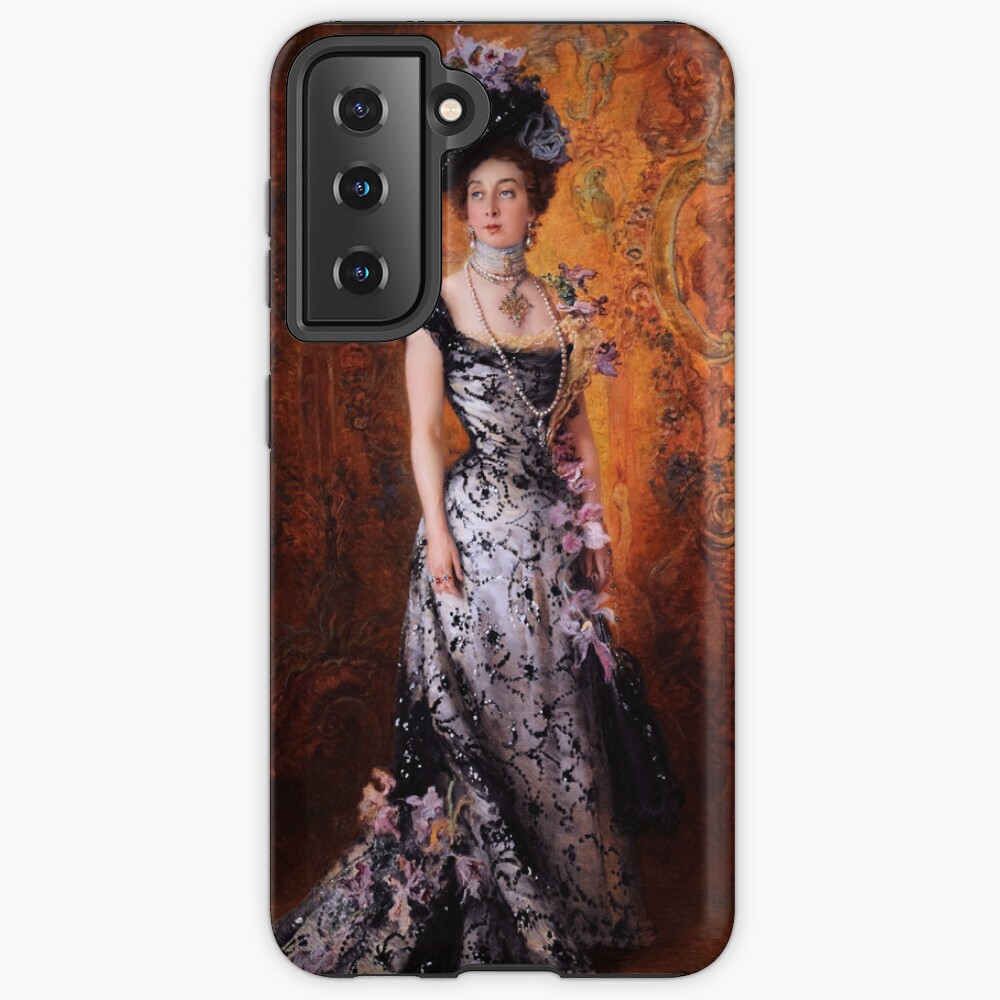
Table of Contents
U sughjettu: Maria Alexeevna Matavtina
The portrait centers on Maria Alexeevna Matavtina, who was the third wife of renowned Russian artist Konstantin Makovsky. natu in 1869, Maria became an influential figure in the Russian artistic and cultural circles of the late 19th and early 20th centuries. Known for her poised and refined demeanor, she is depicted in the portrait as a symbol of aristocratic grace and beauty. Her gentle expression conveys a sense of serenity and dignity, offering the viewer a glimpse into the life of Russian nobility during this period. Maria’s attire and accessories, as well as her posture, exude the confidence and sophistication expected of women of her social standing.
The Style and Technique
Makovsky’s work is celebrated for its realistic portrayal of his subjects, blending academic tradition with the Russian fascination for opulence and grandeur. The artist’s technique is a fine example of Russian realism, focusing on intricate details and the creation of a lifelike representation of his subjects. The brushwork in the portrait is meticulous and refined, especially in the rendering of Maria’s luxurious gown, the pearls draped across her neck, and the fine details of her jewelry. The texture of her gown, which appears to be made from satin or silk, is rendered with remarkable precision, highlighting the rich fabrics and the skillful use of light and shadow to suggest depth.
The background of the portrait is painted in a warm palette of oranges, browns, è oru, creating a sense of intimacy and luxury. I culori si mischianu in armunia, enhancing the subject’s presence in the painting. The warm tones of the backdrop serve to emphasize the elegance and poise of Maria, further highlighting her position within the elite class of Russian society.
U vestitu è l'accessori
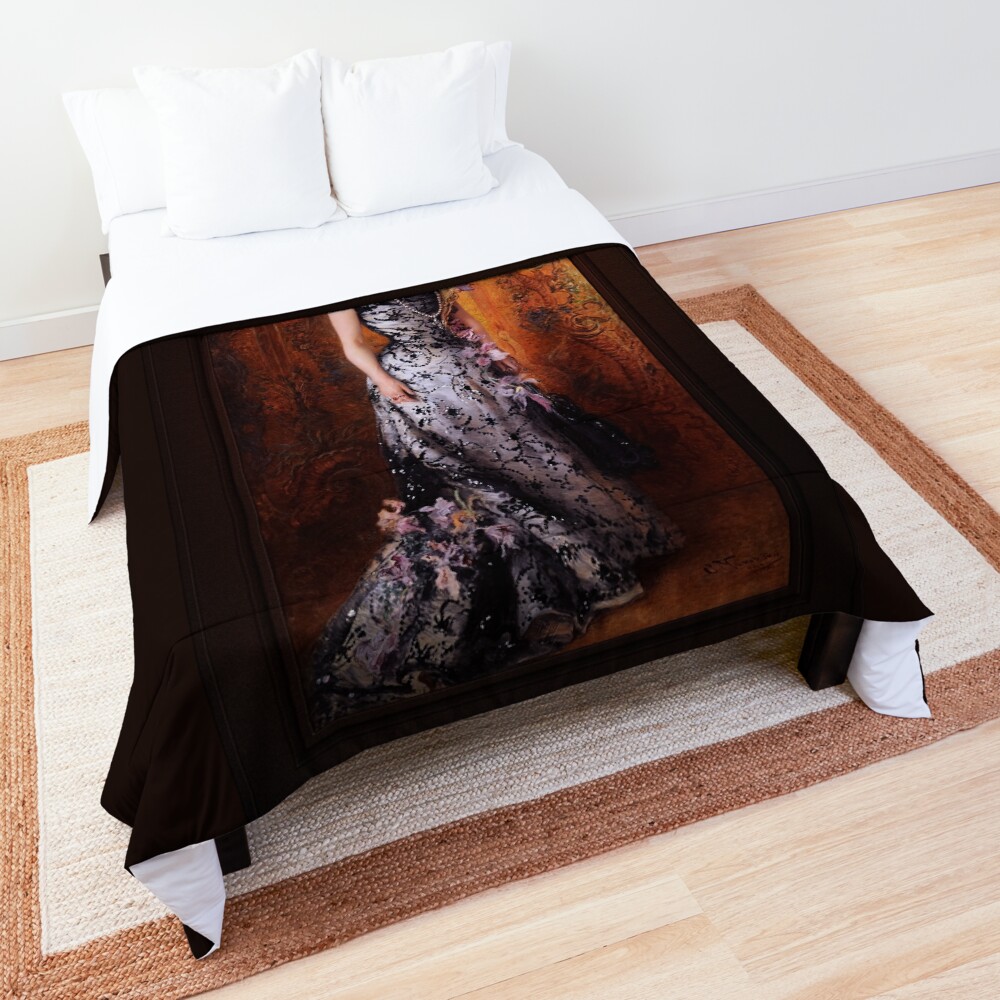
Maria’s gown is one of the most striking features of the portrait. The deep, dark colors of the dress, accentuated with subtle light reflections, suggest a luxurious fabric like satin or velvet, offering a rich contrast to the lighter tones of her skin. The gown’s intricate black lace details, especially along the bodice and sleeves, are skillfully depicted, showcasing Makovsky’s attention to texture and his mastery of rendering fabric. The lace patterns evoke an air of formality and class, befitting a member of the Russian aristocracy.
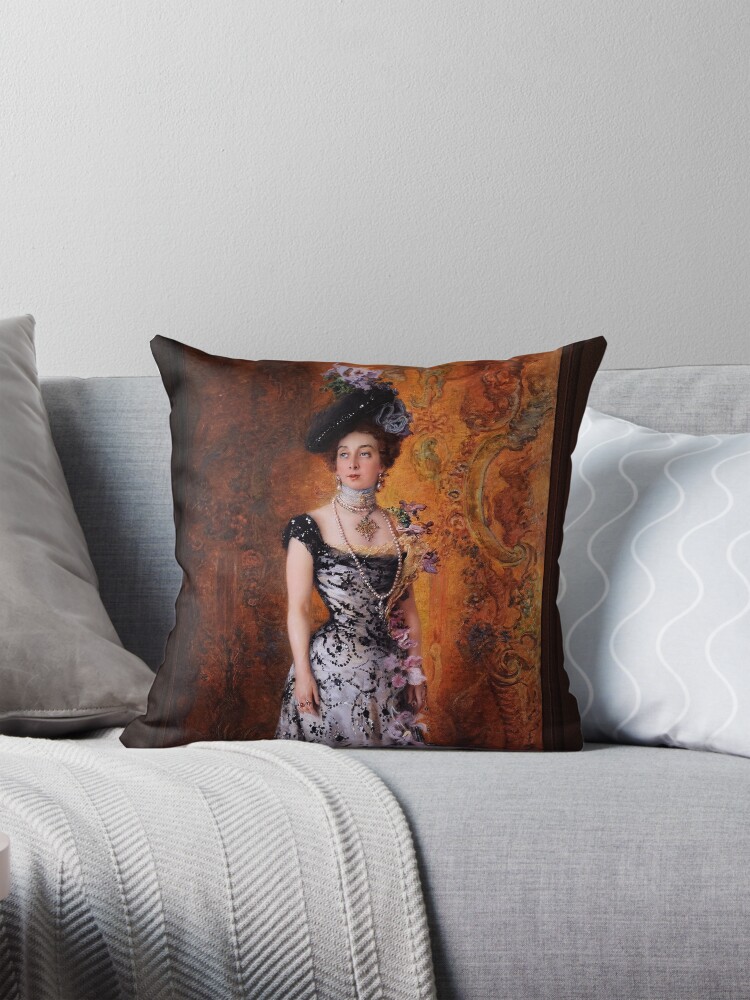
Maria wears a lavish array of pearls and jewelry, including a pearl necklace that cascades elegantly around her neck. A large star-shaped brooch, likely of gold or silver, adorns her chest, drawing attention to her upper body and serving as a focal point in the composition. I so capelli, styled in an intricate updo, is accessorized with a delicate floral arrangement, featuring shades of violet, adding a touch of softness to the overall look. These details not only speak to the high social status of the subject but also highlight the fashionable trends of the period.
The Setting and Background
The background of the portrait is a harmonious blend of warm, earthy tones. A subtle floral pattern emerges from the textured surface, creating a sense of richness without distracting from the central figure. The organic motifs in the background are reminiscent of the decorative arts of the time, possibly inspired by the Rococo or Neoclassical influences that were popular in Russian interiors. The golden hues give the painting a sense of warmth, making Maria the undeniable focal point of the composition.
The background’s richness contrasts beautifully with the subject’s refined and poised figure. U paràmetru, although not overly detailed, evokes the luxurious world of Russian nobility, providing a fitting context for the subject’s elegant attire and aristocratic presence. The overall mood of the piece is one of intimate grandeur, where the viewer is invited to witness the opulence of Russian society through the lens of a poised and sophisticated aristocrat.
The Mood and Tone
The mood of the portrait is serene and contemplative, with an air of aristocratic dignity. Maria’s expression is calm and composed, her posture exuding grace and confidence. U molle, almost wistful look in her eyes suggests a deeper introspection, lending the portrait an emotional depth that contrasts with the grandeur of her attire. This emotional resonance adds complexity to the piece, offering more than just a visual portrayal of wealth and status.
The painting evokes a sense of nostalgia for the opulence and refinement of the Russian Imperial era. It serves as a historical artifact that captures not only the fashion and style of the time but also the societal values and norms that governed the lives of the Russian aristocracy. The combination of the subject’s regal bearing, the lush textures of her gown, and the warm, inviting background creates an atmosphere of refinement and sophistication.
Cunclusione
Makovsky’s “Portrait of Maria Alexeevna Matavtina” is a stunning example of Russian portraiture at the turn of the 20th century. It showcases the artist’s ability to blend realism with a sense of grandeur, capturing the subject’s beauty and the luxurious lifestyle of Russian nobility. The detailed depiction of Maria’s attire, accessori, and the background of the painting invites the viewer into a world of opulence and aristocratic grace. Through this portrait, Makovsky immortalizes not only his beloved wife but also the rich cultural and artistic heritage of late Imperial Russia.
Portrait of Maria Alexeevna Matavtina is a remastered digital art old masters reproduction of a public domain image that is available as a stampa su tela in linea.
À propositu di l'artista
Info sottu Derivatu da Wikipedia.org
Konstantin Makovsky era un influente pittore russu, affiliated with the “Peredvizhniki (I vagabondi)”. Parechje di i so pitture storichi, cum'è Sottu a Corona (1889) also known as The Russian Bride’s Attire and Before the Wedding, mostrava una visione idealizzata di a vita russa di i seculi precedenti. Hè spessu cunzidiratu un rappresentante di l'arte accademica.
Konstantin Makovsky hè natu in Mosca. U so babbu era una figura di l'arti russa è un pittore dilettante, Egor Ivanovich Makovskij. A so mamma era un cumpusitore, è sperava chì u so figliolu un ghjornu seguitassi i so passi. I so fratelli più chjuchi Vladimir è Nikolay è a so surella Alexandra anu ancu diventatu pittori.
In 1851 Makovsky intrì in a Scola di Pittura di Mosca, Scultura è Architettura induve diventò u primu studiente, ottene facilmente tutti i premii dispunibili. I so maestri eranu Karl Bryullov è Vasily Tropinin. Makovsky’s inclinations to Romanticism and decorative effects can be explained by the influence of Bryullov.
Although art was his passion, he also considered what his mother had wanted him to do. He set off to look for composers he could refer to, and first went to France. Before, he had always been a classical music lover, and listened to many pieces. He often wished he could change the tune, or style of some of them to make them more enjoyable. Later in his life it came true.
In 1858 Makovsky entered the Imperial Academy of Arts in Saint Petersburg. Da 1860 he participated in the Academy’s exhibitions with paintings such as Curing of the Blind (1860) and Agents of the False Dmitry kill the son of Boris Godunov (1862). In 1863 Makovsky and thirteen other students held a protest against the Academy’s setting of topics from Scandinavian mythology in the competition for the Large Gold Medal of Academia; all left the academy without a formal diploma.
Makovsky became a member of a co-operative (artel) of artists led by Ivan Kramskoi, typically producing Wanderers paintings on everyday life (Widow 1865, Herring-seller 1867, etc.). Da 1870 he was a founding member of the Society for Traveling Art Exhibitions and continued to work on paintings devoted to everyday life. He exhibited his works at both the Academia exhibitions and the Traveling Art Exhibitions of the Wanderers.
A significant change in his style occurred after traveling to Egypt and Serbia in the mid-1870s. His interests changed from social and psychological problems to the artistic problems of colors and shape.
In the 1880s he became a fashionable author of portraits and historical paintings. At the World’s Fair of 1889 in Paris he received the Large Gold Medal for his paintings Death of Ivan the Terrible, The Judgement of Paris, and Demon and Tamara. He was one of the most highly appreciated and highly paid Russian artists of the time. Many democratic critics considered him as a renegade of the Wanderers’ ideals, producing (like Henryk Siemiradzki) striking but shallow works, while others see him as a forerunner of Russian Impressionism.
Makovsky was killed in 1915 when his horse-drawn carriage was hit by an electric tram in Saint Petersburg.