

Portread o Maria Alexeevna Matavtina
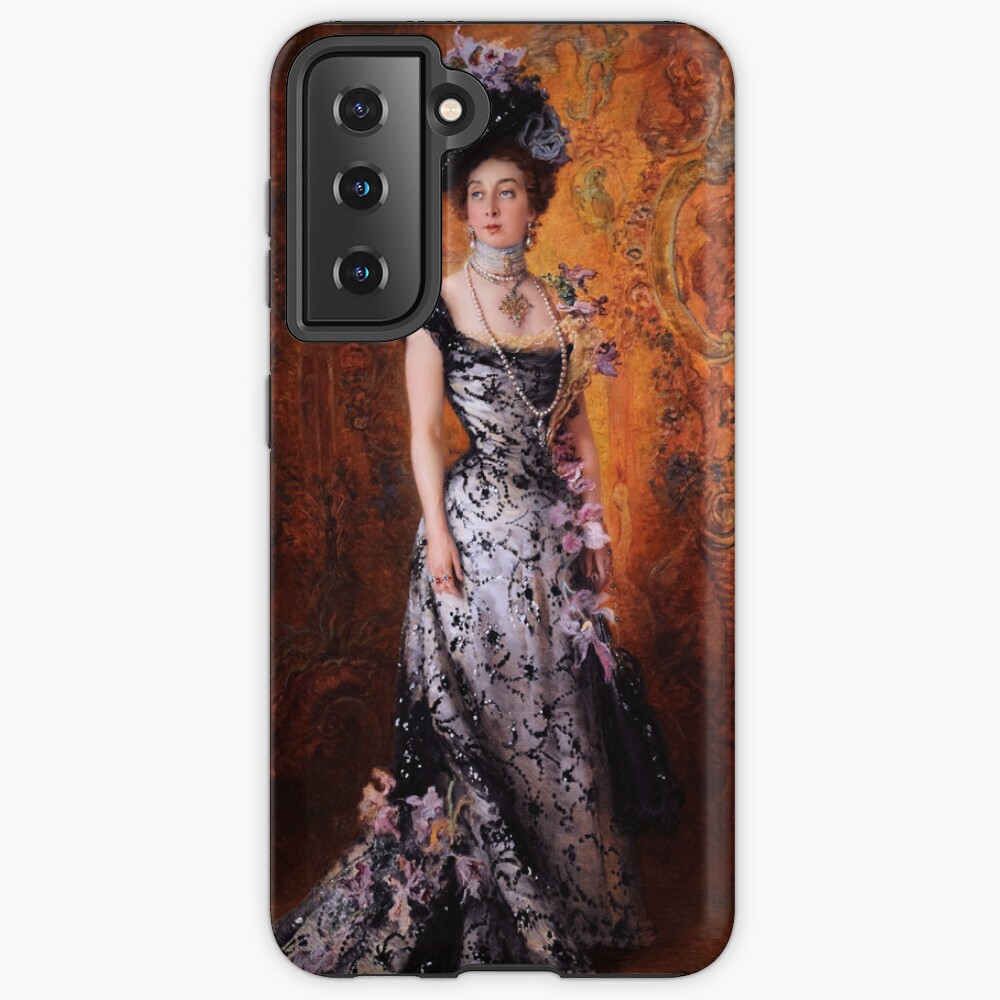
Portread o Drydedd Wraig Makovsky Maria Alexeevna Matavtina (1869-1919) c1900 erbyn Konstantin Makovsky (1839 – 1915); arbenigo mewn paentiadau Hanesyddol Rwsiaidd yn dangos golwg ddelfrydol ar fywyd Rwseg yn y canrifoedd diwethaf.
Rhagymadrodd
Mae'r “Portread o Maria Alexeevna Matavtina” by Konstantin Makovsky is an exquisite example of late 19th-century Russian portraiture. Painted around the turn of the 20th century, this artwork portrays Makovsky’s third wife, Maria Alexeevna Matavtina, in a sumptuous gown against a backdrop of warm, opulent colors. The portrait reveals not only the refined beauty of the subject but also Makovsky’s exceptional skill in capturing the grace, geinder, and grandeur of Russian aristocracy during the Imperial era.
Tabl Cynnwys
Y Pwnc: Maria Alexeevna Matavtina
The portrait centers on Maria Alexeevna Matavtina, who was the third wife of renowned Russian artist Konstantin Makovsky. Ganwyd yn 1869, Maria became an influential figure in the Russian artistic and cultural circles of the late 19th and early 20th centuries. Known for her poised and refined demeanor, she is depicted in the portrait as a symbol of aristocratic grace and beauty. Her gentle expression conveys a sense of serenity and dignity, offering the viewer a glimpse into the life of Russian nobility during this period. Maria’s attire and accessories, as well as her posture, exude the confidence and sophistication expected of women of her social standing.
The Style and Technique
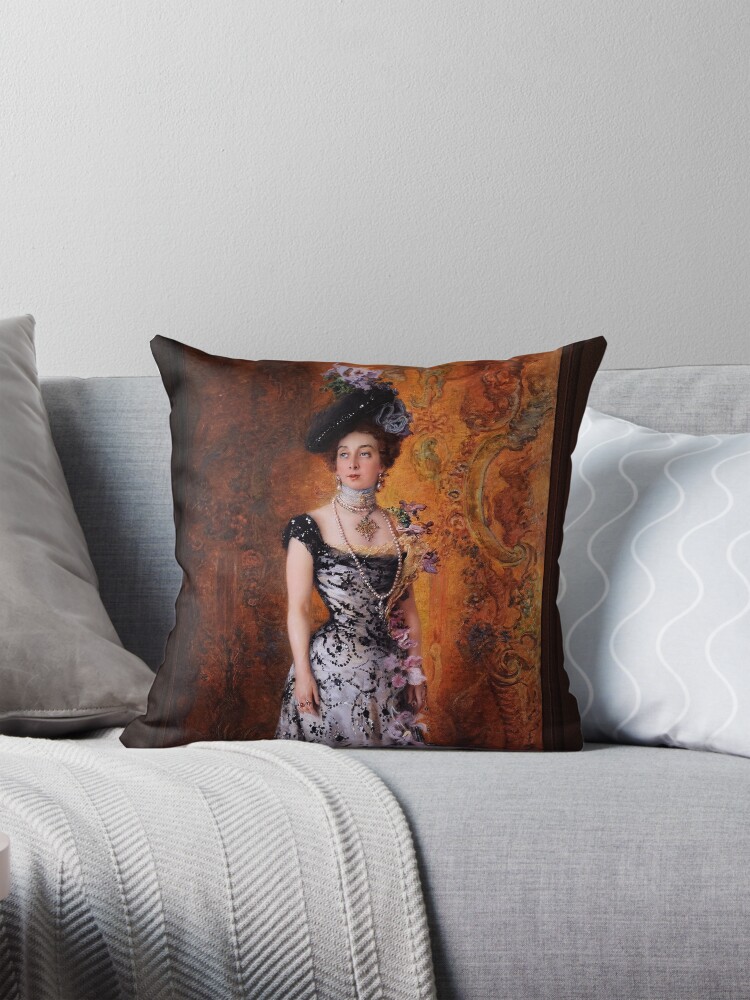
Makovsky’s work is celebrated for its realistic portrayal of his subjects, blending academic tradition with the Russian fascination for opulence and grandeur. The artist’s technique is a fine example of Russian realism, focusing on intricate details and the creation of a lifelike representation of his subjects. The brushwork in the portrait is meticulous and refined, especially in the rendering of Maria’s luxurious gown, the pearls draped across her neck, and the fine details of her jewelry. The texture of her gown, which appears to be made from satin or silk, is rendered with remarkable precision, highlighting the rich fabrics and the skillful use of light and shadow to suggest depth.
The background of the portrait is painted in a warm palette of oranges, browns, ac aur, creating a sense of intimacy and luxury. The colors blend harmoniously, enhancing the subject’s presence in the painting. The warm tones of the backdrop serve to emphasize the elegance and poise of Maria, further highlighting her position within the elite class of Russian society.
Y Gwisg a'r Ategolion
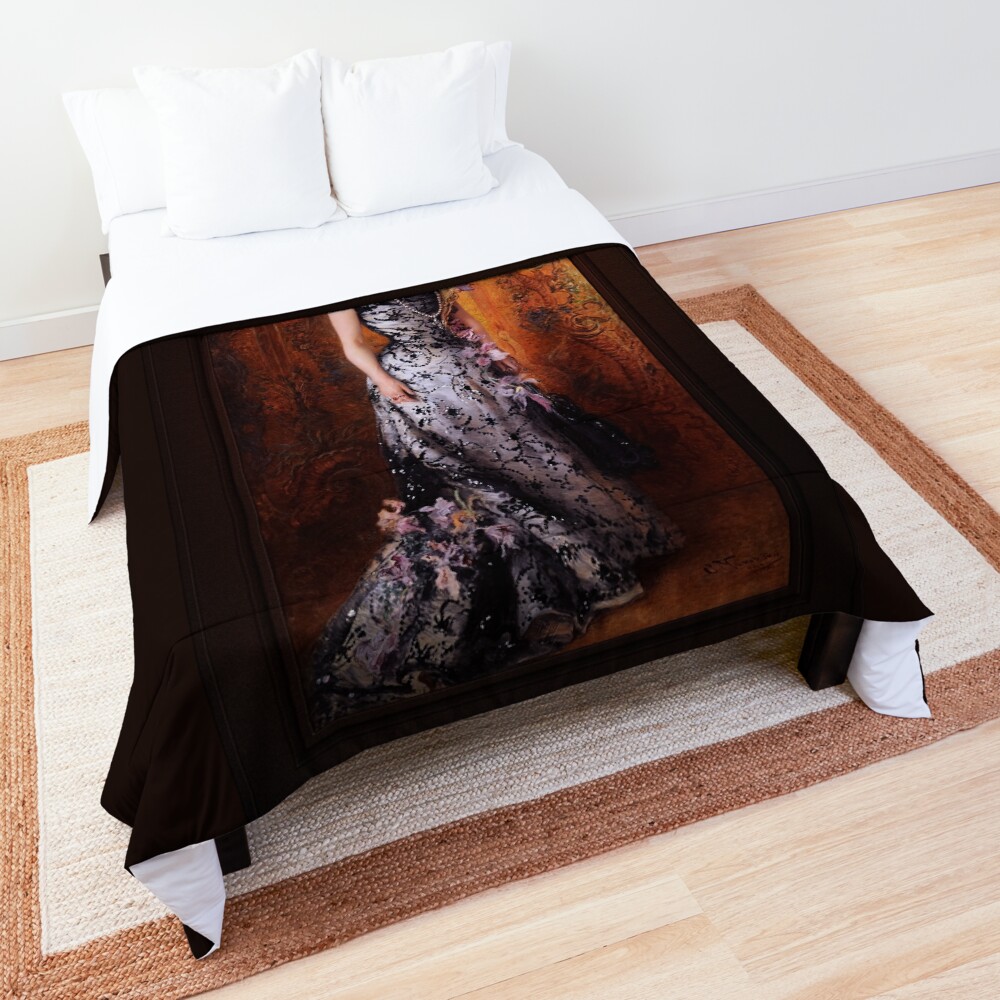
Maria’s gown is one of the most striking features of the portrait. Y dyfnder, dark colors of the dress, accentuated with subtle light reflections, suggest a luxurious fabric like satin or velvet, offering a rich contrast to the lighter tones of her skin. The gown’s intricate black lace details, especially along the bodice and sleeves, are skillfully depicted, showcasing Makovsky’s attention to texture and his mastery of rendering fabric. The lace patterns evoke an air of formality and class, befitting a member of the Russian aristocracy.
Maria wears a lavish array of pearls and jewelry, including a pearl necklace that cascades elegantly around her neck. A large star-shaped brooch, likely of gold or silver, adorns her chest, drawing attention to her upper body and serving as a focal point in the composition. Ei gwallt, styled mewn updo cymhleth, is accessorized with a delicate floral arrangement, featuring shades of violet, adding a touch of softness to the overall look. These details not only speak to the high social status of the subject but also highlight the fashionable trends of the period.
Y lleoliad a'r cefndir
The background of the portrait is a harmonious blend of warm, tonau priddlyd. A subtle floral pattern emerges from the textured surface, creating a sense of richness without distracting from the central figure. The organic motifs in the background are reminiscent of the decorative arts of the time, possibly inspired by the Rococo or Neoclassical influences that were popular in Russian interiors. The golden hues give the painting a sense of warmth, making Maria the undeniable focal point of the composition.
The background’s richness contrasts beautifully with the subject’s refined and poised figure. Y gosodiad, although not overly detailed, evokes the luxurious world of Russian nobility, providing a fitting context for the subject’s elegant attire and aristocratic presence. The overall mood of the piece is one of intimate grandeur, where the viewer is invited to witness the opulence of Russian society through the lens of a poised and sophisticated aristocrat.
The Mood and Tone
The mood of the portrait is serene and contemplative, with an air of aristocratic dignity. Maria’s expression is calm and composed, her posture exuding grace and confidence. Y meddal, almost wistful look in her eyes suggests a deeper introspection, lending the portrait an emotional depth that contrasts with the grandeur of her attire. This emotional resonance adds complexity to the piece, offering more than just a visual portrayal of wealth and status.
The painting evokes a sense of nostalgia for the opulence and refinement of the Russian Imperial era. It serves as a historical artifact that captures not only the fashion and style of the time but also the societal values and norms that governed the lives of the Russian aristocracy. The combination of the subject’s regal bearing, the lush textures of her gown, and the warm, inviting background creates an atmosphere of refinement and sophistication.
Nghasgliad
Makovsky’s “Portread o Maria Alexeevna Matavtina” is a stunning example of Russian portraiture at the turn of the 20th century. It showcases the artist’s ability to blend realism with a sense of grandeur, capturing the subject’s beauty and the luxurious lifestyle of Russian nobility. The detailed depiction of Maria’s attire, ategolion, and the background of the painting invites the viewer into a world of opulence and aristocratic grace. Through this portrait, Makovsky immortalizes not only his beloved wife but also the rich cultural and artistic heritage of late Imperial Russia.
Portrait of Maria Alexeevna Matavtina is a remastered digital art old masters reproduction of a public domain image that is available as a argraffu cynfas ar-lein.
Am Yr Artist
Gwybodaeth Islaw sy'n Deillio o Wikipedia.org
Roedd Konstantin Makovsky yn arlunydd dylanwadol o Rwseg, yn gysylltiedig â'r “Peredvizhniki (Crwydriaid)”. Llawer o'i ddarluniau hanesyddol, megis Dan y Goron (1889) a elwir hefyd yn The Russian Bride's Attire a Before the Wedding, yn dangos golwg ddelfrydol ar fywyd Rwsiaidd y canrifoedd blaenorol. Mae'n cael ei ystyried yn aml yn gynrychiolydd celf Academaidd.
Ganed Konstantin Makovsky ym Moscow. Ei dad oedd y ffigwr celf Rwsiaidd ac arlunydd amatur, Yegor Ivanovich Makovsky. Cyfansoddwr oedd ei fam, a gobeithiai y byddai ei mab un diwrnod yn dilyn yn ei throed. Aeth ei frodyr iau Vladimir a Nikolay a'i chwaer Alexandra ymlaen hefyd i fod yn beintwyr.
Yn 1851 Aeth Makovsky i Ysgol Peintio Moscow, Cerflunio a Phensaernïaeth lle daeth yn fyfyriwr gorau, cael yr holl wobrau sydd ar gael yn hawdd. Ei athrawon oedd Karl Bryullov a Vasily Tropinin. Gellir esbonio tueddiadau Makovsky i Rhamantiaeth ac effeithiau addurniadol gan ddylanwad Bryullov.
Er mai celf oedd ei angerdd, ystyriodd hefyd yr hyn yr oedd ei fam am iddo ei wneud. Aeth i chwilio am gyfansoddwyr y gallai gyfeirio atynt, ac yn gyntaf aeth i Ffrainc. Cyn, roedd wedi bod yn hoff o gerddoriaeth glasurol erioed, a gwrandawodd ar lawer o ddarnau. Roedd yn aml yn dymuno cael newid y dôn, neu arddull rhai ohonynt i'w gwneud yn fwy pleserus. Yn ddiweddarach yn ei fywyd daeth yn wir.
Yn 1858 Ymunodd Makovsky â'r Imperial Academy of Arts yn St Petersburg. O 1860 cymerodd ran yn arddangosfeydd yr Academi gyda phaentiadau fel Curing of the Blind (1860) ac Asiantau'r Dmitry Ffug yn lladd mab Boris Godunov (1862). Yn 1863 Cynhaliodd Makovsky a thri ar ddeg o fyfyrwyr eraill brotest yn erbyn gosodiad yr Academi o bynciau o fytholeg Sgandinafaidd yn y gystadleuaeth am Fedal Aur Fawr yr Academia.; gadawodd pawb yr academi heb ddiploma ffurfiol.
Daeth Makovsky yn aelod o gwmni cydweithredol (artel) o artistiaid dan arweiniad Ivan Kramskoi, yn nodweddiadol yn cynhyrchu paentiadau Wanderers ar fywyd bob dydd (Gweddw 1865, Gwerthwr penwaig 1867, etc.). O 1870 roedd yn un o sylfaenwyr y Gymdeithas Arddangosfeydd Celf Teithiol a pharhaodd i weithio ar baentiadau a oedd yn ymwneud â bywyd bob dydd.. Arddangosodd ei weithiau yn arddangosfeydd yr Academia ac yn Arddangosfeydd Celf Teithiol y Crwydriaid.
Bu newid sylweddol yn ei arddull ar ôl teithio i'r Aifft a Serbia yng nghanol y 1870au. Newidiodd ei ddiddordebau o broblemau cymdeithasol a seicolegol i broblemau artistig lliwiau a siâp.
Yn y 1880au daeth yn awdur ffasiynol ar bortreadau a phaentiadau hanesyddol. Yn Ffair y Byd o 1889 ym Mharis derbyniodd y Fedal Aur Fawr am ei luniau Death of Ivan the Terrible, Barn Paris, a Demon a Tamara. Roedd yn un o'r artistiaid Rwsiaidd a gafodd ei werthfawrogi a'i dalu fwyaf ar y pryd. Roedd llawer o feirniaid democrataidd yn ei ystyried yn wrthuniad o'r Wanderers’ delfrydau, cynhyrchu (fel Henryk Siemiradzki) gweithiau trawiadol ond bas, tra bod eraill yn ei weld fel rhagflaenydd Argraffiadaeth Rwsiaidd.
Lladdwyd Makovsky yn 1915 pan gafodd ei gerbyd ceffyl ei daro gan dram trydan yn St Petersburg.