

Portrait of Maria Alexeevna Matavtina
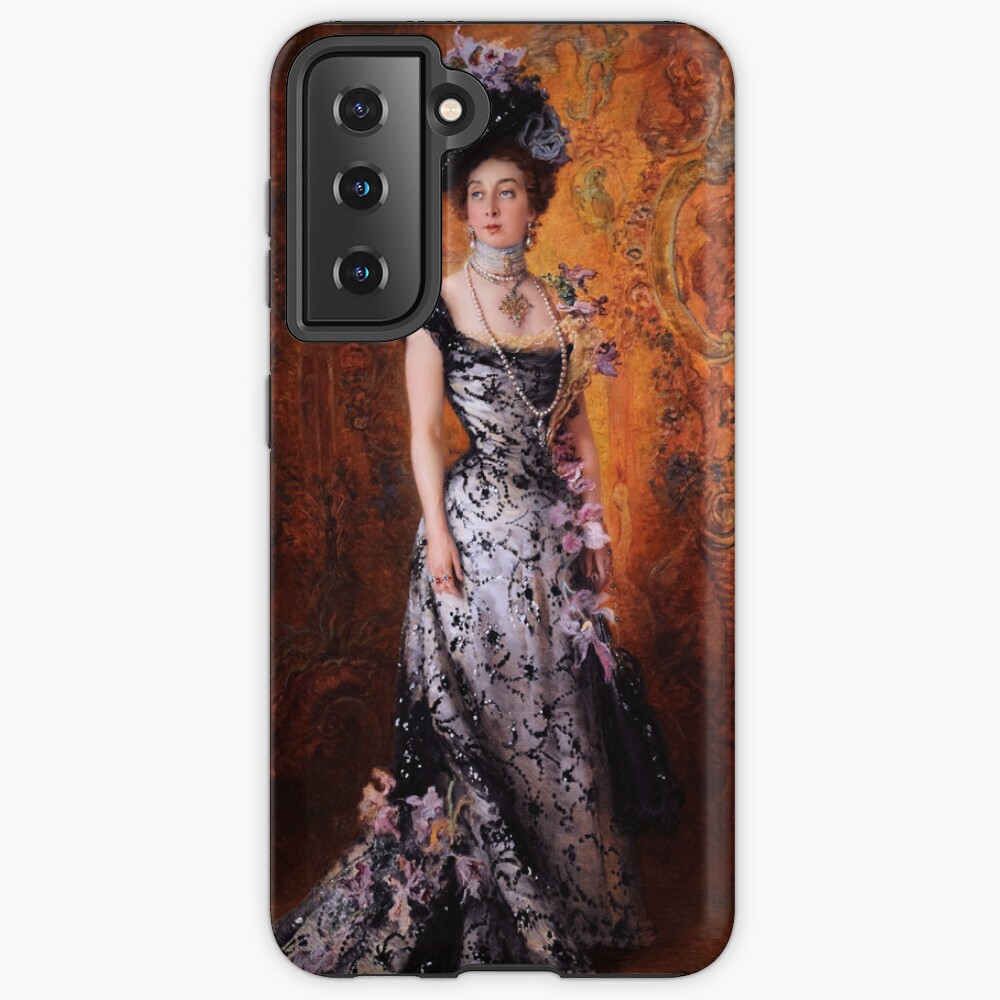
Portrait of Makovsky’s Third Wife Maria Alexeevna Matavtina (1869-1919) c1900 by Konstantin Makovsky (1839 – 1915); med speciale i russiske historiske malerier, der viser et idealiseret syn på russisk liv i tidligere århundreder.
Indledning
Det “Portrait of Maria Alexeevna Matavtina” by Konstantin Makovsky is an exquisite example of late 19th-century Russian portraiture. Painted around the turn of the 20th century, this artwork portrays Makovsky’s third wife, Maria Alexeevna Matavtina, in a sumptuous gown against a backdrop of warm, opulent colors. The portrait reveals not only the refined beauty of the subject but also Makovsky’s exceptional skill in capturing the grace, elegance, and grandeur of Russian aristocracy during the Imperial era.
Indholdsfortegnelse
Emnet: Maria Alexeevna Matavtina
The portrait centers on Maria Alexeevna Matavtina, who was the third wife of renowned Russian artist Konstantin Makovsky. Født i 1869, Maria became an influential figure in the Russian artistic and cultural circles of the late 19th and early 20th centuries. Known for her poised and refined demeanor, she is depicted in the portrait as a symbol of aristocratic grace and beauty. Her gentle expression conveys a sense of serenity and dignity, offering the viewer a glimpse into the life of Russian nobility during this period. Maria’s attire and accessories, as well as her posture, exude the confidence and sophistication expected of women of her social standing.
Stilen og teknikken
Makovsky’s work is celebrated for its realistic portrayal of his subjects, blending academic tradition with the Russian fascination for opulence and grandeur. The artist’s technique is a fine example of Russian realism, focusing on intricate details and the creation of a lifelike representation of his subjects. The brushwork in the portrait is meticulous and refined, especially in the rendering of Maria’s luxurious gown, the pearls draped across her neck, and the fine details of her jewelry. The texture of her gown, which appears to be made from satin or silk, is rendered with remarkable precision, highlighting the rich fabrics and the skillful use of light and shadow to suggest depth.
The background of the portrait is painted in a warm palette of oranges, brune, og guld, creating a sense of intimacy and luxury. The colors blend harmoniously, enhancing the subject’s presence in the painting. The warm tones of the backdrop serve to emphasize the elegance and poise of Maria, further highlighting her position within the elite class of Russian society.
Påklædning og tilbehør
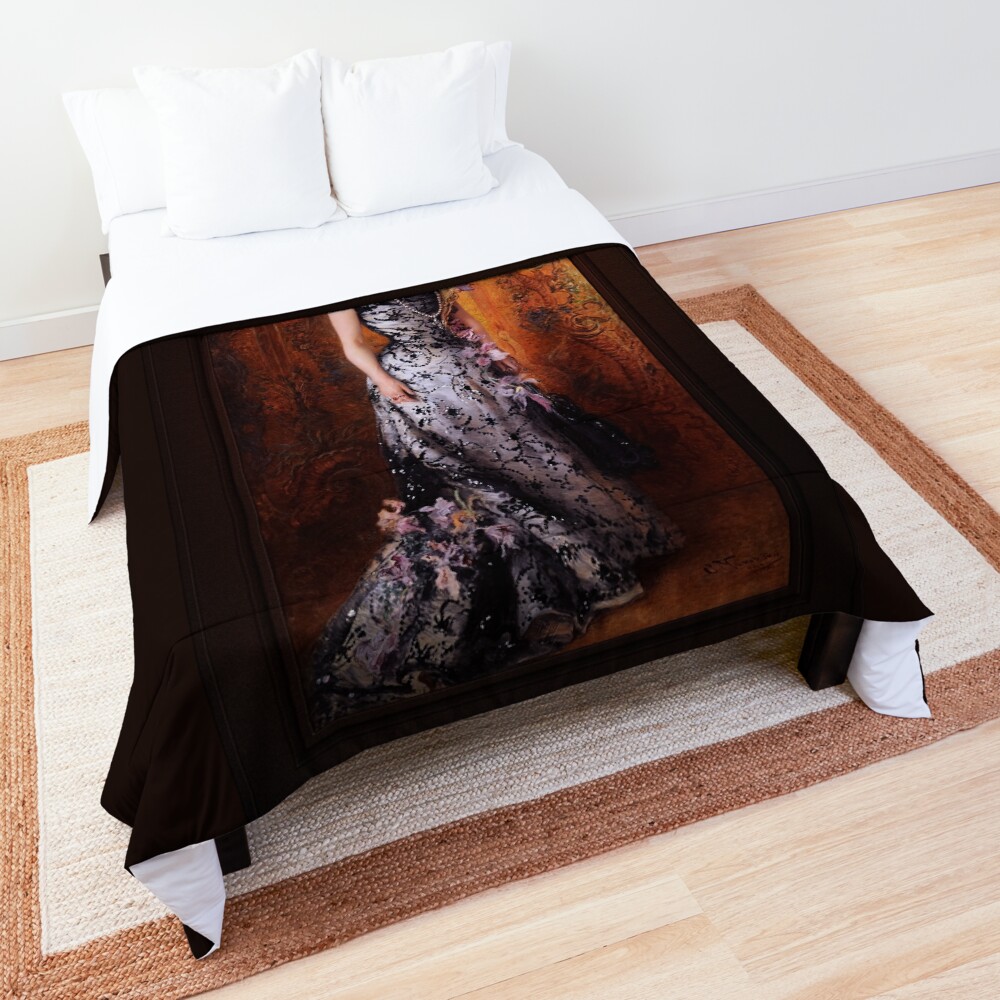
Maria’s gown is one of the most striking features of the portrait. Det dybe, dark colors of the dress, accentuated with subtle light reflections, suggest a luxurious fabric like satin or velvet, offering a rich contrast to the lighter tones of her skin. The gown’s intricate black lace details, especially along the bodice and sleeves, are skillfully depicted, showcasing Makovsky’s attention to texture and his mastery of rendering fabric. The lace patterns evoke an air of formality and class, befitting a member of the Russian aristocracy.
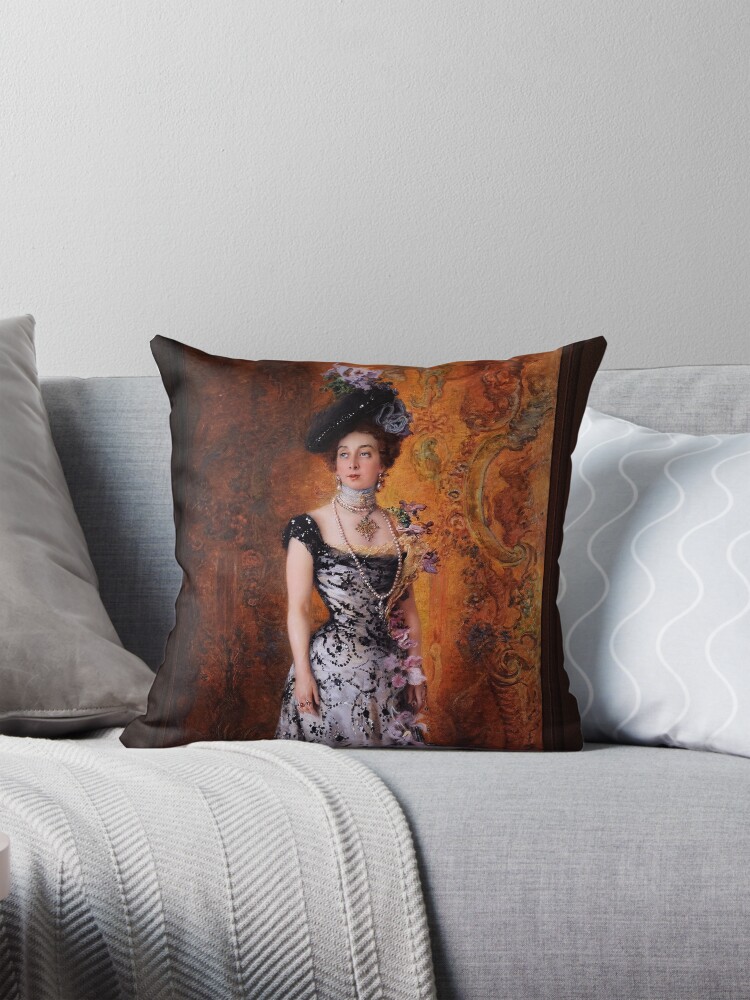
Maria wears a lavish array of pearls and jewelry, including a pearl necklace that cascades elegantly around her neck. A large star-shaped brooch, likely of gold or silver, adorns her chest, drawing attention to her upper body and serving as a focal point in the composition. Hendes hår, styled in an intricate updo, is accessorized with a delicate floral arrangement, featuring shades of violet, adding a touch of softness to the overall look. These details not only speak to the high social status of the subject but also highlight the fashionable trends of the period.
Indstillingen og baggrunden
The background of the portrait is a harmonious blend of warm, earthy tones. A subtle floral pattern emerges from the textured surface, creating a sense of richness without distracting from the central figure. The organic motifs in the background are reminiscent of the decorative arts of the time, possibly inspired by the Rococo or Neoclassical influences that were popular in Russian interiors. The golden hues give the painting a sense of warmth, making Maria the undeniable focal point of the composition.
The background’s richness contrasts beautifully with the subject’s refined and poised figure. Indstillingen, although not overly detailed, evokes the luxurious world of Russian nobility, providing a fitting context for the subject’s elegant attire and aristocratic presence. The overall mood of the piece is one of intimate grandeur, where the viewer is invited to witness the opulence of Russian society through the lens of a poised and sophisticated aristocrat.
The Mood and Tone
The mood of the portrait is serene and contemplative, with an air of aristocratic dignity. Maria’s expression is calm and composed, her posture exuding grace and confidence. Den bløde, almost wistful look in her eyes suggests a deeper introspection, lending the portrait an emotional depth that contrasts with the grandeur of her attire. This emotional resonance adds complexity to the piece, offering more than just a visual portrayal of wealth and status.
The painting evokes a sense of nostalgia for the opulence and refinement of the Russian Imperial era. It serves as a historical artifact that captures not only the fashion and style of the time but also the societal values and norms that governed the lives of the Russian aristocracy. The combination of the subject’s regal bearing, the lush textures of her gown, and the warm, inviting background creates an atmosphere of refinement and sophistication.
Konklusion
Makovsky’s “Portrait of Maria Alexeevna Matavtina” is a stunning example of Russian portraiture at the turn of the 20th century. It showcases the artist’s ability to blend realism with a sense of grandeur, capturing the subject’s beauty and the luxurious lifestyle of Russian nobility. The detailed depiction of Maria’s attire, tilbehør, and the background of the painting invites the viewer into a world of opulence and aristocratic grace. Gennem dette portræt, Makovsky immortalizes not only his beloved wife but also the rich cultural and artistic heritage of late Imperial Russia.
Portrait of Maria Alexeevna Matavtina is a remastered digital art old masters reproduction of a public domain image that is available as a lærred print online.
Om Kunstneren
Info nedenfor stammer fra Wikipedia.org
Konstantin Makovsky var en indflydelsesrig russisk maler, tilknyttet “Peredvizhniki (Vandrere)”. Mange af hans historiske malerier, såsom Beneath the Crown (1889) også kendt som The Russian Bride's Attire og Before the Wedding, viste et idealiseret syn på russisk liv i tidligere århundreder. Han betragtes ofte som en repræsentant for akademisk kunst.
Konstantin Makovsky blev født i Moskva. Hans far var den russiske kunstfigur og amatørmaler, Yegor Ivanovich Makovsky. Hans mor var komponist, og hun håbede, at hendes søn en dag ville følge i hendes fodspor. Hans yngre brødre Vladimir og Nikolay og hans søster Alexandra blev også malere.
I 1851 Makovsky gik ind i Moskvas malerskole, Skulptur og arkitektur, hvor han blev den bedste studerende, nemt at få alle de tilgængelige priser. Hans lærere var Karl Bryullov og Vasily Tropinin. Makovskys tilbøjeligheder til romantik og dekorative effekter kan forklares med indflydelsen fra Bryullov.
Selvom kunst var hans passion, han overvejede også, hvad hans mor havde ønsket, at han skulle gøre. Han tog afsted for at lede efter komponister, han kunne henvise til, og tog først til Frankrig. Før, han havde altid været en elsker af klassisk musik, og lyttet til mange stykker. Han ønskede ofte, at han kunne ændre melodien, eller stil nogle af dem for at gøre dem sjovere. Senere i hans liv gik det i opfyldelse.
I 1858 Makovsky gik ind på Imperial Academy of Arts i Sankt Petersborg. Fra 1860 han deltog i Akademiets udstillinger med malerier som Curing of the Blind (1860) og Agenter for den falske Dmitry dræber Boris Godunovs søn (1862). I 1863 Makovsky og tretten andre studerende holdt en protest mod Akademiets indstilling af emner fra skandinavisk mytologi i konkurrencen om den store guldmedalje for akademiet; alle forlod akademiet uden et formelt eksamensbevis.
Makovsky blev medlem af et kooperativ (artel) af kunstnere ledet af Ivan Kramskoi, producerer typisk Wanderers-malerier i hverdagen (Enke 1865, Silde-sælger 1867, etc.). Fra 1870 han var et stiftende medlem af Society for Travelling Art Exhibitions og fortsatte med at arbejde på malerier, der var helliget hverdagen. Han udstillede sine værker på både Academia-udstillingerne og Vandrernes Rejsekunstudstillinger.
En betydelig ændring i hans stil skete efter at have rejst til Egypten og Serbien i midten af 1870'erne. Hans interesser ændrede sig fra sociale og psykologiske problemer til de kunstneriske problemer med farver og form.
I 1880'erne blev han en fashionabel forfatter af portrætter og historiske malerier. På verdensudstillingen i 1889 i Paris modtog han den store guldmedalje for sine malerier Ivan den grusommes død, Paris-dommen, og Demon og Tamara. Han var en af tidens mest værdsatte og højt betalte russiske kunstnere. Mange demokratiske kritikere betragtede ham som en frafalden af Wanderers’ idealer, producerer (ligesom Henryk Siemiradzki) slående, men overfladiske værker, mens andre ser ham som en forløber for russisk impressionisme.
Makovsky blev dræbt i 1915 da hans hestevogn blev ramt af en elektrisk sporvogn i Sankt Petersborg.