

Portrait de Maria Alexeïevna Matavtina
Portrait de la troisième épouse de Makovsky Maria Alexeevna Matavtina (1869-1919) c1900 par Constantin Makovsky (1839 – 1915); spécialisée dans les peintures historiques russes montrant une vision idéalisée de la vie russe au cours des siècles passés.
Introduction
Le “Portrait de Maria Alexeïevna Matavtina” de Konstantin Makovsky est un exemple exquis du portrait russe de la fin du XIXe siècle. Peint au tournant du 20e siècle, cette œuvre représente la troisième épouse de Makovsky, Maria Alekseevna Matavtina, dans une somptueuse robe sur fond de chaleur, couleurs opulentes. Le portrait révèle non seulement la beauté raffinée du sujet mais aussi l’habileté exceptionnelle de Makovsky à capturer la grâce, élégance, et la grandeur de l'aristocratie russe à l'époque impériale.
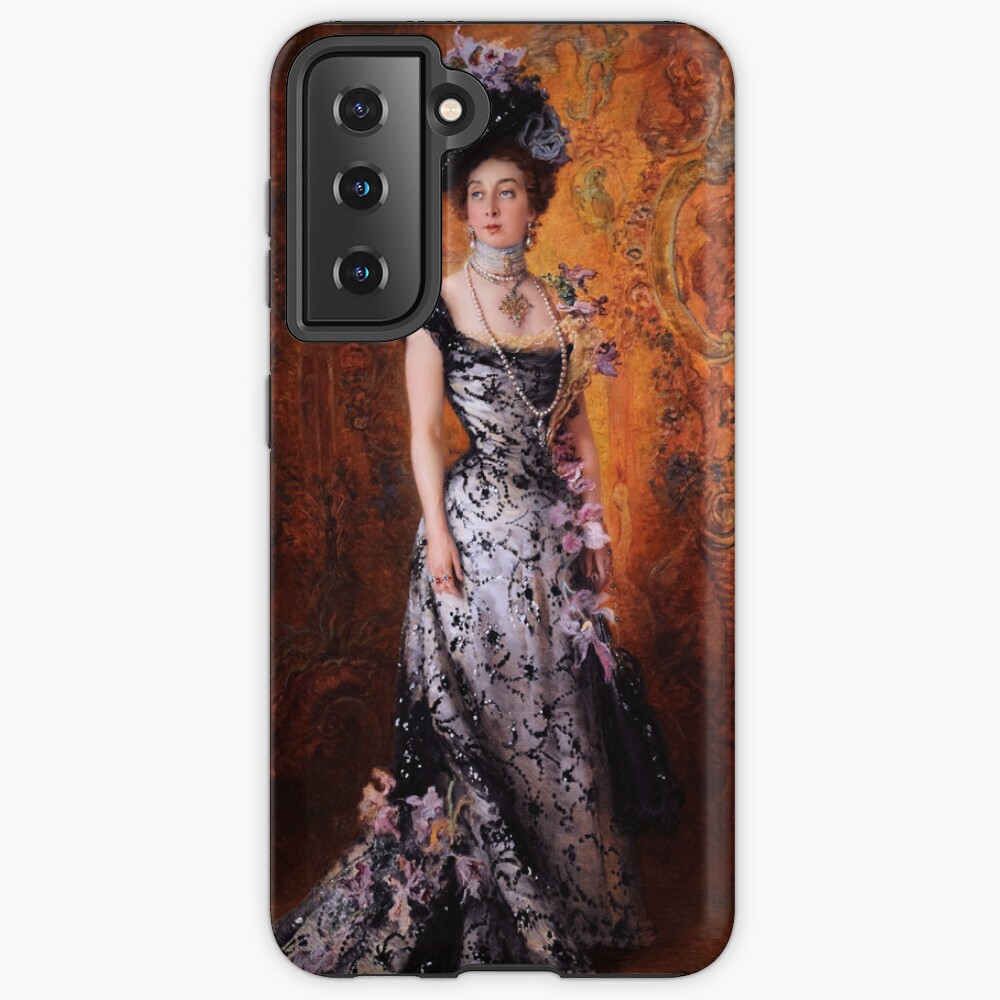
Table des matières
Le sujet: Maria Alekseevna Matavtina
Le portrait est centré sur Maria Alexeevna Matavtina, qui était la troisième épouse du célèbre artiste russe Konstantin Makovsky. Né dans 1869, Maria est devenue une figure influente des cercles artistiques et culturels russes de la fin du XIXe et du début du XXe siècle.. Connue pour son attitude posée et raffinée, elle est représentée dans le portrait comme un symbole de grâce et de beauté aristocratique. Son expression douce transmet un sentiment de sérénité et de dignité, offrant au spectateur un aperçu de la vie de la noblesse russe durant cette période. La tenue vestimentaire et les accessoires de Maria, ainsi que sa posture, dégage la confiance et la sophistication attendues des femmes de son statut social.
Le style et la technique
Le travail de Makovsky est célèbre pour sa représentation réaliste de ses sujets, mêlant la tradition académique à la fascination russe pour l'opulence et la grandeur. La technique de l’artiste est un bel exemple du réalisme russe, se concentrant sur les détails complexes et la création d'une représentation réaliste de ses sujets. Le travail au pinceau du portrait est méticuleux et raffiné, surtout dans le rendu de la luxueuse robe de Maria, les perles drapées autour de son cou, et les détails fins de ses bijoux. La texture de sa robe, qui semble être fait de satin ou de soie, est rendu avec une précision remarquable, mettant en valeur la richesse des tissus et l'utilisation habile de la lumière et de l'ombre pour suggérer la profondeur.
Le fond du portrait est peint dans une palette chaleureuse d'oranges, les bruns, et or, créer un sentiment d'intimité et de luxe. Les couleurs se mélangent harmonieusement, enhancing the subject’s presence in the painting. The warm tones of the backdrop serve to emphasize the elegance and poise of Maria, further highlighting her position within the elite class of Russian society.
La tenue vestimentaire et les accessoires
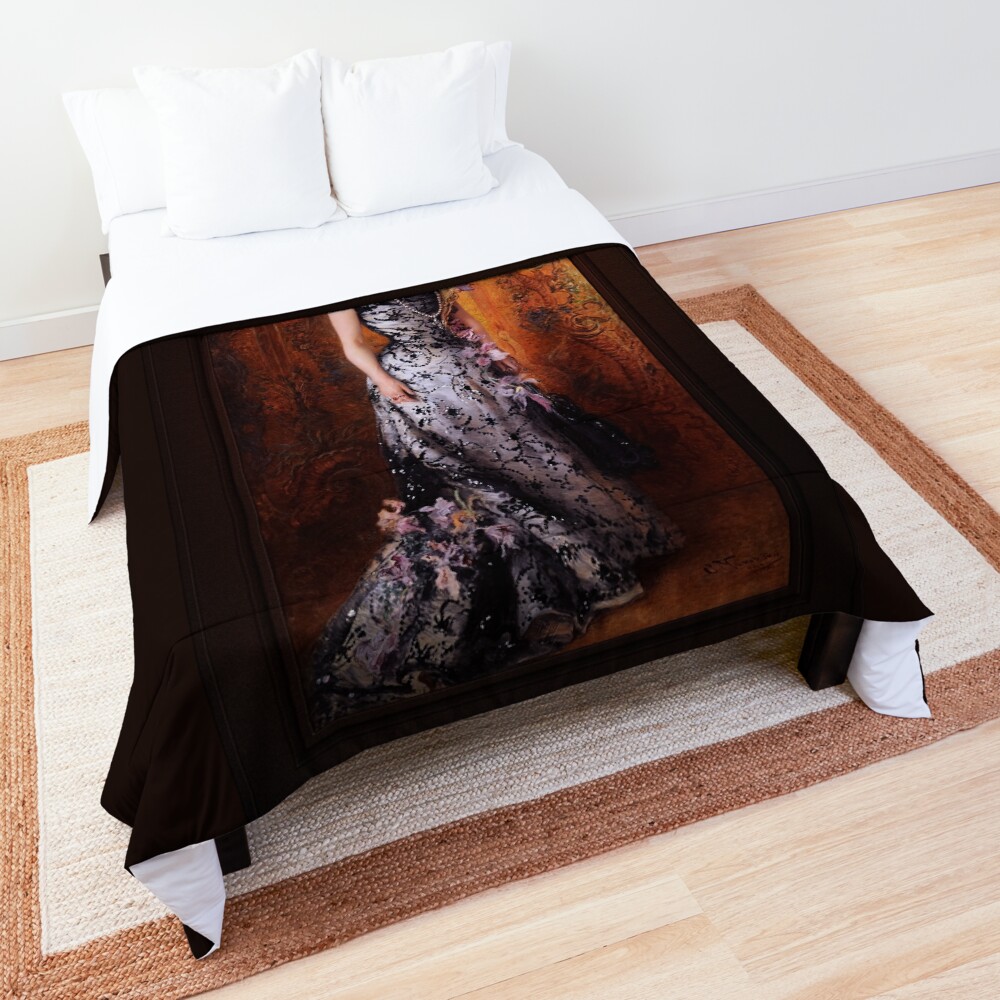
Maria’s gown is one of the most striking features of the portrait. Le profond, dark colors of the dress, accentuated with subtle light reflections, suggest a luxurious fabric like satin or velvet, offering a rich contrast to the lighter tones of her skin. The gown’s intricate black lace details, especially along the bodice and sleeves, are skillfully depicted, showcasing Makovsky’s attention to texture and his mastery of rendering fabric. The lace patterns evoke an air of formality and class, befitting a member of the Russian aristocracy.
Maria wears a lavish array of pearls and jewelry, including a pearl necklace that cascades elegantly around her neck. A large star-shaped brooch, likely of gold or silver, adorns her chest, drawing attention to her upper body and serving as a focal point in the composition. Ses cheveux, stylisé dans un chignon complexe, is accessorized with a delicate floral arrangement, featuring shades of violet, adding a touch of softness to the overall look. These details not only speak to the high social status of the subject but also highlight the fashionable trends of the period.
Le cadre et le contexte
The background of the portrait is a harmonious blend of warm, tons terreux. A subtle floral pattern emerges from the textured surface, creating a sense of richness without distracting from the central figure. The organic motifs in the background are reminiscent of the decorative arts of the time, possibly inspired by the Rococo or Neoclassical influences that were popular in Russian interiors. The golden hues give the painting a sense of warmth, making Maria the undeniable focal point of the composition.
The background’s richness contrasts beautifully with the subject’s refined and poised figure. Le réglage, although not overly detailed, evokes the luxurious world of Russian nobility, providing a fitting context for the subject’s elegant attire and aristocratic presence. The overall mood of the piece is one of intimate grandeur, where the viewer is invited to witness the opulence of Russian society through the lens of a poised and sophisticated aristocrat.
L'ambiance et le ton
L'ambiance du portrait est sereine et contemplative, with an air of aristocratic dignity. Maria’s expression is calm and composed, her posture exuding grace and confidence. Le doux, almost wistful look in her eyes suggests a deeper introspection, lending the portrait an emotional depth that contrasts with the grandeur of her attire. This emotional resonance adds complexity to the piece, offering more than just a visual portrayal of wealth and status.
The painting evokes a sense of nostalgia for the opulence and refinement of the Russian Imperial era. Il s'agit d'un artefact historique qui capture non seulement la mode et le style de l'époque, mais également les valeurs et normes sociétales qui régissaient la vie de l'aristocratie russe.. La combinaison de l’allure royale du sujet, les textures luxuriantes de sa robe, Et le chaud, un fond invitant crée une atmosphère de raffinement et de sophistication.
Conclusion
de Makovsky “Portrait de Maria Alexeïevna Matavtina” est un superbe exemple du portrait russe du début du XXe siècle. Il met en valeur la capacité de l’artiste à allier réalisme et sentiment de grandeur., capturer la beauté du sujet et le style de vie luxueux de la noblesse russe. La représentation détaillée de la tenue vestimentaire de Maria, accessoires, et l'arrière-plan du tableau invite le spectateur dans un monde d'opulence et de grâce aristocratique. A travers ce portrait, Makovsky immortalizes not only his beloved wife but also the rich cultural and artistic heritage of late Imperial Russia.
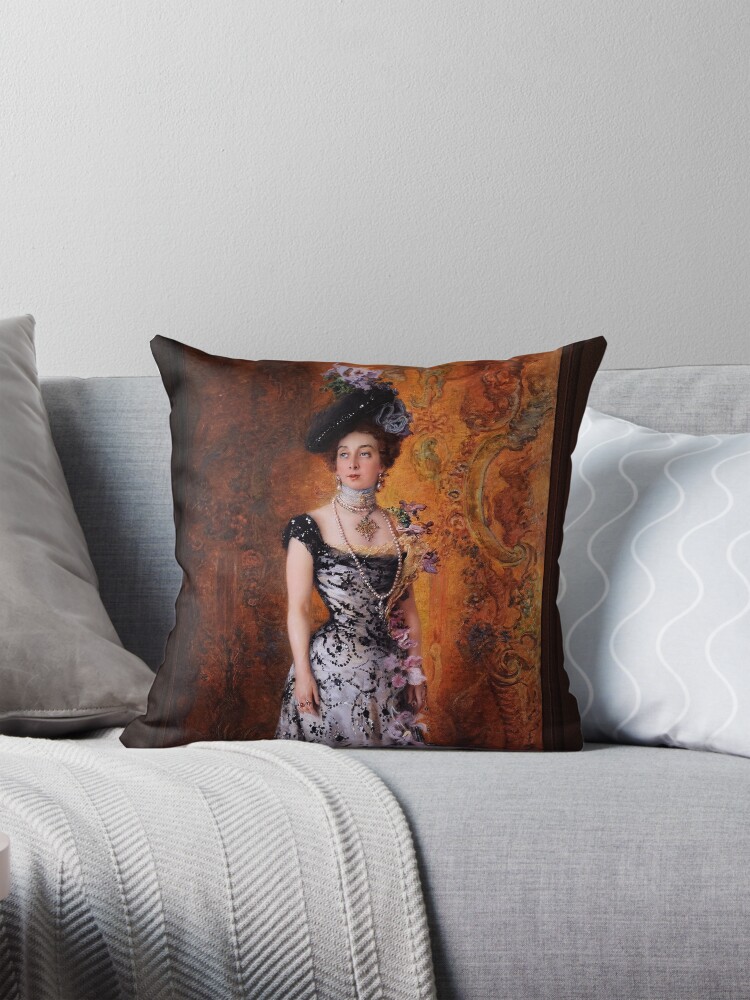
Portrait of Maria Alexeevna Matavtina is a remastered digital art old masters reproduction of a public domain image that is available as a impression sur toile.
À propos de l'artiste
Informations ci-dessous dérivées de Wikipedia.org
Konstantin Makovsky était un peintre russe influent, affilié à la “Peredvizhniki (Vagabonds)”. Beaucoup de ses peintures historiques, comme sous la couronne (1889) également connu sous le nom de tenue de la mariée russe et avant le mariage, a montré une vision idéalisée de la vie russe des siècles précédents. Il est souvent considéré comme un représentant de l'art académique.
Konstantin Makovsky est né à Moscou. Son père était la figure de l'art russe et peintre amateur, Egor Ivanovitch Makovsky. Sa mère était compositrice, et elle espérait que son fils suivrait un jour ses traces. Ses jeunes frères Vladimir et Nikolay et sa sœur Alexandra sont également devenus peintres.
Dans 1851 Makovsky entre à l'école de peinture de Moscou, Sculpture et Architecture dont il devient le meilleur élève, obtenir facilement toutes les récompenses disponibles. Ses professeurs étaient Karl Bryullov et Vasily Tropinin. Les penchants de Makovsky pour le romantisme et les effets décoratifs peuvent s'expliquer par l'influence de Bryullov.
Même si l'art était sa passion, il a également réfléchi à ce que sa mère avait voulu qu'il fasse. Il part à la recherche de compositeurs auxquels il pourrait se référer, et d'abord allé en France. Avant de, il a toujours été un amateur de musique classique, et écouté de nombreux morceaux. Il a souvent souhaité pouvoir changer la mélodie, ou le style de certains d'entre eux pour les rendre plus agréables. Plus tard dans sa vie, c'est devenu réalité.
Dans 1858 Makovsky entre à l'Académie impériale des arts de Saint-Pétersbourg. De 1860 il a participé aux expositions de l'Académie avec des peintures telles que Curing of the Blind (1860) et les agents du faux Dmitry tuent le fils de Boris Godunov (1862). Dans 1863 Makovsky et treize autres étudiants ont organisé une manifestation contre la mise en scène par l'Académie de sujets de la mythologie scandinave dans le cadre du concours pour la grande médaille d'or de l'Académie.; tous ont quitté l'académie sans diplôme officiel.
Makovsky est devenu membre d'une coopérative (artel) d'artistes dirigés par Ivan Kramskoi, produisant généralement des peintures Wanderers sur la vie quotidienne (Veuve 1865, Vendeur de hareng 1867, etc.). De 1870 il a été membre fondateur de la Society for Traveling Art Exhibitions et a continué à travailler sur des peintures consacrées à la vie quotidienne. Il a exposé ses œuvres aux expositions Academia et aux expositions d'art itinérantes des Wanderers..
Un changement significatif dans son style s'est produit après avoir voyagé en Égypte et en Serbie au milieu des années 1870.. Ses intérêts sont passés des problèmes sociaux et psychologiques aux problèmes artistiques des couleurs et de la forme.
Dans les années 1880, il devient un auteur à la mode de portraits et de peintures historiques. A l'Exposition Universelle de 1889 à Paris, il a reçu la Grande Médaille d'Or pour ses peintures Mort d'Ivan le Terrible, Le jugement de Pâris, et Démon et Tamara. Il était l'un des artistes russes les plus appréciés et les mieux payés de l'époque. De nombreux critiques démocrates le considéraient comme un renégat des Wanderers’ idéaux, produire (comme Henryk Siemiradzki) œuvres saisissantes mais peu profondes, tandis que d'autres le voient comme un précurseur de l'impressionnisme russe.
Makovsky a été tué en 1915 lorsque sa calèche a été heurtée par un tramway électrique à Saint-Pétersbourg.