

Portrait of Maria Alexeevna Matavtina
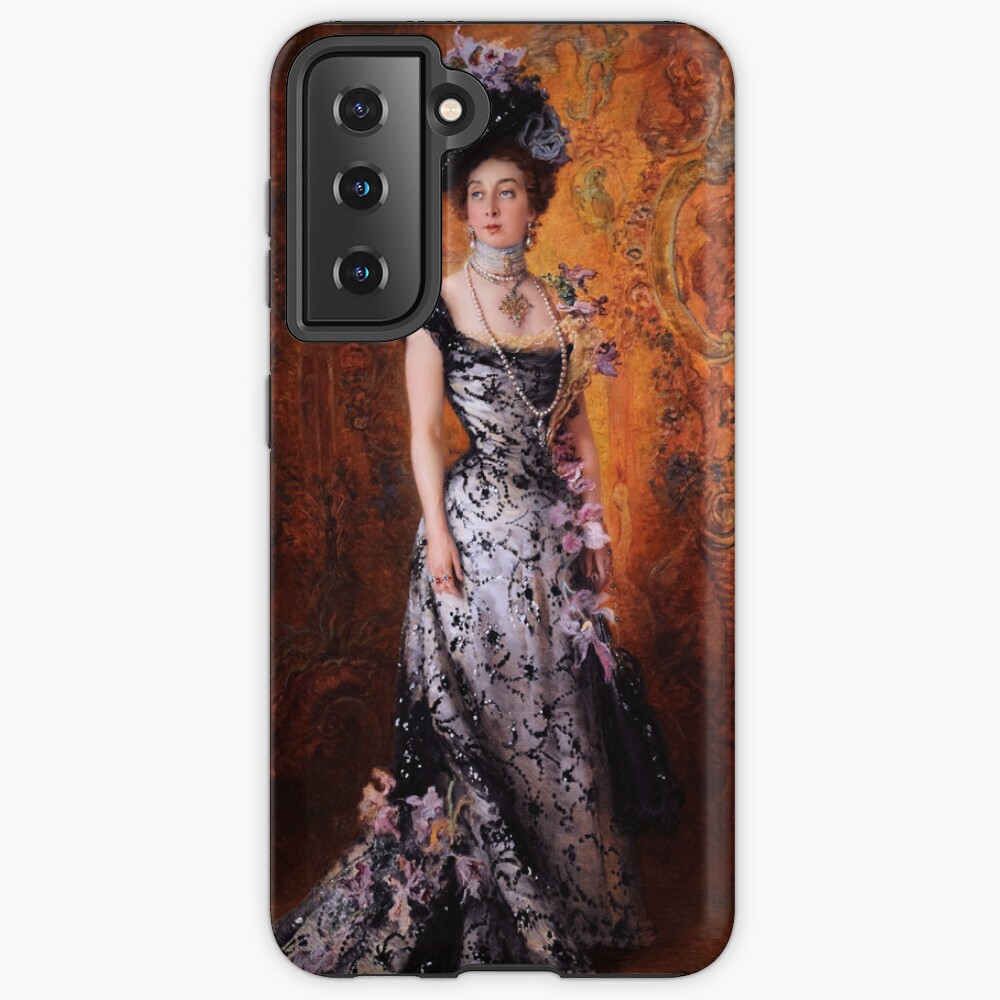
Portrait of Makovsky’s Third Wife Maria Alexeevna Matavtina (1869-1919) c1900 by Konstantin Makovsky (1839 – 1915); ag speisialú i bpictiúir Stairiúla na Rúise a thaispeánann radharc idéalach ar shaol na Rúise sna céadta bliain a chuaigh thart.
Réamhrá
Tá an “Portrait of Maria Alexeevna Matavtina” by Konstantin Makovsky is an exquisite example of late 19th-century Russian portraiture. Painted around the turn of the 20th century, this artwork portrays Makovsky’s third wife, Maria Alexeevna Matavtina, in a sumptuous gown against a backdrop of warm, opulent colors. The portrait reveals not only the refined beauty of the subject but also Makovsky’s exceptional skill in capturing the grace, galánta, and grandeur of Russian aristocracy during the Imperial era.
Clár na nÁbhar
An tÁbhar: Maria Alexeevna Matavtina
The portrait centers on Maria Alexeevna Matavtina, who was the third wife of renowned Russian artist Konstantin Makovsky. Rugadh i 1869, Maria became an influential figure in the Russian artistic and cultural circles of the late 19th and early 20th centuries. Known for her poised and refined demeanor, she is depicted in the portrait as a symbol of aristocratic grace and beauty. Her gentle expression conveys a sense of serenity and dignity, offering the viewer a glimpse into the life of Russian nobility during this period. Maria’s attire and accessories, as well as her posture, exude the confidence and sophistication expected of women of her social standing.
An Stíl agus an Teicníc
Makovsky’s work is celebrated for its realistic portrayal of his subjects, blending academic tradition with the Russian fascination for opulence and grandeur. The artist’s technique is a fine example of Russian realism, focusing on intricate details and the creation of a lifelike representation of his subjects. The brushwork in the portrait is meticulous and refined, especially in the rendering of Maria’s luxurious gown, the pearls draped across her neck, and the fine details of her jewelry. The texture of her gown, which appears to be made from satin or silk, is rendered with remarkable precision, highlighting the rich fabrics and the skillful use of light and shadow to suggest depth.
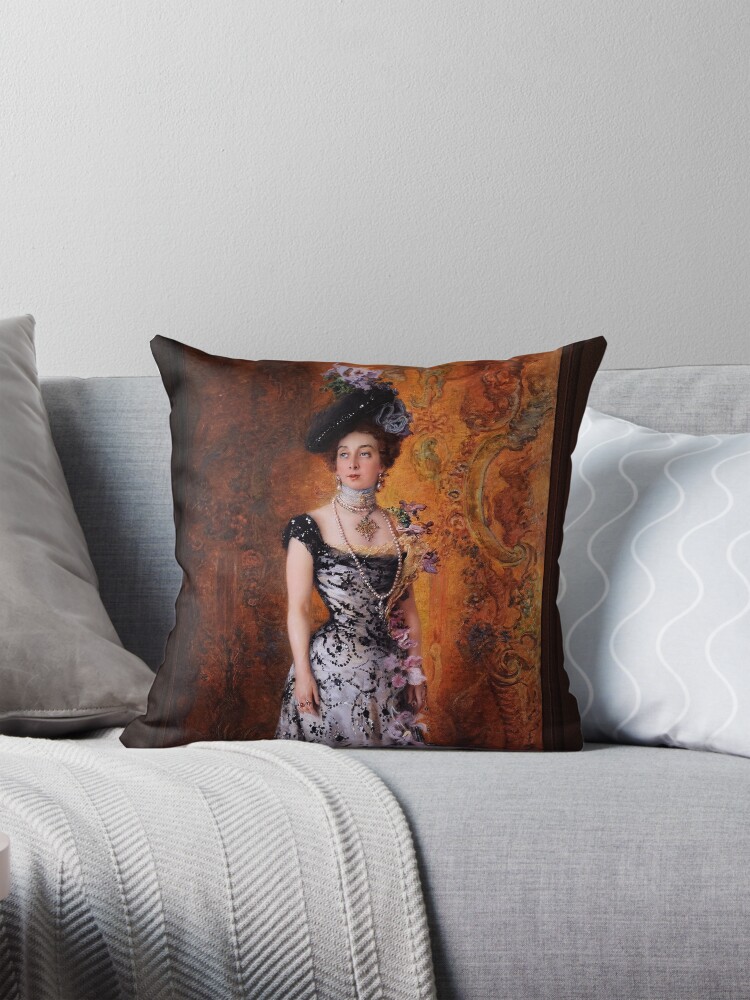
The background of the portrait is painted in a warm palette of oranges, donn, agus óir, creating a sense of intimacy and luxury. Meascann na dathanna go comhchuí, enhancing the subject’s presence in the painting. The warm tones of the backdrop serve to emphasize the elegance and poise of Maria, further highlighting her position within the elite class of Russian society.
An Feisteas agus Gabhálais
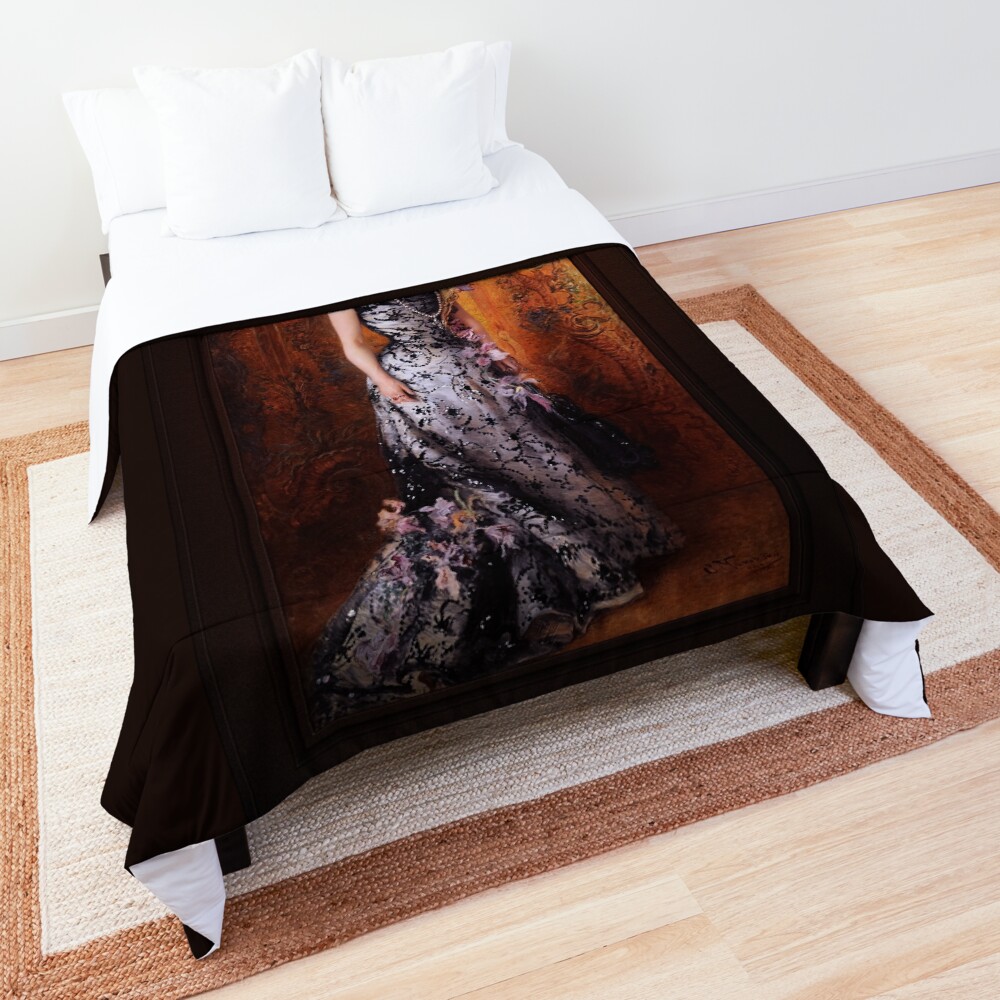
Maria’s gown is one of the most striking features of the portrait. An domhain, dark colors of the dress, accentuated with subtle light reflections, suggest a luxurious fabric like satin or velvet, offering a rich contrast to the lighter tones of her skin. The gown’s intricate black lace details, especially along the bodice and sleeves, are skillfully depicted, showcasing Makovsky’s attention to texture and his mastery of rendering fabric. The lace patterns evoke an air of formality and class, befitting a member of the Russian aristocracy.
Maria wears a lavish array of pearls and jewelry, including a pearl necklace that cascades elegantly around her neck. A large star-shaped brooch, likely of gold or silver, adorns her chest, drawing attention to her upper body and serving as a focal point in the composition. A cuid gruaige, styled in an intricate updo, is accessorized with a delicate floral arrangement, featuring shades of violet, adding a touch of softness to the overall look. These details not only speak to the high social status of the subject but also highlight the fashionable trends of the period.
An Socrú agus Cúlra
The background of the portrait is a harmonious blend of warm, toin earthy. A subtle floral pattern emerges from the textured surface, creating a sense of richness without distracting from the central figure. The organic motifs in the background are reminiscent of the decorative arts of the time, possibly inspired by the Rococo or Neoclassical influences that were popular in Russian interiors. The golden hues give the painting a sense of warmth, making Maria the undeniable focal point of the composition.
The background’s richness contrasts beautifully with the subject’s refined and poised figure. An socrú, although not overly detailed, evokes the luxurious world of Russian nobility, providing a fitting context for the subject’s elegant attire and aristocratic presence. The overall mood of the piece is one of intimate grandeur, where the viewer is invited to witness the opulence of Russian society through the lens of a poised and sophisticated aristocrat.
The Mood and Tone
The mood of the portrait is serene and contemplative, with an air of aristocratic dignity. Maria’s expression is calm and composed, her posture exuding grace and confidence. An bog, almost wistful look in her eyes suggests a deeper introspection, lending the portrait an emotional depth that contrasts with the grandeur of her attire. This emotional resonance adds complexity to the piece, offering more than just a visual portrayal of wealth and status.
The painting evokes a sense of nostalgia for the opulence and refinement of the Russian Imperial era. It serves as a historical artifact that captures not only the fashion and style of the time but also the societal values and norms that governed the lives of the Russian aristocracy. The combination of the subject’s regal bearing, the lush textures of her gown, and the warm, inviting background creates an atmosphere of refinement and sophistication.
Conclúid
Makovsky’s “Portrait of Maria Alexeevna Matavtina” is a stunning example of Russian portraiture at the turn of the 20th century. It showcases the artist’s ability to blend realism with a sense of grandeur, capturing the subject’s beauty and the luxurious lifestyle of Russian nobility. The detailed depiction of Maria’s attire, gabhálais, and the background of the painting invites the viewer into a world of opulence and aristocratic grace. Through this portrait, Makovsky immortalizes not only his beloved wife but also the rich cultural and artistic heritage of late Imperial Russia.
Portrait of Maria Alexeevna Matavtina is a remastered digital art old masters reproduction of a public domain image that is available as a priontáil chanbhás ar líne.
Faoin Ealaíontóir
Faisnéis Thíos Díorthaithe ó Wikipedia.org
Bhí Konstantin Makovsky ina phéintéir Rúiseach a raibh tionchar aige, cleamhnaithe leis an “Peredvizhniki (Fánaithe)”. Go leor dá phictiúir stairiúla, ar nós Faoi bhun na Corónach (1889) ar a dtugtar freisin The Russian Bride's Attire and Before the Wedding, léirigh radharc idéalach ar shaol na Rúise na gcéadta bliain roimhe sin. Is minic a mheastar é mar ionadaí d’ealaín Acadúil.
Rugadh Konstantin Makovsky i Moscó. Ba é a athair an figiúr ealaíne Rúiseach agus péintéir amaitéarach, Yegor Ivanovich Makovsky. Cumadóir ab ea a mháthair, agus bhí súil aici go leanfadh a mac lá amháin ina cois. Chuaigh a dheartháireacha níos óige Vladimir agus Nikolay agus a dheirfiúr Alexandra ar aghaidh chun bheith ina bpéintéirí freisin.
I 1851 Chuaigh Makovsky isteach i Scoil Péinteála Moscó, Dealbhóireacht agus Ailtireacht áit a raibh sé ar an mac léinn ab fhearr, na dámhachtainí uile atá ar fáil a fháil go héasca. Ba iad a mhúinteoirí Karl Bryullov agus Vasily Tropinin. Is féidir claontaí Makovsky ar an Rómánsachas agus éifeachtaí maisiúla a mhíniú trí thionchar Bryullov.
Cé gurbh í an ealaín a paisean, rinne sé machnamh freisin ar a raibh a mháthair ag iarraidh air a dhéanamh. D'imigh sé ar lorg cumadóirí a bhféadfadh sé tagairt a dhéanamh dóibh, agus chuaigh sé chun na Fraince ar dtús. Roimh, bhí grá riamh aige don cheol clasaiceach, agus d’éist sé le go leor píosaí. Ba mhinic a theastaigh uaidh go bhféadfadh sé an fonn a athrú, nó stíl cuid acu chun iad a dhéanamh níos taitneamhaí. Níos déanaí ina shaol tháinig sé i gcrích.
I 1858 Chuaigh Makovsky isteach san Acadamh Ealaíon Impiriúil i Saint Petersburg. Ó 1860 ghlac sé páirt i dtaispeántais an Acadaimh le pictiúir mar Curing of the Blind (1860) Maraíonn Gníomhairí an False Dmitry mac Boris Godunov (1862). I 1863 Bhí agóid ar siúl ag Makovsky agus trí mhac léinn déag eile in aghaidh shuíomh an Acadaimh d’ábhair ó mhiotaseolaíocht Chríoch Lochlann sa chomórtas do Bhonn Mór Óir an Acadaimh.; d'fhág siad go léir an acadamh gan dioplóma foirmiúil.
Tháinig Makovsky ina bhall de chomharchumann (airteil) ealaíontóirí faoi stiúir Ivan Kramskoi, go tipiciúil ag táirgeadh pictiúir Wanderers ar an saol laethúil (baintreach 1865, Díoltóir Scadán 1867, srl.). Ó 1870 bhí sé ar dhuine de bhunaitheoirí an Chumainn Taispeántais Ealaíne Taistil agus lean sé ag obair ar phictiúir a bhí dírithe ar an saol laethúil.. Thaispeáin sé a shaothair ag taispeántais an Acadaimh agus ag Taispeántais Ealaíne Taistil na nDaoine Wanderers.
Tháinig athrú suntasach ar a stíl tar éis taisteal go dtí an Éigipt agus an tSeirbia i lár na 1870idí. D'athraigh a spéiseanna ó fhadhbanna sóisialta agus síceolaíochta go fadhbanna ealaíne dathanna agus cruth.
Sna 1880idí rinneadh údar faiseanta de phortráidí agus de phictiúir stairiúla de. Ag Aonach an Domhain de 1889 i bPáras fuair sé an Bonn Óir Mór as a phictiúir Death of Ivan the Terrible, Breithiúnas Pháras, agus Demon agus Tamara. Bhí sé ar dhuine de na healaíontóirí Rúiseacha is mó a raibh meas agus ard-íoc air ag an am. Mheas go leor criticeoirí daonlathacha é mar renegade de na Wanderers’ idéalacha, ag táirgeadh (cosúil le Henryk Siemiradzki) oibreacha buailte ach éadomhain, agus feiceann daoine eile é mar réamhtheachtaí de chuid Impriseanachas na Rúise.
Maraíodh Makovsky i 1915 nuair a bhuail tram leictreach a charráiste capall i St Petersburg.