

Portrait of Maria Alexeevna Matavtina
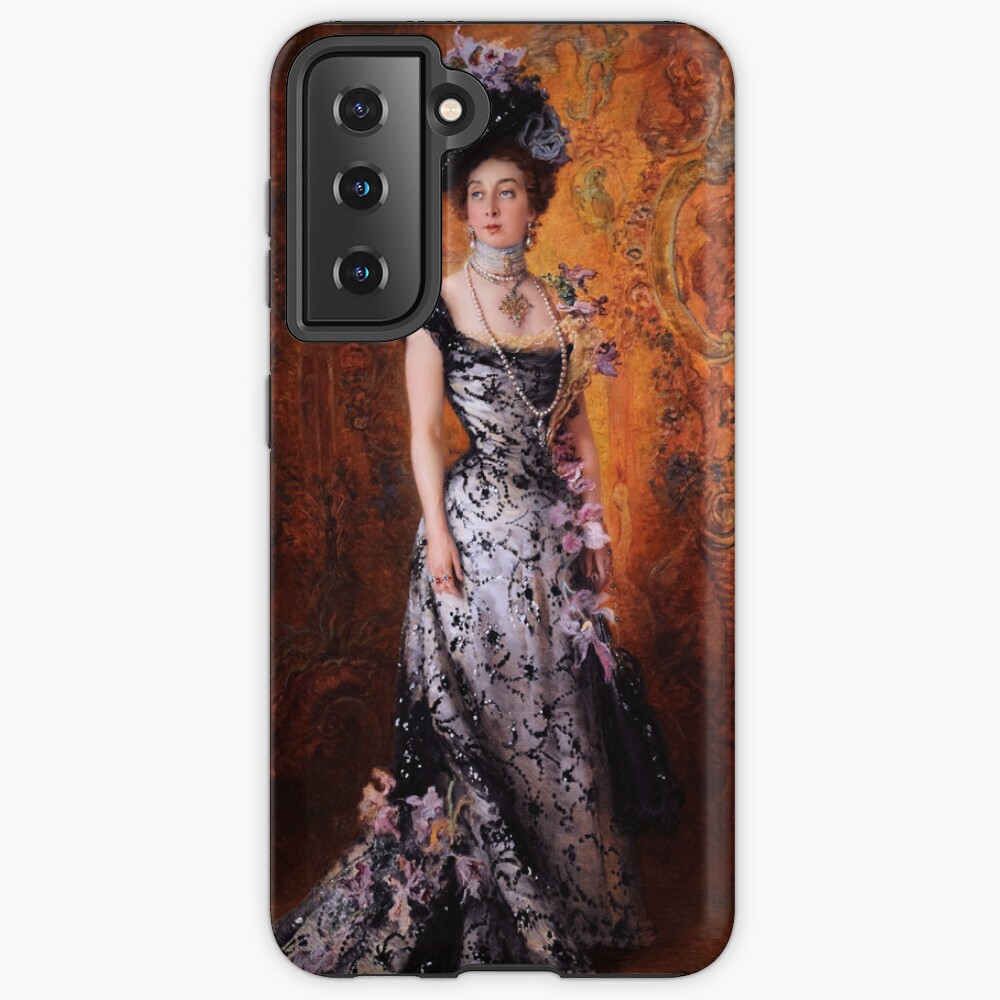
Portrait of Makovsky’s Third Wife Maria Alexeevna Matavtina (1869-1919) c1900 by Konstantin Makovsky (1839 – 1915); gespecialiseerd in Russische historische schilderijen die een geïdealiseerd beeld geven van het Russische leven in de afgelopen eeuwen.
Invoering
De “Portrait of Maria Alexeevna Matavtina” by Konstantin Makovsky is an exquisite example of late 19th-century Russian portraiture. Painted around the turn of the 20th century, this artwork portrays Makovsky’s third wife, Maria Alexeevna Matavtina, in a sumptuous gown against a backdrop of warm, opulent colors. The portrait reveals not only the refined beauty of the subject but also Makovsky’s exceptional skill in capturing the grace, elegantie, and grandeur of Russian aristocracy during the Imperial era.
Inhoudsopgave
Het onderwerp: Maria Alexeevna Matavtina
The portrait centers on Maria Alexeevna Matavtina, who was the third wife of renowned Russian artist Konstantin Makovsky. Geboren in 1869, Maria became an influential figure in the Russian artistic and cultural circles of the late 19th and early 20th centuries. Known for her poised and refined demeanor, she is depicted in the portrait as a symbol of aristocratic grace and beauty. Her gentle expression conveys a sense of serenity and dignity, offering the viewer a glimpse into the life of Russian nobility during this period. Maria’s attire and accessories, as well as her posture, exude the confidence and sophistication expected of women of her social standing.
De stijl en techniek
Makovsky’s work is celebrated for its realistic portrayal of his subjects, blending academic tradition with the Russian fascination for opulence and grandeur. The artist’s technique is a fine example of Russian realism, focusing on intricate details and the creation of a lifelike representation of his subjects. The brushwork in the portrait is meticulous and refined, especially in the rendering of Maria’s luxurious gown, the pearls draped across her neck, and the fine details of her jewelry. The texture of her gown, which appears to be made from satin or silk, is rendered with remarkable precision, highlighting the rich fabrics and the skillful use of light and shadow to suggest depth.
The background of the portrait is painted in a warm palette of oranges, bruin, en goud, creating a sense of intimacy and luxury. The colors blend harmoniously, enhancing the subject’s presence in the painting. The warm tones of the backdrop serve to emphasize the elegance and poise of Maria, further highlighting her position within the elite class of Russian society.
De kleding en accessoires
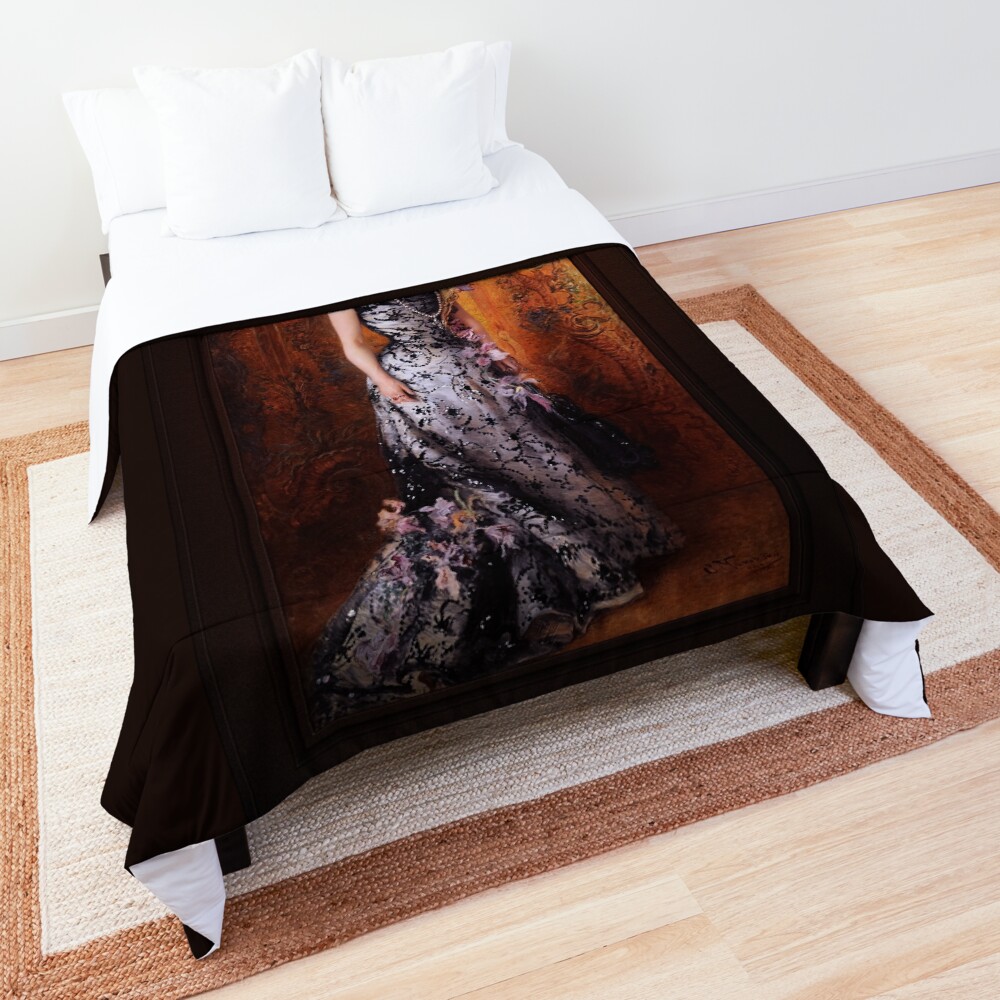
Maria’s gown is one of the most striking features of the portrait. The deep, dark colors of the dress, accentuated with subtle light reflections, suggest a luxurious fabric like satin or velvet, offering a rich contrast to the lighter tones of her skin. The gown’s intricate black lace details, especially along the bodice and sleeves, are skillfully depicted, showcasing Makovsky’s attention to texture and his mastery of rendering fabric. The lace patterns evoke an air of formality and class, befitting a member of the Russian aristocracy.
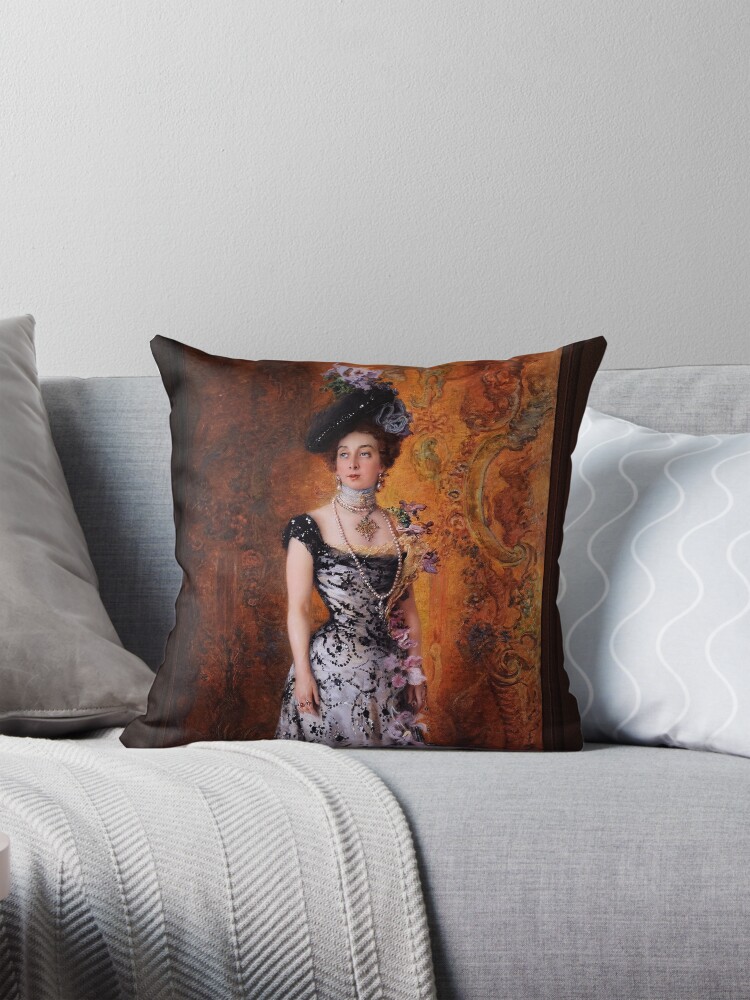
Maria wears a lavish array of pearls and jewelry, including a pearl necklace that cascades elegantly around her neck. A large star-shaped brooch, likely of gold or silver, adorns her chest, drawing attention to her upper body and serving as a focal point in the composition. Haar haar, styled in an intricate updo, is accessorized with a delicate floral arrangement, featuring shades of violet, adding a touch of softness to the overall look. These details not only speak to the high social status of the subject but also highlight the fashionable trends of the period.
The Setting and Background
The background of the portrait is a harmonious blend of warm, earthy tones. A subtle floral pattern emerges from the textured surface, creating a sense of richness without distracting from the central figure. The organic motifs in the background are reminiscent of the decorative arts of the time, possibly inspired by the Rococo or Neoclassical influences that were popular in Russian interiors. The golden hues give the painting a sense of warmth, making Maria the undeniable focal point of the composition.
The background’s richness contrasts beautifully with the subject’s refined and poised figure. De instelling, although not overly detailed, evokes the luxurious world of Russian nobility, providing a fitting context for the subject’s elegant attire and aristocratic presence. The overall mood of the piece is one of intimate grandeur, where the viewer is invited to witness the opulence of Russian society through the lens of a poised and sophisticated aristocrat.
The Mood and Tone
The mood of the portrait is serene and contemplative, with an air of aristocratic dignity. Maria’s expression is calm and composed, her posture exuding grace and confidence. De zachte, almost wistful look in her eyes suggests a deeper introspection, lending the portrait an emotional depth that contrasts with the grandeur of her attire. This emotional resonance adds complexity to the piece, offering more than just a visual portrayal of wealth and status.
The painting evokes a sense of nostalgia for the opulence and refinement of the Russian Imperial era. It serves as a historical artifact that captures not only the fashion and style of the time but also the societal values and norms that governed the lives of the Russian aristocracy. The combination of the subject’s regal bearing, the lush textures of her gown, en de warme, inviting background creates an atmosphere of refinement and sophistication.
Conclusie
Makovsky’s “Portrait of Maria Alexeevna Matavtina” is a stunning example of Russian portraiture at the turn of the 20th century. It showcases the artist’s ability to blend realism with a sense of grandeur, capturing the subject’s beauty and the luxurious lifestyle of Russian nobility. The detailed depiction of Maria’s attire, accessoires, and the background of the painting invites the viewer into a world of opulence and aristocratic grace. Via dit portret, Makovsky immortalizes not only his beloved wife but also the rich cultural and artistic heritage of late Imperial Russia.
Portrait of Maria Alexeevna Matavtina is a remastered digital art old masters reproduction of a public domain image that is available as a canvas print online.
Over de kunstenaar
Info hieronder afgeleid van Wikipedia.org
Konstantin Makovsky was een invloedrijke Russische schilder, aangesloten bij de “Peredvizhniki (Zwervers)”. Veel van zijn historische schilderijen, zoals onder de kroon (1889) ook bekend als de kleding van de Russische bruid en voor de bruiloft, toonde een geïdealiseerd beeld van het Russische leven van voorgaande eeuwen. Hij wordt vaak beschouwd als een vertegenwoordiger van de academische kunst.
Konstantin Makovsky werd geboren in Moskou. Zijn vader was de Russische kunstfiguur en amateurschilder, Yegor Ivanovitsj Makovsky. Zijn moeder was een componist, en ze hoopte dat haar zoon op een dag in haar voetsporen zou treden. Zijn jongere broers Vladimir en Nikolay en zijn zus Alexandra werden ook schilders.
In 1851 Makovsky ging naar de Moskouse schilderschool, Beeldhouwkunst en architectuur waar hij de beste student werd, gemakkelijk alle beschikbare onderscheidingen krijgen. Zijn leraren waren Karl Bryullov en Vasily Tropinin. Makovsky's neigingen tot romantiek en decoratieve effecten kunnen worden verklaard door de invloed van Bryullov.
Hoewel kunst zijn passie was, hij dacht ook na over wat zijn moeder had gewild dat hij deed. Hij ging op zoek naar componisten naar wie hij kon verwijzen, en ging eerst naar Frankrijk. Voordat, hij was altijd een liefhebber van klassieke muziek geweest, en luisterde naar veel stukken. Hij wenste vaak dat hij de melodie kon veranderen, of stijl van sommigen om ze leuker te maken. Later in zijn leven kwam het uit.
In 1858 Makovsky ging naar de keizerlijke kunstacademie in Sint-Petersburg. Van 1860 hij nam deel aan de tentoonstellingen van de Academie met schilderijen zoals Curing of the Blind (1860) en agenten van de valse Dmitry doden de zoon van Boris Godunov (1862). In 1863 Makovsky en dertien andere studenten hielden een protest tegen de instelling van onderwerpen uit de Scandinavische mythologie door de Academie in de competitie voor de Grote Gouden Medaille van de Academia; allen verlieten de academie zonder een formeel diploma.
Makovsky werd lid van een coöperatie (artel) van kunstenaars onder leiding van Ivan Kramskoi, typisch het produceren van Wanderers-schilderijen over het dagelijks leven (Weduwe 1865, Haring-verkoper 1867, enz.). Van 1870 hij was een van de oprichters van de Society for Traveling Art Exhibitions en bleef werken aan schilderijen die gewijd waren aan het dagelijks leven. Hij exposeerde zijn werken op zowel de Academia-tentoonstellingen als de Travelling Art Exhibitions of the Wanderers.
Een belangrijke verandering in zijn stijl vond plaats na een reis naar Egypte en Servië in het midden van de jaren 1870. Zijn interesses veranderden van sociale en psychologische problemen naar de artistieke problemen van kleur en vorm.
In de jaren 1880 werd hij een modieuze auteur van portretten en historische schilderijen. Op de Wereldtentoonstelling van 1889 in Parijs ontving hij de Grote Gouden Medaille voor zijn schilderijen Dood van Ivan de Verschrikkelijke, Het oordeel van Parijs, en Demon en Tamara. Hij was een van de meest gewaardeerde en best betaalde Russische kunstenaars van die tijd. Veel democratische critici beschouwden hem als een afvallige van de Wanderers’ idealen, produceren (zoals Henryk Siemiradzki) opvallende maar oppervlakkige werken, terwijl anderen hem zien als een voorloper van het Russische impressionisme.
Makovsky werd vermoord in 1915 toen zijn paardenkoets werd aangereden door een elektrische tram in Sint-Petersburg.