

Portrait of Maria Alexeevna Matavtina
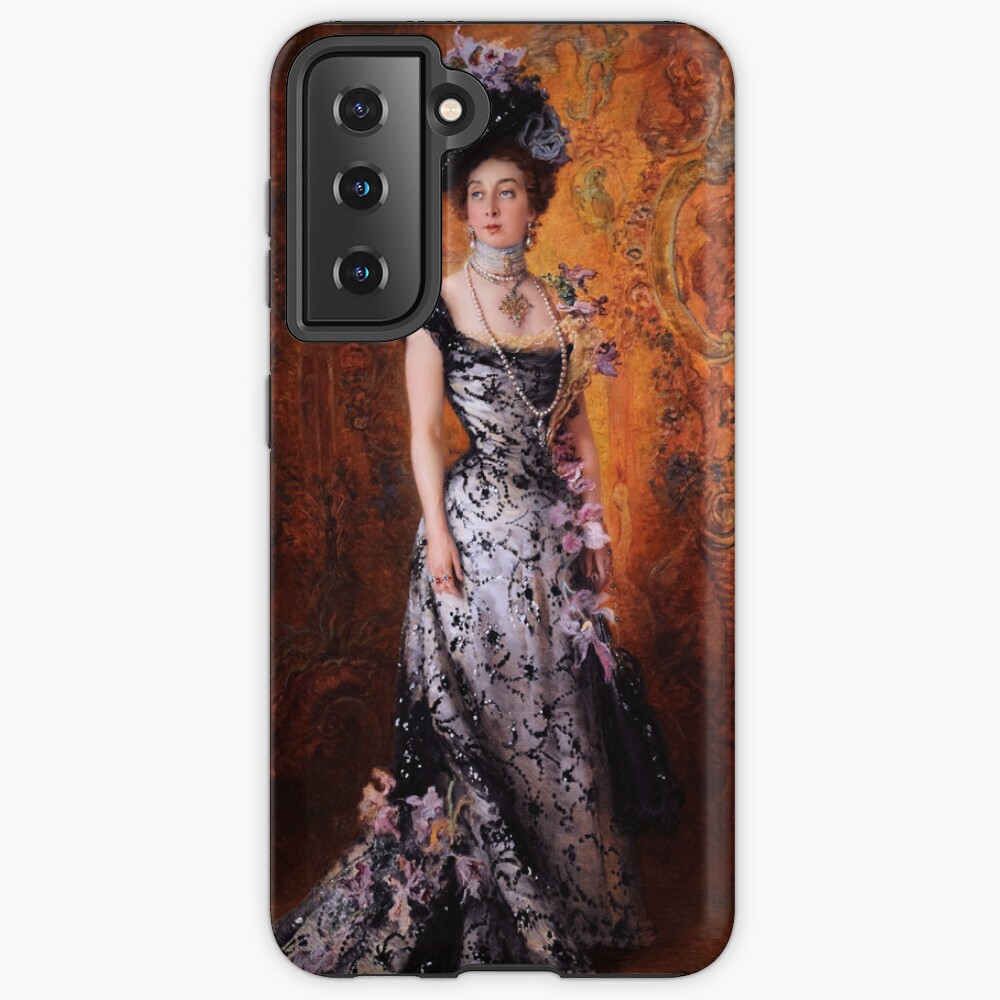
Portrait of Makovsky’s Third Wife Maria Alexeevna Matavtina (1869-1919) c1900 by Konstantin Makovsky (1839 – 1915); specialiserad på ryska historiska målningar som visar en idealiserad syn på det ryska livet under tidigare århundraden.
Introduktion
De “Portrait of Maria Alexeevna Matavtina” by Konstantin Makovsky is an exquisite example of late 19th-century Russian portraiture. Painted around the turn of the 20th century, this artwork portrays Makovsky’s third wife, Maria Alexeevna Matavtina, in a sumptuous gown against a backdrop of warm, opulent colors. The portrait reveals not only the refined beauty of the subject but also Makovsky’s exceptional skill in capturing the grace, elegans, and grandeur of Russian aristocracy during the Imperial era.
Innehållsförteckning
Ämnet: Maria Alexeevna Matavtina
The portrait centers on Maria Alexeevna Matavtina, who was the third wife of renowned Russian artist Konstantin Makovsky. Född i 1869, Maria became an influential figure in the Russian artistic and cultural circles of the late 19th and early 20th centuries. Known for her poised and refined demeanor, she is depicted in the portrait as a symbol of aristocratic grace and beauty. Her gentle expression conveys a sense of serenity and dignity, offering the viewer a glimpse into the life of Russian nobility during this period. Maria’s attire and accessories, as well as her posture, exude the confidence and sophistication expected of women of her social standing.
Stilen och tekniken
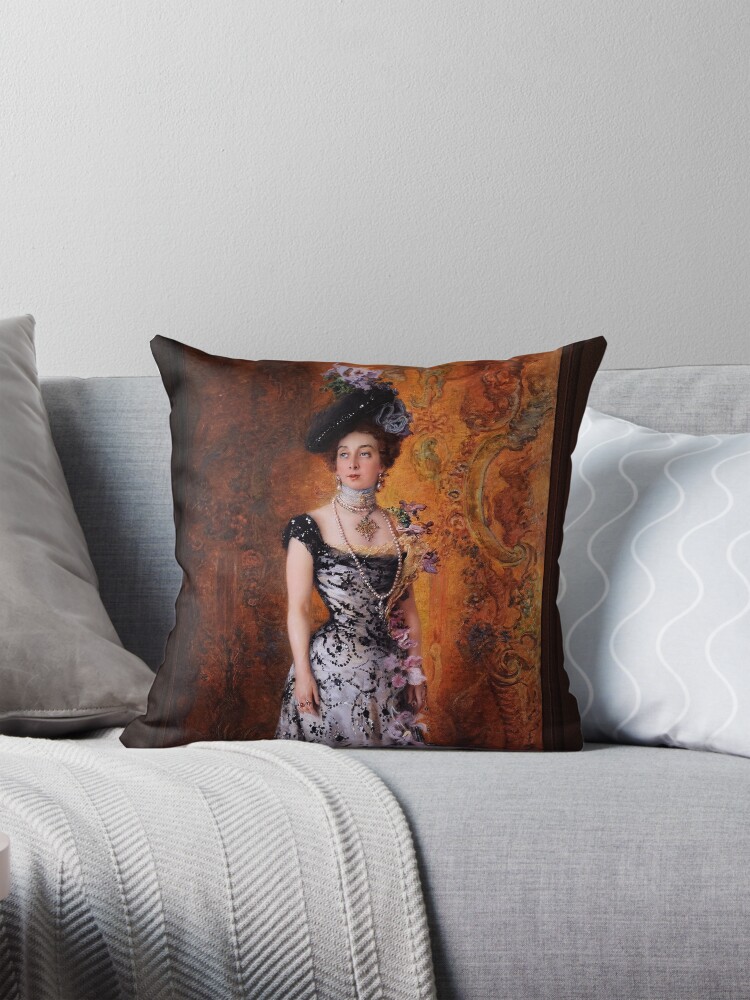
Makovsky’s work is celebrated for its realistic portrayal of his subjects, blending academic tradition with the Russian fascination for opulence and grandeur. The artist’s technique is a fine example of Russian realism, focusing on intricate details and the creation of a lifelike representation of his subjects. The brushwork in the portrait is meticulous and refined, especially in the rendering of Maria’s luxurious gown, the pearls draped across her neck, and the fine details of her jewelry. The texture of her gown, which appears to be made from satin or silk, is rendered with remarkable precision, highlighting the rich fabrics and the skillful use of light and shadow to suggest depth.
The background of the portrait is painted in a warm palette of oranges, bruna, och guld, creating a sense of intimacy and luxury. The colors blend harmoniously, enhancing the subject’s presence in the painting. The warm tones of the backdrop serve to emphasize the elegance and poise of Maria, further highlighting her position within the elite class of Russian society.
The Attire and Accessories
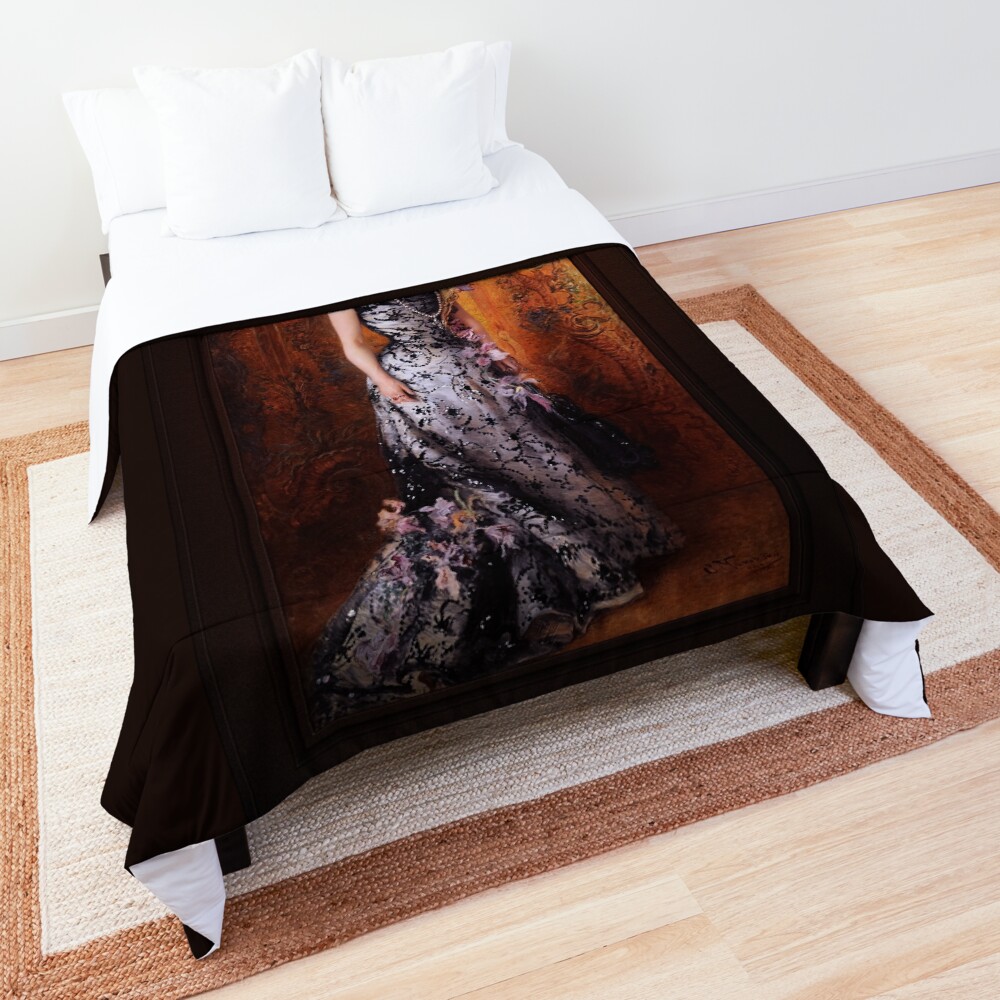
Maria’s gown is one of the most striking features of the portrait. Djupet, dark colors of the dress, accentuated with subtle light reflections, suggest a luxurious fabric like satin or velvet, offering a rich contrast to the lighter tones of her skin. The gown’s intricate black lace details, especially along the bodice and sleeves, are skillfully depicted, showcasing Makovsky’s attention to texture and his mastery of rendering fabric. The lace patterns evoke an air of formality and class, befitting a member of the Russian aristocracy.
Maria wears a lavish array of pearls and jewelry, including a pearl necklace that cascades elegantly around her neck. A large star-shaped brooch, likely of gold or silver, adorns her chest, drawing attention to her upper body and serving as a focal point in the composition. Hennes hår, styled in an intricate updo, is accessorized with a delicate floral arrangement, featuring shades of violet, adding a touch of softness to the overall look. These details not only speak to the high social status of the subject but also highlight the fashionable trends of the period.
Inställningen och bakgrunden
The background of the portrait is a harmonious blend of warm, jordnära toner. A subtle floral pattern emerges from the textured surface, creating a sense of richness without distracting from the central figure. The organic motifs in the background are reminiscent of the decorative arts of the time, possibly inspired by the Rococo or Neoclassical influences that were popular in Russian interiors. The golden hues give the painting a sense of warmth, making Maria the undeniable focal point of the composition.
The background’s richness contrasts beautifully with the subject’s refined and poised figure. Inställningen, although not overly detailed, evokes the luxurious world of Russian nobility, providing a fitting context for the subject’s elegant attire and aristocratic presence. The overall mood of the piece is one of intimate grandeur, where the viewer is invited to witness the opulence of Russian society through the lens of a poised and sophisticated aristocrat.
The Mood and Tone
The mood of the portrait is serene and contemplative, with an air of aristocratic dignity. Maria’s expression is calm and composed, her posture exuding grace and confidence. Den mjuka, almost wistful look in her eyes suggests a deeper introspection, lending the portrait an emotional depth that contrasts with the grandeur of her attire. This emotional resonance adds complexity to the piece, offering more than just a visual portrayal of wealth and status.
The painting evokes a sense of nostalgia for the opulence and refinement of the Russian Imperial era. It serves as a historical artifact that captures not only the fashion and style of the time but also the societal values and norms that governed the lives of the Russian aristocracy. The combination of the subject’s regal bearing, the lush textures of her gown, och det varma, inviting background creates an atmosphere of refinement and sophistication.
Slutsats
Makovsky’s “Portrait of Maria Alexeevna Matavtina” is a stunning example of Russian portraiture at the turn of the 20th century. It showcases the artist’s ability to blend realism with a sense of grandeur, capturing the subject’s beauty and the luxurious lifestyle of Russian nobility. The detailed depiction of Maria’s attire, tillbehör, and the background of the painting invites the viewer into a world of opulence and aristocratic grace. Through this portrait, Makovsky immortalizes not only his beloved wife but also the rich cultural and artistic heritage of late Imperial Russia.
Portrait of Maria Alexeevna Matavtina is a remastered digital art old masters reproduction of a public domain image that is available as a canvastavla online.
Om konstnären
Info nedan härledd från Wikipedia.org
Konstantin Makovsky var en inflytelserik rysk målare, anslutna till “Peredvizhniki (Vandrare)”. Många av hans historiska målningar, såsom Beneath the Crown (1889) även känd som The Russian Bride's Attire och Before the Wedding, visade en idealiserad syn på det ryska livet under tidigare århundraden. Han anses ofta vara en representant för akademisk konst.
Konstantin Makovsky föddes i Moskva. Hans far var den ryska konstfiguren och amatörmålaren, Yegor Ivanovich Makovsky. Hans mamma var en kompositör, och hon hoppades att hennes son en dag skulle följa i hennes fotspår. Hans yngre bröder Vladimir och Nikolay och hans syster Alexandra blev också målare.
I 1851 Makovsky gick in i Moskvaskolan för måleri, Skulptur och arkitektur där han blev toppstudent, enkelt få alla tillgängliga utmärkelser. Hans lärare var Karl Bryullov och Vasily Tropinin. Makovskys böjelser för romantik och dekorativa effekter kan förklaras av Bryullovs inflytande.
Även om konsten var hans passion, han funderade också på vad hans mamma hade velat att han skulle göra. Han gav sig iväg för att leta efter kompositörer han kunde hänvisa till, och åkte först till Frankrike. Innan, han hade alltid varit en älskare av klassisk musik, och lyssnade på många stycken. Han önskade ofta att han kunde ändra låten, eller stil på några av dem för att göra dem roligare. Senare i hans liv blev det verklighet.
I 1858 Makovsky gick in på Imperial Academy of Arts i Sankt Petersburg. Från 1860 han deltog i Akademiens utställningar med målningar som Curing of the Blind (1860) och Agenter of the False Dmitry dödar Boris Godunovs son (1862). I 1863 Makovsky och tretton andra studenter höll en protest mot Akademins inställning av ämnen från skandinavisk mytologi i tävlingen om den stora guldmedaljen för akademin; alla lämnade akademin utan formellt diplom.
Makovsky blev medlem i ett kooperativ (artel) av konstnärer under ledning av Ivan Kramskoi, producerar typiskt Wanderers-målningar i vardagen (Änka 1865, Sill-säljare 1867, etc.). Från 1870 han var en av grundarna av Society for Travelling Art Exhibitions och fortsatte att arbeta med målningar som ägnas åt vardagslivet. Han ställde ut sina verk på både Academia-utställningarna och Vandrarnas resande konstutställningar.
En betydande förändring i hans stil inträffade efter att ha rest till Egypten och Serbien i mitten av 1870-talet. Hans intressen förändrades från sociala och psykologiska problem till de konstnärliga problemen med färger och form.
På 1880-talet blev han en fashionabel författare av porträtt och historiska målningar. På världsutställningen i 1889 i Paris fick han den stora guldmedaljen för sina målningar Ivan den förskräckliges död, Parisdomen, och Demon och Tamara. Han var en av den tidens mest uppskattade och högt betalda ryska artister. Många demokratiska kritiker ansåg honom som en överlöpare från Wanderers’ ideal, producerar (som Henryk Siemiradzki) slående men ytliga verk, medan andra ser honom som en föregångare till den ryska impressionismen.
Makovsky dödades i 1915 när hans häst och vagn blev påkörd av en elektrisk spårvagn i Sankt Petersburg.