

Portrait Of Miss Dorothea Gwladys Tombs c1889
Le “Portrait de Mlle Dorothea Gwladys tombes, Later Lady Butler,” créé dans 1889 by British painter Archibald Stuart-Wortley (1849 – 1905), is a captivating example of late 19th-century portraiture. This work combines both realism and classic portraiture techniques, offering a glimpse into the fashionable and dignified elegance of the time. Le sujet de la peinture, Dorothea Gwladys Tombs, is depicted with a regal and composed expression that reflects both her societal standing and personal character. This portrait is a study in both form and context, capturing a moment in time where fashion, art, and the nuances of individual personality converge.
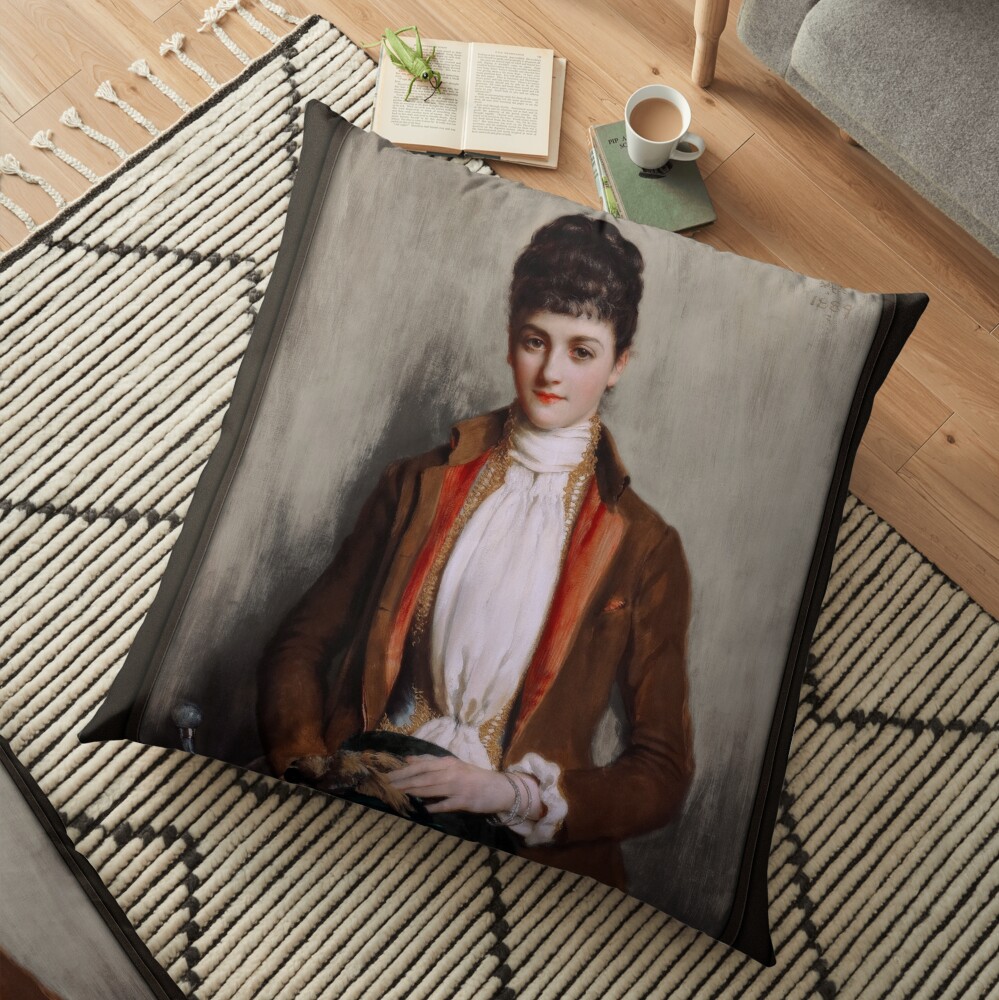
Table des matières
Le sujet
The central figure in the portrait est Miss Dorothea Gwladys Tombs, qui deviendra plus tard Lady Butler, un témoignage de sa position sociale élevée. Elle porte la tenue qui convient à une femme de la haute société à l'époque victorienne.. Sa posture est équilibrée, avec une expression sereine qui transmet la grâce et la confiance. Elle est positionnée légèrement à gauche de la composition, attirant le regard du spectateur directement sur elle. Ses yeux marrons, bien que doux et contemplatif, sont fermes dans leur regard, suggérant l'intelligence et la confiance en soi.
Les cheveux châtain foncé de Dorothea sont coiffés dans un chignon élégant, séparés proprement et enroulés à la manière typique de l'époque victorienne. Quelques vrilles délicates tombent gracieusement près de son visage, encadrant ses traits avec des courbes douces. L'artiste a habilement mis en valeur la texture subtile et la brillance de ses cheveux, utiliser de fins coups de pinceau pour faire ressortir sa profondeur et son volume.
The Clothing and Accessories
Sa tenue vestimentaire est un autre point central du portrait, offrant un aperçu des tendances de la mode de l'époque. Dorothea porte une veste marron, taillé avec une précision exquise pour s'adapter à sa silhouette, la richesse et la texture du tissu presque tangibles dans sa représentation. La veste est complétée par un chemisier blanc à col montant, sécurisé par un délicat col en dentelle. La combinaison contrastée des tons brun foncé et blanc doux crée un équilibre harmonieux au sein de la composition.. La veste est ornée d'une bordure dorée ornée, qui reflète subtilement la lumière et ajoute une touche d'opulence à l'ensemble de la tenue.
Entre ses mains, Dorothea tient un chapeau noir orné d'un petit oiseau, éventuellement un faucon ou un oiseau de proie similaire. Le chapeau, made of felt or a similar material, suggests her connection to the outdoors, and perhaps alludes to a personal interest or hobby. The bird perched delicately atop the hat may also symbolize a certain nobility or gentility associated with the aristocracy of the time. The presence of such an accessory lends a sense of individuality to the portrait, as it suggests that Dorothea was not only a woman of beauty and refinement but also someone with unique tastes and interests.
Le contexte et le cadre
The background of the portrait is kept intentionally simple, with soft gray tones that create a sense of neutrality, allowing the subject to stand out. The muted backdrop serves to direct the viewer’s attention toward Dorothea herself, avoiding any distractions from the subject’s presence. The texture of the background is rougher and more abstract than the refined details of the figure, providing a striking contrast between the smooth, polished skin of Dorothea and the roughness of the surrounding space.
While the setting is ambiguous, there is an underlying sense of refinement that is carried through the composition. The choice of colors—neutral and subtle—speaks to the reserved nature of Victorian portraiture, where the focus remained on the individual, rather than the surroundings. The simplicity of the backdrop allows the viewer to focus on the sitter’s personality, tenue, et l'équilibre.
Technique and Style
Stuart-Wortley employs a realistic style, emphasizing fine detail and the textures of his subject’s attire and surroundings. His technique showcases meticulous brushwork, particularly in the rendering of fabric and hair, donner au portrait une qualité réaliste. The subtle play of light and shadow is particularly notable, as it reveals the texture of Dorothea’s skin and the fabric of her clothing with remarkable precision.
The artist’s attention to detail is not only evident in the rendering of textures but also in the way he captures the essence of his subject’s demeanor. The posture and expression of Dorothea reveal her social standing without the need for extravagant symbolism or overt opulence. The muted colors and composition underscore the elegance of the portrait, with each stroke contributing to the overall harmony of the piece. The contrast between Dorothea’s graceful figure and the simplicity of the background enhances the sense of nobility and refinement.
Thème et humeur
The mood of the portrait is dignified, evoking a sense of respect and admiration for the subject. Dorothea’s calm, serene expression is indicative of her composure and social grace. The painting reflects the values of the late Victorian era, where societal expectations of women were rooted in decorum, élégance, et la retenue. The choice of subdued colors and the emphasis on the sitter’s poised demeanor reinforce the theme of aristocratic refinement.
The inclusion of the hat with the bird suggests a theme of balance between elegance and personal interests, highlighting the complexity of Dorothea as a person who embodies both social grace and individuality. L'ambiance est à une confiance tranquille, a reflection of the societal roles that women of Dorothea’s class were expected to fulfill, while still subtly hinting at her personal character and interests outside the public eye.
Conclusion
En conclusion, les “Portrait de Mlle Dorothea Gwladys tombes, Later Lady Butler” by Archibald Stuart-Wortley is a masterful example of 19th-century British portraiture. The artist captures not only the physical likeness of the subject but also her character, humeur, and the societal expectations of her time. Grâce à une attention particulière aux détails, composition, et techniques, Stuart-Wortley brings Dorothea to life, portraying her with dignity and grace. The portrait remains a testament to both the artist’s skill and the cultural ideals of the late Victorian period.
Il s'agit d'une reproduction de maîtres anciens d'art numérique remasterisée d'une image du domaine public qui est disponible sous forme d'impression sur toile en ligne.