

Portrait of Mlle Lange as Danae: A Neoclassical Reverie
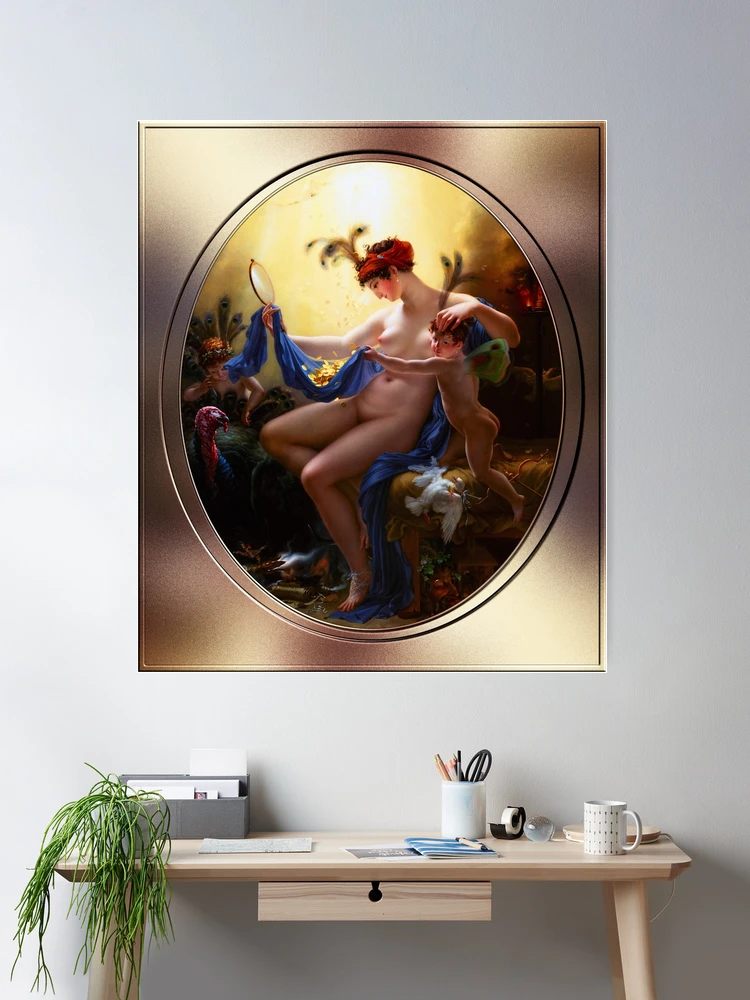
Anne-Louis Girodet de Roussy-Trioson’s “Portrait of Mlle Lange as Danae,” painted around 1799, is a captivating example of late Neoclassicism infused with Romantic sensibilities. The work resides within an oval frame, immediately establishing a sense of intimacy and contained narrative. It depicts the mythological figure Danae, known in Greek legend for being impregnated by Zeus who descended upon her as golden rain. Girodet’s interpretation moves beyond simple illustration; it’s a carefully constructed tableau exploring themes of beauty, transformace, and the interplay between the mortal and divine realms. The painting is currently held within the collection of the Musée du Louvre, Paříž.
Obsah
Složení struktury & Framing
The oval format itself is significant. It evokes the shape of a looking glass or mirror, subtly hinting at Danae’s self-reflection and vanity, but also alluding to the act of seeing and being seen – a key element in portraiture. The composition is densely packed with figures and symbolic elements, creating a rich visual experience. Danae occupies the central space, her form bathed in an ethereal light emanating from above.
This light source isn’t merely illuminating; it’s actively shaping the scene, highlighting Danae’s skin and drawing attention to the golden shower that is implied within the upper portion of the painting. The surrounding figures – putti (cherubic infants) and a dove – contribute to the overall atmosphere of mythological fantasy.
Danae: Figure & Pose
Mlle. Touha, the model for this portrait, embodies Danae with an arresting combination of vulnerability and composure. She is depicted seated on a draped cushion, partially covered by a blue cloth that reveals her upper body. Her pose is relaxed yet graceful; she leans slightly forward, holding a hand mirror to examine herself.
This gesture introduces a layer of introspection and self-awareness into the mythological narrative. The mirror isn’t merely an accessory; it acts as a portal, reflecting not just Danae’s physical appearance but also hinting at the transformative power that is about to befall her. Her expression is serene, almost contemplative, suggesting a quiet acceptance of her fate.
Symbolic Elements & Mythology
The painting is replete with symbolic details drawn from Greek mythology and Neoclassical artistic conventions. The golden rain, though not explicitly depicted as individual droplets, is suggested by the radiant light emanating from above and the scattered gold coins at Danae’s feet. These coins represent Zeus’s transformation into a shower of gold, fulfilling the prophecy that she would conceive a child through divine intervention.
The putti flanking Danae are playful yet watchful, their presence reinforcing the sense of a fantastical realm. One holds a peacock feather, a symbol often associated with Juno, the jealous wife of Zeus, adding an element of potential conflict and foreshadowing. A dove, traditionally representing peace and purity, rests near her feet, perhaps signifying hope or divine favor. The lush foliage in the background further enhances the idyllic setting, creating a sense of secluded paradise.
Paleta barev & Osvětlení
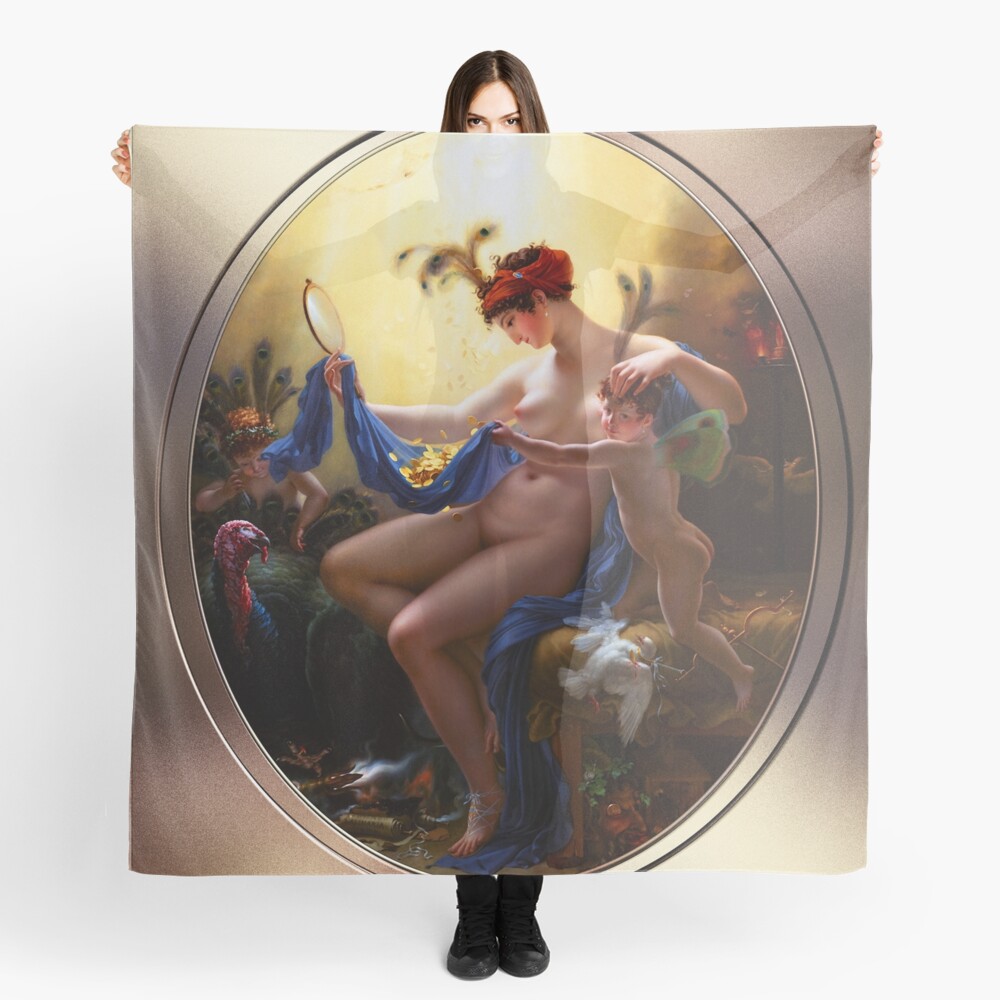
Girodet’s masterful use of color contributes significantly to the painting’s impact. The dominant palette is warm and luminous, with soft yellows, zlata, and creams dominating the upper portion of the canvas. These colors evoke a sense of divine radiance and otherworldly beauty. Na rozdíl od toho, the lower section features cooler tones – blues, zelenina, and browns – which ground the scene in a more earthly realm.
The lighting is dramatic and carefully controlled; it’s not naturalistic but rather serves to highlight key elements and create a mood of reverie. The chiaroscuro effect (the use of strong contrasts between light and dark) emphasizes Danae’s form and draws the viewer’s eye towards her face, making her the undeniable focal point of the composition.
Neoklasicistní & Romantic Influences
“Portrét slečny. Lange jako Danae” exemplifies the transition from strict Neoclassicism to the emerging Romantic style prevalent in late 18th-century France. While adhering to Neoclassical principles such as idealized forms and classical subject matter, Girodet introduces elements that foreshadow Romanticism – a heightened emotionality, a focus on individual experience, and an appreciation for the sublime.
Dramatické osvětlení, the lush background, and the introspective gaze of Danae all contribute to this shift in artistic sensibility. The painting is not merely a depiction of a mythological scene; it’s a psychological portrait that explores themes of beauty, fate, and transformation with remarkable depth and nuance.
O uměleckých dílech
Tento satirický portrét slečny Langeové, talentovaná herečka své doby, známá svou krásou a bohatými milenci; vytvořil Girodet, když mu odmítla zaplatit za její portrét, který si objednala.
Portrét slečny. Lange jako Danae je druhým portrétem, který o ní v hněvu vytvořil, který ji zobrazuje jako mytologickou Danae (starověkého Řecka), dcera a jediné dítě krále Arrisa Acrisia a jeho manželky královny Eurydiky; jako marný, cizoložná a hrabivá žena.
Je ukázána, jak chamtivě chytá zlaté mince, které na ni stříkají (zlato představuje Dia, jak se proměnil ve spršku zlata); a zároveň ukazuje velkou baculatou krůtu na sobě snubní prsten, což představuje muže, kterého si vzala za své bohatství a postavu.
Lze také vidět hrdličky, které se zdají být mučeny, a hlava muže pod postelí se zlatou mincí v oku (možná je to jeden z jejích bohatých milenců).
Umělec bio z Wikipedia.org
Girodet byl francouzský malíř a žák Jacques-Louis David, který se účastnil raného romantického hnutí zahrnutím prvků erotiky do svých obrazů. Girodet je připomínán pro jeho přesný a jasný styl a pro jeho obrazy členů napoleonské rodiny.
Girodet se narodil v Montargis. Oba jeho rodiče zemřeli, když byl mladý dospělý. Péče o jeho dědictví a vzdělání padla na jeho opatrovníka, prominentní lékař jménem Benoît-François Trioson, “dámy-doktorko”, který ho později adoptoval. Oba muži zůstali po celý život blízko a Girodet přijal příjmení Trioson 1812.
Ve škole nejprve studoval architekturu a věnoval se vojenské kariéře. Přešel na studium malby pod učitelem jménem Luquin a poté nastoupil do školy Jacques-Louis David.
Ve věku 22 úspěšně soutěžil o cenu Prix de Rome s obrazem Příběhu Josefa a jeho bratří.
Z 1789 na 1793 žil v Itálii a zatímco v Římě namaloval své Hippokratovy odmítající les dárky d’Artaxerxes a Endymion-spící (nyní v Louvru), dílo, které si získalo velký ohlas v Salonu 1793 a zajistil si pověst vedoucího malíře ve francouzské škole.
Jednou se vrátil do Francie, Girodet namaloval mnoho portrétů, včetně některých členů rodiny Bonaparte. v 1806, v soutěži se Sabines of David, vystavoval svou Povodňovou scénu (Louvre), která byla oceněna desetiletou cenou.
v 1808 produkoval Kapitulu Vídně a Atalu do hrobky, dílo, které si získalo obrovskou popularitu, svou šťastnou volbou tématu, Román Françoise-Reného de Chateaubrianda Atala, poprvé publikováno v 1801; a jeho pozoruhodný odklon od teatrálnosti Girodetova obvyklého způsobu. Ke svému divadelnímu stylu by se vrátil v La Révolte du Caire (1810).
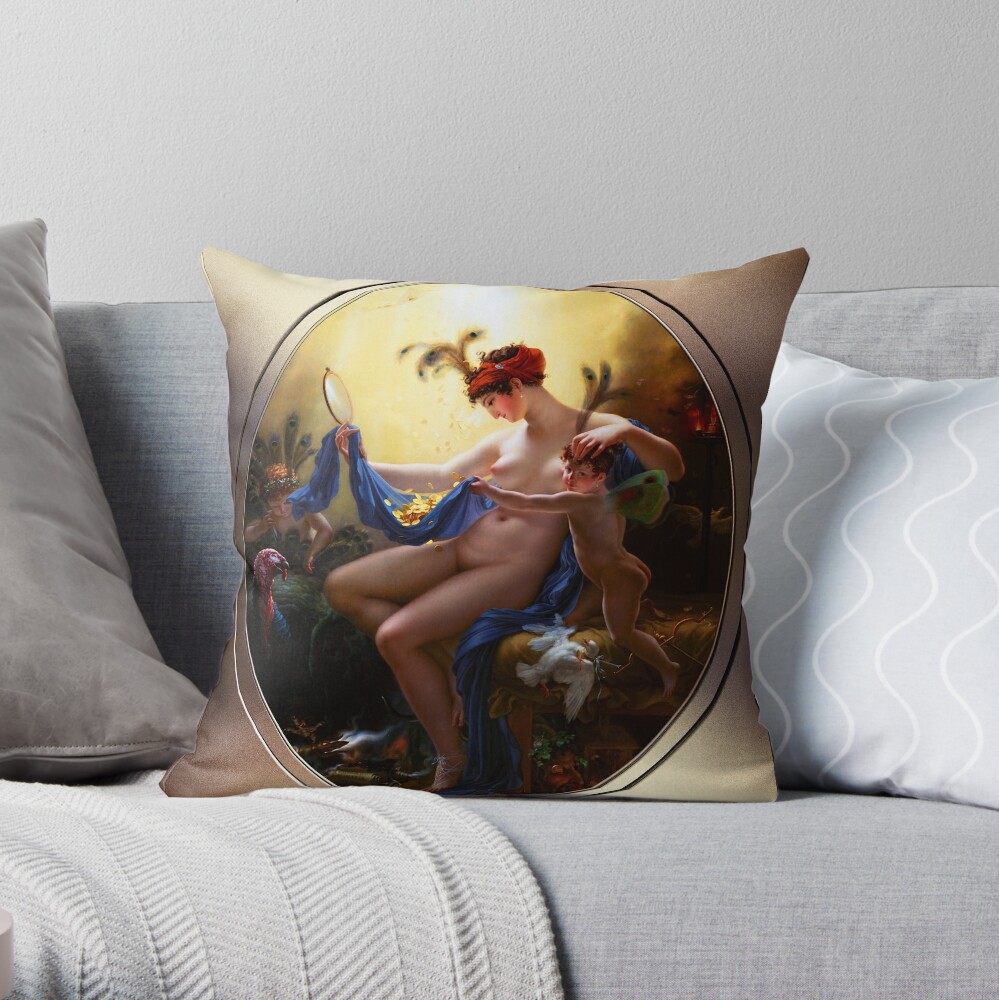
Portrét slečny. Lange as Danae is a retouched digital art old masters reproduction of a public domain image that is available online as an akryl, plátno, metal and wood print.