

Retrat de la princesa Alexandra
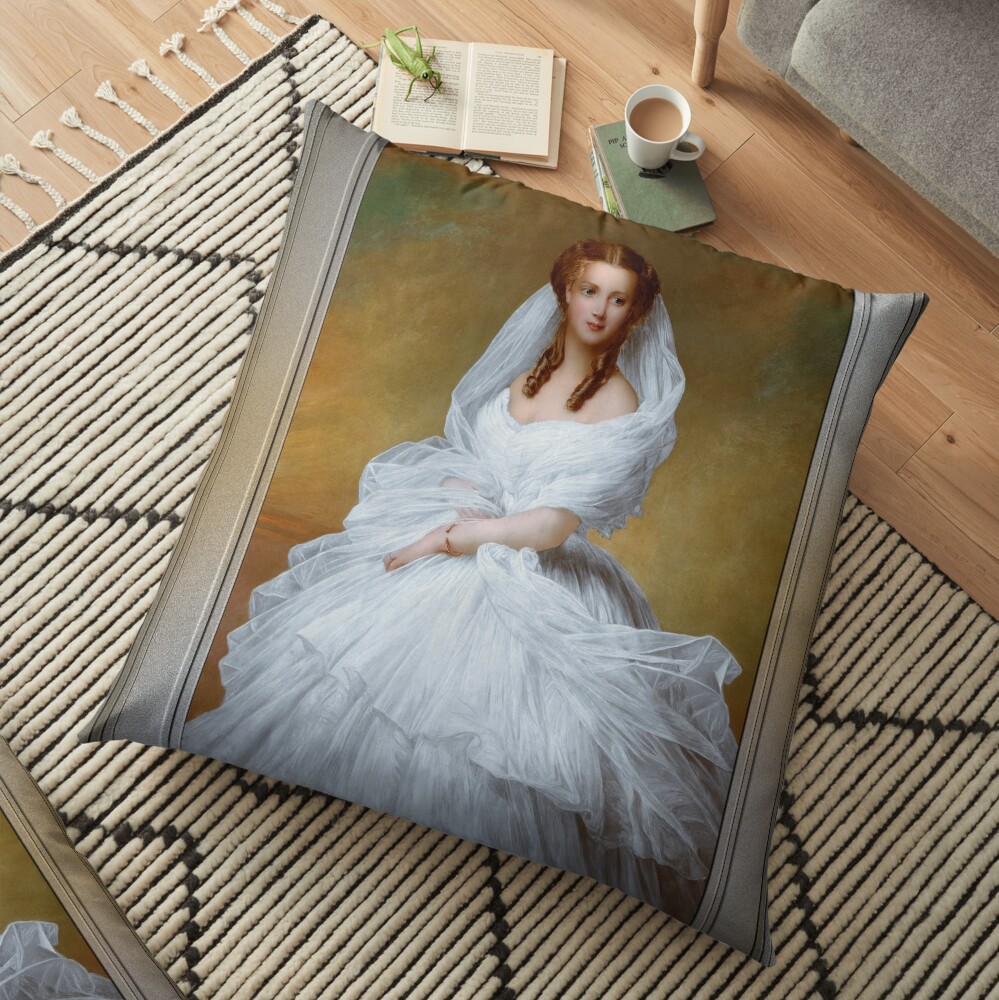
El “Retrat de la princesa Alexandra (1844 – 1925)” c1863 del pintor alemany Richard Lauchert (1823 – 1869) és una representació sorprenent de la reialesa a mitjans del segle XIX, capturant la gràcia i la bellesa de la princesa en el cim de la seva joventut. Lauchert, conegut pels seus retrats detallats i realistes, utilitza el mitjà per immortalitzar la princesa Alexandra en una representació exquisida de l'elegància aristocràtica. Mitjançant un examen atent de l'obra, l'espectador es transporta a un moment en el temps on l'opulència, formalitat, i la gràcia conflueixen. La imatge de la princesa està envoltada de textures suaus però captivadores i pinzellades delicades, mostrant la capacitat de l'artista de representar no només l'aspecte físic del subjecte, sinó també l'essència cultural i emocional de l'època..
Taula de continguts
Tema i composició
El punt focal del retrat és la mateixa princesa Alexandra, una figura de gràcia i elegància. Va vestida amb un elaborat vestit blanc que és l'epítom de la moda de mitjans del segle XIX., caracteritzat per una lleugeresa etèria i un teixit fluid. Les capes voluminoses del vestit estan pintades amb una intricada atenció als detalls, cada plec i ondulació destacat acuradament per crear una sensació de moviment. El suau, material fluid contrasta amb els elements més estructurats del vestit, com la cotilla o el cosset més ajustat, suggerint l'habilitat de l'artista per equilibrar el rígid i el lliure. El vestit blanc de la princesa també simbolitza la puresa i la noblesa, una opció adequada per a la jove princesa.
El seu cabell està pentinat solt, rínxols naturals, amb fils que li cauen subtilment la cara i les espatlles, contribuint a l'atmosfera suau i naturalista del retrat. La paleta de colors del seu vestit, consistent principalment en blancs i suaus tons crema, reflecteix la moda aristocràtica de l'època, mentre que la seva expressió suau afegeix una capa de complexitat al retrat. No és ni obertament alegre ni solemne, sinó que irradia una calma serena, encarnant tant la dignitat reial com la introspecció tranquil·la.
La postura de la princesa Alexandra està equilibrada, with her right hand delicately resting on her waist while her left arm is folded in front of her in an almost protective gesture. The careful placement of her hands conveys grace, suggesting a woman of royal stature aware of her position yet also intimate in her portrayal. The light falling on her figure creates subtle contrasts between shadow and illumination, further accentuating the volume of her dress and the soft textures of her skin and face.
Fons i configuració
Behind the princess, the background remains relatively simple and unobtrusive, serving to draw attention to the subject rather than the surrounding environment. A softly blended golden-brown hue dominates the background, providing a warm, neutral contrast to the bright whites and pale tones of her gown. The simplicity of the background allows the princess to stand out, her figure almost ethereal against the blurred, softened tones. This artistic choice is indicative of the formal portraiture style typical of royal depictions in the 19th century, where the subject’s presence is highlighted against a more abstract or subdued backdrop, emphasizing their importance and individuality.
The landscape is rendered minimally, offering just a hint of color that does not detract from the subject’s prominence. This allows the viewer’s gaze to remain focused on the princess, elevating her as the central figure within the artwork.
Estil, Tema, i l'estat d'ànim
Richard Lauchert’s style in this portrait is grounded in the traditions of realism, common in mid-19th-century European portraiture. L'atenció meticulosa de l'artista als detalls, especially in the rendering of the fabric and textures, showcases his skill in creating lifelike imagery. Lauchert’s use of lighting, ombres, and soft color gradients enhances the realism, making the portrait not just a representation of the princess but also a study of how light interacts with the human form and clothing.
The theme of the portrait is one of aristocratic refinement and regal dignity. Princess Alexandra is depicted in a moment of serene contemplation, which adds a layer of quiet majesty to the work. Unlike some royal portraits that may evoke power or grandeur through strong poses or dramatic settings, Lauchert’s work captures an intimate, almost tender moment. The princess is portrayed as a young woman at the threshold of maturity, poised yet youthful, encarnant els ideals de la feminitat, noblesa, i bellesa que es celebraven durant l'època.
L'estat d'ànim de la pintura és tranquil i digne. Hi ha una certa suavitat en l'expressió de la princesa Alexandra, una sensació de tranquil·litat i calma interior que contrasta amb el caràcter més cerimonial i públic de la vida reial. Aquest retrat parla no només de la grandesa de la reialesa, sinó també de la persona que hi ha darrere de la corona: un individu atrapat en el delicat equilibri de l'expectativa pública i l'emoció privada.. La suavitat de les línies, l'expressió suau, i la qualitat de la llum del vestit es combinen per crear un estat d'ànim serè i sofisticat.
Materials i Tècnica
L'ús de Lauchert de pintures a l'oli és evident en la textura suau i la profunditat del color que defineix el retrat. Les capes de pintura a l'oli aplicades a la tela aporten riquesa i dimensió, sobretot en el vestit de la princesa, on la llum i les ombres revelen el volum i el moviment de la tela. L'artista ha emprat un delicat equilibri entre nítids, àrees definides, com ara el contorn de la cara i els detalls complexos del vestit, i més suaus, zones més difuses, com el vel fluent i el fons.
La pinzellada és fina i controlada, amb el domini de l'artista per capturar els complexos plecs de la tela i el delicat to de pell de la princesa. Els subtils gradients de llum a través de la cara i el vestit de la princesa creen una interacció suau entre el realisme i la idealització, que era típic dels retrats reials durant aquest període. Lauchert’s technique contributes to a sense of intimacy, making the viewer feel as though they are in the presence of the princess herself, rather than simply observing a historical figure from the past.
Conclusió
El “Portrait of Princess Alexandra” (c1863) by Richard Lauchert is a remarkable example of 19th-century royal portraiture, combinant realisme, idealism, i elegància. A través d'aquest treball, Lauchert captures not just the external appearance of the princess but also the serene and dignified spirit that she embodied as a member of the royal family. La composició, estil, and mood of the portrait together create an image that transcends time, offering insight into the life of a royal woman during the 19th century. It remains a stunning representation of both the subject and the era in which it was created.
Sobre l'obra d'art
This portrait of Princess Alexandra was commissioned by her mother-in-law Queen Victoria in 1863.
She was married to the Queen’s eldest son the Prince of Wales Albert Edward who would later become Edward VII.
Originally Queen Victoria wanted her favorite artist Franz Xaver Winterhalter (1805 – 1873) to do the portrait, but he was of ill health and she instead gave the commission to Richard Lauchert.
It was said by Albert’s elder sister Victoria, the Crown Princess of Prussia; that Princess Alexandra was one of the most lady like and aristocratic looking people she had ever seen and “outrageously beautiful”; while Queen Victoria thought her to be a “estimat, lovely being”.
This is a remastered digital art reproduction of a public domain image that is available for purchase as an acrílic, tela, metall, wood print online.