

Portrait vun der Prinzessin Alexandra
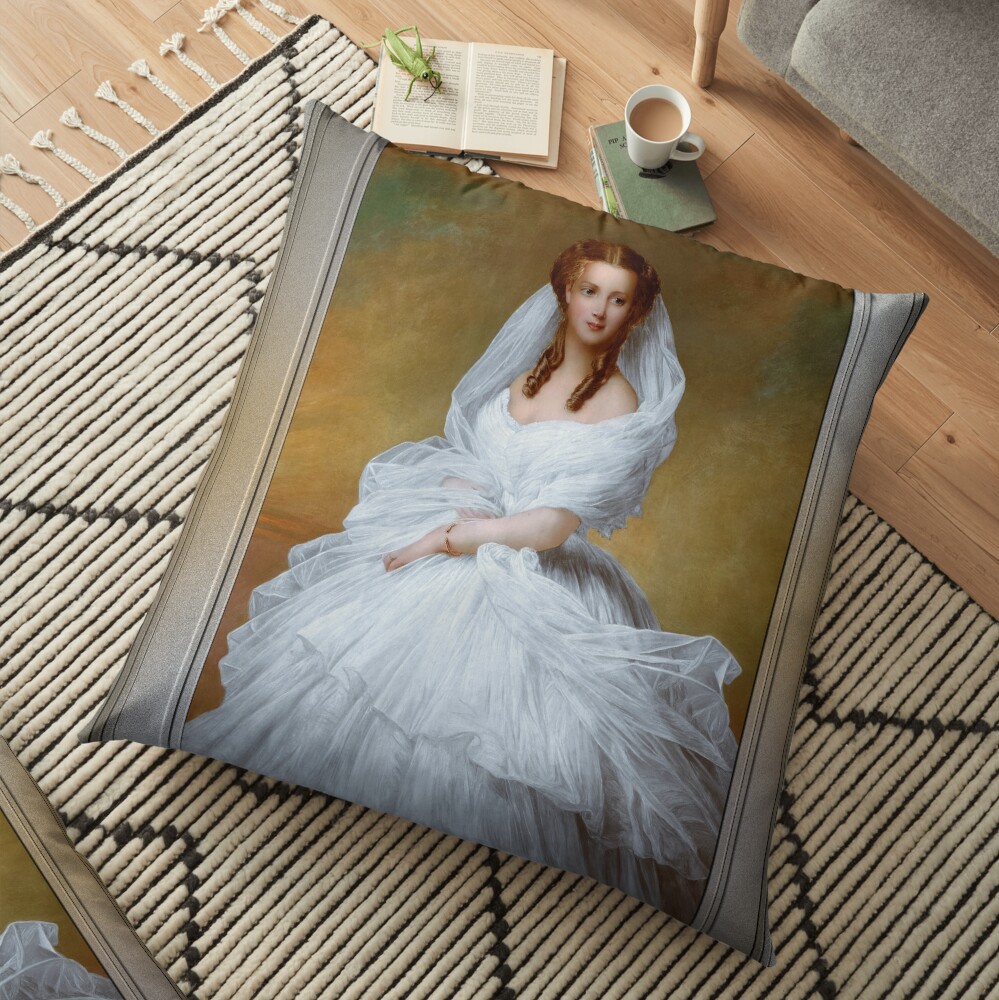
Den “Portrait vun der Prinzessin Alexandra (1844 – 1925)” c1863 vum däitsche Moler Richard Lauchert (1823 – 1869) ass eng markant Duerstellung vum Kinnekräich an der Mëtt vum 19. Joerhonnert, d'Gnod an d'Schéinheet vun der Prinzessin op der Héicht vun hirer Jugend erfaasst. Lauchert, bekannt fir seng detailléiert a realistesch Portraite, benotzt de Medium fir d'Prinzessin Alexandra an enger exquisite Representatioun vun aristokratescher Eleganz ze veréiwegt. Duerch eng virsiichteg Ënnersichung vun der Aarbecht, den Zuschauer gëtt an e Moment an der Zäit transportéiert wou Opulenz, Formalitéit, a Gnod konvergéieren. D'Bild vun der Prinzessin ass ëmgi vu mëllen awer faszinéierende Texturen a delikate Pinselstécker, d'Fäegkeet vum Kënschtler ze weisen net nëmmen d'physesch Erscheinung vum Thema ze weisen, awer och déi kulturell an emotional Essenz vun der Zäit.
Inhaltsverzeechnes
Sujet a Kompositioun
De Brennpunkt vum Portrait ass d'Prinzessin Alexandra selwer, eng Figur vu Gnod an Eleganz. Si ass an engem ausgeglachene wäisse Kleed gekleet deen d'Epitom vun der Mëtt vum 19., charakteriséiert duerch eng ätheresch Liichtegkeet a fléissend Stoff. Déi voluminös Schichten vum Kleed si mat enger komplizéierter Opmierksamkeet op Detailer gemoolt, all Falt a Ripple suergfälteg beliicht fir e Gefill vu Bewegung ze kreéieren. Der mëller, fléissend Material kontrastéiert mat de méi strukturéierte Elementer vum Kleed, wéi zum Beispill de Korsett oder de méi enk passend Kierper, suggeréiert dem Kënschtler seng Fäegkeet fir dat steift an dat fräi ze balancéieren. De wäisse Kleed vun der Prinzessin symboliséiert och Rengheet an Adel, e passende Choix fir déi jonk Prinzessin.
Hir Hoer sinn a locker styléiert, natierlech Curls, mat Strécke subtil iwwer hiert Gesiicht a Schëlleren falen, bäidroen zu der mëller an naturalistescher Atmosphär vum Porträt. D'Faarfpalette vun hirem Kleed, besteet virun allem aus wäiss a mëll Crème Téin, reflektéiert déi aristokratesch Moud vun der Zäit, während hire sanften Ausdrock eng Schicht vu Komplexitéit zum Portrait bäidréit. Si ass weder offen frou nach feierlech, awer strahlt amplaz eng roueg Rou aus, verkierpert souwuel kinneklech Dignitéit a roueg Introspektioun.
D'Prinzessin Alexandra hir Haltung ass ausgerechent, mat hirer rietser Hand delikat op der Taille riicht, während hire lénksen Aarm virun hatt geklappt ass an engem bal Schutzgeste. Déi virsiichteg Plazéierung vun hiren Hänn vermëttelt Gnod, suggeréiert eng Fra vu kinneklecher Statur, déi hir Positioun bewosst ass, awer och intim an hirer Porträt. D'Liicht, déi op hir Figur fällt, schaaft subtile Kontraster tëscht Schied a Beliichtung, de Volume vun hirem Kleed an déi mëll Texturen vun hirer Haut a Gesiicht weider accentuéieren.
Hannergrond a Kader
Hannert der Prinzessin, den Hannergrond bleift relativ einfach an onopfälleg, déngt fir op d'Thema opmierksam ze maachen anstatt d'Ëmfeld ronderëm. Eng mëll gemëscht gëllen-brong Faarftéin dominéiert den Hannergrond, suergt fir eng waarm, neutrale Kontrast zu den helle Wäissen a blass Téin vun hirem Kleed. D'Einfachheet vum Hannergrond léisst d'Prinzessin erausstoen, hir Figur bal äthereschen géint de blurred, erweicht Téin. Dës artistesch Wiel weist op de formelle Portraitstil typesch fir kinneklech Biller am 19., wou d'Präsenz vum Thema géint eng méi abstrakt oder gedämpft Kuliss beliicht ass, hir Wichtegkeet an Individualitéit ënnersträichen.
D'Landschaft ass minimal rendered, bitt just en Hiweis vu Faarf, déi net vun der Prominenz vum Thema ofleet. Dëst erlaabt dem Zuschauer säi Bléck op d'Prinzessin konzentréiert ze bleiwen, hir als zentral Figur am Konschtwierk erhiewen.
Stil, Thema, a Stëmmung
Dem Richard Lauchert säi Stil an dësem Portrait ass an den Traditioune vum Realismus gegrënnt, heefeg an der Mëtt vum 19. Joerhonnert europäesch Portraiten. Dem Kënschtler seng virsiichteg Opmierksamkeet op Detailer, especially in the rendering of the fabric and textures, showcases his skill in creating lifelike imagery. Lauchert’s use of lighting, Schatten, and soft color gradients enhances the realism, making the portrait not just a representation of the princess but also a study of how light interacts with the human form and clothing.
The theme of the portrait is one of aristocratic refinement and regal dignity. Princess Alexandra is depicted in a moment of serene contemplation, which adds a layer of quiet majesty to the work. Unlike some royal portraits that may evoke power or grandeur through strong poses or dramatic settings, Lauchert’s work captures an intimate, almost tender moment. The princess is portrayed as a young woman at the threshold of maturity, poised yet youthful, embodying the ideals of femininity, Adel, and beauty that were celebrated during the era.
The mood of the painting is tranquil and dignified. There is a certain softness to the expression of Princess Alexandra, a sense of tranquility and inner calm that contrasts with the more ceremonial and public nature of royal life. This portrait speaks not only to the grandeur of royalty but also to the person behind the crown—an individual caught in the delicate balance of public expectation and private emotion. The softness of the lines, the gentle expression, and the light quality of the gown combine to create a mood that is both serene and sophisticated.
Materialien an Technik
Lauchert’s use of oil paints is evident in the smooth texture and depth of color that defines the portrait. The layers of oil paint applied to the canvas provide richness and dimension, particularly in the princess’s gown, where the light and shadows reveal the volume and movement of the fabric. The artist has employed a delicate balance between sharp, defined areas—such as the outline of the face and the intricate details of the dress—and softer, more diffused areas, like the flowing veil and the background.
D'Brushwork ass gutt a kontrolléiert, with the artist’s mastery in capturing the intricate folds of fabric and the delicate skin tone of the princess. The subtle gradients of light across the princess’s face and gown create a gentle interplay between realism and idealization, which was typical of royal portraits during this period. Lauchert’s technique contributes to a sense of intimacy, making the viewer feel as though they are in the presence of the princess herself, rather than simply observing a historical figure from the past.
Conclusioun
Den “Portrait of Princess Alexandra” (c1863) by Richard Lauchert is a remarkable example of 19th-century royal portraiture, vermëschen Realismus, Idealismus, an Eleganz. Duerch dës Aarbecht, Lauchert captures not just the external appearance of the princess but also the serene and dignified spirit that she embodied as a member of the royal family. D'Kompositioun, Stil, and mood of the portrait together create an image that transcends time, offering insight into the life of a royal woman during the 19th century. It remains a stunning representation of both the subject and the era in which it was created.
Iwwert Konschtwierk
This portrait of Princess Alexandra was commissioned by her mother-in-law Queen Victoria in 1863.
She was married to the Queen’s eldest son the Prince of Wales Albert Edward who would later become Edward VII.
Originally Queen Victoria wanted her favorite artist Franz Xaver Winterhalter (1805 – 1873) to do the portrait, but he was of ill health and she instead gave the commission to Richard Lauchert.
It was said by Albert’s elder sister Victoria, the Crown Princess of Prussia; that Princess Alexandra was one of the most lady like and aristocratic looking people she had ever seen and “outrageously beautiful”; while Queen Victoria thought her to be a “léif, lovely being”.
This is a remastered digital art reproduction of a public domain image that is available for purchase as an acrylic, Leinwand, metallen, wood print online.