

Princino Charlotte de Belgio
Princino Charlotte of Belgium (1840 – 1927) c1842 de germana farbisto Franz Xaver Winterhalter (1805 – 1873); older brother of German painter Hermann Fidel Winterhalter (1808 – 1891), is known for his portraits of mid nineteenth century royalty.
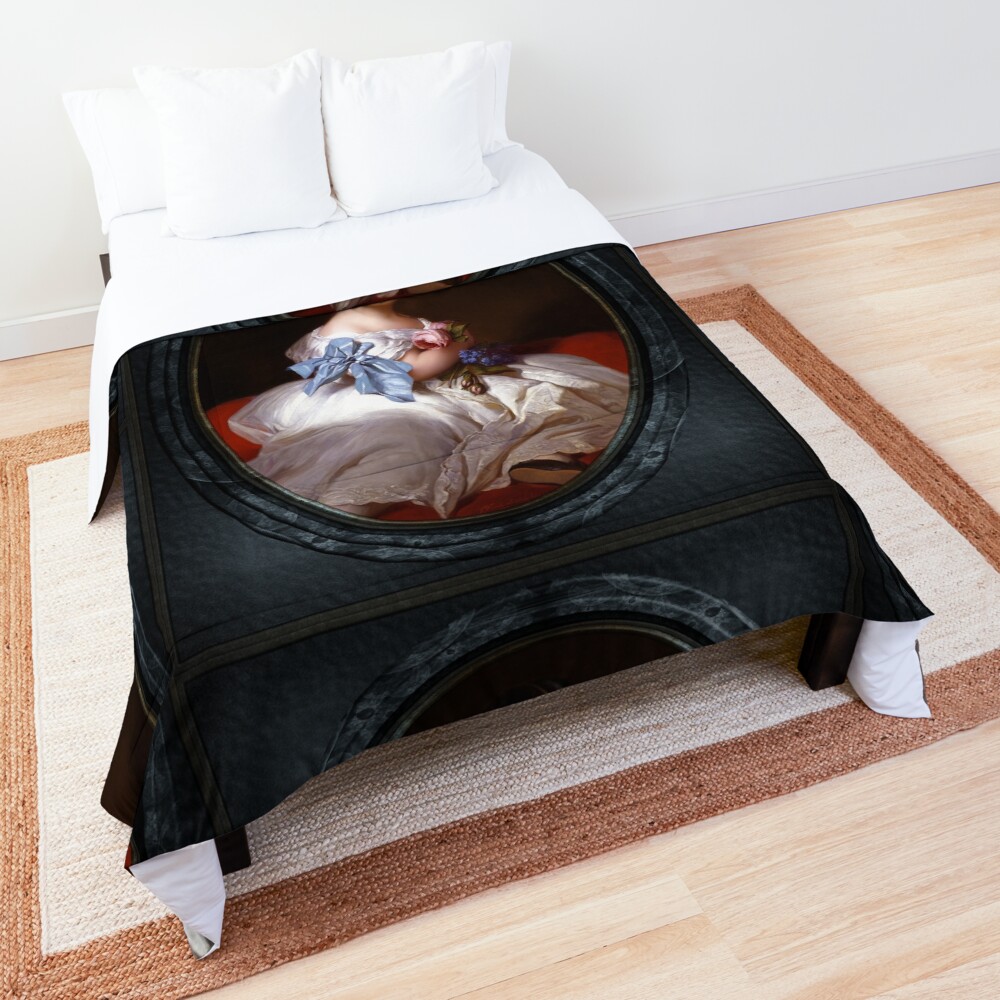
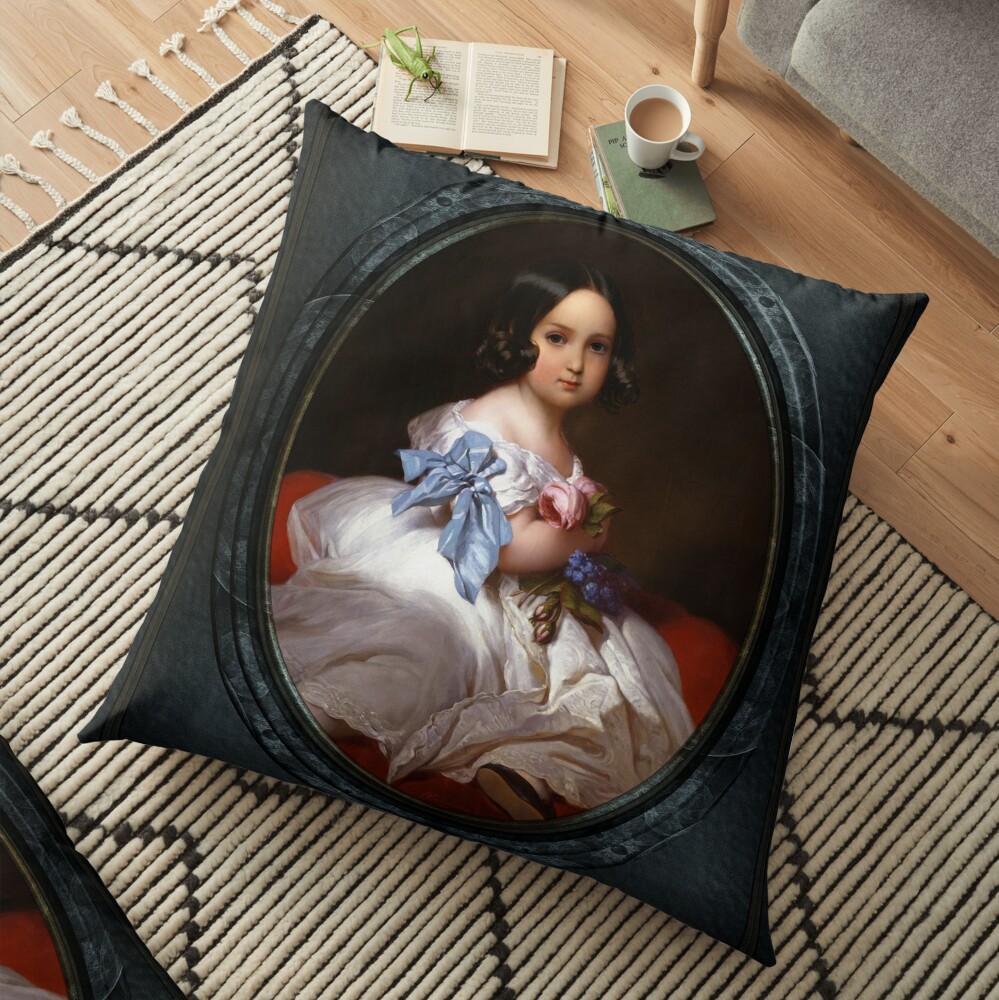
Princess Charlotte of Belgium as an adorable young girl of 2 years of age sitting on a red pillow, wearing a white dress with a blue ribbon tied around her right arm and holding a rose in her right hand that situated across her chest, with more blue flowers with large leaves and bulbs resting on lap.
Princess Charlotte of Belgium is a retouched digital art old masters reproduction of a public domain image, kaj kiel kun ĉiuj artaĵoj, kiuj troveblas en la retejo de Xzendor7, estas aĉetebla interrete en diversaj materialaj formatoj inkluzive de kanvasaj presaĵoj., akrilaj presaĵoj, metalaj presaĵoj, lignaj presaĵoj, enkadrigitaj presaĵoj, afiŝoj, kaj kiel rulitaj kanvasaj presaĵoj en diversaj grandecoj de 12 colojn al 72 coloj depende de la grandeco de la reala artaĵo kaj la presaĵo laŭpeta butiko, de kiu vi elektas aĉeti la arton.print.
Informoj Malsupre De Vikipedio.org
Franz Xaver Winterhalter was born in the small village of Menzenschwand, (now part of Sankt Blasien), in Germany’s Black Forest in the Electorate of Baden, on 20 Aprilo 1805. He was the sixth child of Fidel Winterhalter (1773–1863), a farmer and resin producer in the village, and his wife Eva Meyer (1765–1838), a member of a long established Menzenschwand family.
His father was of peasant stock and was a powerful influence in his life. Of the eight brothers and sisters, only four survived infancy. Throughout his life Franz Xaver remained very close to his family, in particular to his brother Hermann (1808–1891), kiu ankaŭ estis pentristo.
After attending school at a Benedictine monastery in St. Blasien, Winterhalter left Menzenschwand in 1818 en la aĝo de 13 to study drawing and engraving. He trained as a draughtsman and lithographer in the workshop of Karl Ludwig Schüler (1785–1852) in Freiburg im Breisgau. En 1823, en la aĝo de 18, he went to Munich, sponsored by the industrialist Baron von Eichtal (1775–1850).
En 1825, he was granted a stipend by Ludwig I, Grand Duke of Baden (1763–1830) and began a course of study at the Academy of Arts in Munich with Peter von Cornelius (1783–1867), whose academic methods made him uncomfortable. Winterhalter found a more congenial mentor in the fashionable portraitist Joseph Karl Stieler (1781–1858). Dum ĉi tiu tempo, he supported himself working as lithographer.
Winterhalter entered court circles when in 1828 he became drawing master to Sophie Margravine of Baden, at Karlsruhe. His opportunity to establish himself beyond southern Germany came in 1832 when he was able to travel to Italy, 1833–1834, with the support of Grand Duke Leopold of Baden.
In Rome he composed romantic genre scenes in the manner of Louis Léopold Robert and attached himself to the circle of the director of the French Academy, Horace Vernet. On his return to Karlsruhe he painted portraits of the Grand Duke Leopold of Baden and his wife, and was appointed painter to the grand-ducal court.
Nevertheless, he left Baden to move to France, where his Italian genre scene Il dolce Farniente attracted notice at the Salon of 1836. Il Decameron a year later was also praised; both paintings are academic compositions in the style of Raphael. In the Salon of 1838 he exhibited a portrait of the Prince of Wagram with his young daughter.
His career as a portrait painter was soon secured when in the same year he painted Louise Marie of Orleans, Queen of the Belgians, and her son. It was probably through this painting that Winterhalter came to the notice of Maria Amalia of the Two Sicilies, Queen of the French, mother of the Queen of the Belgians.