

Psyche c1786
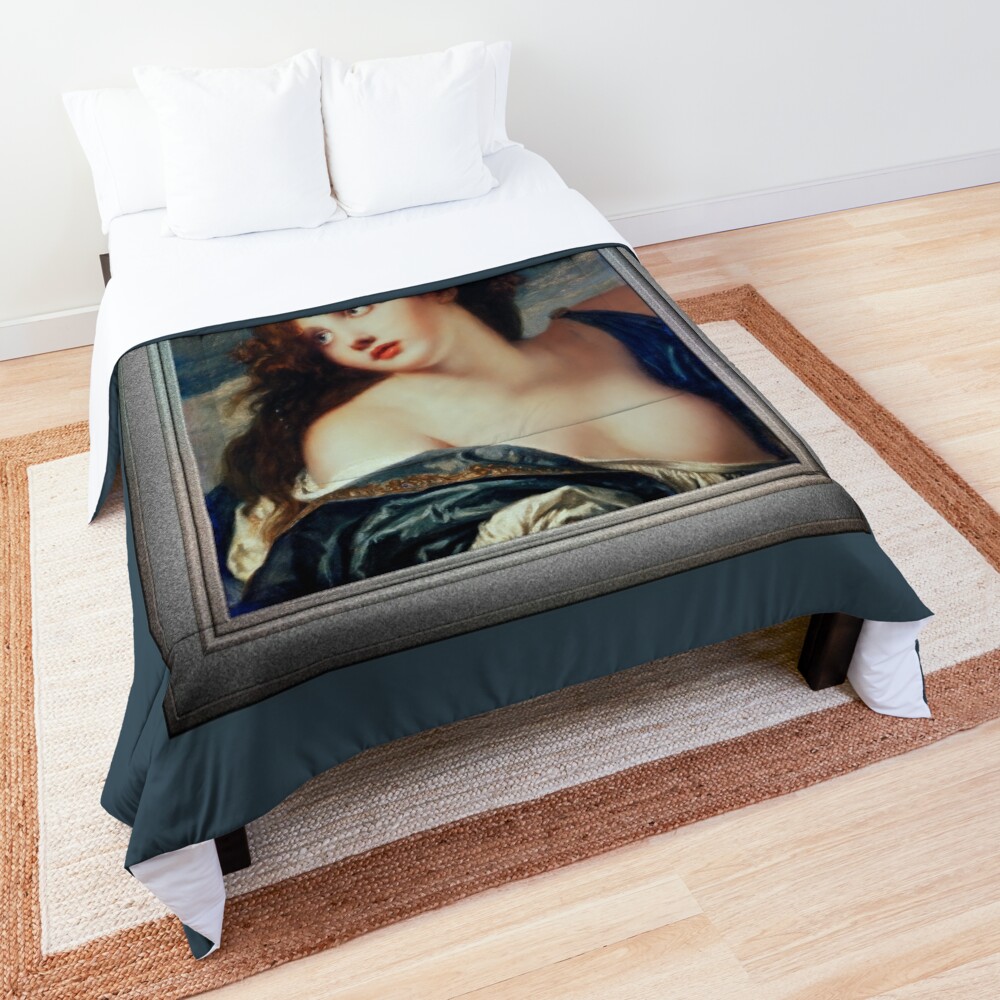
タイトルのアートワーク Psyche プリンセスマリアイリイニチナゴリツィナ 1786, created by French painter ジャン=バティスト・グルーズ (1725 – 1805), depicts an emotional and intimate moment in mythological storytelling. This painting captures the mythical figure Psyche in a delicate and poignant portrayal, showcasing Greuze’s mastery of light, テクスチャ, そして感情の深さ. この作品では, Greuze uses soft hues and detailed expressions to bring to life the timeless myth of Psyche, a mortal woman whose beauty was so extraordinary that it led her into a series of trials that ultimately resulted in her becoming immortal.
目次
本題: Psyche’s Emotional Expression
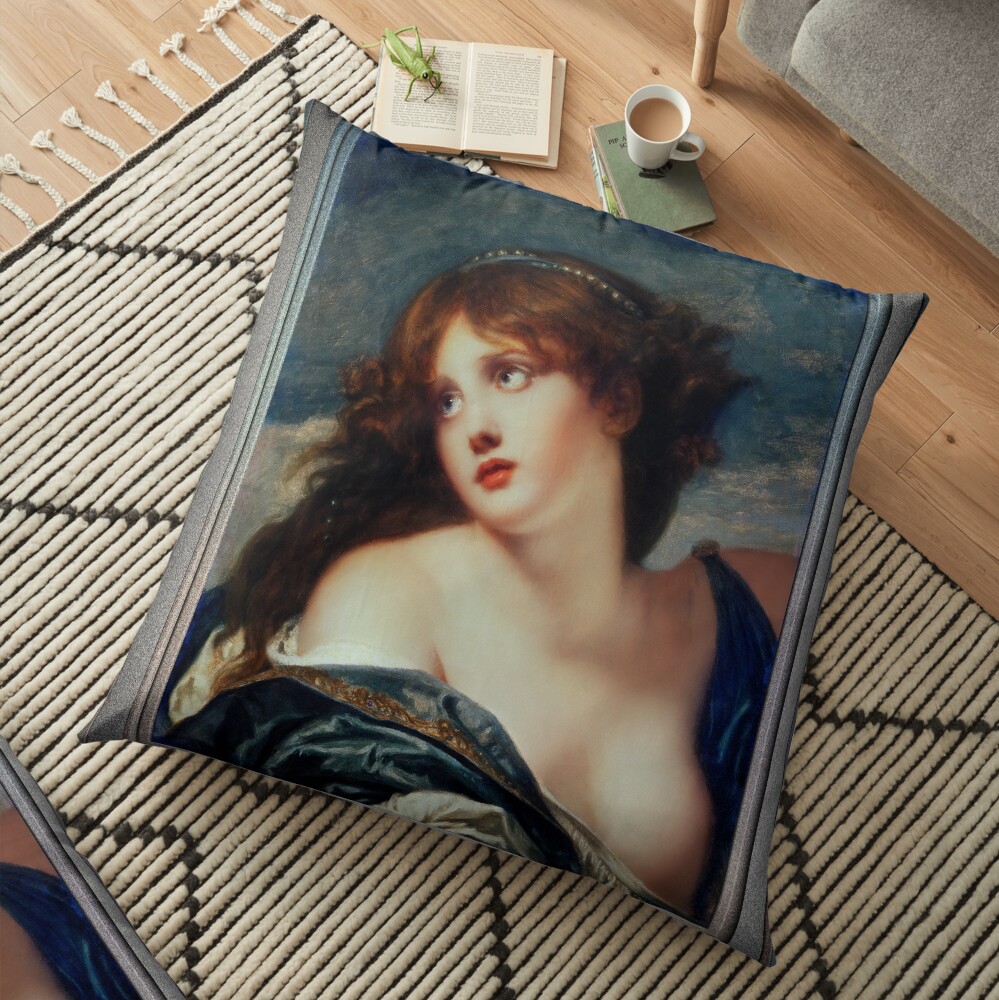
Psyche is the central figure of the composition, rendered with grace and sensuality. She is portrayed in a moment of quiet contemplation, her eyes gazing upward with an expression that reflects both vulnerability and longing. Her delicate features—rounded cheeks, soft lips, そして大きい, expressive eyes—are painted with such fine detail that they evoke a sense of realism, almost lifelike in their intensity. This is characteristic of Greuze’s style, where he excelled in capturing human emotion with a remarkable sense of tenderness and psychological depth.
Psyche’s long, flowing hair is styled in loose curls that cascade over her shoulders, adding to her ethereal and delicate appearance. A pearl headband adorns her hair, symbolizing both her beauty and her connection to the divine. The way her hair is painted suggests movement, as though caught in a gentle breeze. The artist’s attention to such fine details not only enhances her beauty but also reinforces the dreamlike quality of the scene.
The Clothing and Materials
Psyche is dressed in a lavish garment of blue and gold. The fabric flows elegantly around her shoulders and neck, rendered with Greuze’s characteristic skill at depicting textures. The deep blue of the robe contrasts beautifully with the soft white of her exposed skin, creating a striking visual balance. The robe is adorned with golden trims, which enhance its luxurious appearance, symbolizing the celestial and divine nature of Psyche herself. Greuze’s treatment of the fabric is particularly noteworthy, with light and shadow playing across the material in such a way that it almost seems tangible, as though the viewer could reach out and touch the smoothness of the silk.
The fine texture of the fabric serves as a metaphor for the vulnerability and fragility of Psyche’s character, amplifying her emotional turmoil. The clothing, with its soft folds and the shimmering sheen of the material, adds a layer of complexity to the emotional tone of the painting. The robe’s rich colors and sumptuous fabric reflect Psyche’s dual nature—both mortal and divine, 人間と異世界の.
背景と設定
The background of the painting is a soft, atmospheric blend of cool blues and whites. It lacks any overt detail, but it works to emphasize Psyche’s figure. The simple, almost abstract background contrasts with the highly detailed foreground, focusing the viewer’s attention entirely on the subject. This technique reflects Greuze’s ability to create intimacy within his compositions, drawing the viewer into the emotional state of the subject without distraction.
The sky-like backdrop also evokes the idea of vastness and infinity, suggesting the mythological setting from which Psyche originates. The gentle gradients of color create a sense of space and airiness, adding to the dreamlike atmosphere of the painting. Psyche’s figure appears almost suspended in space, as though she is caught in a moment between earth and the heavens.
スタイルとテクニック
Jean-Baptiste Greuze was known for his ability to capture human emotion through his mastery of light and shadow, as well as his use of soft, harmonious colors. に Psyche, the artist’s use of soft, glowing light on the figure’s face creates a sense of naturalism, drawing attention to the emotional expression of the subject. The light falls gently on Psyche’s skin, highlighting her delicate features while creating a contrast with the darker tones of her hair and clothing. This use of light and shadow is not just a stylistic choice but serves to emphasize the psychological depth of the painting, imbuing Psyche with a sense of inner conflict and longing.
Greuze’s technique in handling the human form is another striking element of this work. The artist captures the natural curves of Psyche’s body with fluid lines, giving her an air of graceful motion even though she is seated in stillness. The folds of her robe, the movement of her hair, and the nuanced expression on her face all combine to create a portrait that is both emotionally compelling and visually arresting.
ムードとテーマ
の気分 Psyche is one of wistful longing and quiet contemplation. The expression on Psyche’s face suggests a deep emotional turmoil, possibly related to the trials and tribulations she faces in the myth. There is a sense of sadness and resignation in her gaze, as though she is caught between hope and despair. The artist captures this emotional complexity through his careful rendering of her facial expression and posture, conveying a sense of vulnerability that resonates deeply with the viewer.
The theme of the painting—Psyche’s journey from mortal to divine—adds layers of meaning to the artwork. The mythological tale of Psyche and her eventual union with Cupid, 愛の神, is one of transformation, 愛, そして犠牲を払う. Greuze’s portrayal of Psyche’s emotional state hints at the internal conflict she faces as she navigates these challenges. この作業で, Greuze does not focus on the grandiose or heroic elements of the myth but rather on the human, emotional aspect of the character, making the figure of Psyche relatable and deeply human.
結論
Psyche c1786 by Jean-Baptiste Greuze is a masterpiece that captures both the beauty and the emotional depth of its mythological subject. Through his delicate rendering of Psyche’s form, expressive face, and elegant attire, Greuze has created a timeless portrayal of a woman caught between the mortal and divine worlds. The emotional resonance of the painting, combined with its technical mastery, places this work among the finest examples of Greuze’s career and offers a powerful exploration of human emotion within the context of classical mythology.
これは、リマスターされたデジタルアートのオールドマスターであり、パブリックドメインの画像を複製したものです。 キャンバスプリントオンライン.
このデジタルアート作品は、, Xzendor7 Web サイトにあるすべてのアートワークと同様に、キャンバス プリントを含むさまざまな素材形式でオンラインで購入できます。, アクリルプリント, メタルプリント, 木版, 額入りプリント, ポスター, ロール状のキャンバス プリントとしてさまざまなサイズでご利用いただけます。 12 インチから 72 インチは、実際のアートワークのサイズと、アートを購入するために選択したオンデマンド プリント ショップによって異なります。.
このアートワークは、幅広いメンズおよびウィメンズのアパレルでも利用可能です, マグカップ, トートバッグ, スカーフ, ノートや日記帳、その他多くの室内装飾品.
アーティストについて
以下の情報はから派生しています NGA.gov
ジャンはトゥルニュで生まれました, フランス 1725 瓦職人の六男として、幼い頃から自分の才能に気づいた; 彼をリヨンに送る, フランス、フランスの肖像画家シャルル・グランドンに師事 (1691 – 1762).
くらいの年齢で 30 彼はリヨンを去った, そしてパリへ旅行しました, フランス王立絵画彫刻アカデミーまたは王立絵画彫刻アカデミーで学ぶ; 当時、アンシャン レジーム後期のフランス最高の美術機関でした。 (旧体制 ~1500 ~ 1789), 廃止されるまで 1793 フランス革命中.
非常に才能があり、1760 年代から 1770 年代には大成功を収めましたが、, ポンパドゥール侯爵夫人などの後援者がいる (1721 – 1764), ロシア皇后エカチェリーナ2世 (r. 1762 – 1796), ラ・ライブ・ド・ジュリーのアンジュ・ローランと (1725 – 1779); 彼の反抗的な性格とアカデミーやサロンの関係者との対立が彼の不幸となることになる; 特にアン・マリー・バビュティとの結婚後は、 1759; それは彼にとって災難となるだろう, 彼女は彼の生徒やシッターとさまざまな関係を持っていたことが知られていたため、, それが彼に収入の喪失と世間の屈辱をもたらした.
結婚生活が終わったとき 34 数年後、彼の妻は多額の和解金を受け取った, そのせいで彼は悲惨な財政状態に陥り、亡くなるまでに 1805 歳の時に 80 彼は破産寸前だった.