

Reading Woman ~c1866
Ivan Kramskoi’s painting Gwraig Darllen (c. ~1866) is a tender and intimate portrait of his wife, embodying the quiet, reflective moments that so often elude the public eye in art history. Created during the latter part of Kramskoi’s life, the artwork highlights his mastery in capturing emotional depth through the use of light, gwead, a manylion. Kramskoi, eni yn 1837 a phasio i mewn 1887, was a renowned Russian painter, known for his contribution to the Russian realist movement and his delicate portrayals of women, often using them as symbols of moral and intellectual pursuit.
Tabl Cynnwys
Pwnc a Chyfansoddiad
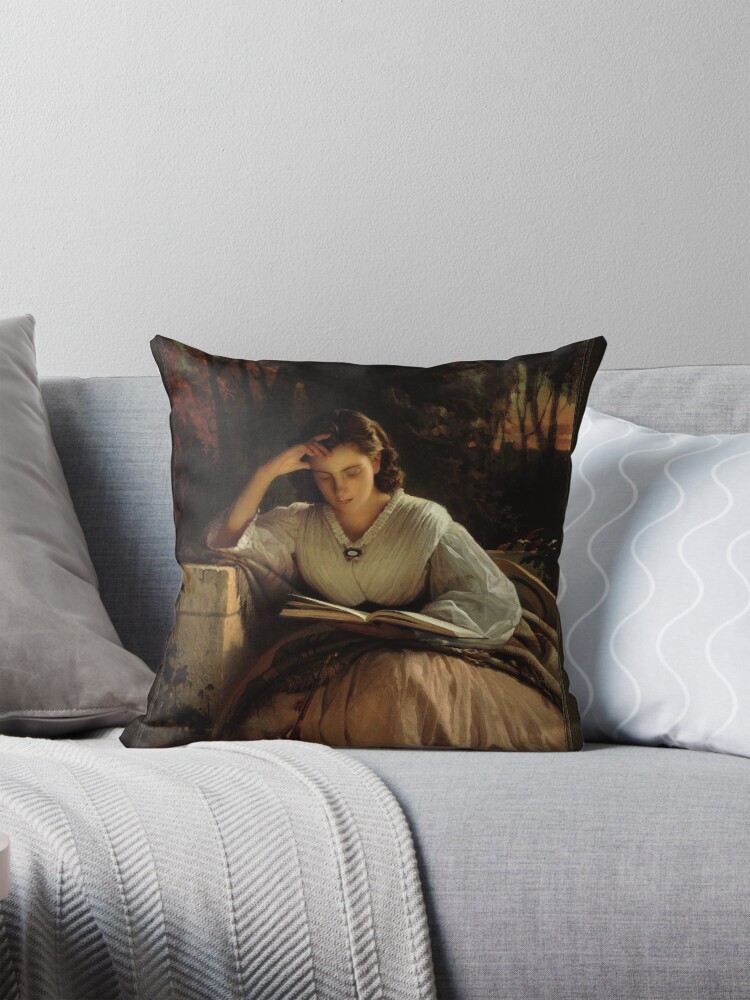
Ffigur canolog y paentiad yw menyw ifanc, portrayed deeply immersed in a book. She is seated comfortably outdoors, leaning slightly forward with one hand resting against her forehead, fel pe bai'n myfyrio neu'n myfyrio ar gynnwys ei darllen. Y llyfr, er nad y canolbwynt, yn amnaid cynnil i ymgysylltiad deallusol a myfyrdod personol. Mae ystum y fenyw yn cyfleu ymdeimlad o fewnsylliad tawel a chanolbwyntio, gan bwysleisio thema o unigedd a gweithgarwch deallusol a oedd yn annwyl yn ystod y 19eg ganrif, yn enwedig gan y deallusion Rwsiaidd.
Y model, derbyn yn eang fel gwraig Kramskoi, yn cael ei darlunio yn llonyddwch tawel ei gofod preifat, lleoliad ymhell oddi wrth y byd cyhoeddus. Mae hi wedi gwisgo mewn syml, gwisg wen gain, yn arwydd o wyleidd-dra a pharchusrwydd, gyda neckline dwfn sy'n awgrymu'n gynnil yr arddull Fictoraidd ffasiynol ond neilltuedig. Mae ffabrig ei ffrog yn llifo'n ysgafn dros y breichiau, suggesting her stillness and composure. The light source, likely natural sunlight, illuminates the subject’s face, highlighting her soft features and youthful expression. This soft light contributes to the painting’s intimate mood, suggesting a moment frozen in time.
Setting and Surroundings
The painting is set in a lush outdoor environment, possibly a garden or a secluded courtyard. Behind the seated woman, the landscape is gently blurred, filled with warm autumnal tones of red and brown, the edges softened to create a dreamy, almost ethereal backdrop. This background, though not highly detailed, complements the subject’s mood and highlights the calm tranquility of the scene. The surrounding foliage and the faint suggestion of trees offer a peaceful and contemplative atmosphere, subtly drawing the viewer’s attention back to the subject, rather than the surroundings.
I'r chwith, a stone structure or seat appears, possibly an architectural element of the garden. This feature serves not only as an anchor for the figure but also symbolizes a certain permanence and timelessness, as though the woman is a part of this natural world—grounded and enduring. The greenery that surrounds her suggests both natural beauty and a harmonious coexistence with the world around her.
Naws a Thema
Mae naws Gwraig Darllen is one of quiet contemplation and intellectual solitude. There is an air of serenity and introspection, evoking a sense of deep thought and emotional reflection. The woman’s gaze is focused, her mind fully absorbed in the pages before her, while her posture suggests that this is a moment of peaceful solitude rather than active engagement with the outside world.
Kramskoi’s choice of a woman as the subject aligns with his broader thematic explorations of the inner lives of women. The painting’s theme may suggest the delicate balance between the external world and inner reflection, offering a glimpse into the private, intellectual world of a woman during the 19th century. The contemplative nature of the painting speaks to the broader social ideals of the time, where intellectual pursuits were increasingly recognized as a valuable part of a woman’s role, despite the constraints placed upon her in the public sphere.
Technique and Style
Kramskoi’s style is marked by precision and meticulous attention to detail, nodweddion sy'n amlwg yn Gwraig Darllen. Mae'r artist yn defnyddio golau gyda sensitifrwydd mawr, gan ganiatáu iddo amlygu a meddalu nodweddion y pwnc. Mae'r cydadwaith cynnil rhwng golau a chysgod yn pwysleisio gwead dillad y fenyw, ei nodweddion wyneb, a dyfnder ei hemosiynau. Mae ei nodweddion cain yn cael eu rendro â gofal coeth, o feddalwch ei chroen i'r mynegiant yn ei llygaid, yn awgrymu dyfnder meddwl a phrydferthwch tawel.
Mae defnydd yr artist o liw yn gyfyngedig ond yn effeithiol. Mae arlliwiau tawel dillad y ffigwr yn cyferbynnu â chynhesrwydd y dirwedd gyfagos, tynnu sylw'n gynnil at y pwnc heb drechu harddwch naturiol y lleoliad. Y tonau ddaear, megis y brown a'r cochion yn y cefndir, create a harmonious atmosphere that ties the figure to the land and suggests a timelessness about the scene.
Kramskoi’s realism is apparent in his treatment of texture, golau, a chysgod, but his approach is softened by the romantic undercurrent of his subjects. Y cefndir, rendered with softer brushstrokes, contrasts with the more sharply defined woman, drawing the viewer’s focus to her as the central figure. The result is a balanced composition, where the subject is the clear focal point, yet the surrounding environment is fully integrated into the narrative of the painting.
Nghasgliad
Gwraig Darllen (Portread o Wraig yr Artist) by Ivan Kramskoi is a masterpiece of 19th-century Russian art that combines intimate portraiture with the intellectual themes of its time. Through the serene depiction of his wife, Kramskoi explores the intersection of private life, intellectual curiosity, a dyfnder emosiynol. The painting offers a glimpse into the quiet, reflective moments of the subject’s life, underscoring the artist’s ability to render the subtle complexities of human emotion. Kramskoi’s skillful use of light, gwead, and color adds layers of depth to this otherwise simple scene, creating a powerful narrative that continues to resonate with viewers.
Gwraig Darllen (Portread o Wraig yr Artist) erbyn c~1866 erbyn Peintiwr Rwsiaidd Ivan Kramskoi (1837 – 1887); ac arweinydd deallusol Mudiad Celf Democrataidd Rwseg (The Wanderers or The Itinerants yn Saesneg: Grŵp o artistiaid realaidd Rwsiaidd a ffurfiodd artistiaid’ cooperative in protest of academic restrictions) o 1860 – 1880
This is wonderful portrait of a young woman in a garden (which is the wife of the painter); as dusk approaches rest her right upper arm on the ledge of a large stone bench she is sitting on, that has vines on its front face; while she leans her forehead on the fingers of her right hand, with her head tilted slightly forward.
Gweddill ei llaw chwith agored ar ei glin ar ben siôl werdd ysgafn gyda streipiau coch sydd hefyd o dan ei braich dde uchaf ar y silff garreg; cefnogi llyfr mawr agored y mae hi'n ei ddarllen yng ngolau'r haul sy'n lleihau wrth i'r hwyr agosáu.
Mae hi'n gwisgo blows wen gyda choler ruffle a tlws crog yng nghanol y llinell v-gwddf, yn ogystal â sash lliw tywyll o amgylch ei chanol a sgert frown fawr hyd llawn.
Ar flaen y sgert mae ymbarél yn pwyso yn ei herbyn a thu ôl iddi mae het wellt lydan gyda band tywyll o amgylch y gwaelod.; a rhai planhigion.
Yn y cefndir gallwn weld coed gyda dail coch yn ogystal â choed gyda dail gwyrdd a'r haul yn eistedd wrth i'r awyr las gyda chymylau drawsnewid i liw oren.
Dyma atgynhyrchiad hen feistr celf ddigidol wedi'i ailfeistroli o ddelwedd parth cyhoeddus sydd ar gael fel print cynfas ar-lein.