

Reading Woman ~c1866
Ivan Kramskoi’s painting Reading Woman (c. ~1866) is a tender and intimate portrait of his wife, embodying the quiet, reflective moments that so often elude the public eye in art history. Created during the latter part of Kramskoi’s life, the artwork highlights his mastery in capturing emotional depth through the use of light, textura, and detail. Kramskoi, nascido em 1837 e passando 1887, was a renowned Russian painter, known for his contribution to the Russian realist movement and his delicate portrayals of women, often using them as symbols of moral and intellectual pursuit.
Índice
Assunto e Composição
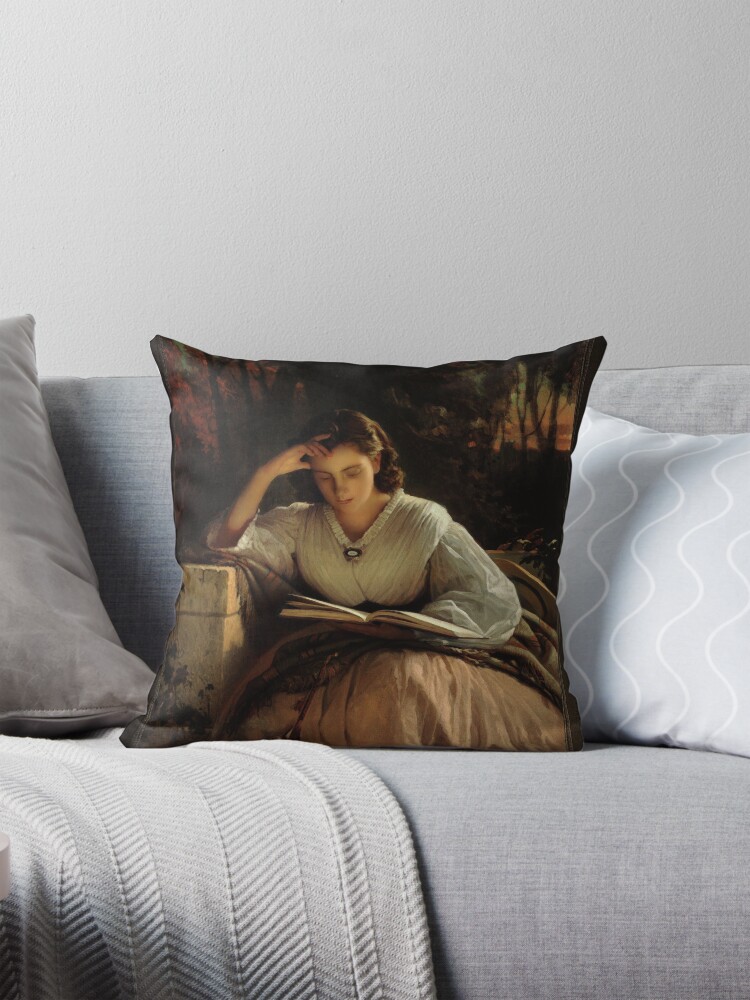
The central figure of the painting is a young woman, portrayed deeply immersed in a book. Ela está sentada confortavelmente ao ar livre, inclinando-se ligeiramente para a frente com uma mão apoiada na testa, como se estivesse ponderando ou refletindo sobre o conteúdo de sua leitura. O livro, embora não seja o ponto focal, serve como um aceno sutil ao envolvimento intelectual e à contemplação pessoal. A postura da mulher transmite uma sensação de introspecção e concentração silenciosa, enfatizando um tema de solidão e busca intelectual que foi valorizado durante o século XIX, particularmente pela intelectualidade russa.
O modelo, amplamente aceita como esposa de Kramskoi, é retratada na serenidade calma de seu espaço privado, um cenário muito distante do mundo público. Ela está vestida com uma roupa simples, elegante vestido branco, indicativo de modéstia e respeitabilidade, with a deep neckline that subtly hints at the fashionable yet reserved Victorian style. The fabric of her dress flows gently over the armrest, suggesting her stillness and composure. The light source, likely natural sunlight, illuminates the subject’s face, highlighting her soft features and youthful expression. This soft light contributes to the painting’s intimate mood, suggesting a moment frozen in time.
Setting and Surroundings
The painting is set in a lush outdoor environment, possibly a garden or a secluded courtyard. Behind the seated woman, the landscape is gently blurred, filled with warm autumnal tones of red and brown, the edges softened to create a dreamy, almost ethereal backdrop. This background, though not highly detailed, complements the subject’s mood and highlights the calm tranquility of the scene. A folhagem envolvente e a ténue sugestão de árvores oferecem um ambiente tranquilo e contemplativo., chamando sutilmente a atenção do espectador de volta ao assunto, em vez do ambiente.
Para a esquerda, uma estrutura ou assento de pedra aparece, possivelmente um elemento arquitetônico do jardim. Este recurso não serve apenas como âncora para a figura, mas também simboliza uma certa permanência e atemporalidade, como se a mulher fosse parte deste mundo natural - fundamentado e duradouro. A vegetação que a rodeia sugere tanto beleza natural como uma convivência harmoniosa com o mundo que a rodeia..
Humor e tema
O humor de Reading Woman é de contemplação silenciosa e solidão intelectual. Há um ar de serenidade e introspecção, evocando uma sensação de pensamento profundo e reflexão emocional. O olhar da mulher está focado, her mind fully absorbed in the pages before her, while her posture suggests that this is a moment of peaceful solitude rather than active engagement with the outside world.
Kramskoi’s choice of a woman as the subject aligns with his broader thematic explorations of the inner lives of women. The painting’s theme may suggest the delicate balance between the external world and inner reflection, offering a glimpse into the private, intellectual world of a woman during the 19th century. The contemplative nature of the painting speaks to the broader social ideals of the time, where intellectual pursuits were increasingly recognized as a valuable part of a woman’s role, despite the constraints placed upon her in the public sphere.
Technique and Style
O estilo de Kramskoi é marcado pela precisão e atenção meticulosa aos detalhes, características que ficam evidentes Reading Woman. O artista usa a luz com muita sensibilidade, permitindo destacar e suavizar as características do assunto. A interação sutil entre luz e sombra enfatiza a textura da roupa feminina, suas características faciais, e a profundidade de suas emoções. Seus traços delicados são representados com cuidado requintado, desde a suavidade de sua pele até a expressão em seus olhos, sugerindo uma profundidade de pensamento e uma beleza tranquila.
O uso da cor pelo artista é contido, mas impactante. Os tons suaves das roupas da figura contrastam com o calor da paisagem circundante, chamando sutilmente a atenção para o assunto, sem dominar a beleza natural do cenário. The earth tones, such as the browns and reds in the background, create a harmonious atmosphere that ties the figure to the land and suggests a timelessness about the scene.
Kramskoi’s realism is apparent in his treatment of texture, luz, e sombra, but his approach is softened by the romantic undercurrent of his subjects. O plano de fundo, rendered with softer brushstrokes, contrasts with the more sharply defined woman, drawing the viewer’s focus to her as the central figure. The result is a balanced composition, where the subject is the clear focal point, yet the surrounding environment is fully integrated into the narrative of the painting.
Conclusão
Reading Woman (Portrait of Artist’s Wife) by Ivan Kramskoi is a masterpiece of 19th-century Russian art that combines intimate portraiture with the intellectual themes of its time. Through the serene depiction of his wife, Kramskoi explores the intersection of private life, intellectual curiosity, and emotional depth. The painting offers a glimpse into the quiet, reflective moments of the subject’s life, underscoring the artist’s ability to render the subtle complexities of human emotion. Kramskoi’s skillful use of light, textura, and color adds layers of depth to this otherwise simple scene, creating a powerful narrative that continues to resonate with viewers.
Reading Woman (Portrait of Artist’s Wife) by c~1866 by Russian Painter Ivan Kramskoi (1837 – 1887); and an intellectual leader of the Russian Democratic Art Movement (The Wanderers or The Itinerants in English: A group of Russian realist artists who formed an artists’ cooperative in protest of academic restrictions) from 1860 – 1880
This is wonderful portrait of a young woman in a garden (qual é a esposa do pintor); conforme o anoitecer se aproxima, descanse seu braço direito na borda de um grande banco de pedra em que ela está sentada, que tem vinhas na face frontal; enquanto ela apoia a testa nos dedos da mão direita, com a cabeça ligeiramente inclinada para frente.
Sua mão esquerda aberta descansa em seu colo em cima de um xale verde claro com listras vermelhas que também está abaixo de seu braço direito na borda de pedra; apoiando um grande livro aberto que ela está lendo sob a luz solar minguante à medida que a noite se aproxima.
Ela está vestindo uma blusa branca com gola babado e um pingente no centro do decote em V, bem como uma faixa de cor escura em volta da cintura e uma saia marrom grande e comprida.
Na frente da saia há um guarda-chuva encostado nela e atrás dela está um chapéu de palha de aba larga com uma faixa escura na base; e algumas plantas.
Ao fundo podemos ver árvores com folhas vermelhas, bem como árvores com folhas verdes e o sol poente enquanto o céu azul com nuvens muda para uma cor laranja.
Esta é uma reprodução remasterizada de arte digital de antigos mestres de uma imagem de domínio público que está disponível como impressão em tela online.