

Mulher ruiva
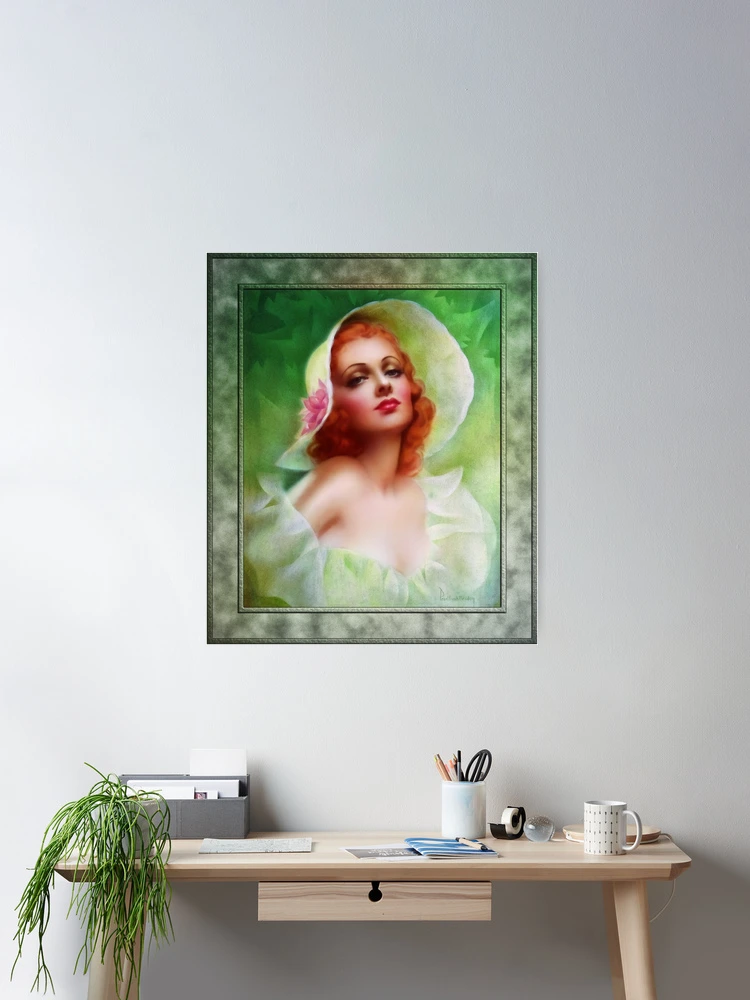
Criado na década de 1930, Mulher ruiva por Pérola Alice Frush Brudon (1907 – 1986) é um exemplo notável do uso delicado de tons suaves e da representação detalhada da beleza feminina pelo artista.. Conhecida por seus retratos sensíveis de mulheres em ambientes serenos e quase etéreos, Brudon captura um momento de graça na vida de uma jovem, provavelmente inspirado nas tradições artísticas do início do século 20. A peça, executado com pinceladas suaves e uma paleta de cores claras, é uma homenagem ao realismo e à beleza do retrato americano durante a época.
Na vanguarda deste retrato está a própria mulher, seus cachos ruivos suaves caindo elegantemente em torno de seu rosto, emoldurado por um grande, chapéu claro adornado com uma flor rosa. Este chapéu, uma característica definidora do assunto, gives her an air of sophistication and youthful vitality. Her facial expression is serene yet enigmatic, with a hint of a smile that evokes a sense of quiet confidence.
The soft pink of her lips contrasts subtly with the gentle tones of her complexion, accentuating the softness of her features. The eyes are a focal point of the portrait; they are wide, cativante, and appear to be gazing directly at the viewer with a gaze that feels both distant and intimate.
The background of the painting, consisting of lush, blurry greens and soft washes of color, suggests an outdoor setting, perhaps a garden or a meadow. The hazy greens surrounding her lend a sense of tranquility and isolation from the world, suggesting that the subject exists in a peaceful moment of solitude. As folhas e a folhagem desfocada contribuem para uma sensação de beleza onírica, como se a mulher fizesse parte da própria paisagem.
Índice
Estilo Artístico e Técnica
O trabalho de Frush Brudon em Mulher ruiva está enraizado nas tradições das belas artes do realismo, embora sua abordagem mude para uma representação um pouco mais romântica e idealizada da forma feminina. O artista usa suave, cores quase pastéis, particularmente nos tons de pele, criando um efeito suave e luminoso que dá ao assunto uma qualidade atemporal. A representação das características da mulher é altamente detalhada, desde a estrutura delicada do rosto até a textura intrincada do cabelo, yet the overall tone of the painting remains soft and smooth, avoiding any harsh lines or sharp contrasts.
The hat, with its wide brim and gentle curves, is another notable feature of the painting, contributing to the sense of softness and grace. Its white color provides a stark contrast to the warmth of the woman’s complexion and the gentle greens of the background. The flower at the side of the hat further adds to the softness of the subject, enhancing the delicacy of the image and the mood of the painting.
In terms of technique, Frush Brudon employed a careful application of color and light, giving the portrait a sense of depth despite its simplicity. O fundo, though blurry, creates a natural environment that enhances the subject’s ethereal presence. The use of light, particularmente no rosto da mulher e na flor em seu cabelo, chama a atenção do espectador para seus traços delicados, ao mesmo tempo que permite que o espectador aprecie a totalidade, renderização suave da pintura.
O tema e o humor da obra de arte
O tema de Mulher ruiva é de feminilidade atemporal e beleza tranquila. A mulher retratada não está no meio de nenhuma grande atividade; em vez de, ela é capturada em um momento de repouso calmo, convidando o espectador a apreciá-la de forma mais contemplativa e íntima.
O macio, fundo nebuloso aumenta a sensação de isolamento, quase como se o espectador estivesse testemunhando um vislumbre íntimo de um momento privado da vida do sujeito. Há uma sensação de serenidade na pintura, and the way in which the subject interacts with the natural surroundings emphasizes a deep connection between the woman and the world around her.
The choice of a red-headed woman is significant, as it highlights an unusual beauty that was not as frequently celebrated in art at the time. O cabelo dela, rich in color and volume, contrasts beautifully with the soft tones of the rest of her features and the setting, further emphasizing her individuality and uniqueness. This red hair, along with the softness of the colors, suggests both warmth and delicacy, key qualities of femininity that are captured in this portrait.
The mood of the artwork is peaceful and reflective, evoking feelings of calm and admiration for the quiet beauty of the subject. It presents the viewer with a sense of tranquility, como se o momento capturado no tempo fosse de puro contentamento. Não há pressa ou pressa no retrato; o assunto existe em uma perfeita, momento imperturbável de graça.
Materiais e Meio
Embora os materiais exatos usados por Frush Brudon em Mulher ruiva não estão definitivamente documentados, é provável que o artista tenha empregado tintas a óleo, como era comum durante este período para retratos. As tintas a óleo permitem a mistura fina de cores e as transições suaves entre tons que são vistas na reprodução suave dos tons de pele e nas transições suaves no fundo.. A qualidade luminosa do retrato, junto com as pinceladas delicadas vistas nos detalhes do rosto e dos cabelos da mulher, sugerem que o óleo foi o meio escolhido para esta peça.
Esta é uma reprodução retocada dos antigos mestres de arte digital de uma imagem de domínio público.
A biografia do artista é derivada de Wikipedia.org
Pearl Alice Frush nasceu em Sioux City, Woodbury, Iowa em 1907; quando ela era jovem, sua família mudou-se para a Costa Dourada do Mississippi e começou seus estudos artísticos em Nova Orleans., Filadélfia e Nova York e depois na School of the Art Institute of Chicago, associada ao Art Institute of Chicago.
Durante o final da década de 1930 e início da década de 1940, Pearl fez trabalho publicitário freelance em Chicago, incluindo o Vogue-Wright Studios., Sundblom, Johnson & Branco, e Gerlach Barklow Co..
Essas empresas publicaram grande parte de sua bem-sucedida arte de calendário de garotas pinup, incluindo Liberty Belles, Meninas do glamour, e glamour 24 horas por dia.
Pearls foi uma das três principais artistas femininas de glamour pinup, incluindo Joyce Ballantyne (1918 – 2006), e Zoë Mozert (1907 – 1993) que fizeram grande sucesso na ilustração de garotas pin-up dominada por Alberto Vargas (1896 – 1982), George Petty (1894 – 1975), Gil Elvgren (1914 – 1980), Bill Medcalf (1920 – 2005), Rolf Armstrong (1889 – 1960) e vários outros.