

Cintes i puntes c1902
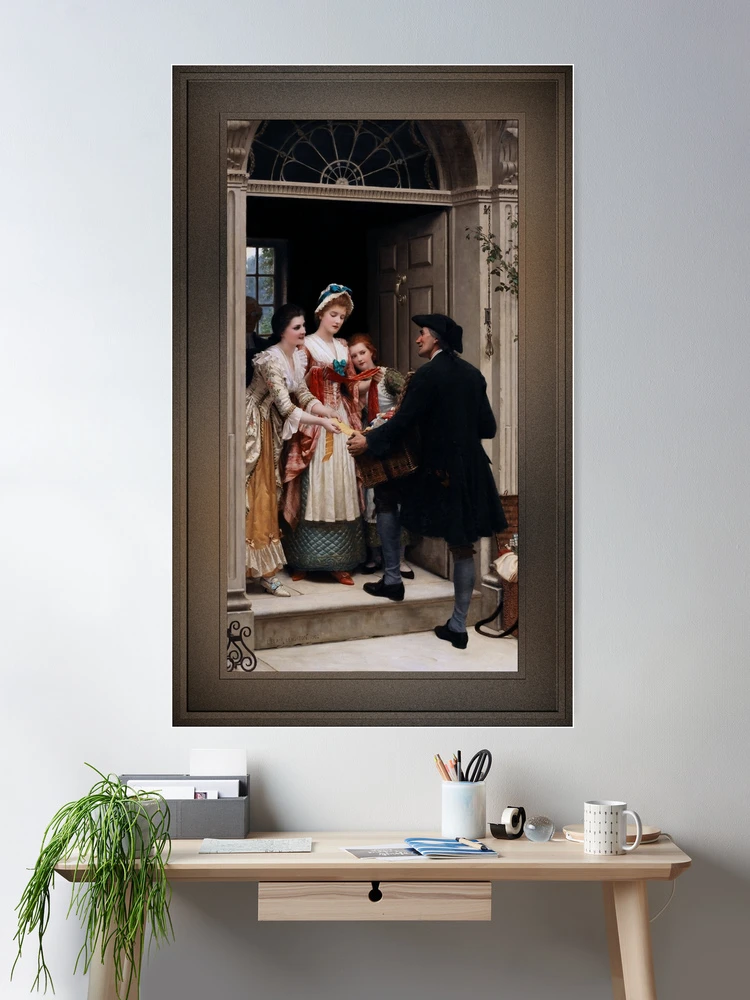
“Cintes i puntes,” creat a 1902 de l'artista britànic Edmund Blair Leighton (1852 – 1922), és un bon exemple del victorià tardà pintura de gènere que personifica l'elegància i l'encant de l'època. Leighton, conegut per les seves hàbils representacions d'escenes històriques i romàntiques, capta magistralment un moment de gràcia refinada en aquesta obra. La pintura se centra en un grup de tres dones involucrades en un moment d'interacció social a la porta d'un gran edifici. L'atenció al detall de l'artista, la riquesa de textures, i la graciosa representació dels seus subjectes reflecteix la seva profunda comprensió de la forma humana i la seva interpretació romàntica dels moments quotidians..
Taula de continguts
Assumpte i composició principal
El punt focal de l'obra d'art és la interacció entre les dones i un home a la porta. L'escena està ambientada en un interior elegant i sofisticat, suggerint l'estatus social dels personatges. Les tres dones, vestit amb un vestit luxós del segle XVIII, es col·loquen a la porta, cadascun adornat amb encaixos i cintes complexos que simbolitzen tant la feminitat com l'estil de moda de l'època. La figura central és una dona amb un vestit blanc amb una faixa vermella, rebent una cistella de l'home. La seva postura suggereix un reconeixement amable, mentre que les altres dues dones, col·locat al seu costat, observar la interacció.
L'home, dempeus a l'entrada, conté una cistella de vímet plena de diversos productes, potser un regal o una ofrena. El seu vestit reflecteix la moda masculina de l'època, amb un abric i un barret que, mentre que formal, conservar un sentit pràctic. La seva cara està lleugerament girada cap a l'espectador, donant la impressió de compromís cordial, tot i que la seva atenció se centra principalment en la dona amb qui està interactuant. La postura de la figura, lleugerament doblegada, afegeix al sentit general de respecte i deferència típics del festeig i els intercanvis socials del segle XIX.
Entorn i Entorn
La configuració de “Cintes i puntes” contribueix significativament a l'estat d'ànim de la peça. La porta és una gran característica arquitectònica, amb columnes i detalls complexos que envolten l'entrada. La finestra ornamentada sobre la porta suggereix l'opulència de l'edifici i l'alta classe social dels seus habitants. The exterior landscape is slightly visible through the open door, hinting at a well-kept garden or grounds typical of wealthy estates during the period.
The interior, visible only in part, hints at further richness, with luxurious drapery and muted light filtering through the doorway. The use of natural light, filtered through the door and window, banya l'escena amb un resplendor càlid, lending a sense of tranquility and harmony to the atmosphere. The light plays a crucial role in highlighting the fabric textures of the women’s dresses and the delicate features of their faces.
Objectes i detalls
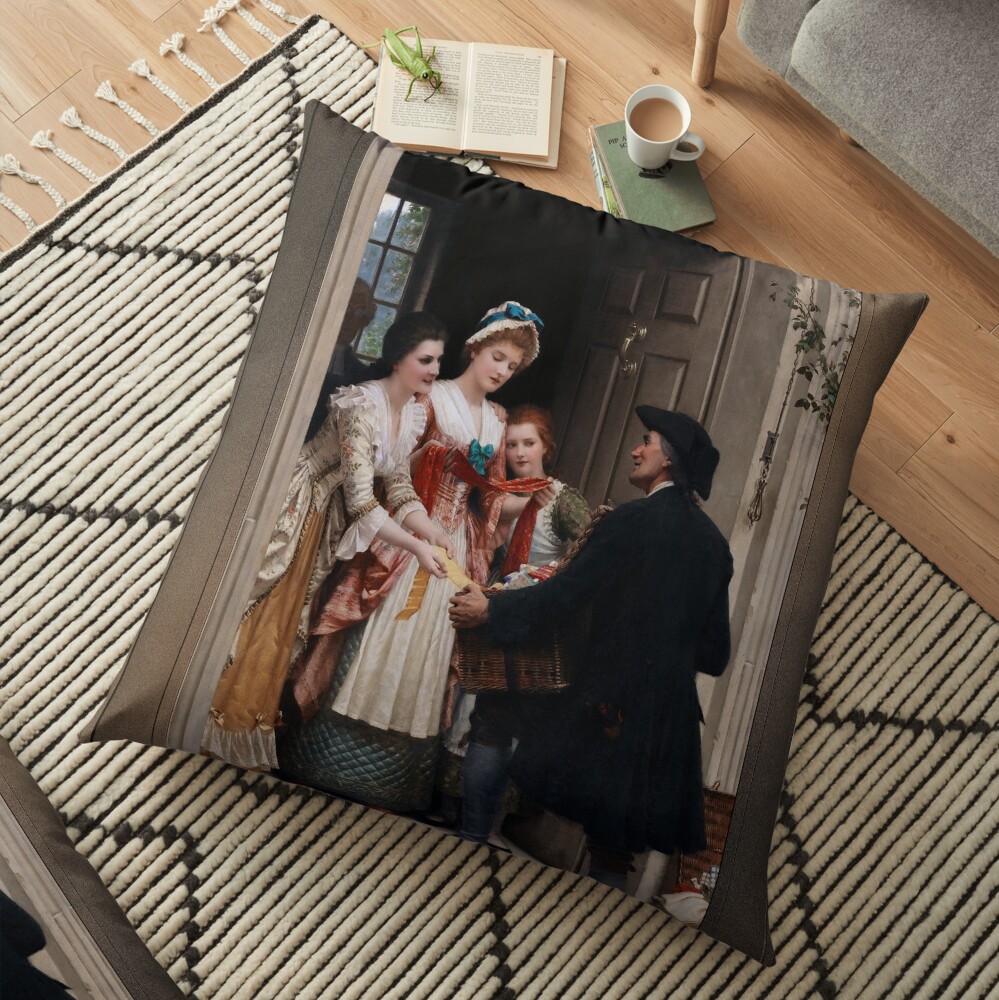
Each object in the scene has been carefully placed to contribute to the overall narrative and ambiance. The man’s basket is central to the exchange, symbolizing a gift or offering, while the ribbons and lace adorning the women’s attire suggest a sense of gentility and sophistication. These elements emphasize the social status of the women, whose fashionable dresses and attention to detail signify wealth and refinement.
The architectural details of the doorway, with its delicate carvings and sweeping lines, create a frame that visually guides the viewer’s attention towards the figures. These details are mirrored by the soft, luxurious fabrics worn by the women, including the delicate lace around the edges of their dresses and the smooth, flowing ribbons that accentuate the contours of their figures. The textures of the clothing, the smoothness of the basket, and the soft shadows of the interior contribute to the rich tactile quality of the painting.
Tema i estat d’ànim
El tema de la pintura és un de la vida domèstica gentil i la interacció social. Reflecteix el refinat, ritme pausat de la societat de classe alta a principis del segle XX, capturant un moment d'intercanvi cortès. La interacció entre l'home i la dona suggereix un sentit de propietat, mentre que l'escenari evoca un món de gràcia i elegància. L'estat d'ànim de la pintura és serè i digne, sense sentit d'urgència ni discordia. Les figures estan compostes i controlades, suggerint un món on es respectin les normes socials, i les interaccions són mesurades i educades.
L'ús de la llum i l'ombra millora la calma, ambient acollidor, while the soft colors of the women’s clothing and the architectural details create a sense of harmony. There is no visible tension or discord, only the tranquil flow of interaction between the figures. This mood invites the viewer to step into a world of refined beauty, where art, moda, and social custom blend seamlessly.
Estil i tècnica
Leighton’s style in “Cintes i puntes” is characteristic of the academic tradition, focusing on historical realism and attention to detail. The painting employs a soft, almost dreamlike quality through the use of light, which accentuates the delicacy of the figures and their surroundings. The artist’s technical expertise is evident in his rendering of fabric textures, from the lace and ribbons on the women’s dresses to the smooth, shiny surface of the basket.
Leighton’s attention to anatomical detail and the draping of fabric reflects his mastery of portraiture and his deep understanding of human form and movement. The clothing of the figures is depicted with painstaking accuracy, with individual folds and creases suggesting the weight and texture of the materials. The use of shadows and light to enhance the forms and create depth in the composition further demonstrates Leighton’s ability to capture the natural beauty of his subjects.
Conclusió
“Cintes i puntes” by Edmund Blair Leighton is a stunning example of late Victorian genre painting, capturing a delicate moment of social exchange within a refined, elegant setting. Through his meticulous attention to detail and mastery of light, Leighton creates a serene, harmonious atmosphere that evokes a sense of nostalgia for an era of grace and civility. The painting’s exquisite portrayal of fabric textures, intricate architectural features, and dignified social interaction reflects the artist’s deep understanding of his subject matter and his ability to evoke a world of beauty, elegància, and charm.
Es tracta d'una reproducció d'antics mestres d'art digital remasteritzada d'una imatge de domini públic que està disponible com a Impressió de tela en línia.
Artista Bio
Informació a continuació derivada de Wikipedia.org
Edmund was born to Caroline Leighton (née Boosey) and artist Charles Blair Leighton (1823 – 1855) in London England on September 21, 1852; and was educated at the University College School, which he left at the age of 15 to work for a tea merchant.
As he had an interest in art and wanted to study it; he enrolled at South Kensington and began taking lesson in the evening; and from there attended Heatherley’s School in Newman Street, Londres.
Quan ell era 21 years of age he entered the Royal Academy of Arts, que es va fundar a 1768; and would later receive his first art commission doing monochrome illustrations for Cassell’s Magazine and its Book of British Ballads.
He exhibited his first painting titled: A Flaw in the Title in 1874 at the Royal Academy, which earned him 200 Pounds; and would exhibit his works annually for the next 40 years at the Royal Academy until 1920.
Edmund was an artist who paid great attention to detail and produced highly finished decorative historical artworks, that featured romanticized scenes of chivalry and women in medieval attire, that had great popular appeal.