

Ripplin Rythm
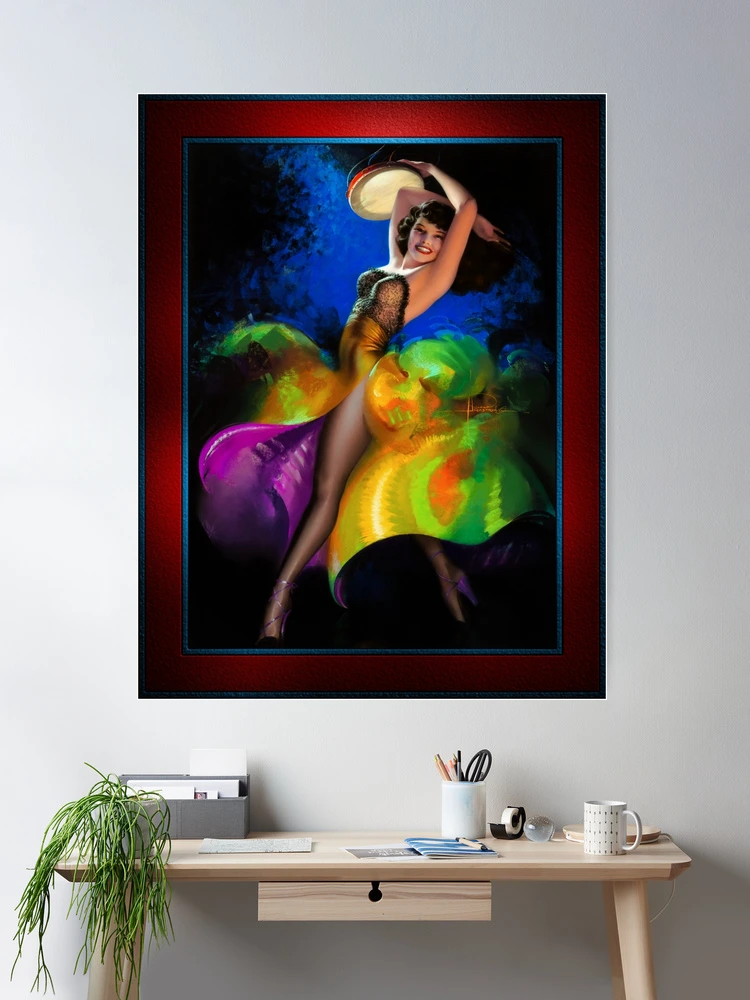
“Ripplin Rhythm,” created by the renowned American artist Rolf Armstrong (1889 – 1960), stands as a testament to the vibrant beauty of pin-up art during the mid-20th century. Armstrong, a prominent figure in the golden era of American commercial art, expertly merges movement, barva, and emotion within this piece, offering a glimpse into the glamour and sensuality that defined the era.
Narozen v 1889, Armstrong’s work was marked by a mastery of light and color, making his images highly sought after in advertisements, illustrations, and fine art. He utilized a unique blend of techniques that brought dynamism to his subjects, a “Ripplin Rhythm” encapsulates this with its fluid and energetic portrayal of a woman in motion.
Obsah
Hlavní předmět: The Vibrant Dancer
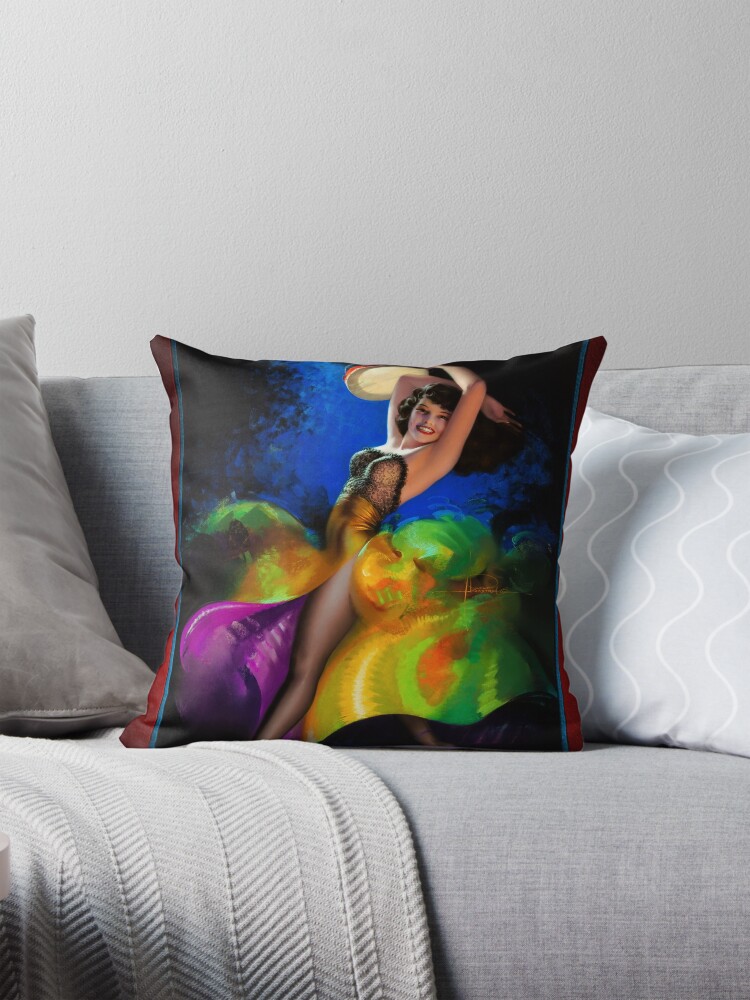
V srdci “Ripplin Rhythm” is a captivating depiction of a dancer in mid-performance. Předmět, a woman, exudes confidence and joy as she spins gracefully, her flowing dress rippling around her body like the waves of an ocean. The dancer’s attire is a burst of color, with swirling shades of green, žlutá, and purple creating a striking contrast against the deep blue background.
The woman’s posture is elegant yet exuberant, her arms raised in a celebratory gesture as she holds a tambourine above her head. Her face radiates happiness, a wide smile revealing her playful spirit. Armstrong has captured not only her motion but also her essence, making her appear as though she is alive with energy and rhythm.
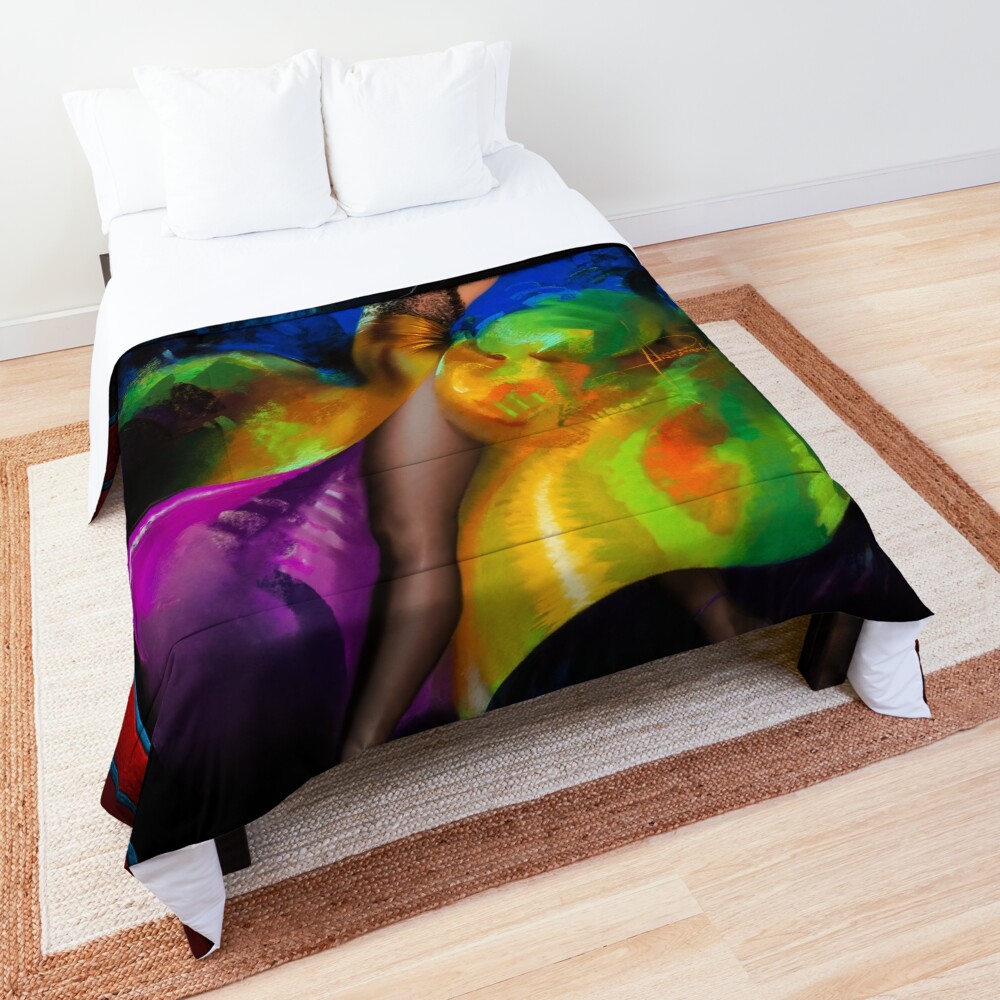
The woman’s vibrant costume, designed to reflect the rhythm of her movements, is a fusion of bold colors. The soft metallic sheen of her golden bodice catches the light, enhancing the dynamic flow of her skirt. Armstrong’s use of color in this piece is masterful, with each hue seemingly chosen to emphasize the woman’s graceful spinning and the lively atmosphere of her performance. The skirt, which flares out around her like an explosive flower, ripples with energy, suggesting the dancer’s movement and the pulse of the music she is engaged with.
Objekty: Tambourine and Flowing Garments
The tambourine held by the dancer is a key object in the painting, not only because it symbolizes the musical rhythm she embodies but also because it ties the composition together. The tambourine’s small yet intricate form contrasts the large, swirling mass of the dancer’s gown, yet it maintains a presence that complements the overall movement within the scene.
The circular shape of the tambourine subtly mirrors the curves and flow of her garments, creating a visual harmony between the two. This object, while seemingly simple, amplifies the sense of rhythm and dance in the composition.
The cascading layers of the dancer’s gown are another vital aspect of the work. Armstrong’s skillful handling of fabric and texture brings the dress to life, with each fold and curve appearing as if it is caught mid-movement. Šaty, with its vibrant, rippling folds, seems to echo the fluidity of the dancer’s form. The luxurious colors and glossy textures of the skirt create a feeling of both elegance and freedom, enhancing the theme of lively celebration.
Terén: The Colorful Background
The background of “Ripplin Rhythm” is one of the key elements that contribute to the piece’s overall mood. A deep blue hue forms the backdrop, providing a striking contrast to the warm colors of the dancer’s attire. This color choice highlights the subject and makes her appear as if she is emerging from a dreamlike or fantastical environment.
Armstrong uses the swirling shapes and dark tones in the background to evoke movement and rhythm, as if the air itself is alive with the same energy that drives the dancer. The fluidity of the colors in the background suggests motion, blending with the dancer’s own movements, creating a seamless connection between subject and environment.
Styl: Art Deco and Glamour
“Ripplin Rhythm” is a quintessential example of Armstrong’s signature style, which draws heavily from Art Deco influences. The streamlined elegance of the figure, the dynamic compositions, and the use of bold, contrasting colors all reflect the Art Deco movement, which was characterized by its celebration of modernity, luxus, and glamour.
Hladký, graceful lines of the dancer’s body and the geometric shapes within the composition convey a sense of sophistication and energy that are central to the Art Deco aesthetic. Ve stejnou dobu, the work also embodies the exuberance and glamour of the pin-up style, which Armstrong helped define. His portrayal of women was not only sensual but celebratory, a “Ripplin Rhythm” is a perfect example of this, as it captures a moment of joyous self-expression.
The dancer’s radiant smile and energetic pose speak to the optimistic and carefree mood of the era. Armstrong’s work is imbued with a sense of youthful vitality, and this painting exemplifies the vibrant energy of American culture during the 1940s. It reflects a time of confidence and joy, set against the backdrop of a world on the cusp of dramatic change.
Téma a nálada: Celebration of Movement and Music
Téma “Ripplin Rhythm” is centered around the celebration of movement, hudba, and femininity. Armstrong captures the essence of dance as an expression of joy and liberation, highlighting the dynamism and beauty of the human form in motion.
The artist has skillfully conveyed the idea that rhythm is not just a sound but a force that can be seen and felt in the movements of the body. The dancer’s bright smile and the lively swirl of her dress communicate a sense of freedom, playfulness, and enthusiasm, making the painting feel like an invitation to partake in the celebration.
The overall mood of the artwork is one of joy and excitement. Armstrong’s use of color and form conveys a sense of lightness and exuberance, and the dancer herself appears to be in the midst of a joyous performance, lost in the music and her own movement. The piece encapsulates a spirit of happiness, optimism, and youthful vitality, evoking a time when life seemed to be filled with endless possibilities.
Závěr
“Ripplin Rhythm” by Rolf Armstrong is more than just a beautiful portrait of a woman in motion; it is a vibrant celebration of life, barva, and music. The dynamic composition, bold use of color, and joyful expression of the dancer all contribute to a sense of energy and rhythm that makes the painting come alive. Armstrong’s mastery of movement and his ability to capture the spirit of an era make this work a timeless example of American art. Through the use of elegant forms, flowing garments, and vibrant hues, Armstrong successfully conveys the joy of dance, the celebration of femininity, and the power of music to inspire movement and expression.
The Enchantress is a retouched digital art old masters reproduction of a public domain image.
Umělec bio z Wikipedia.org
Rolf Armstrong se narodil jako John Scott Armstrong v Bay City, Dubna v Michiganu 21, 1889, Richardovi a Harriet (Scott) Armstrong. Jeho otec vlastnil společnost Boy-Line Fire Boat Company, který zahrnoval řadu osobních lodí. Některé byly nasazeny v Chicagu k použití na tamní světové chicagské světové výstavě 1893.
nicméně, otcova firma a rodina měly problémy, a rodinná usedlost byla ztracena exekucí. v 1899, rodina se přestěhovala do Detroitu, Michigan. Rolfův otec zemřel v 1903, ao rok později se s matkou přestěhovali do Seattlu, Washington, ve stopách svého nejstaršího bratra, William, kteří se tam přestěhovali před rokem. Touto dobou se Rolfovy umělecké zájmy stávaly více než jen zábavou na částečný úvazek.
Přestěhoval se do Chicaga 1908, kde později studoval na Institutu umění. Poté odjel do New Yorku, kde studoval u Roberta Henriho. Po cestě do Paříže v 1919 studovat na Académie Julian, vrátil se do New Yorku a založil studio. v 1921 odjel do Minneapolisu studovat produkci kalendáře u Browna & Bigelow.
Během 20. a 30. let 20. století, jeho práce se objevila na mnoha skladbách, stejně jako na obálkách mnoha časopisů, nejvíce proslulý pro filmové fanouškovské časopisy jako Photoplay a Screenland. Jeho práci většinou tvoří ženy; Mary Pickfordová, Bebe Danielsová, a Greta Garbo jsou jen některé z mnoha, které namaloval.
Armstrongova práce pro Pictorial Review byla z velké části zodpovědná za to, že tento časopis dosáhl nákladu více než dvou milionů 1926. O rok později, byl nejprodávanějším kalendářem ve společnosti Brown & Bigelow. v 1930, RCA ho najala, aby maloval pin-upy, aby propagoval své produkty, a v 1933 Thomas D. Murphy Calendar Company ho podepsala, aby vytvořil sérii obrazů pro jejich řadu.
V březnu 1940, Jewel květiny, dívka z Lumbertonu, Severní Karolina, poslala svou fotku Armstrongovi v reakci na inzerát, který umístil do New York Times. Armstrong, 50 v době, kdy, od té doby sídlí v Hotel des Artistes na West 67th Street na Manhattanu 1939, a hledali nové modely.
Pozval Flowers na rozhovor. V březnu 25, 1940, Flowers začal modelovat pro Armstronga. Jejich profesionální spolupráce a přátelství trvalo dvě desetiletí. První malba, s názvem “Jak se mi vede?”, údajně kvůli Květinám, nezvyklý na modelování, zeptal se Armstrong opakovaně “Jak se mi vede?” během modelování, byl poprvé publikován po vypuknutí druhé světové války.
Byl to Brown & Bigelowův nejprodávanější kalendář pro 1942 v době, kdy firma prodala v Americe miliony kalendářů, a stal se jedním z nejvíce reprodukovaných obrázků Armstronga. Květiny byly oblíbené u amerických vojáků během druhé světové války, z nichž někteří jí poslali dopisy s návrhem na sňatek. Armstrongovy kalendáře a siluety květin byly zkopírovány na bombardéry a další letadla jako nosní kresba a namalovány na věže tanků.
Za války se stala tak známou, i když spíš jako známá tvář než jménem, že servisní dopis adresovaný jednoduše jako “Jewel květiny, New York City” byla doručena správně. Pro mnoho amerických vojáků v zahraničí, zastupovala “Proč bojujeme” duch. NÁS. Prezident Franklin D. Rooseveltova vláda ji pověřila, aby pomohla propagovat válečné dluhopisy.
ledna 1, 1945 vydání časopisu TIME zahrnovalo Armstrongův “Přípitek města” malba květin v článku o umění kalendáře. Článek poznamenal, že kalendáře s “dívčí obrazy” byli “těžce kupované slévárnami, strojírny, prodejci autodoplňků.”
Flowers se vdala 1946. Ona a její manžel žili na několika místech, zatímco on vyzkoušel řadu obchodních podniků, včetně pláže Laguna, Kalifornie, Greenville, Jižní Karolína, Reno, Nevada, kde údajně nějakou dobu pracovala jako dealerka karet, a New York City. Podle Michaela Wooldridge, spoluautor knihy Pin up Dreams: Glamour Art Rolfa Armstronga, Armstrong jí během období, kdy sledovala svého manžela z místa na místo, několikrát zavolal, pokusit se ji přesvědčit, aby se vrátila do New Yorku a dělala mu modelku.
Její kariéra modelky skončila Armstrongovou smrtí v r 1960. Velkou část svého osobního bohatství zanechal Flowersovi. Celkem, Armstrong vytvořil kolem padesáti až šedesáti děl s použitím květin jako modelu.
Rolf Armstrong zemřel v 1960 na ostrově Oahu, Havaj jako jedna z nejlepších “přišpendlit” umělci první poloviny dvacátého století.