

Ripplin Rythm
“Ripplin Rhythm,” created by the renowned American artist Rolf Armstrong (1889 – 1960), stands as a testament to the vibrant beauty of pin-up art during the mid-20th century. Armstrong, a prominent figure in the golden era of American commercial art, expertly merges movement, kolorea, and emotion within this piece, offering a glimpse into the glamour and sensuality that defined the era.
urtean jaioa 1889, Armstrong’s work was marked by a mastery of light and color, making his images highly sought after in advertisements, illustrations, and fine art. He utilized a unique blend of techniques that brought dynamism to his subjects, eta “Ripplin Rhythm” encapsulates this with its fluid and energetic portrayal of a woman in motion.
Edukien taula
Gai nagusia: The Vibrant Dancer
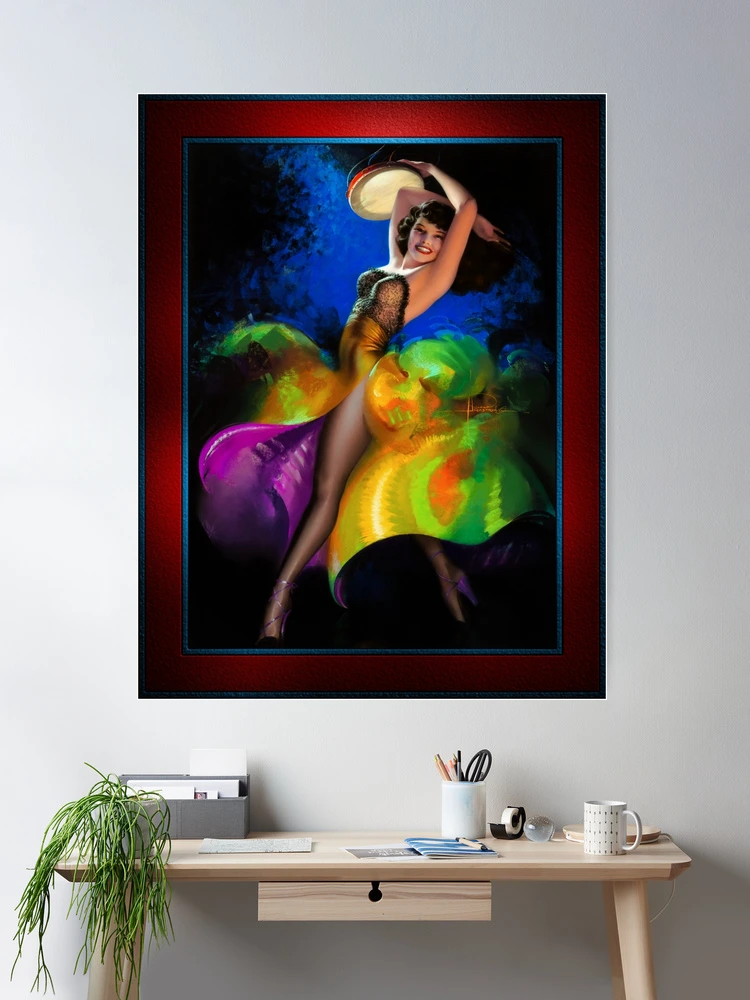
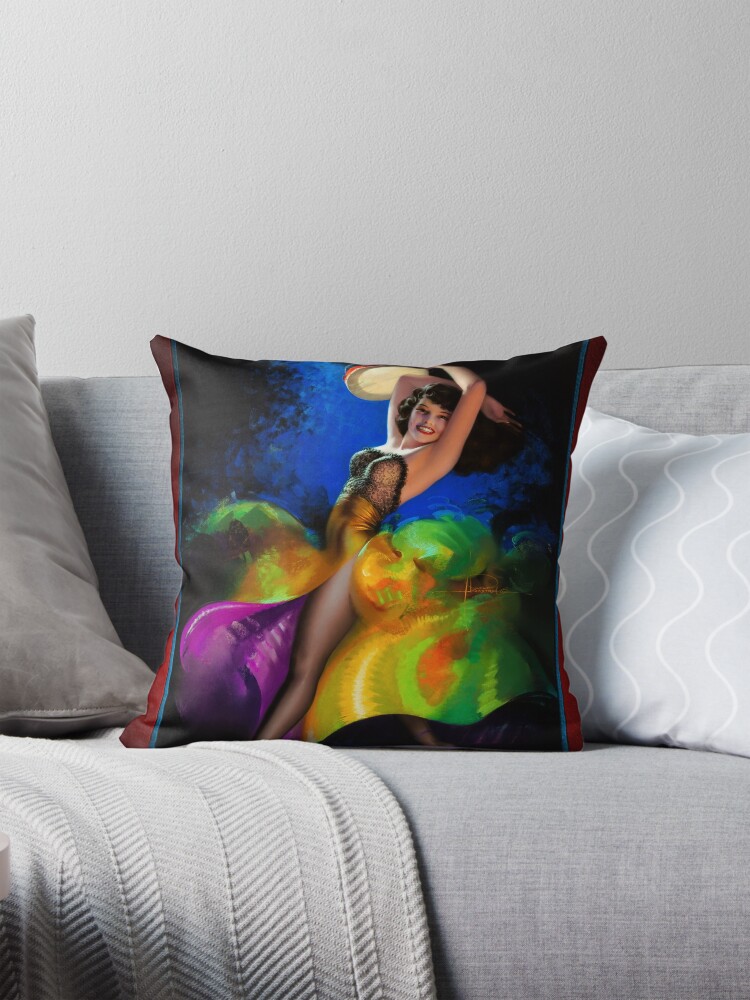
-ren bihotzean “Ripplin Rhythm” is a captivating depiction of a dancer in mid-performance. Gaia, a woman, exudes confidence and joy as she spins gracefully, her flowing dress rippling around her body like the waves of an ocean. The dancer’s attire is a burst of color, with swirling shades of green, horia, and purple creating a striking contrast against the deep blue background.
The woman’s posture is elegant yet exuberant, her arms raised in a celebratory gesture as she holds a tambourine above her head. Her face radiates happiness, a wide smile revealing her playful spirit. Armstrong has captured not only her motion but also her essence, making her appear as though she is alive with energy and rhythm.
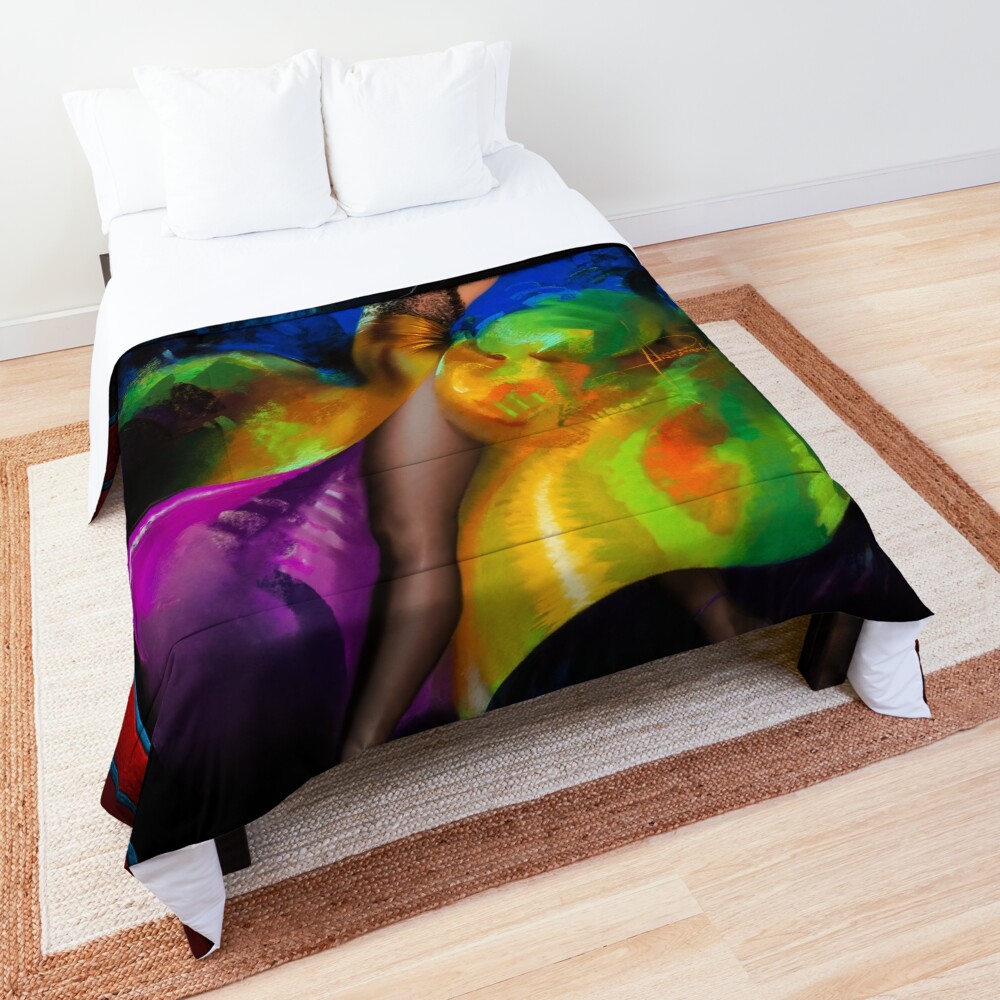
The woman’s vibrant costume, designed to reflect the rhythm of her movements, is a fusion of bold colors. The soft metallic sheen of her golden bodice catches the light, enhancing the dynamic flow of her skirt. Armstrong’s use of color in this piece is masterful, with each hue seemingly chosen to emphasize the woman’s graceful spinning and the lively atmosphere of her performance. Gona, which flares out around her like an explosive flower, ripples with energy, suggesting the dancer’s movement and the pulse of the music she is engaged with.
The Objects: Tambourine and Flowing Garments
The tambourine held by the dancer is a key object in the painting, not only because it symbolizes the musical rhythm she embodies but also because it ties the composition together. The tambourine’s small yet intricate form contrasts the large, swirling mass of the dancer’s gown, yet it maintains a presence that complements the overall movement within the scene.
The circular shape of the tambourine subtly mirrors the curves and flow of her garments, creating a visual harmony between the two. This object, while seemingly simple, amplifies the sense of rhythm and dance in the composition.
The cascading layers of the dancer’s gown are another vital aspect of the work. Armstrong’s skillful handling of fabric and texture brings the dress to life, with each fold and curve appearing as if it is caught mid-movement. Bata, with its vibrant, rippling folds, seems to echo the fluidity of the dancer’s form. The luxurious colors and glossy textures of the skirt create a feeling of both elegance and freedom, enhancing the theme of lively celebration.
Lurra: The Colorful Background
-ren atzealdea “Ripplin Rhythm” is one of the key elements that contribute to the piece’s overall mood. A deep blue hue forms the backdrop, providing a striking contrast to the warm colors of the dancer’s attire. This color choice highlights the subject and makes her appear as if she is emerging from a dreamlike or fantastical environment.
Armstrong uses the swirling shapes and dark tones in the background to evoke movement and rhythm, as if the air itself is alive with the same energy that drives the dancer. The fluidity of the colors in the background suggests motion, blending with the dancer’s own movements, creating a seamless connection between subject and environment.
Estilo: Art Deco and Glamour
“Ripplin Rhythm” is a quintessential example of Armstrong’s signature style, which draws heavily from Art Deco influences. The streamlined elegance of the figure, the dynamic compositions, and the use of bold, contrasting colors all reflect the Art Deco movement, which was characterized by its celebration of modernity, luxua, eta glamourra.
Leuna, graceful lines of the dancer’s body and the geometric shapes within the composition convey a sense of sophistication and energy that are central to the Art Deco aesthetic. Aldi berean, the work also embodies the exuberance and glamour of the pin-up style, which Armstrong helped define. His portrayal of women was not only sensual but celebratory, eta “Ripplin Rhythm” is a perfect example of this, as it captures a moment of joyous self-expression.
The dancer’s radiant smile and energetic pose speak to the optimistic and carefree mood of the era. Armstrong’s work is imbued with a sense of youthful vitality, and this painting exemplifies the vibrant energy of American culture during the 1940s. It reflects a time of confidence and joy, set against the backdrop of a world on the cusp of dramatic change.
Gaia eta Aldartea: Celebration of Movement and Music
Gaia “Ripplin Rhythm” is centered around the celebration of movement, musika, eta feminitatea. Armstrong captures the essence of dance as an expression of joy and liberation, highlighting the dynamism and beauty of the human form in motion.
The artist has skillfully conveyed the idea that rhythm is not just a sound but a force that can be seen and felt in the movements of the body. The dancer’s bright smile and the lively swirl of her dress communicate a sense of freedom, playfulness, and enthusiasm, making the painting feel like an invitation to partake in the celebration.
The overall mood of the artwork is one of joy and excitement. Armstrong’s use of color and form conveys a sense of lightness and exuberance, and the dancer herself appears to be in the midst of a joyous performance, lost in the music and her own movement. The piece encapsulates a spirit of happiness, baikortasuna, and youthful vitality, evoking a time when life seemed to be filled with endless possibilities.
Bukaera
“Ripplin Rhythm” by Rolf Armstrong is more than just a beautiful portrait of a woman in motion; it is a vibrant celebration of life, kolorea, eta musika. The dynamic composition, kolorearen erabilera ausarta, and joyful expression of the dancer all contribute to a sense of energy and rhythm that makes the painting come alive. Armstrong’s mastery of movement and his ability to capture the spirit of an era make this work a timeless example of American art. Through the use of elegant forms, flowing garments, and vibrant hues, Armstrong successfully conveys the joy of dance, the celebration of femininity, and the power of music to inspire movement and expression.
The Enchantress is a retouched digital art old masters reproduction of a public domain image.
Artistaren biografia Wikipedia.org
Rolf Armstrong John Scott Armstrong jaio zen Bay Cityn, Michigan apirilean 21, 1889, Richard eta Harriet-i (Scott) Armstrong. Bere aita Boy-Line Fire Boat Companyren jabea zen, bidaiari-ontzien lerroa barne hartzen zuena. Batzuk Chicagon zabaldu zituzten bertan Chicagoko Munduko Azokan erabiltzeko 1893.
Alabaina, aitaren negozioa eta familia borrokan ari ziren, eta familiaren etxea galdu egin zen. In 1899, familia Detroitera joan zen bizitzera, Michigan. Rolf-en aita hil zen 1903, eta urtebete geroago bera eta bere ama Seattlera joan ziren bizitzera, Washington, bere anaia zaharrenaren urratsei jarraituz, William, urtebete lehenago hara joandakoa. Ordurako Rolf-en interes artistikoak denbora partzialeko plazer bat baino gehiago sortzen ari ziren.
urtean Chicagora joan zen bizitzera 1908, non gero Arte Institutuan ikasi zuen. Ondoren, New Yorkera joan zen, non Robert Henrirekin ikasi zuen. Parisera bidaia baten ondoren 1919 Académie Julian-en ikasteko, New Yorkera itzuli eta estudio bat sortu zuen. In 1921 Minneapolisera joan zen Brownen egutegiaren ekoizpena ikastera & Bigelow.
1920ko eta 1930eko hamarkadetan zehar, bere lana partitura askotan agertu zen, baita aldizkari askoren azaletan ere, Zinema zaleen aldizkarietarako ospetsuena, hala nola Photoplay eta Screenland. Bere lana emakumeek osatzen dute gehienbat; Mary Pickford, Baby Daniels, eta Greta Garbo margotu zituen ugarietako batzuk besterik ez dira.
Armstrongek Pictorial Review-erako egindako lana izan zen aldizkari horrek bi milioitik gorako tirada lortzearen erantzule nagusia. 1926. Urtebete geroago, Brownen egutegiko artistarik salduena izan zen & Bigelow. In 1930, RCAk bere produktuak iragartzeko pin-upak margotzeko kontratatu zuen, eta barruan 1933 Thomas D. Murphy Calendar Company-k bere lerrorako margolan sorta bat ekoizteko sinatu zuen.
Martxoan 1940, Lore Bitxiak, Lumbertongo neska bat, Ipar Carolina, Armstrong-i bere argazkia bidali zion hark New York Times-en jarritako iragarki bati erantzunez. Armstrong, 50 garai hartan, Manhattango West 67th Street-eko Hotel des Artistes-en zuen egoitza geroztik 1939, eta modelo berrien bila zebilen.
Flowers elkarrizketa baterako gonbidatu zuen. Martxoan 25, 1940, Loreak Armstrongentzat modelatzen hasi ziren. Haien lankidetza eta adiskidetasun profesionalak bi hamarkada iraun zuen. Lehenengo margolana, izenburupean “Nola nabil?”, Loreak delako, modelatzera ohituta ez dagoena, behin eta berriz galdetu zuen Armstrongek “Nola nabil?” modelaje saioan, Bigarren Mundu Gerra hasi ondoren argitaratu zen lehen aldiz.
Brown zen & Bigelow-en egutegirik salduena 1942 konpainiak Amerikan milioika egutegi saltzen zituen garaian, eta Armstrongen irudi erreproduzituenetako bat bihurtu zen. Flowers ezaguna zen militar amerikarren artean Bigarren Mundu Gerran, haietako batzuek ezkontza proposatzeko gutunak bidali zizkioten. Armstrongen egutegiak eta Loreen siluetak bonbardatzaile eta beste hegazkin batzuetan kopiatu zituzten sudur-arte gisa eta tankeen dorreetan margotu ziren..
Gerra garaian hain ezaguna egin zen, nahiz eta izenez baino aurpegi ospetsu gisa, militar baten gutuna besterik ez bezala zuzendua “Lore Bitxiak, New York hiria” behar bezala entregatu zen. Atzerrian dauden militar amerikar askorentzat, irudikatu zuen “Zergatik Borrokatzen dugu” izpiritua. AEB. Franklin D. presidentea. Roosevelten gobernuak gerra-loturak sustatzen laguntzeko eskatu zuen.
Urtarrila 1, 1945 TIME aldizkariaren edizioak Armstrong-ena barne hartu zuen “Herriaren brindisa” Loreak margotzea Egutegiko Arteari buruzko artikulu batean. Artikuluak adierazi zuen egutegiekin “neska margoak” ziren “burdinolek asko erosi zuten, makina dendak, auto-hornikuntza-saltzaileak.”
Loreak bertan ezkondu ziren 1946. Bera eta bere senarra hainbat tokitan bizi ziren hainbat negozio-asmotan saiatu zen bitartean, tartean, Laguna Beach, Kalifornia, Greenville, Hego Carolina, Reno, Nevada, non txartel banatzaile gisa lan egin omen zuen denbora batez, eta New York hiria. Michael Wooldridgeren arabera, Pin up Dreams-en egilekidea: Rolf Armstrongen Glamour Artea, Armstrongek hainbat aldiz deitu zion senarrari segika ibili zen garaian, New Yorkera itzultzeko eta beraren eredua konbentzitzen saiatzeko.
Bere modelo-karrera Armstrongen heriotzarekin amaitu zen 1960. Bere aberastasun pertsonalaren zati handi bat Flowers-i utzi zion. Guztira, Armstrongek berrogeita hamar edo hirurogei lan inguru sortu zituen Flowers eredutzat hartuta.
urtean hil zen Rolf Armstrong 1960 Oahu uhartean, Hawaii onenetako bat bezala “pin-up” mendearen lehen erdiko artistak.