

Ripplin Rythm
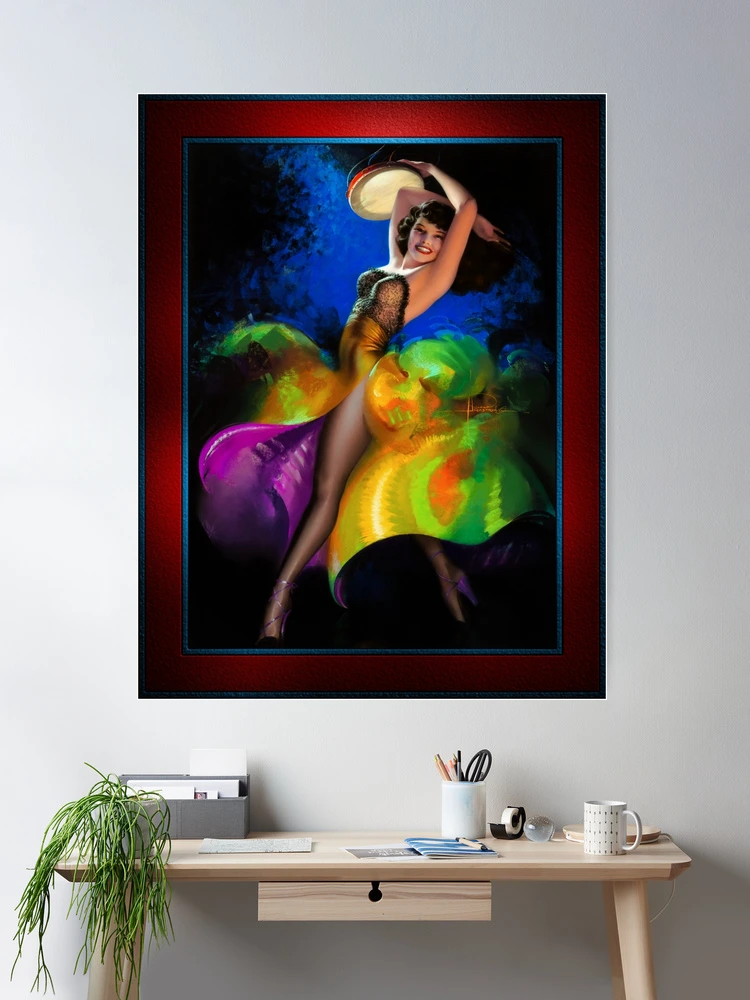
“Ripplin Rhythm,” created by the renowned American artist Rolf Armstrong (1889 – 1960), stands as a testament to the vibrant beauty of pin-up art during the mid-20th century. Armstrong, a prominent figure in the golden era of American commercial art, expertly merges movement, dath, and emotion within this piece, offering a glimpse into the glamour and sensuality that defined the era.
Rugadh i 1889, Armstrong’s work was marked by a mastery of light and color, making his images highly sought after in advertisements, illustrations, and fine art. He utilized a unique blend of techniques that brought dynamism to his subjects, agus “Ripplin Rhythm” encapsulates this with its fluid and energetic portrayal of a woman in motion.
Clár na nÁbhar
An phríomh -ábhar: The Vibrant Dancer
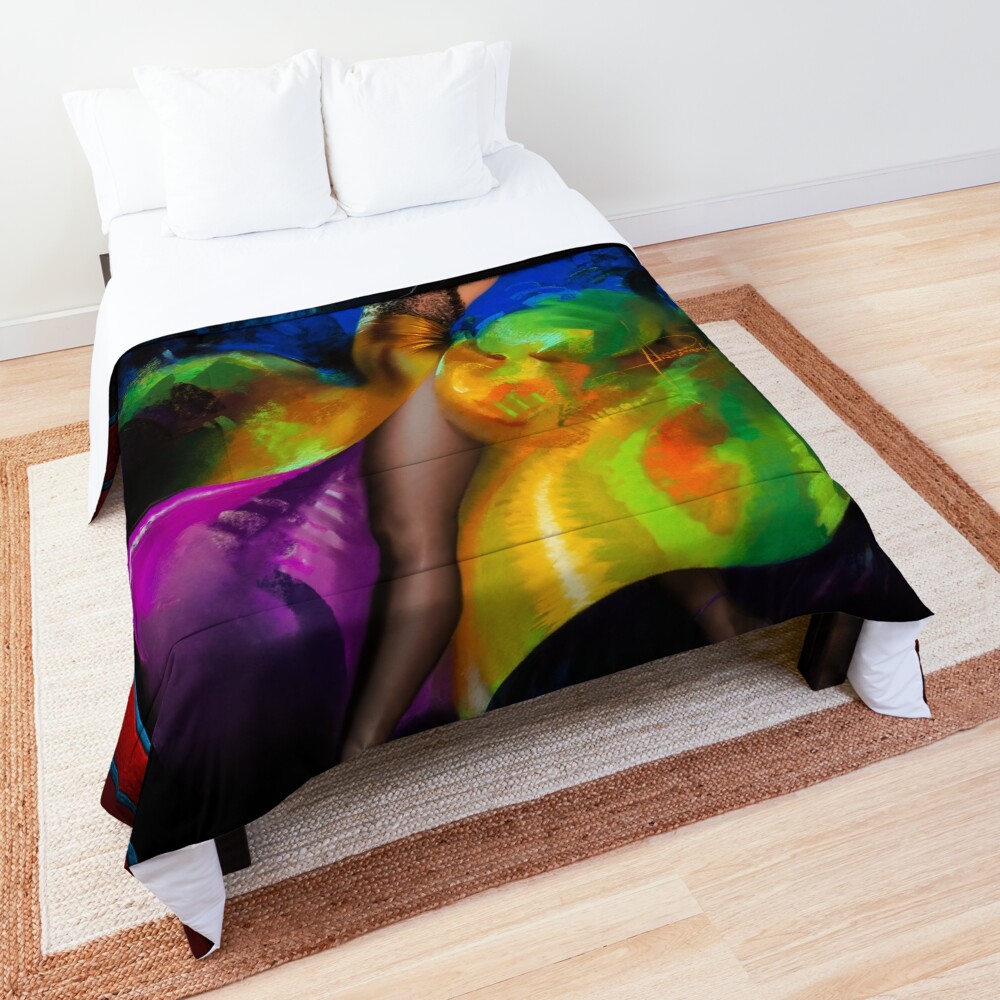
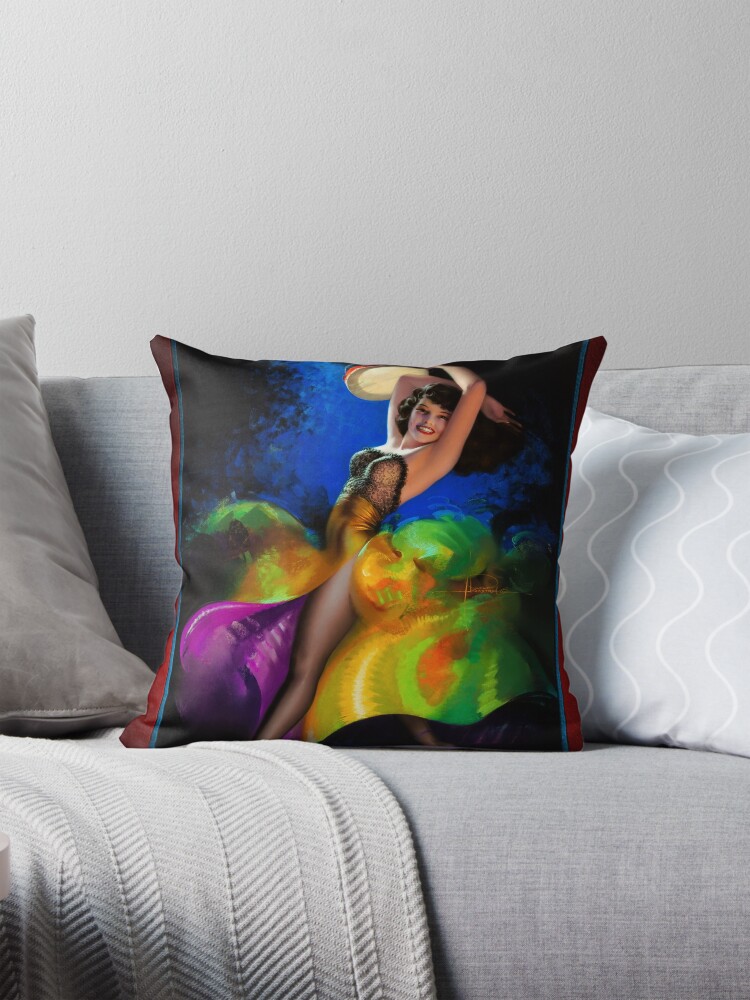
I gcroílár na “Ripplin Rhythm” is a captivating depiction of a dancer in mid-performance. An t-ábhar, a woman, exudes confidence and joy as she spins gracefully, her flowing dress rippling around her body like the waves of an ocean. The dancer’s attire is a burst of color, with swirling shades of green, buí, and purple creating a striking contrast against the deep blue background.
The woman’s posture is elegant yet exuberant, her arms raised in a celebratory gesture as she holds a tambourine above her head. Her face radiates happiness, a wide smile revealing her playful spirit. Armstrong has captured not only her motion but also her essence, making her appear as though she is alive with energy and rhythm.
The woman’s vibrant costume, designed to reflect the rhythm of her movements, is a fusion of bold colors. The soft metallic sheen of her golden bodice catches the light, enhancing the dynamic flow of her skirt. Armstrong’s use of color in this piece is masterful, with each hue seemingly chosen to emphasize the woman’s graceful spinning and the lively atmosphere of her performance. An sciorta, which flares out around her like an explosive flower, ripples with energy, suggesting the dancer’s movement and the pulse of the music she is engaged with.
The Objects: Tambourine and Flowing Garments
The tambourine held by the dancer is a key object in the painting, not only because it symbolizes the musical rhythm she embodies but also because it ties the composition together. The tambourine’s small yet intricate form contrasts the large, swirling mass of the dancer’s gown, yet it maintains a presence that complements the overall movement within the scene.
The circular shape of the tambourine subtly mirrors the curves and flow of her garments, creating a visual harmony between the two. This object, while seemingly simple, amplifies the sense of rhythm and dance in the composition.
The cascading layers of the dancer’s gown are another vital aspect of the work. Armstrong’s skillful handling of fabric and texture brings the dress to life, with each fold and curve appearing as if it is caught mid-movement. An gúna, with its vibrant, rippling folds, seems to echo the fluidity of the dancer’s form. The luxurious colors and glossy textures of the skirt create a feeling of both elegance and freedom, enhancing the theme of lively celebration.
tír-raon: The Colorful Background
Cúlra na “Ripplin Rhythm” is one of the key elements that contribute to the piece’s overall mood. A deep blue hue forms the backdrop, providing a striking contrast to the warm colors of the dancer’s attire. This color choice highlights the subject and makes her appear as if she is emerging from a dreamlike or fantastical environment.
Armstrong uses the swirling shapes and dark tones in the background to evoke movement and rhythm, as if the air itself is alive with the same energy that drives the dancer. The fluidity of the colors in the background suggests motion, blending with the dancer’s own movements, creating a seamless connection between subject and environment.
Stíl: Art Deco and Glamour
“Ripplin Rhythm” is a quintessential example of Armstrong’s signature style, which draws heavily from Art Deco influences. The streamlined elegance of the figure, the dynamic compositions, and the use of bold, contrasting colors all reflect the Art Deco movement, which was characterized by its celebration of modernity, só, agus glamour.
An réidh, graceful lines of the dancer’s body and the geometric shapes within the composition convey a sense of sophistication and energy that are central to the Art Deco aesthetic. At the same time, the work also embodies the exuberance and glamour of the pin-up style, which Armstrong helped define. His portrayal of women was not only sensual but celebratory, agus “Ripplin Rhythm” is a perfect example of this, as it captures a moment of joyous self-expression.
The dancer’s radiant smile and energetic pose speak to the optimistic and carefree mood of the era. Armstrong’s work is imbued with a sense of youthful vitality, and this painting exemplifies the vibrant energy of American culture during the 1940s. It reflects a time of confidence and joy, set against the backdrop of a world on the cusp of dramatic change.
Téama agus giúmar: Celebration of Movement and Music
Téama na “Ripplin Rhythm” is centered around the celebration of movement, Ceol, agus femininity. Armstrong captures the essence of dance as an expression of joy and liberation, highlighting the dynamism and beauty of the human form in motion.
The artist has skillfully conveyed the idea that rhythm is not just a sound but a force that can be seen and felt in the movements of the body. The dancer’s bright smile and the lively swirl of her dress communicate a sense of freedom, playfulness, and enthusiasm, making the painting feel like an invitation to partake in the celebration.
The overall mood of the artwork is one of joy and excitement. Armstrong’s use of color and form conveys a sense of lightness and exuberance, and the dancer herself appears to be in the midst of a joyous performance, lost in the music and her own movement. The piece encapsulates a spirit of happiness, optimism, and youthful vitality, evoking a time when life seemed to be filled with endless possibilities.
Conclúid
“Ripplin Rhythm” by Rolf Armstrong is more than just a beautiful portrait of a woman in motion; it is a vibrant celebration of life, dath, and music. The dynamic composition, bold use of color, and joyful expression of the dancer all contribute to a sense of energy and rhythm that makes the painting come alive. Armstrong’s mastery of movement and his ability to capture the spirit of an era make this work a timeless example of American art. Through the use of elegant forms, flowing garments, and vibrant hues, Armstrong successfully conveys the joy of dance, the celebration of femininity, and the power of music to inspire movement and expression.
The Enchantress is a retouched digital art old masters reproduction of a public domain image.
Beathaisnéis Ealaíontóir Ó Wikipedia.org
Rugadh Rolf Armstrong John Scott Armstrong i gCathair na Bá, Michigan ar Aibreán 21, 1889, do Risteard agus Harriet (Scott) Armstrong. Bhí úinéireacht ag a athair ar an Boy-Line Fire Boat Company, lena n-áirítear líne long paisinéirí. Imscaradh cuid acu i Chicago le húsáid ag Aonach Domhanda Chicago ansin i 1893.
ach, bhí gnó agus teaghlach an athar ag streachailt, agus cailleadh áras an teaghlaigh de bharr imfhálú. I 1899, bhog an teaghlach go Detroit, Michigan. Fuair athair Rolf bás i 1903, agus bliain ina dhiaidh sin bhog sé féin agus a mháthair go Seattle, Washington, ag leanúint chéimeanna a dhearthár is sine, Uilliam, a bhog ann bliain roimhe sin. Faoin am seo bhí spéiseanna ealaíne Rolf ag teacht chun cinn níos mó ná pléisiúr páirtaimseartha.
Bhog sé go Chicago i 1908, áit a ndearna sé staidéar níos déanaí san Institiúid Ealaíne. Chuaigh sé ar aghaidh go Nua Eabhrac ansin, áit a ndearna sé staidéar le Robert Henri. Tar éis turas go Páras i 1919 chun staidéar a dhéanamh san Académie Julian, d’fhill sé ar Nua-Eabhrac agus bhunaigh sé stiúideo. I 1921 chuaigh sé go Minneapolis chun staidéar a dhéanamh ar tháirgeadh féilire ag Brown & atá ina seasamh i lár srutha ag sileadh le slat agus ríl ina lámh dheas a bhfuil crúca aici ar iasc atá sí ag tógáil amach as an uisce lena lámh chlé i líontán éisc.
I rith na 1920idí agus na 1930idí, bhí a shaothar le feiceáil ar go leor píosaí bileog ceoil, chomh maith le ar chlúdaigh go leor irisí, is cáiliúla iad as irisí lucht leanúna scannán ar nós Photoplay agus Screenland. Mná den chuid is mó atá i mbun a chuid oibre; Mary Pickford, daniels leanbh, agus níl Greta Garbo ach cuid den líon iomadúla a phéinteáil sé.
Bhí obair Armstrong don Pictorial Review freagrach go príomha as an iris sin a bhaint amach níos mó ná dhá mhilliún faoin gcéad 1926. Bliain ina dhiaidh sin, bhí sé ar an ealaíontóir féilire is mó díol ag Brown & atá ina seasamh i lár srutha ag sileadh le slat agus ríl ina lámh dheas a bhfuil crúca aici ar iasc atá sí ag tógáil amach as an uisce lena lámh chlé i líontán éisc. I 1930, D'fhostaigh RCA é chun pin-ups a phéinteáil chun a gcuid táirgí a fhógairt, agus i 1933 Tomás D. Shínigh Murphy Calendar Company é chun sraith pictiúr a tháirgeadh dá líne.
I mí an Mhárta 1940, Bláthanna Jewel, cailín ó Lumberton, Carolina Thuaidh, sheol sé pictiúr di féin chuig Armstrong mar fhreagra ar fhógra a chuir sé sa New York Times. Armstrong, 50 ag an am, Bhí sé bunaithe ag an Hotel des Artistes ar West 67th Street i Manhattan ó shin 1939, agus bhí sé ag lorg samhlacha nua.
Thug sé cuireadh do Flowers le haghaidh agallaimh. Ar an Mhárta 25, 1940, Thosaigh bláthanna ag samhaltú do Armstrong. Mhair a gcomhoibriú gairmiúil agus a gcairdeas ar feadh fiche bliain. An chéad phéintéireacht, dar teideal “Conas atá ag éirí liom?”, reportedly mar gheall ar Bláthanna, gan úsáid le samhaltú, arís agus arís eile d'iarr Armstrong “Conas atá ag éirí liom?” le linn an tseisiúin shamhaltú, a foilsíodh den chéad uair tar éis don Dara Cogadh Domhanda tosú.
Brown a bhí ann & An féilire díolacháin is fearr le Bigelow 1942 ag am nuair a dhíol an chuideachta na milliúin féilirí i Meiriceá, agus bhí sé ar cheann de na pictiúir is mó atáirgeadh ag Armstrong. Bhí an-tóir ar bhláthanna i measc lucht seirbhíse Mheiriceá le linn an Dara Cogadh Domhanda, chuir cuid acu litreacha chuici ag moladh pósadh. Rinneadh féilirí Armstrong agus scáthchruth Bláthanna a chóipeáil ar bhuamálaithe agus ar eitleáin eile mar ealaín na srón agus péinteáilte ar túiríní umar.
Tháinig an oiread sin aithne uirthi le linn an chogaidh, cé go bhfuil níos mó mar aghaidh cáiliúil ná de réir ainm, gur dhírigh leitir seirbhíseach díreach mar “Bláthanna Jewel, Cathair Nua-Eabhrac” seachadadh i gceart. Do sheirbhísigh Mheiriceá go leor thar lear, rinne sí ionadaíocht ar an “Cén Fáth a Throidimid” spiorad. U.S. Uachtarán Franklin D. Liostáil rialtas Roosevelt í chun cabhrú le bannaí cogaidh a chur chun cinn.
An Eanair 1, 1945 Eagrán den iris TIME san áireamh Armstrong's “Tósta an Bhaile” péinteáil Bláthanna in alt faoi Ealaín Féilire. Thug an t-alt faoi deara go bhfuil féilirí le “pictiúir cailín” bhí “ceannaithe go mór ag teilgcheártaí, siopaí meaisín, déileálaithe uathoibríoch-soláthair.”
Phós bláthanna i 1946. Chónaigh sí féin agus a fear céile i go leor áiteanna le linn dó iarracht a dhéanamh ar roinnt fiontar gnó, lena n-áirítear Laguna Beach, California, Greenville, Carolina Theas, Reno, Nevada, áit a raibh sí ag obair mar dhéileálaí cártaí ar feadh tamaill tuairiscithe, agus Cathair Nua Eabhrac. Dar le Michael Wooldridge, comhúdar Pin up Dreams: Ealaín glamour de Rolf Armstrong, Chuir Armstrong glaoch uirthi roinnt uaireanta le linn na tréimhse a raibh sí ag leanúint a fir chéile ó áit go háit, iarracht a chur ina luí uirthi filleadh ar Nua-Eabhrac agus samhail a dhéanamh dó.
Tháinig deireadh lena gairm samhaltaithe nuair a bhásaigh Armstrong i 1960. D’fhág sé cuid mhór dá shaibhreas pearsanta ag Flowers. San iomlán, Chruthaigh Armstrong timpeall caoga go seasca saothar ag baint úsáide as Flowers mar mhúnla.
Fuair Rolf Armstrong bás i 1960 ar oileán Oahu, Haváí mar cheann de na cinn is fearr “bioráin suas” ealaíontóirí den chéad leath den fhichiú haois.