

Ripplin Rythm
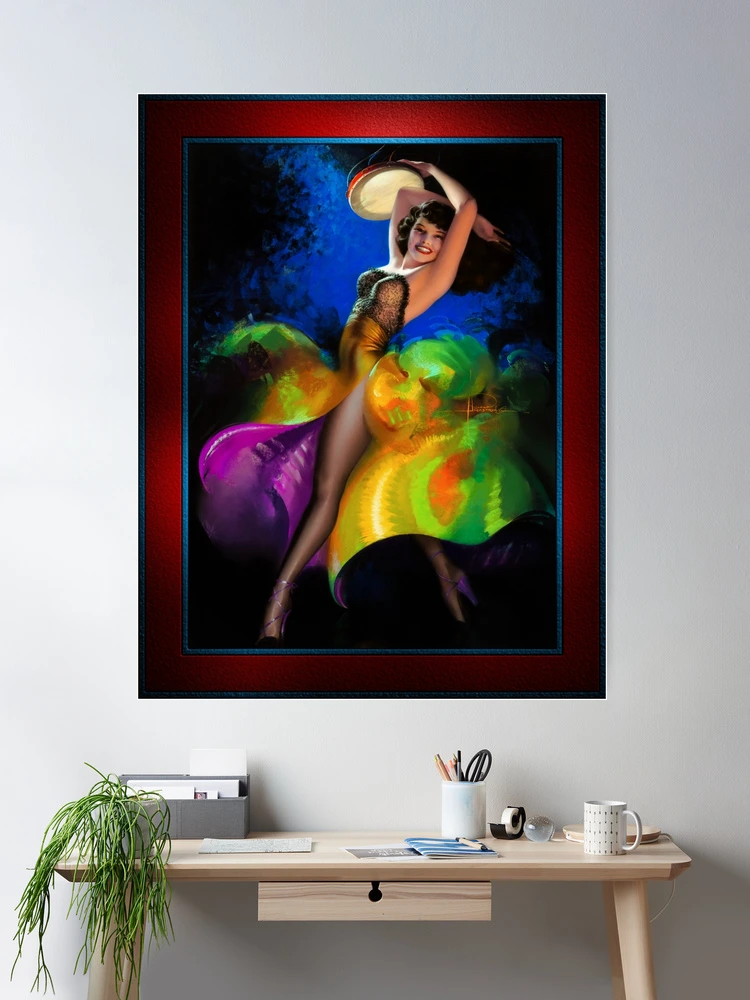
“Ripplin Rhythm,” created by the renowned American artist Rolf Armstrong (1889 – 1960), stands as a testament to the vibrant beauty of pin-up art during the mid-20th century. Armstrong, a prominent figure in the golden era of American commercial art, expertly merges movement, lit, and emotion within this piece, offering a glimpse into the glamour and sensuality that defined the era.
Fæddur í 1889, Armstrong’s work was marked by a mastery of light and color, making his images highly sought after in advertisements, illustrations, and fine art. He utilized a unique blend of techniques that brought dynamism to his subjects, og “Ripplin Rhythm” encapsulates this with its fluid and energetic portrayal of a woman in motion.
Efnisyfirlit
Aðalefni: The Vibrant Dancer
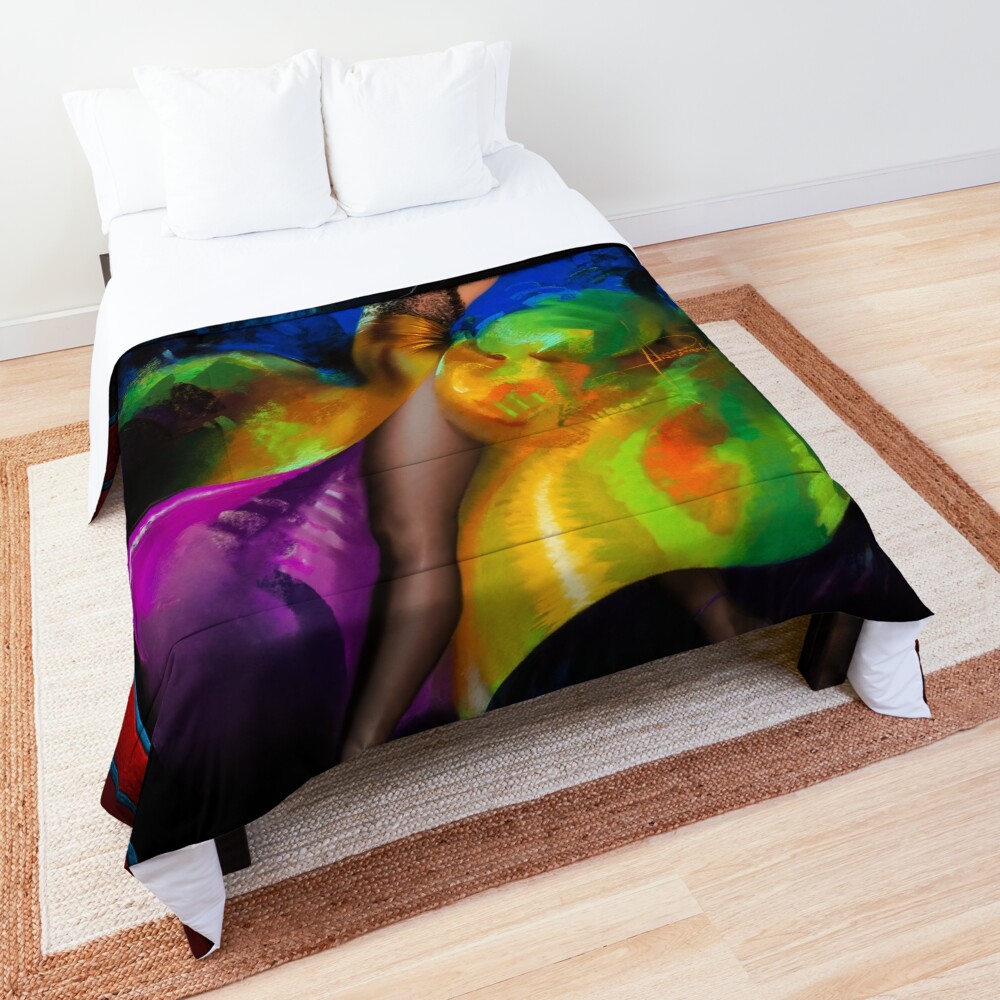
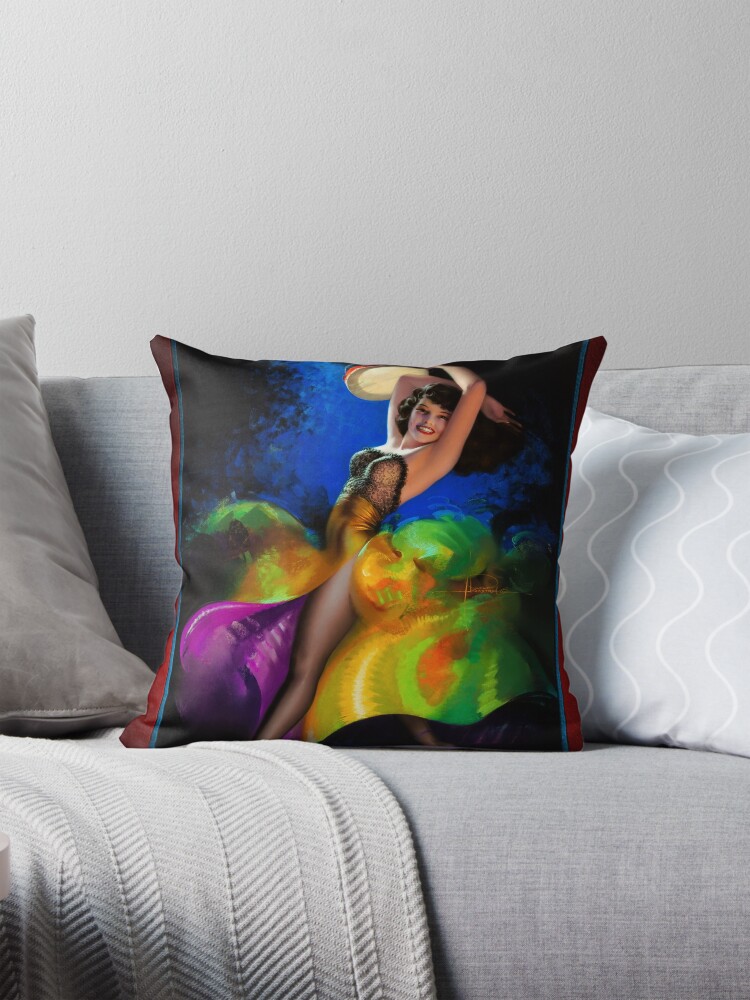
Í hjarta “Ripplin Rhythm” is a captivating depiction of a dancer in mid-performance. Viðfangsefnið, a woman, exudes confidence and joy as she spins gracefully, her flowing dress rippling around her body like the waves of an ocean. The dancer’s attire is a burst of color, with swirling shades of green, gulur, and purple creating a striking contrast against the deep blue background.
The woman’s posture is elegant yet exuberant, her arms raised in a celebratory gesture as she holds a tambourine above her head. Her face radiates happiness, a wide smile revealing her playful spirit. Armstrong has captured not only her motion but also her essence, making her appear as though she is alive with energy and rhythm.
The woman’s vibrant costume, designed to reflect the rhythm of her movements, is a fusion of bold colors. The soft metallic sheen of her golden bodice catches the light, enhancing the dynamic flow of her skirt. Armstrong’s use of color in this piece is masterful, with each hue seemingly chosen to emphasize the woman’s graceful spinning and the lively atmosphere of her performance. The skirt, which flares out around her like an explosive flower, ripples with energy, suggesting the dancer’s movement and the pulse of the music she is engaged with.
The Objects: Tambourine and Flowing Garments
The tambourine held by the dancer is a key object in the painting, not only because it symbolizes the musical rhythm she embodies but also because it ties the composition together. The tambourine’s small yet intricate form contrasts the large, swirling mass of the dancer’s gown, yet it maintains a presence that complements the overall movement within the scene.
The circular shape of the tambourine subtly mirrors the curves and flow of her garments, creating a visual harmony between the two. This object, while seemingly simple, amplifies the sense of rhythm and dance in the composition.
The cascading layers of the dancer’s gown are another vital aspect of the work. Armstrong’s skillful handling of fabric and texture brings the dress to life, with each fold and curve appearing as if it is caught mid-movement. Sloppurinn, with its vibrant, rippling folds, seems to echo the fluidity of the dancer’s form. The luxurious colors and glossy textures of the skirt create a feeling of both elegance and freedom, enhancing the theme of lively celebration.
Landsvæði: The Colorful Background
Bakgrunnur af “Ripplin Rhythm” is one of the key elements that contribute to the piece’s overall mood. A deep blue hue forms the backdrop, providing a striking contrast to the warm colors of the dancer’s attire. This color choice highlights the subject and makes her appear as if she is emerging from a dreamlike or fantastical environment.
Armstrong uses the swirling shapes and dark tones in the background to evoke movement and rhythm, as if the air itself is alive with the same energy that drives the dancer. The fluidity of the colors in the background suggests motion, blending with the dancer’s own movements, creating a seamless connection between subject and environment.
Stíll: Art Deco and Glamour
“Ripplin Rhythm” is a quintessential example of Armstrong’s signature style, which draws heavily from Art Deco influences. The streamlined elegance of the figure, the dynamic compositions, and the use of bold, contrasting colors all reflect the Art Deco movement, which was characterized by its celebration of modernity, luxury, and glamour.
Hið slétta, graceful lines of the dancer’s body and the geometric shapes within the composition convey a sense of sophistication and energy that are central to the Art Deco aesthetic. Á sama tíma, the work also embodies the exuberance and glamour of the pin-up style, which Armstrong helped define. His portrayal of women was not only sensual but celebratory, og “Ripplin Rhythm” is a perfect example of this, as it captures a moment of joyous self-expression.
The dancer’s radiant smile and energetic pose speak to the optimistic and carefree mood of the era. Armstrong’s work is imbued with a sense of youthful vitality, and this painting exemplifies the vibrant energy of American culture during the 1940s. It reflects a time of confidence and joy, set against the backdrop of a world on the cusp of dramatic change.
Þema og stemning: Celebration of Movement and Music
Þemað í “Ripplin Rhythm” is centered around the celebration of movement, tónlist, og kvenleika. Armstrong captures the essence of dance as an expression of joy and liberation, highlighting the dynamism and beauty of the human form in motion.
The artist has skillfully conveyed the idea that rhythm is not just a sound but a force that can be seen and felt in the movements of the body. The dancer’s bright smile and the lively swirl of her dress communicate a sense of freedom, leikgleði, and enthusiasm, making the painting feel like an invitation to partake in the celebration.
The overall mood of the artwork is one of joy and excitement. Armstrong’s use of color and form conveys a sense of lightness and exuberance, and the dancer herself appears to be in the midst of a joyous performance, lost in the music and her own movement. The piece encapsulates a spirit of happiness, bjartsýni, and youthful vitality, evoking a time when life seemed to be filled with endless possibilities.
Niðurstaða
“Ripplin Rhythm” by Rolf Armstrong is more than just a beautiful portrait of a woman in motion; it is a vibrant celebration of life, lit, and music. The dynamic composition, bold use of color, and joyful expression of the dancer all contribute to a sense of energy and rhythm that makes the painting come alive. Armstrong’s mastery of movement and his ability to capture the spirit of an era make this work a timeless example of American art. Through the use of elegant forms, flowing garments, and vibrant hues, Armstrong successfully conveys the joy of dance, the celebration of femininity, and the power of music to inspire movement and expression.
The Enchantress is a retouched digital art old masters reproduction of a public domain image.
Lífsmynd listamanns frá Wikipedia.org
Rolf Armstrong fæddist John Scott Armstrong í Bay City, Michigan í apríl 21, 1889, til Richard og Harriet (Scott) Armstrong. Faðir hans átti Boy-Line Fire Boat Company, sem innihélt röð farþegaskipa. Sumir voru sendir til Chicago til notkunar á Chicago heimssýningunni þar í 1893.
Hins vegar, Viðskipti föðurins og fjölskylda voru í erfiðleikum, og heimili fjölskyldunnar var týnt til fjárnáms. Í 1899, fjölskyldan flutti til Detroit, Michigan. Faðir Rolfs lést í 1903, og ári síðar fluttu hann og móðir hans til Seattle, Washington, feta í fótspor elsta bróður síns, Vilhjálmur, sem hafði flutt þangað ári áður. Nú þegar voru listræn áhugamál Rolfs að verða meira en ánægjuleg í hlutastarfi.
Hann flutti til Chicago í 1908, þar sem hann stundaði síðar nám við Listastofnun. Síðan hélt hann áfram til New York, þar sem hann lærði hjá Robert Henri. Eftir ferð til Parísar í 1919 til náms við Académie Julian, hann sneri aftur til New York og stofnaði vinnustofu. Í 1921 hann fór til Minneapolis til að læra dagatalsgerð hjá Brown & Bigelow.
Á 1920 og 1930, Verk hans komu fram á mörgum nótum, sem og á forsíðum margra tímarita, frægastur fyrir kvikmyndaaðdáendatímarit eins og Photoplay og Screenland. Verk hans eru að mestu leyti af konum; Mary Pickford, elskan daníel, og Greta Garbo eru aðeins nokkrar af þeim fjölmörgu sem hann málaði.
Starf Armstrongs fyrir Pictorial Review bar að mestu leyti ábyrgð á því að tímaritið náði meira en tveimur milljónum upplags 1926. Ári síðar, hann var mest seldi dagatalslistamaðurinn hjá Brown & Bigelow. Í 1930, RCA réð hann til að mála pin-ups til að auglýsa vörur sínar, og inn 1933 Thomas D. Murphy Calendar Company skrifaði undir hann til að framleiða röð málverka fyrir línuna sína.
Í mars 1940, Jewel Blóm, stúlka frá Lumberton, Norður Karólína, sendi Armstrong mynd af sér sem svar við auglýsingu sem hann hafði sett í New York Times. Armstrong, 50 á sínum tíma, hafði verið með aðsetur á Hotel des Artistes á West 67th Street á Manhattan síðan 1939, og var að leita að nýjum gerðum.
Hann bauð Flowers í viðtal. Þann mars 25, 1940, Flowers byrjaði að gera fyrirsætu fyrir Armstrong. Faglegt samstarf þeirra og vinátta hélst í tvo áratugi. Fyrsta málverkið, titlaður “Hvernig hef ég það?”, að sögn vegna þess að Blóm, óvanur fyrirsætugerð, spurði Armstrong ítrekað “Hvernig hef ég það?” á fyrirsætuþinginu, kom fyrst út eftir að seinni heimsstyrjöldin hófst.
Það var Brown & Mest selda dagatal Bigelow fyrir 1942 á þeim tíma þegar fyrirtækið seldi milljónir dagatala í Ameríku, og hún varð ein mest endurgerð mynd Armstrongs. Blóm voru vinsæl hjá bandarískum hermönnum í seinni heimsstyrjöldinni, sumir hverjir sendu henni bréf þar sem þeir buðu upp á hjónaband. Dagatöl Armstrongs og skuggamyndir af blómum voru afritaðar á sprengjuflugvélar og aðrar flugvélar sem neflist og máluð á skriðdrekaturn..
Hún varð svo vel þekkt í stríðinu, þó meira sem frægt andlit en að nafni, að bréf þjónustumanns var beint sem “Jewel Blóm, New York borg” var rétt afhent. Fyrir marga bandaríska hermenn erlendis, hún var fulltrúi fyrir “Af hverju við berjumst” anda. BNA. Forseti Franklín D. Ríkisstjórn Roosevelts fékk hana til að hjálpa til við að stuðla að stríðsböndum.
janúar 1, 1945 útgáfa TIME tímaritsins innihélt Armstrong's “Skál af bænum” málverk af blómum í grein um Calendar Art. Greinin tók fram að dagatöl með “stelpumálverk” voru “keypt mikið af steypum, vélaverkstæði, söluaðilar bílavara.”
Blóm giftust í 1946. Hún og eiginmaður hennar bjuggu á nokkrum stöðum á meðan hann reyndi fjölda fyrirtækja, þar á meðal Laguna Beach, Kaliforníu, Greenville, Suður Karólína, Reno, Nevada, þar sem hún hefur að sögn starfað sem kortasölumaður um tíma, og New York borg. Samkvæmt Michael Wooldridge, meðhöfundur Pin up Dreams: Glamour list Rolfs Armstrong, Armstrong hringdi í hana nokkrum sinnum á tímabilinu sem hún fylgdist með eiginmanni sínum á milli staða, að reyna að fá hana til að snúa aftur til New York og fyrirmynda fyrir hann.
Fyrirsætuferli hennar lauk með andláti Armstrong árið 1960. Hann lét Flowers eftir stóran hluta af persónulegum auði sínum. Samtals, Armstrong skapaði um fimmtíu til sextíu verk með Flowers sem fyrirmynd.
Rolf Armstrong lést í 1960 á eyjunni Oahu, Hawaii sem einn af þeim bestu “pin-up” listamenn á fyrri hluta tuttugustu aldar.