

Ripplin Rythm
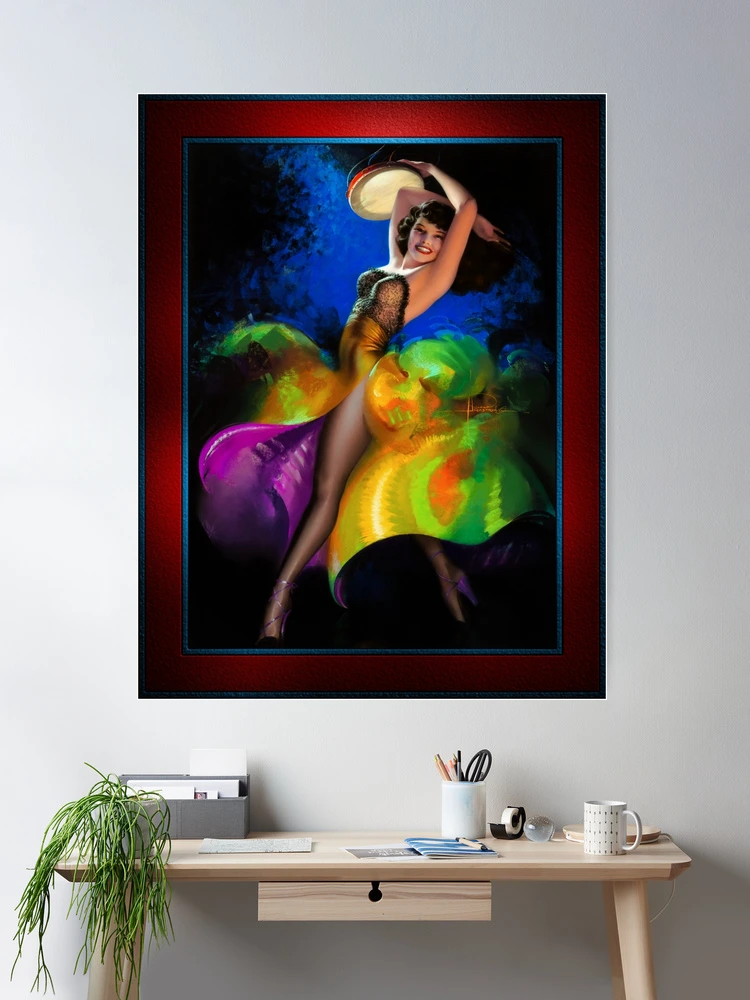
“Ripplin Rhythm,” created by the renowned American artist Rolf Armstrong (1889 – 1960), stands as a testament to the vibrant beauty of pin-up art during the mid-20th century. Armstrong, a prominent figure in the golden era of American commercial art, expertly merges movement, colore, and emotion within this piece, offering a glimpse into the glamour and sensuality that defined the era.
Nato a 1889, Armstrong’s work was marked by a mastery of light and color, making his images highly sought after in advertisements, illustrazioni, and fine art. He utilized a unique blend of techniques that brought dynamism to his subjects, e “Ripplin Rhythm” encapsulates this with its fluid and energetic portrayal of a woman in motion.
Sommario
Argomento principale: The Vibrant Dancer
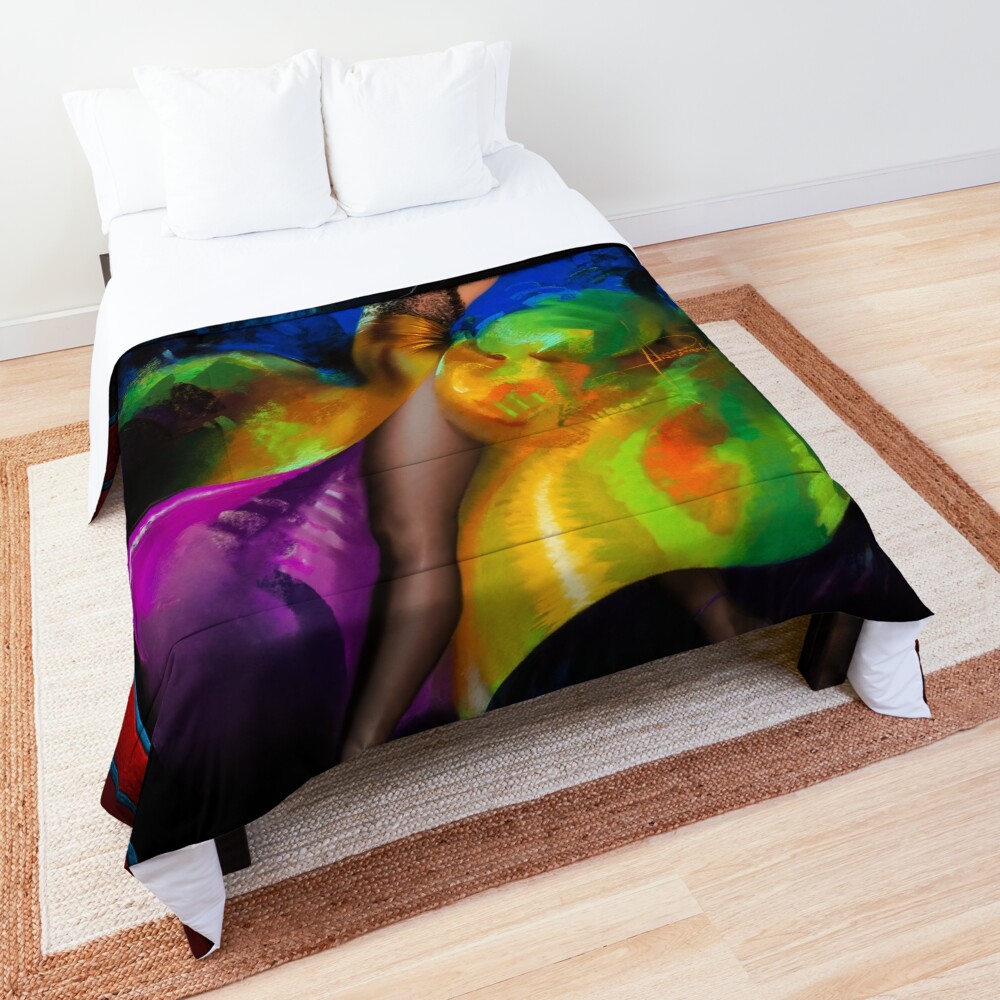
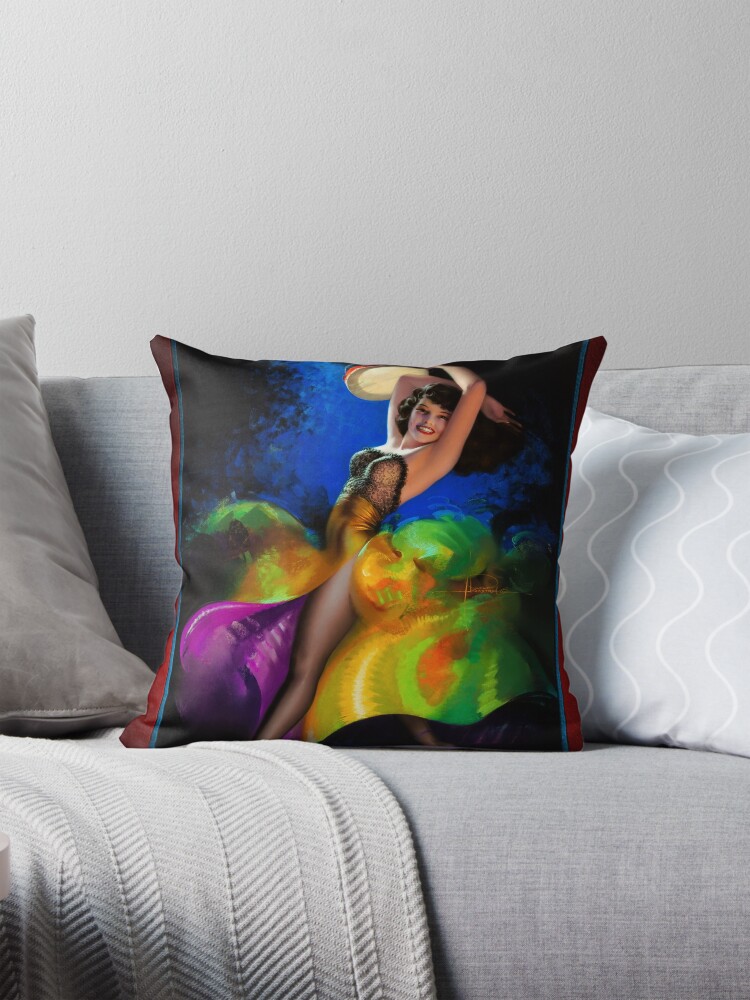
Al centro di “Ripplin Rhythm” is a captivating depiction of a dancer in mid-performance. Il soggetto, a woman, exudes confidence and joy as she spins gracefully, her flowing dress rippling around her body like the waves of an ocean. The dancer’s attire is a burst of color, with swirling shades of green, giallo, and purple creating a striking contrast against the deep blue background.
The woman’s posture is elegant yet exuberant, her arms raised in a celebratory gesture as she holds a tambourine above her head. Her face radiates happiness, a wide smile revealing her playful spirit. Armstrong has captured not only her motion but also her essence, making her appear as though she is alive with energy and rhythm.
The woman’s vibrant costume, designed to reflect the rhythm of her movements, is a fusion of bold colors. The soft metallic sheen of her golden bodice catches the light, enhancing the dynamic flow of her skirt. Armstrong’s use of color in this piece is masterful, with each hue seemingly chosen to emphasize the woman’s graceful spinning and the lively atmosphere of her performance. The skirt, which flares out around her like an explosive flower, ripples with energy, suggesting the dancer’s movement and the pulse of the music she is engaged with.
Gli oggetti: Tambourine and Flowing Garments
The tambourine held by the dancer is a key object in the painting, not only because it symbolizes the musical rhythm she embodies but also because it ties the composition together. The tambourine’s small yet intricate form contrasts the large, swirling mass of the dancer’s gown, yet it maintains a presence that complements the overall movement within the scene.
The circular shape of the tambourine subtly mirrors the curves and flow of her garments, creating a visual harmony between the two. This object, while seemingly simple, amplifies the sense of rhythm and dance in the composition.
The cascading layers of the dancer’s gown are another vital aspect of the work. Armstrong’s skillful handling of fabric and texture brings the dress to life, with each fold and curve appearing as if it is caught mid-movement. L'abito, with its vibrant, rippling folds, seems to echo the fluidity of the dancer’s form. The luxurious colors and glossy textures of the skirt create a feeling of both elegance and freedom, enhancing the theme of lively celebration.
Terreno: The Colorful Background
Lo sfondo di “Ripplin Rhythm” is one of the key elements that contribute to the piece’s overall mood. A deep blue hue forms the backdrop, providing a striking contrast to the warm colors of the dancer’s attire. This color choice highlights the subject and makes her appear as if she is emerging from a dreamlike or fantastical environment.
Armstrong uses the swirling shapes and dark tones in the background to evoke movement and rhythm, as if the air itself is alive with the same energy that drives the dancer. The fluidity of the colors in the background suggests motion, blending with the dancer’s own movements, creating a seamless connection between subject and environment.
Stile: Art Deco and Glamour
“Ripplin Rhythm” is a quintessential example of Armstrong’s signature style, which draws heavily from Art Deco influences. The streamlined elegance of the figure, the dynamic compositions, and the use of bold, contrasting colors all reflect the Art Deco movement, which was characterized by its celebration of modernity, lusso, e fascino.
Il liscio, graceful lines of the dancer’s body and the geometric shapes within the composition convey a sense of sophistication and energy that are central to the Art Deco aesthetic. Allo stesso tempo, the work also embodies the exuberance and glamour of the pin-up style, which Armstrong helped define. His portrayal of women was not only sensual but celebratory, e “Ripplin Rhythm” is a perfect example of this, as it captures a moment of joyous self-expression.
The dancer’s radiant smile and energetic pose speak to the optimistic and carefree mood of the era. Armstrong’s work is imbued with a sense of youthful vitality, and this painting exemplifies the vibrant energy of American culture during the 1940s. It reflects a time of confidence and joy, set against the backdrop of a world on the cusp of dramatic change.
Tema e umore: Celebration of Movement and Music
Il tema di “Ripplin Rhythm” is centered around the celebration of movement, musica, e femminilità. Armstrong captures the essence of dance as an expression of joy and liberation, highlighting the dynamism and beauty of the human form in motion.
The artist has skillfully conveyed the idea that rhythm is not just a sound but a force that can be seen and felt in the movements of the body. The dancer’s bright smile and the lively swirl of her dress communicate a sense of freedom, playfulness, and enthusiasm, making the painting feel like an invitation to partake in the celebration.
The overall mood of the artwork is one of joy and excitement. Armstrong’s use of color and form conveys a sense of lightness and exuberance, and the dancer herself appears to be in the midst of a joyous performance, lost in the music and her own movement. The piece encapsulates a spirit of happiness, ottimismo, and youthful vitality, evoking a time when life seemed to be filled with endless possibilities.
Conclusione
“Ripplin Rhythm” by Rolf Armstrong is more than just a beautiful portrait of a woman in motion; it is a vibrant celebration of life, colore, and music. The dynamic composition, bold use of color, and joyful expression of the dancer all contribute to a sense of energy and rhythm that makes the painting come alive. Armstrong’s mastery of movement and his ability to capture the spirit of an era make this work a timeless example of American art. Through the use of elegant forms, flowing garments, and vibrant hues, Armstrong successfully conveys the joy of dance, the celebration of femininity, and the power of music to inspire movement and expression.
The Enchantress is a retouched digital art old masters reproduction of a public domain image.
Bio dell'artista da Wikipedia.org
Rolf Armstrong è nato John Scott Armstrong a Bay City, Michigan ad aprile 21, 1889, a Richard e Harriet (Scott) Armstrong. Suo padre possedeva la Boy-Line Fire Boat Company, che comprendeva una linea di navi passeggeri. Alcuni sono stati schierati a Chicago per essere utilizzati alla Fiera mondiale di Chicago 1893.
tuttavia, gli affari e la famiglia del padre stavano lottando, e la fattoria di famiglia andò perduta a causa del pignoramento. Nel 1899, la famiglia si trasferì a Detroit, Michigan. Il padre di Rolf è morto 1903, e un anno dopo lui e sua madre si trasferirono a Seattle, Washington, seguendo le orme del fratello maggiore, William, che vi si era trasferito un anno prima. Ormai gli interessi artistici di Rolf stavano emergendo in qualcosa di più di un piacere part-time.
Si trasferì a Chicago nel 1908, dove in seguito ha studiato presso l'Istituto d'Arte. Poi è andato a New York, dove ha studiato con Robert Henri. Dopo un viaggio a Parigi in 1919 studiare all'Académie Julian, tornò a New York e fondò uno studio. Nel 1921 andò a Minneapolis per studiare produzione di calendari alla Brown & Bigelow.
Durante gli anni '20 e '30, il suo lavoro è apparso su molti brani di spartiti, così come sulle copertine di molte riviste, più famoso per le riviste di fan del cinema come Photoplay e Screenland. Il suo lavoro consiste principalmente di donne; Mary Pickford, bambino daniel, e Greta Garbo sono solo alcuni dei numerosi che ha dipinto.
Il lavoro di Armstrong per la Pictorial Review è stato in gran parte responsabile del raggiungimento di una tiratura di oltre due milioni di copie da parte di quella rivista 1926. Un anno dopo, è stato l'artista del calendario più venduto alla Brown & Bigelow. Nel 1930, La RCA lo ha assunto per dipingere pin-up per pubblicizzare i loro prodotti, e in 1933 il Thomas D. Murphy Calendar Company lo ha firmato per produrre una serie di dipinti per la loro linea.
Nel mese di marzo 1940, Fiori gioiello, una ragazza di Lumberton, Carolina del Nord, ha inviato una sua foto ad Armstrong in risposta a un annuncio che aveva pubblicato sul New York Times. Armstrong, 50 al tempo, da allora aveva sede all'Hotel des Artistes sulla West 67th Street a Manhattan 1939, e stavo cercando nuovi modelli.
Ha invitato Flowers per un'intervista. A marzo 25, 1940, Flowers ha iniziato a fare la modella per Armstrong. La loro collaborazione professionale e amicizia è durata due decenni. Il primo dipinto, intitolato “Come lo sto facendo?”, secondo quanto riferito, perché Flowers, non abituato alla modellazione, chiese ripetutamente ad Armstrong “Come lo sto facendo?” durante la sessione di modellazione, fu pubblicato per la prima volta dopo l'inizio della seconda guerra mondiale.
Era Marrone & Il calendario più venduto di Bigelow per 1942 in un momento in cui l'azienda vendeva milioni di calendari in America, ed è diventata una delle immagini più riprodotte di Armstrong. Flowers era popolare tra i militari americani durante la seconda guerra mondiale, alcuni dei quali hanno inviato le sue lettere proponendo il matrimonio. I calendari e le sagome dei fiori di Armstrong sono stati copiati su bombardieri e altri aerei come arte del naso e dipinti sulle torrette dei carri armati.
È diventata così famosa durante la guerra, sebbene più come volto famoso che per nome, che la lettera di un militare indirizzata semplicemente come “Fiori gioiello, New York” è stato consegnato correttamente. Per molti militari americani all'estero, lei ha rappresentato il “Perché combattiamo” spirito. NOI. Il presidente Franklin D. Il governo di Roosevelt l'ha arruolata per aiutare a promuovere i titoli di guerra.
Il gennaio 1, 1945 l'edizione della rivista TIME includeva quella di Armstrong “Brindisi di Città” pittura di Fiori in un articolo sul Calendario Art. L'articolo ha notato che i calendari con “dipinti di ragazze” erano “acquistato pesantemente dalle fonderie, officine meccaniche, rivenditori di autoveicoli.”
Fiori sposati 1946. Lei e suo marito vivevano in diversi posti mentre lui tentava una serie di iniziative imprenditoriali, compreso Laguna Beach, California, Greenville, Carolina del Sud, Reno, Nevada, dove, secondo quanto riferito, ha lavorato per un certo periodo come commerciante di carte, e New York City. Secondo Michael Wooldridge, coautore di Pin up Dreams: L'arte glamour di Rolf Armstrong, Armstrong l'ha chiamata un certo numero di volte durante il periodo in cui seguiva suo marito da un posto all'altro, per cercare di convincerla a tornare a New York e fare la modella per lui.
La sua carriera di modella si è conclusa con la morte di Armstrong 1960. Ha lasciato gran parte della sua ricchezza personale a Flowers. In totale, Armstrong ha creato da cinquanta a sessanta opere utilizzando Flowers come modello.
Rolf Armstrong è morto 1960 sull'isola di Oahu, Hawaii come una delle migliori “ragazza copertina” artisti della prima metà del Novecento.