

Ripplin Rythm
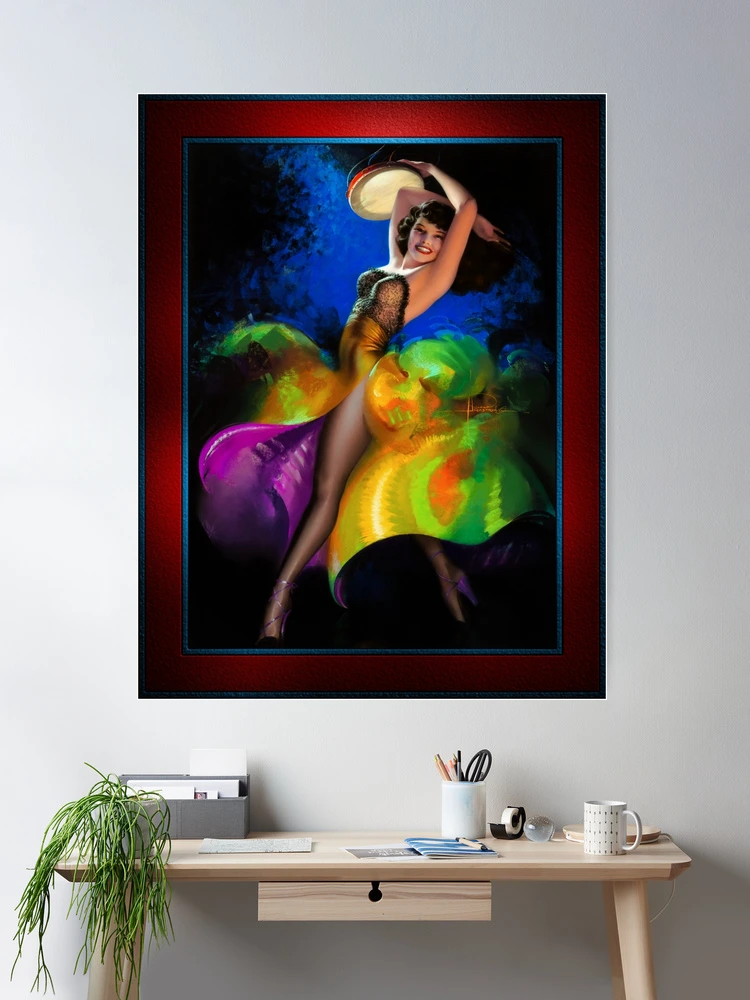
“Ripplin Rhythm,” created by the renowned American artist Rolf Armstrong (1889 – 1960), stands as a testament to the vibrant beauty of pin-up art during the mid-20th century. Armstrong, a prominent figure in the golden era of American commercial art, expertly merges movement, farge, and emotion within this piece, offering a glimpse into the glamour and sensuality that defined the era.
Født i 1889, Armstrong’s work was marked by a mastery of light and color, making his images highly sought after in advertisements, illustrations, og kunst. He utilized a unique blend of techniques that brought dynamism to his subjects, og “Ripplin Rhythm” encapsulates this with its fluid and energetic portrayal of a woman in motion.
Innholdsfortegnelse
Hovedfag: The Vibrant Dancer
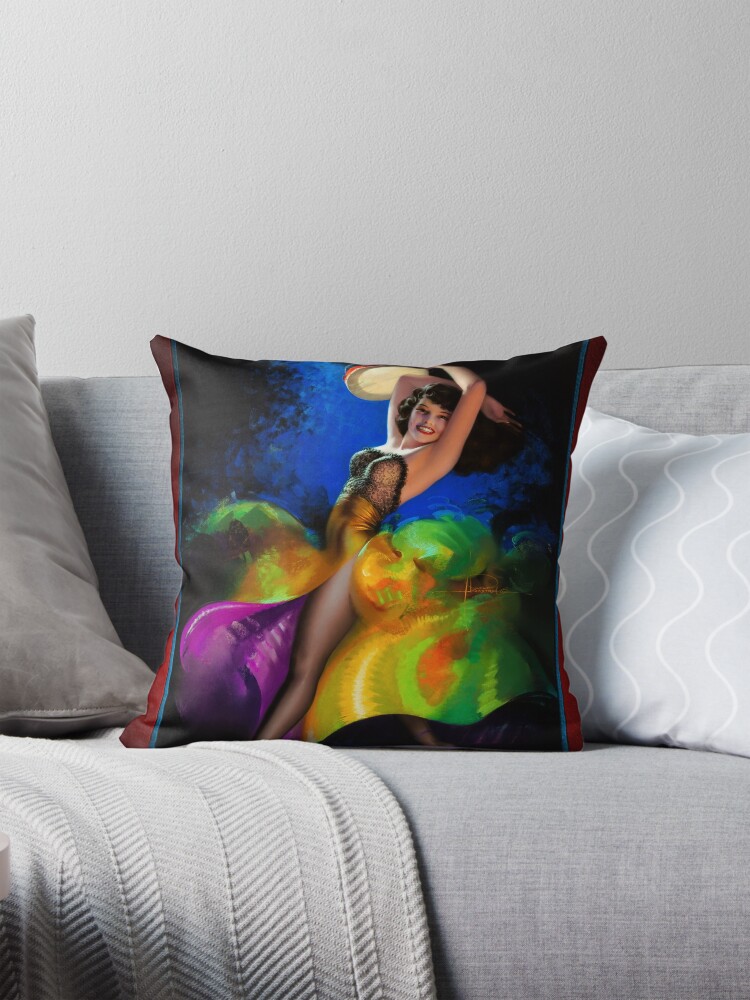
I hjertet av “Ripplin Rhythm” is a captivating depiction of a dancer in mid-performance. Emnet, a woman, exudes confidence and joy as she spins gracefully, her flowing dress rippling around her body like the waves of an ocean. The dancer’s attire is a burst of color, with swirling shades of green, gul, and purple creating a striking contrast against the deep blue background.
The woman’s posture is elegant yet exuberant, her arms raised in a celebratory gesture as she holds a tambourine above her head. Her face radiates happiness, a wide smile revealing her playful spirit. Armstrong has captured not only her motion but also her essence, making her appear as though she is alive with energy and rhythm.
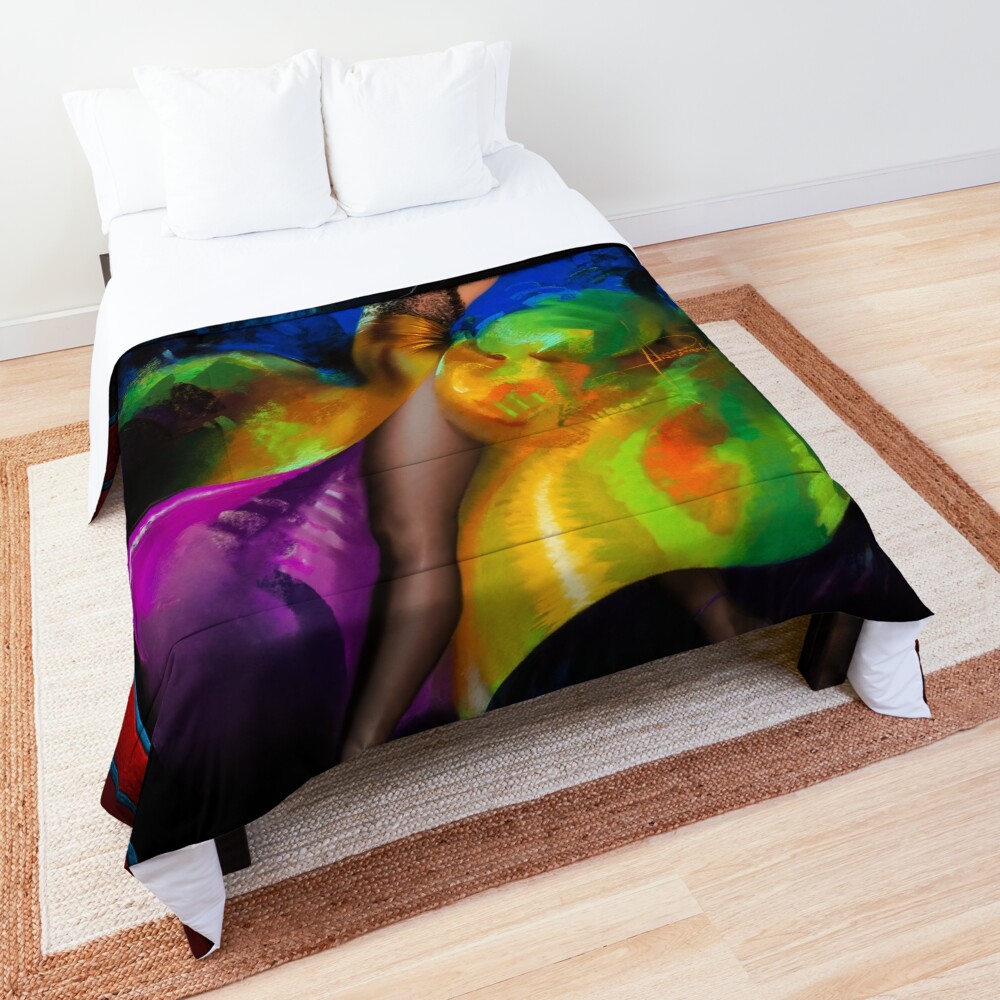
The woman’s vibrant costume, designed to reflect the rhythm of her movements, is a fusion of bold colors. The soft metallic sheen of her golden bodice catches the light, enhancing the dynamic flow of her skirt. Armstrong’s use of color in this piece is masterful, with each hue seemingly chosen to emphasize the woman’s graceful spinning and the lively atmosphere of her performance. The skirt, which flares out around her like an explosive flower, ripples with energy, suggesting the dancer’s movement and the pulse of the music she is engaged with.
The Objects: Tambourine and Flowing Garments
The tambourine held by the dancer is a key object in the painting, not only because it symbolizes the musical rhythm she embodies but also because it ties the composition together. The tambourine’s small yet intricate form contrasts the large, swirling mass of the dancer’s gown, yet it maintains a presence that complements the overall movement within the scene.
The circular shape of the tambourine subtly mirrors the curves and flow of her garments, creating a visual harmony between the two. This object, while seemingly simple, amplifies the sense of rhythm and dance in the composition.
The cascading layers of the dancer’s gown are another vital aspect of the work. Armstrong’s skillful handling of fabric and texture brings the dress to life, with each fold and curve appearing as if it is caught mid-movement. Kjolen, with its vibrant, rippling folds, seems to echo the fluidity of the dancer’s form. The luxurious colors and glossy textures of the skirt create a feeling of both elegance and freedom, enhancing the theme of lively celebration.
Terrain: The Colorful Background
The background of “Ripplin Rhythm” is one of the key elements that contribute to the piece’s overall mood. A deep blue hue forms the backdrop, providing a striking contrast to the warm colors of the dancer’s attire. This color choice highlights the subject and makes her appear as if she is emerging from a dreamlike or fantastical environment.
Armstrong uses the swirling shapes and dark tones in the background to evoke movement and rhythm, as if the air itself is alive with the same energy that drives the dancer. The fluidity of the colors in the background suggests motion, blending with the dancer’s own movements, creating a seamless connection between subject and environment.
Stil: Art Deco and Glamour
“Ripplin Rhythm” is a quintessential example of Armstrong’s signature style, which draws heavily from Art Deco influences. The streamlined elegance of the figure, the dynamic compositions, and the use of bold, contrasting colors all reflect the Art Deco movement, which was characterized by its celebration of modernity, luksus, og glamour.
Den glatte, graceful lines of the dancer’s body and the geometric shapes within the composition convey a sense of sophistication and energy that are central to the Art Deco aesthetic. Samtidig, the work also embodies the exuberance and glamour of the pin-up style, which Armstrong helped define. His portrayal of women was not only sensual but celebratory, og “Ripplin Rhythm” is a perfect example of this, as it captures a moment of joyous self-expression.
The dancer’s radiant smile and energetic pose speak to the optimistic and carefree mood of the era. Armstrong’s work is imbued with a sense of youthful vitality, and this painting exemplifies the vibrant energy of American culture during the 1940s. It reflects a time of confidence and joy, set against the backdrop of a world on the cusp of dramatic change.
Tema og stemning: Celebration of Movement and Music
Temaet for “Ripplin Rhythm” is centered around the celebration of movement, music, and femininity. Armstrong captures the essence of dance as an expression of joy and liberation, highlighting the dynamism and beauty of the human form in motion.
The artist has skillfully conveyed the idea that rhythm is not just a sound but a force that can be seen and felt in the movements of the body. The dancer’s bright smile and the lively swirl of her dress communicate a sense of freedom, playfulness, and enthusiasm, making the painting feel like an invitation to partake in the celebration.
The overall mood of the artwork is one of joy and excitement. Armstrong’s use of color and form conveys a sense of lightness and exuberance, and the dancer herself appears to be in the midst of a joyous performance, lost in the music and her own movement. The piece encapsulates a spirit of happiness, optimism, and youthful vitality, evoking a time when life seemed to be filled with endless possibilities.
Konklusjon
“Ripplin Rhythm” by Rolf Armstrong is more than just a beautiful portrait of a woman in motion; it is a vibrant celebration of life, farge, and music. The dynamic composition, dristig bruk av farge, and joyful expression of the dancer all contribute to a sense of energy and rhythm that makes the painting come alive. Armstrong’s mastery of movement and his ability to capture the spirit of an era make this work a timeless example of American art. Through the use of elegant forms, flowing garments, and vibrant hues, Armstrong successfully conveys the joy of dance, the celebration of femininity, and the power of music to inspire movement and expression.
The Enchantress is a retouched digital art old masters reproduction of a public domain image.
Artistbio fra Wikipedia.org
Rolf Armstrong ble født John Scott Armstrong i Bay City, Michigan i april 21, 1889, til Richard og Harriet (Scott) Armstrong. Faren hans eide Boy-Line Fire Boat Company, som inkluderte en linje med passasjerskip. Noen ble utplassert i Chicago for bruk på Chicago World's Fair der i 1893.
derimot, farens virksomhet og familie slet, og familiens husmannsplass gikk tapt for tvangsutlegg. I 1899, familien flyttet til Detroit, Michigan. Rolfs far døde i 1903, og et år senere flyttet han og moren til Seattle, Washington, følger fotsporene til sin eldste bror, William, som hadde flyttet dit et år tidligere. Nå var Rolfs kunstneriske interesser blitt mer enn en deltidsfornøyelse.
Han flyttet til Chicago i 1908, hvor han senere studerte ved Kunstinstituttet. Deretter dro han videre til New York, hvor han studerte med Robert Henri. Etter en tur til Paris i 1919 å studere ved Académie Julian, han returnerte til New York og etablerte et studio. I 1921 han dro til Minneapolis for å studere kalenderproduksjon ved Brown & Bigelow.
I løpet av 1920- og 1930-årene, hans arbeid dukket opp på mange notestykker, så vel som på forsidene til mange magasiner, mest kjent for filmfansmagasiner som Photoplay og Screenland. Hans arbeid består for det meste av kvinner; Mary Pickford, baby daniel, og Greta Garbo er bare noen av de mange han malte.
Armstrongs arbeid for Pictorial Review var i stor grad ansvarlig for at magasinet oppnådde et opplag på mer enn to millioner av 1926. Et år senere, han var den bestselgende kalenderartisten på Brown & Bigelow. I 1930, RCA leide ham til å male pin-ups for å annonsere for produktene deres, og i 1933 Thomas D. Murphy Calendar Company signerte ham for å produsere en serie malerier for linjen deres.
I mars 1940, Juvelblomster, en jente fra Lumberton, Nord-Carolina, sendte et bilde av seg selv til Armstrong som svar på en annonse han hadde plassert i New York Times. Armstrong, 50 på den tiden, hadde vært basert på Hotel des Artistes på West 67th Street på Manhattan siden 1939, og var på utkikk etter nye modeller.
Han inviterte blomster til et intervju. I mars 25, 1940, Flowers begynte å modellere for Armstrong. Deres profesjonelle samarbeid og vennskap varte i to tiår. Det første maleriet, tittelen “Hvordan gjør jeg det?”, angivelig fordi Blomster, uvant med modellering, spurte Armstrong gjentatte ganger “Hvordan gjør jeg det?” under modelløkten, ble først publisert etter at andre verdenskrig hadde startet.
Det var Brown & Bigelows bestselgende kalender for 1942 på et tidspunkt da selskapet solgte millioner av kalendere i Amerika, og det ble et av Armstrongs mest reproduserte bilder. Blomster var populær blant amerikanske tjenestemenn under andre verdenskrig, noen av dem sendte henne brev med forslag om ekteskap. Armstrongs kalendere og silhuetter av blomster ble kopiert til bombefly og andre fly som nesekunst og malt på tanktårn.
Hun ble så godt kjent under krigen, selv om det er mer som et kjent ansikt enn ved navn, at en servicemans brev adressert ganske enkelt som “Juvelblomster, New York City” ble levert riktig. For mange amerikanske tjenestemenn i utlandet, hun representerte “Hvorfor vi kjemper” ånd. OSS. President Franklin D. Roosevelts regjering vervet henne til å bidra til å fremme krigsbånd.
januar 1, 1945 utgaven av TIME magazine inkluderte Armstrongs “Toast of the Town” maleri av blomster i en artikkel om kalenderkunst. Artikkelen bemerket at kalendere med “jentemalerier” var “kjøpt tungt av støperier, maskinverksteder, bilforsyningsforhandlere.”
Blomster giftet seg inn 1946. Hun og mannen bodde flere steder mens han prøvde en rekke forretningsforetak, inkludert Laguna Beach, California, Greenville, Sør-Carolina, Reno, Nevada, hvor hun etter sigende jobbet som korthandler en tid, og New York City. Ifølge Michael Wooldridge, medforfatter av Pin up Dreams: Glamourkunsten til Rolf Armstrong, Armstrong ringte henne flere ganger i løpet av perioden hun fulgte mannen sin fra sted til sted, å prøve å overtale henne til å reise tilbake til New York og modellere for ham.
Modellkarrieren hennes endte med Armstrongs død i 1960. Han overlot en stor del av sin personlige formue til Flowers. Totalt, Armstrong skapte rundt femti til seksti verk med Flowers som modell.
Rolf Armstrong døde i 1960 på øya Oahu, Hawaii som en av de beste “pin-up” kunstnere fra første halvdel av det tjuende århundre.