

Ripplin Rythm
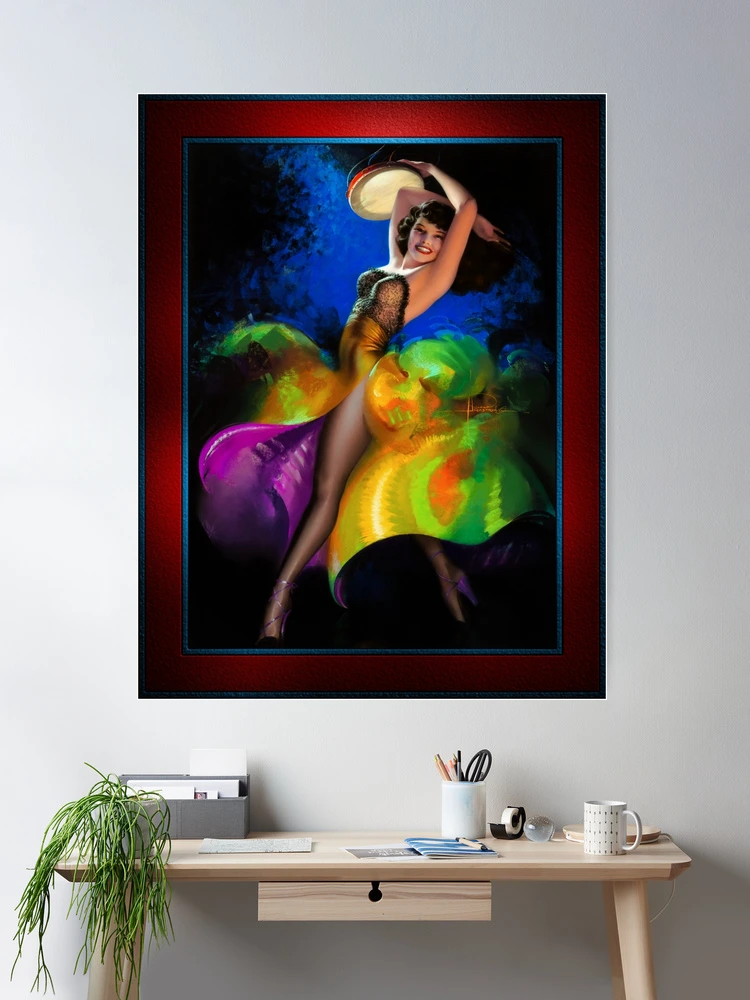
“Ripplin Rhythm,” created by the renowned American artist Rolf Armstrong (1889 – 1960), stands as a testament to the vibrant beauty of pin-up art during the mid-20th century. Armstrong, a prominent figure in the golden era of American commercial art, expertly merges movement, cor, and emotion within this piece, offering a glimpse into the glamour and sensuality that defined the era.
Nascido em 1889, Armstrong’s work was marked by a mastery of light and color, making his images highly sought after in advertisements, ilustrações, e belas artes. He utilized a unique blend of techniques that brought dynamism to his subjects, e “Ripplin Rhythm” encapsulates this with its fluid and energetic portrayal of a woman in motion.
Índice
Assunto principal: The Vibrant Dancer
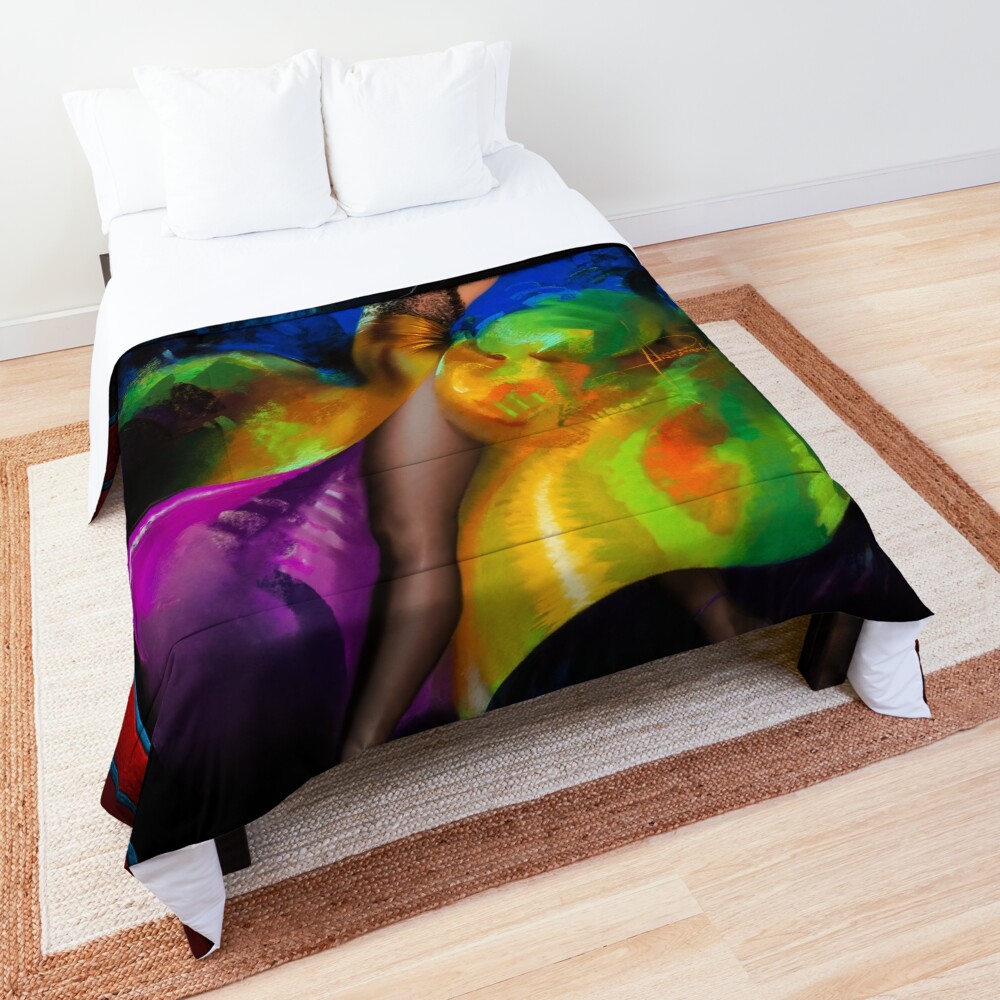
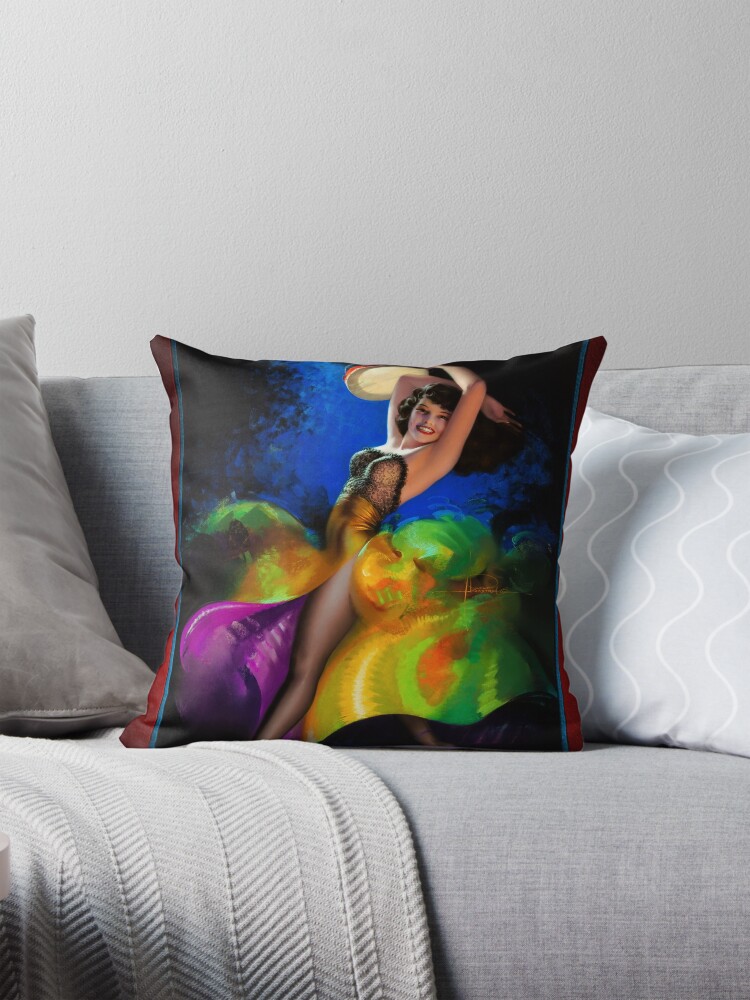
No coração de “Ripplin Rhythm” is a captivating depiction of a dancer in mid-performance. The subject, a woman, exudes confidence and joy as she spins gracefully, her flowing dress rippling around her body like the waves of an ocean. The dancer’s attire is a burst of color, with swirling shades of green, yellow, and purple creating a striking contrast against the deep blue background.
The woman’s posture is elegant yet exuberant, her arms raised in a celebratory gesture as she holds a tambourine above her head. Her face radiates happiness, a wide smile revealing her playful spirit. Armstrong has captured not only her motion but also her essence, making her appear as though she is alive with energy and rhythm.
The woman’s vibrant costume, designed to reflect the rhythm of her movements, is a fusion of bold colors. The soft metallic sheen of her golden bodice catches the light, enhancing the dynamic flow of her skirt. Armstrong’s use of color in this piece is masterful, with each hue seemingly chosen to emphasize the woman’s graceful spinning and the lively atmosphere of her performance. The skirt, which flares out around her like an explosive flower, ripples with energy, suggesting the dancer’s movement and the pulse of the music she is engaged with.
The Objects: Tambourine and Flowing Garments
The tambourine held by the dancer is a key object in the painting, not only because it symbolizes the musical rhythm she embodies but also because it ties the composition together. The tambourine’s small yet intricate form contrasts the large, swirling mass of the dancer’s gown, yet it maintains a presence that complements the overall movement within the scene.
The circular shape of the tambourine subtly mirrors the curves and flow of her garments, creating a visual harmony between the two. This object, while seemingly simple, amplifies the sense of rhythm and dance in the composition.
The cascading layers of the dancer’s gown are another vital aspect of the work. Armstrong’s skillful handling of fabric and texture brings the dress to life, with each fold and curve appearing as if it is caught mid-movement. The gown, with its vibrant, rippling folds, seems to echo the fluidity of the dancer’s form. The luxurious colors and glossy textures of the skirt create a feeling of both elegance and freedom, enhancing the theme of lively celebration.
Terreno: The Colorful Background
The background of “Ripplin Rhythm” is one of the key elements that contribute to the piece’s overall mood. A deep blue hue forms the backdrop, providing a striking contrast to the warm colors of the dancer’s attire. This color choice highlights the subject and makes her appear as if she is emerging from a dreamlike or fantastical environment.
Armstrong uses the swirling shapes and dark tones in the background to evoke movement and rhythm, as if the air itself is alive with the same energy that drives the dancer. The fluidity of the colors in the background suggests motion, blending with the dancer’s own movements, creating a seamless connection between subject and environment.
Estilo: Art Deco and Glamour
“Ripplin Rhythm” is a quintessential example of Armstrong’s signature style, which draws heavily from Art Deco influences. The streamlined elegance of the figure, the dynamic compositions, and the use of bold, contrasting colors all reflect the Art Deco movement, which was characterized by its celebration of modernity, luxo, and glamour.
The smooth, graceful lines of the dancer’s body and the geometric shapes within the composition convey a sense of sophistication and energy that are central to the Art Deco aesthetic. Ao mesmo tempo, the work also embodies the exuberance and glamour of the pin-up style, which Armstrong helped define. His portrayal of women was not only sensual but celebratory, e “Ripplin Rhythm” is a perfect example of this, as it captures a moment of joyous self-expression.
The dancer’s radiant smile and energetic pose speak to the optimistic and carefree mood of the era. Armstrong’s work is imbued with a sense of youthful vitality, and this painting exemplifies the vibrant energy of American culture during the 1940s. It reflects a time of confidence and joy, set against the backdrop of a world on the cusp of dramatic change.
Tema e humor: Celebration of Movement and Music
The theme of “Ripplin Rhythm” is centered around the celebration of movement, music, e feminilidade. Armstrong captures the essence of dance as an expression of joy and liberation, highlighting the dynamism and beauty of the human form in motion.
The artist has skillfully conveyed the idea that rhythm is not just a sound but a force that can be seen and felt in the movements of the body. The dancer’s bright smile and the lively swirl of her dress communicate a sense of freedom, playfulness, and enthusiasm, making the painting feel like an invitation to partake in the celebration.
The overall mood of the artwork is one of joy and excitement. Armstrong’s use of color and form conveys a sense of lightness and exuberance, and the dancer herself appears to be in the midst of a joyous performance, lost in the music and her own movement. The piece encapsulates a spirit of happiness, optimism, and youthful vitality, evoking a time when life seemed to be filled with endless possibilities.
Conclusão
“Ripplin Rhythm” by Rolf Armstrong is more than just a beautiful portrait of a woman in motion; it is a vibrant celebration of life, cor, and music. The dynamic composition, bold use of color, and joyful expression of the dancer all contribute to a sense of energy and rhythm that makes the painting come alive. Armstrong’s mastery of movement and his ability to capture the spirit of an era make this work a timeless example of American art. Through the use of elegant forms, flowing garments, and vibrant hues, Armstrong successfully conveys the joy of dance, the celebration of femininity, and the power of music to inspire movement and expression.
The Enchantress is a retouched digital art old masters reproduction of a public domain image.
Artist Bio From Wikipédia.org
Rolf Armstrong nasceu John Scott Armstrong em Bay City, Michigan em abril 21, 1889, para Richard e Harriet (Scott) Armstrong. Seu pai era dono da Boy-Line Fire Boat Company, que incluía uma linha de navios de passageiros. Alguns foram implantados em Chicago para uso na Feira Mundial de Chicago, em 1893.
No entanto, os negócios e a família do pai estavam passando por dificuldades, e a propriedade da família foi perdida devido à execução hipotecária. Em 1899, a família mudou-se para Detroit, Michigan. O pai de Rolf morreu em 1903, e um ano depois ele e sua mãe se mudaram para Seattle, Washington, seguindo os passos de seu irmão mais velho, Guilherme, who had moved there a year earlier. By now Rolf’s artistic interests were emerging to more than a part-time pleasure.
He moved to Chicago in 1908, where he later studied at the Art Institute. He then went on to New York, onde estudou com Robert Henri. Depois de uma viagem a Paris em 1919 estudar na Académie Julian, ele voltou para Nova York e abriu um estúdio. Em 1921 ele foi para Minneapolis para estudar produção de calendários na Brown & Bigelow.
Durante as décadas de 1920 e 1930, seu trabalho apareceu em muitas partituras, bem como nas capas de muitas revistas, mais famoso por revistas de fãs de cinema, como Photoplay e Screenland. Seu trabalho consiste principalmente de mulheres; Maria Pickford, Bebe Daniels, e Greta Garbo são apenas alguns dos numerosos que pintou.
O trabalho de Armstrong para a Pictorial Review foi em grande parte responsável por aquela revista alcançar uma circulação de mais de dois milhões de exemplares. 1926. Um ano depois, ele foi o artista de calendário mais vendido na Brown & Bigelow. Em 1930, A RCA o contratou para pintar pin-ups para divulgar seus produtos, e em 1933 o Tomás D. Murphy Calendar Company signed him to produce a series of paintings for their line.
In March 1940, Jewel Flowers, a girl from Lumberton, North Carolina, sent a picture of herself to Armstrong in response to an advert he had placed in the New York Times. Armstrong, 50 at the time, had been based at the Hotel des Artistes on West 67th Street in Manhattan since 1939, and was looking for new models.
He invited Flowers for an interview. On March 25, 1940, Flowers started modeling for Armstrong. Their professional collaboration and friendship lasted for two decades. The first painting, titled “How am I doing?”, reportedly because Flowers, unused to modeling, repeatedly asked Armstrong “How am I doing?” during the modeling session, was first published after World War II had started.
It was Brown & Bigelow’s best selling calendar for 1942 at a time when the company sold millions of calendars in America, and it became one of Armstrong’s most reproduced pictures. Flowers was popular with American servicemen during World War II, some of whom sent her letters proposing marriage. Armstrong’s calendars and silhouettes of Flowers were copied onto bombers and other planes as nose art and painted on tank turrets.
She became so well known during the war, although more as a famous face than by name, that a serviceman’s letter addressed simply as “Jewel Flowers, New York City” was delivered correctly. For many American servicemen abroad, she represented the “Why We Fight” spirit. U.S. President Franklin D. Roosevelt’s government enlisted her to help promote war bonds.
The January 1, 1945 edition of TIME magazine included Armstrong’s “Toast of the Town” painting of Flowers in an article about Calendar Art. The article noted that calendars with “girl paintings” were “bought heavily by foundries, machine shops, auto-supply dealers.”
Flowers married in 1946. She and her husband lived in several places while he tried a number of business ventures, including Laguna Beach, California, Greenville, South Carolina, Reno, Nevada, where she reportedly worked in as a card dealer for a time, and New York City. According to Michael Wooldridge, coauthor of Pin up Dreams: A arte glamourosa de Rolf Armstrong, Armstrong ligou para ela várias vezes durante o período em que ela seguia o marido de um lugar para outro., para tentar persuadi-la a voltar para Nova York e ser modelo para ele.
Sua carreira de modelo terminou com a morte de Armstrong em 1960. Ele deixou uma grande parte de sua riqueza pessoal para Flowers. No total, Armstrong criou cerca de cinquenta a sessenta obras usando Flowers como modelo.
Rolf Armstrong morreu em 1960 na ilha de Oahu, Havaí como um dos melhores “pôster” artistas da primeira metade do século XX.