

Kukutana Kimapenzi
Mkutano wa Kimapenzi c1864 na Mchoraji wa Hungaria Mihaly von Zichy (1827 – 1906), alikuwa mchoraji muhimu wa Kihungari wa Kimapenzi, Mchoraji na Msanii wa Picha.
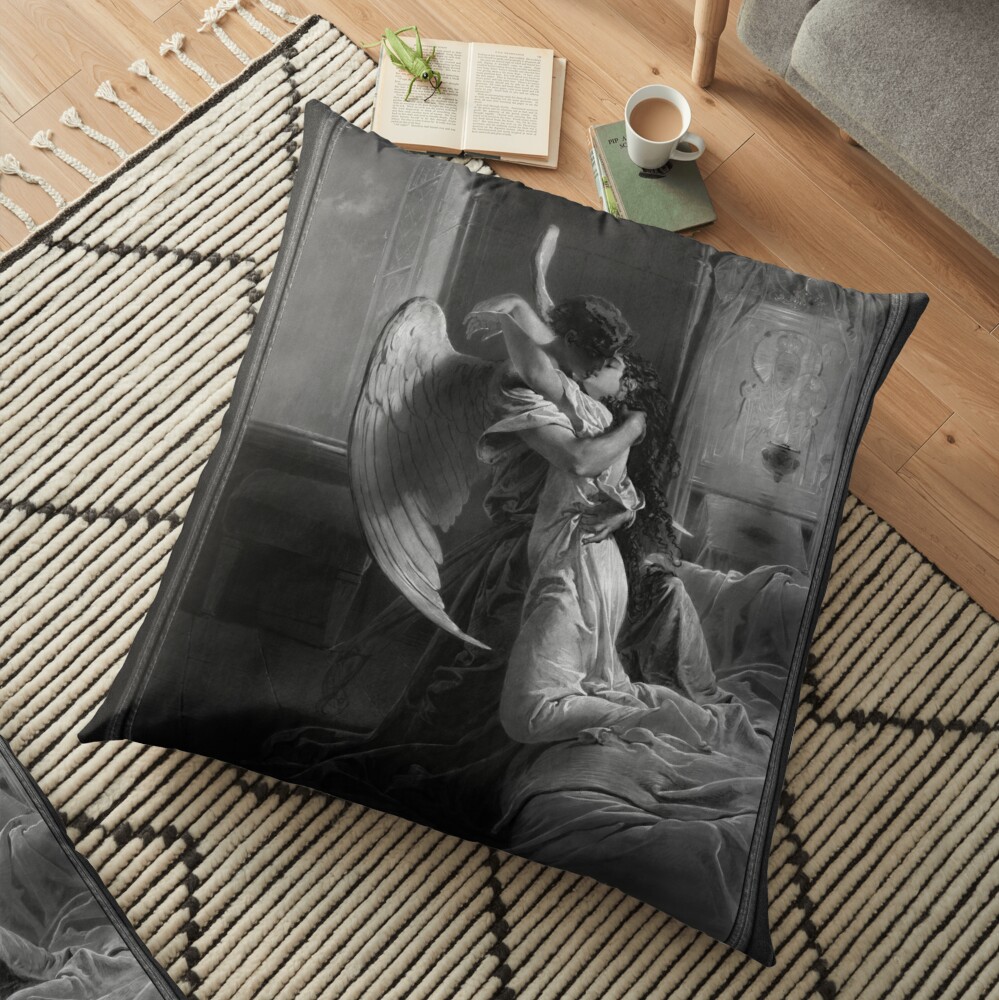
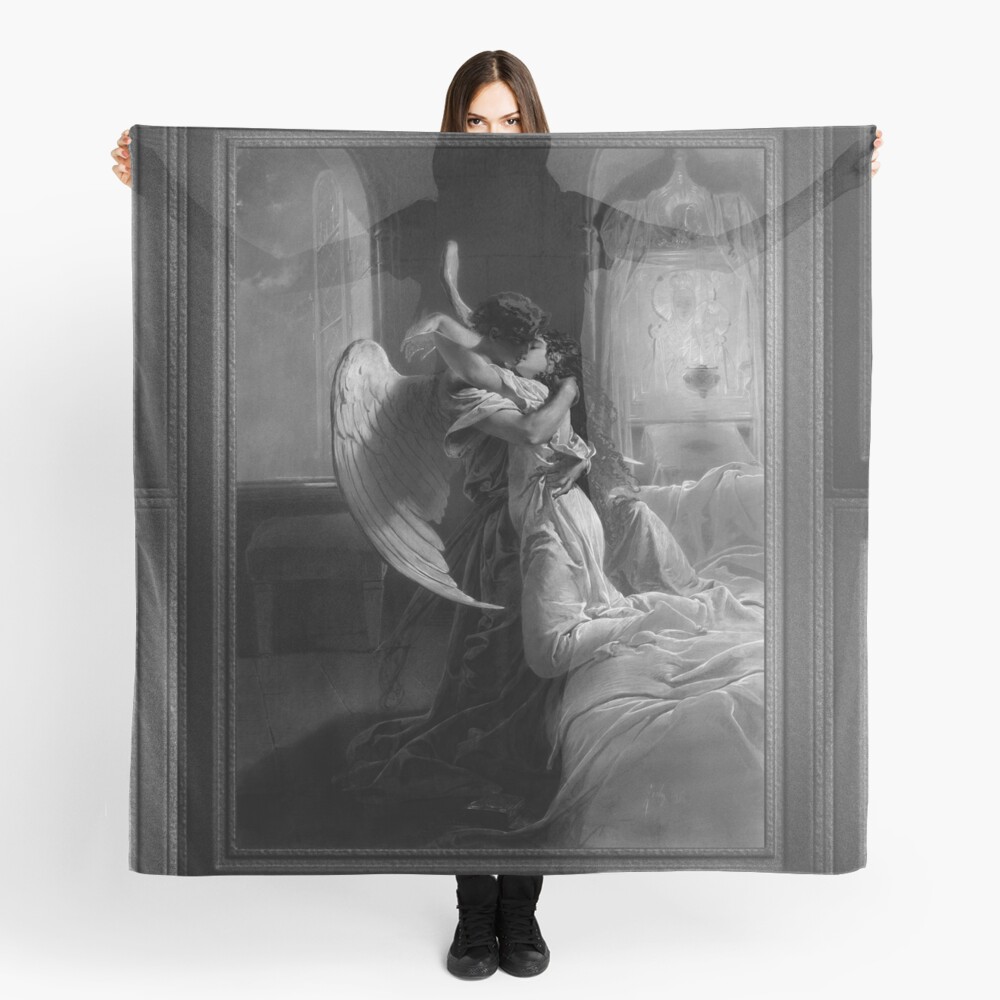
The painting “Kukutana Kimapenzi” presents an evocative scene of emotional intensity and romantic passion. In this artwork, Zichy captures a moment of profound tenderness and longing between two figures, a male angel and a female subject, embraced in a passionate kiss. The figures are framed within a dark, atmospheric interior, which enhances the ethereal and almost otherworldly quality of the encounter.

Jedwali la Yaliyomo
Main Subjects and Composition:
At the heart of the composition are the two figures: the angel, whose soft, delicate wings stretch outward, and the woman in an intimate embrace. Their connection is immediately the focal point, as their bodies intertwine in a sensual and tender moment. The male figure, with his strong physique, is dressed simply in flowing robes that suggest a sense of purity and divinity. His muscular form is in contrast to the graceful, flowing lines of the woman’s figure. She, in contrast, is depicted with more fluidity, her dark hair cascading over her shoulders as her arms rest around the angel’s neck, fully engaged in the kiss.
Zichy has skillfully positioned these figures in a highly emotive and dramatic manner, the angel’s powerful embrace exuding both tenderness and protective strength. The figures’ gaze—whether directed toward one another or lost in the act itself—conveys a deep connection, suggesting a spiritual or transcendent nature to their love. The couple’s proximity, highlighted by their interlocked bodies, underscores a sense of unity, while the blurred background enhances the dreamlike quality of their embrace.
Setting and Environment:
The surrounding space is equally significant, as it plays a crucial role in amplifying the emotional tone of the piece. The background features a solemn, somewhat imposing structure that is clearly not meant to represent a domestic space, but rather a grand, spiritual, or mystical setting. A stone-like texture is suggested in the architecture, evoking a sense of timelessness and permanence. The openness of the space contrasts with the intimacy of the subjects, allowing the viewer to feel the emotional weight of the moment while maintaining a sense of grandeur.
To the left of the scene, a window reveals an expanse of light, which introduces a subtle contrast between the dark interior and the natural light beyond. This serves to emphasize the sense of otherworldliness present in the piece, as if the lovers are suspended between earthly existence and a celestial plane. This play between light and shadow is a key element in the painting’s composition, creating an aura of mystery and emphasizing the divine and ephemeral quality of the love shared between the angel and the woman.
Material and Technique:
The artist’s use of chiaroscuro, a technique of strong contrasts between light and dark is masterful. The interplay of light on the figures’ faces, particularly on the angel’s torso and the woman’s skin, enhances the texture and dimensionality of the forms, making them appear almost sculptural.
The shadows are deep and enveloping, heightening the sense of drama and intimacy, while the light sources, whether natural or mystical, seem to emanate from within the scene itself. Zichy’s brushwork is delicate, adding a softness to the figures that contrasts with the strength suggested in their embrace.
The texture of the materials and the way Zichy portrays the fabric of the angel’s robes and the woman’s gown is noteworthy. Both garments flow with an almost liquid quality, further emphasizing the graceful and otherworldly nature of the characters. The white robes of the woman, haswa, suggest purity and innocence, a common theme in romantic and religious iconography, yet the way they cling to her body adds a sensual and intimate undertone to the scene.
Mada na mhemko:
The theme of the painting revolves around the concept of divine or eternal love. The angel, a symbol of spiritual and supernatural forces, is often associated with purity, guidance, and protection. His embrace of the woman, who appears to be of earthly origin, can be interpreted as the union of the celestial and the mortal. This blending of the divine and the human suggests that their love transcends time and space, existing beyond the limitations of the physical world.
The overall mood of the piece is one of quiet intensity, as the figures are deeply absorbed in their embrace. The painting evokes feelings of longing, devotion, and passion, yet there is a sense of restraint. The soft color palette of whites, grays, and soft browns, combined with the muted tones of the background, creates a somber atmosphere, further amplifying the emotional depth of the scene. There is a subtle melancholy to the moment, as if the lovers are caught in a fleeting instant of time, knowing that their connection is both eternal and temporary.
Ishara:
The angelic figure is rich with symbolic meaning. Angels are often seen as messengers, intermediaries between the human and divine realms. In this artwork, the angel’s role may be interpreted as a guardian of the woman’s soul, offering her protection in this transcendent moment. Laini, sweeping wings can be seen as symbols of both freedom and confinement, as they seem to envelope the figures, creating a space that is simultaneously a sanctuary and a place of surrender.
The woman, on the other hand, could symbolize the mortal soul, longing for union with the divine. Her vulnerable yet passionate engagement in the kiss suggests a deep yearning for something greater than earthly existence. The subtle religious undertones are evident, with the suggestion of sacredness in their interaction, yet the scene remains sensual, making it not purely religious but rather an exploration of love in all its forms—human, divine, and spiritual.
Hitimisho:
“Kukutana Kimapenzi” by Mihály von Zichy is a poignant and evocative painting that captures a moment of ethereal love between two figures, an angel and a woman. Kupitia utumiaji wake mzuri wa nuru, muundo, na fomu, Zichy creates a timeless portrayal of love that transcends the physical realm. The painting speaks to the deep emotional connection between the figures, inviting the viewer to reflect on the nature of love, devotion, and the divine. The juxtaposition of the intimate moment within the grand, mysterious setting further enhances the sense of otherworldly beauty and timeless passion that resonates throughout the piece.
Romantic Encounter Painting Meaning / Story
This illustration is based on the Demon Poem by Russian Poet Mikhail Lermontov (1814 – 1841), on which a powerful demon wondering the world alone comes upon the Georgian Princess Tamara dancing at her wedding.
Upon seeing her the demon falls in love with her; and kills her husband, then begins to court her until she gives herself to him; as she can see neither a demon nor an angel. but a tortured lonely soul.
But when the two kiss, the kiss is fatal to Tamara, and as she rises to Heaven, the demon is once again left alone, to wonder the world and the universe, without love or hope.
Romantic Encounter is a retouched digital art old masters reproduction of a public domain image that is available for purchase online as a uchapishaji wa turubai iliyovingirwa.
Habari Hapo Chini Kutoka Wikipedia.org
Mihaly von Zichy anachukuliwa kuwa mwakilishi mashuhuri wa uchoraji wa kimapenzi wa Hungarian. Aliishi na kufanya kazi kimsingi huko St. Petersburg na Paris wakati wa kazi yake.
Anajulikana kwa kuonyesha shairi la Kijojiajia la The Knight in the Panther's Skin on an. 1881 tume na wasomi. Wakati alikuwa amekamilisha 35 picha, aliguswa moyo sana na shairi hilo hivi kwamba alitoa kazi zake kwa watu wa Georgia kama zawadi.
Wakati wa masomo yake ya sheria katika Pest kutoka 1842, Zichy alihudhuria shule ya sanaa ya Jakab Marastoni pia. Alikwenda Vienna kusoma chini ya Ferdinand Georg Waldmüller katika 1844. Boti ya kuokoa maisha, kazi yake kuu ya kwanza, ilichorwa katika kipindi hiki.
Kwa pendekezo la Waldmüller, Zichy aliajiriwa kama mwalimu wa sanaa huko St. Petersburg. Aliapa utii kwa uhuru 1849 kwa kuchora picha ya Lajos Batthyány, waziri mkuu wa kwanza wa Hungary.
Kutoka 1850 kuendelea, alifanya kazi kimsingi kama retoucher. Pia alifanya michoro ya penseli, rangi za maji, na picha katika mafuta.
Michoro yake ya erotic inajulikana kwa kuwa na nguvu ya joto, kwani washiriki wote wa wanandoa wanaonekana kuwa washirika sawa. Mfululizo juu ya uwindaji wa Gatchina, iliyoamriwa na Tsar wa Urusi, alipata Zichy kusimama kama msanii wa mahakama.
Alianzisha jumuiya ya kusaidia wachoraji wanaohitaji. Alichora Autodafé (1868) kueleza hofu ya mahakama ya Kihispania katika karne za mapema. Katika 1871 alisafiri kupitia Ulaya, kutulia huko Paris 1874.
Alichora Malkia Elisabeth Akiweka Maua karibu na Jeneza la Ferenc Deák kama tume kutoka kwa Treffort.. Kunywa Bout ya Henry III picha yake inayofuata ya kiwango kikubwa, akaingia 1875.
Ushindi wa Fikra za Uharibifu, iliyochorwa kwa Maonyesho ya Paris, ilipigwa marufuku na mamlaka ya Ufaransa kwa sababu ya ujumbe wake wa kuthubutu wa kupinga wanamgambo.
Zichy aliondoka Paris ndani 1881 na kurudi St. Petersburg, baada ya kukaa kwa muda mfupi huko Nice, Vienna na Zala yake ya asili.
Mwaka huo pia alitembelea Tbilisi, Makamu wa Caucasus (leo Georgia). Alipewa kazi ya kuonyesha shairi la epic la Kijojiajia, Knight katika Ngozi ya Panther, kwa ombi la wasomi wa nchi. Alipaka rangi 35 picha kwa jumla.
Tume ya uchapishaji ya kazi ya The Knight in the Panther's Skin ilichagua 27 picha zitakazojumuishwa katika uchapishaji. Mchoraji alikataa kuchukua malipo ya kazi hizo, kwa sababu aliguswa sana na shairi asilia. Badala yake, alitoa kazi zake kwa watu wa Georgia.
Kuanzia wakati huu na kuendelea, Zichy alijishughulisha zaidi na kazi ya vielelezo. Mifano ya kazi alizoonyesha ni pamoja na The Tragedy of Man cha Imre Madách, katika 1887, na balladi ishirini na nne za John Gold, 1894-98.