

港のヨット
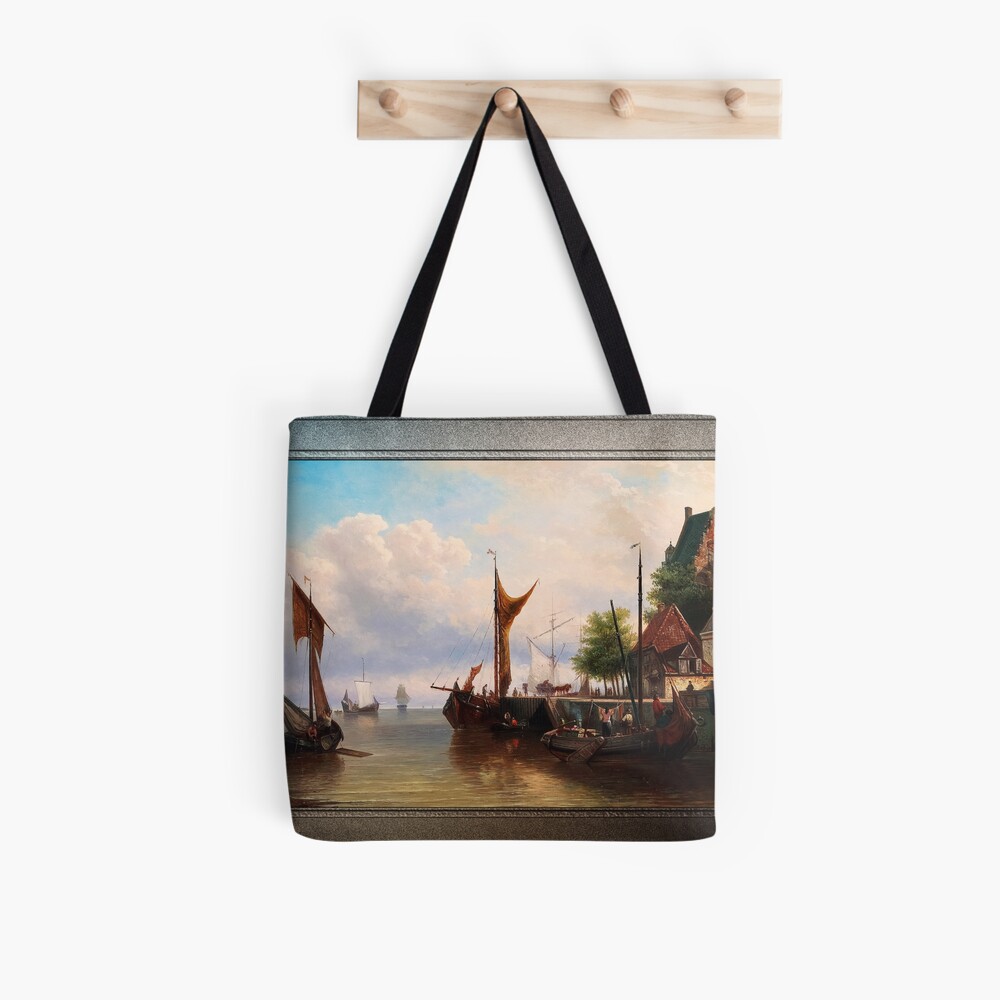
エリアス・ピーター・ヴァン・ボメル “港のヨット” (1800年代半ばの頃) 19世紀のオランダの海事絵画の驚くべき作品として立っています. ヴァン・ボメル (1819 – 1890), オランダの生活のロマンチックで現実的な描写で知られる, にぎやかな港で毎日の活動の穏やかでありながらダイナミックなシーンを捉えています.
ペインティング, 詳細と大気の深さが豊富です, 視聴者は、船の鮮明な表現で沿岸シーンに浸ることができます, 水, そして周囲の建築. 緑豊かなカラーパレット付き, 正確なブラシワーク, 自然光の使用, この作品は、商業の重要性を伝えています, 海洋生物, そして、この期間中のオランダの風景の謙虚な美しさ.
目次
主題と構成
の中心的な焦点 “港のヨット” 平和なウォーターフロントに沿ってドッキングされた一連のボートです, 帆のマストが海のセンチネルのように空に向かって届くと. 人々が水の端に沿って働くにつれて、港は活動に賑わっています, 活気に満ちた貿易ネットワークを本格的に提案します. 帆を下げた小さなボートは、大きな船の隣に固定されています, 彼らの帆は毛皮を払ったが、まだ見える, 運動や貿易の準備状態を暗示しています.
海岸に沿って散らばっている人物は、乗組員が商品を積んで降ろすにつれて、勤勉さの感覚を呼び起こします, or perhaps prepare the vessels for the next journey. Each person is meticulously painted with a focus on realistic details, such as their clothing, 姿勢, and the way they interact with the environment.
On the far side of the composition, traditional brick buildings and lush trees line the banks of the harbour, leading the eye to the distant horizon where another boat drifts into view, almost blending with the soft, luminous sky.
これらの構造, with their intricate rooftops and peaked gables, provide a sense of scale and place, grounding the scene within the context of Dutch architecture. The artist masterfully balances the interaction between human activity and the natural landscape, imbuing the scene with a sense of both order and spontaneity.
水と反射
The water plays a critical role in the composition of this artwork, not only as a reflective surface but as a dynamic element that carries the life of the scene. Van Bommel captures the reflective nature of the water with remarkable accuracy, allowing the viewer to see the boats mirrored on the surface.
水の中の波紋, gently disturbed by the boats, reflect the light and create a tranquil rhythm that contrasts with the busyness on the shore. The interplay of light on the water, combined with the soft reflections of the sails and buildings, creates a sense of fluidity and motion, yet the calm nature of the water suggests peacefulness and stability.
This aspect of the painting emphasizes Van Bommel’s skill in rendering both the natural and human-made elements with equal precision. The artist’s ability to capture the reflective properties of the water alongside the fine details of the boats and buildings shows his mastery of atmospheric perspective. The light diffused across the water highlights the artist’s use of oil paint, with the technique employed to evoke a soft, smooth finish that enhances the overall sense of serenity.
空と自然照明
The sky in “港のヨット” is vast and open, stretching across the canvas with soft clouds drifting lazily above. Van Bommel has employed a rich combination of blues and whites, subtly blending the tones to evoke a sense of calm and stillness. The natural lighting is another hallmark of this piece, as the soft light illuminates the harbour, casting gentle shadows on the boats and the figures below.
The artist has skillfully depicted the sky’s mood, alternating between light, puffy clouds and areas where the blue deepens, creating a sense of depth and atmosphere. 繊細な, filtered sunlight accentuates the tranquility of the moment, highlighting the timeless beauty of the scene.
As sunlight plays on the water and on the ships’ sails, it reflects the serenity of the harbour, inviting viewers to experience a moment in time where nature, human endeavor, and commerce exist in harmonious coexistence. The light from the sky subtly enhances the painting’s overall mood, which is both peaceful and subtly animated by the life of the port.
建築の詳細と風景
Van Bommel’s attention to architectural details reveals his sensitivity to the historical context of the scene. The buildings lining the harbour, with their traditional Dutch gables and tiled roofs, are rendered in exquisite detail. これらの構造, though secondary to the focus on the boats and water, contribute greatly to the authenticity and charm of the scene. The buildings provide visual anchors that help orient the viewer’s eye while also reflecting the architectural style of the Dutch coastal towns during the 19th century.
The surrounding landscape features a mixture of cultivated trees and grassy patches, adding life to the scene without detracting from the focus on the waterfront. 木々, with their lush foliage, gently frame the scene, providing contrast to the geometric lines of the boats and buildings. The greenery serves to balance the painting’s colour palette, infusing the composition with warmth and depth.
気分と雰囲気
の気分 “港のヨット” is one of calm industriousness. Van Bommel captures a sense of daily life in a Dutch port, where trade and the movement of goods happen quietly and naturally. シーンには時代を超越した感覚があります, as if the painting were not just a momentary glance at this specific time, but a reflection of a way of life that has persisted over the centuries.
The painting avoids any dramatic event, instead focusing on the peaceful rhythm of harbour life, which allows the viewer to appreciate the beauty of routine. This simplicity is what gives the painting its contemplative quality, it’s a depiction of a quieter moment in the life of a bustling port town.
The serene mood is accentuated by the calm water and the soft, natural light that bathes the scene. This effect enhances the sense of quietude and peace, creating a harmonious balance between the natural and human-made elements of the scene.
これは、パブリック ドメイン画像のリマスターされたデジタル アートの古いマスターの複製であり、 キャンバスプリント オンライン.
アーティストについて
Elias Pieter van Bommel was a Dutch romantic style painter of landscapes, 海景 and cityscapes, and began his artistic studies under the mentorship of Dutch landscape painter Andries Roth.
He began his carrier painting landscapes, but by the 1850s switched over to producing highly detailed cityscapes that incorporated the scenes of everyday life; with some of his paintings attaining historical significance due to the architectural detail they incorporated.
Elias painted extensively throughout the Netherland, including Amsterdam, Rotterdam, Dordrecht, Scheveningen, Vlissingen and Hoorn; as well as taking extensive study trips through Belgium, ドイツ, フランス, Hungary and Italy.