

Sarah Bernhardt In La Princesse Lointaine
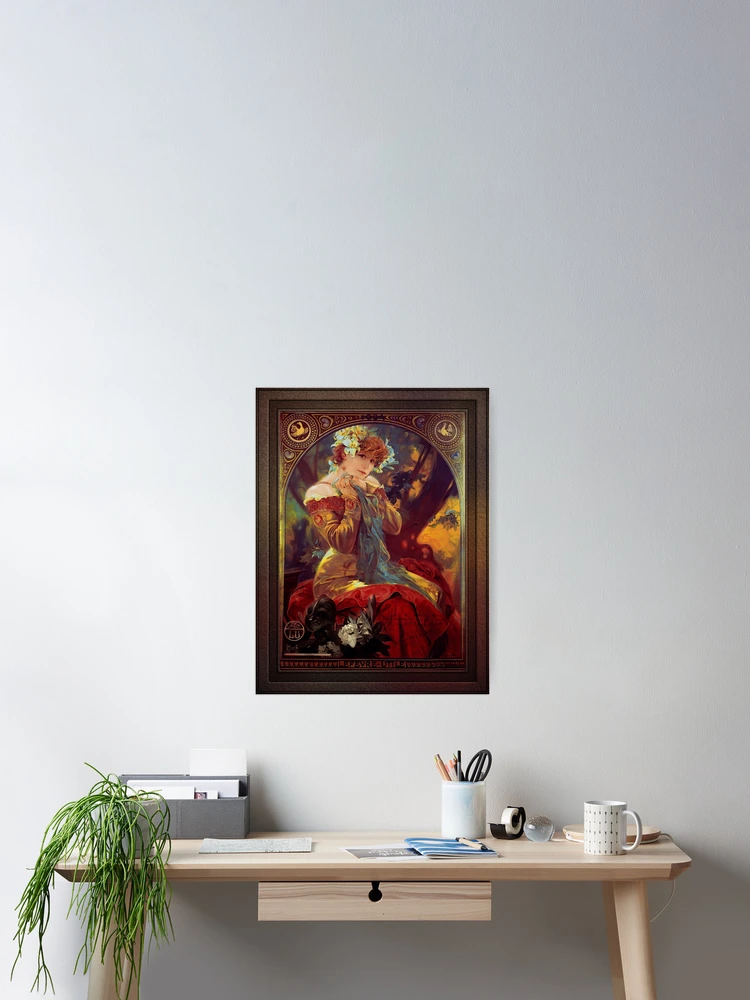
“Sarah Bernhardt in La Princesse Lointaine c1904 – Lefevre-Utile” is a striking poster artwork created by Czech artist Alphonse Mucha (1860 – 1939). This artwork was produced to promote the play “La Princesse Lointaine,” in which Sarah Bernhardt, one of the most renowned actresses of the late 19th and early 20th centuries, performed.
The piece captures the elegance and mystique of Bernhardt, portrayed in a dramatic yet graceful manner, representing her as an ethereal and regal figure. The poster, creat a 1904, is a masterful example of Mucha’s distinctive Art Nouveau style, characterized by flowing lines, intricate floral patterns, and a harmonious balance between figure and decorative elements. The work is a visual testament to Mucha’s ability to blend commercial art with fine art, creating an iconic image that represents both the art of the period and the cultural significance of the actress.
Taula de continguts
Tema principal: Sarah Bernhardt as La Princesse Lointaine
The main subject of the artwork is Sarah Bernhardt herself, depicted as the central figure of the piece, enveloped in opulence and grace. She is shown in a romantic pose, standing serenely against a background of soft, ethereal light that suggests a mythical or dreamlike setting. Bernhardt’s facial expression is one of gentle contemplation, with her hand lightly clutching a piece of fabric, which drapes over her shoulders. Aquesta posada, along with her elegantly dressed appearance, emphasizes her noble and otherworldly persona, drawing attention to her as both an actress and a symbol of femininity and beauty.
La seva vestimenta, a richly detailed gown, is rendered in soft, flowing lines that enhance the fluidity of the composition. The gown’s colors—primarily golden hues accented with deep reds—add a sense of grandeur and sophistication to the portrayal, aligning with her role as a royal or princess in the play. The floral motif woven throughout her gown suggests both beauty and nature, further reinforcing the themes of grace and elegance. The flowers are not only part of the decorative elements of the composition but also tie into the symbolism of purity, bellesa, and femininity that pervades the artwork.
Decorative and Symbolic Elements
Surrounding Sarah Bernhardt are a series of detailed and carefully constructed decorative elements, characteristic of Mucha’s Art Nouveau style. The arches and rounded edges framing the piece create a sense of harmony and enclosure, focusing the viewer’s attention on Bernhardt. The flowing, curvilinear lines that move outward from the central figure evoke the organic, natural forms seen in Mucha’s signature style. These lines are accompanied by intricate, stylized floral patterns that fill the space, creating a sense of movement that contrasts with the stillness of Bernhardt herself.
At the top of the composition, we see two symbolic emblems, a bird and a crescent moon, both recurring motifs in Mucha’s work, representing themes of transcendence, espiritualitat, i l'etern. The bird may symbolize freedom or an ethereal connection, while the crescent moon often reflects the feminine and mystical aspects of the work. These symbols enhance the dreamlike quality of the scene, giving it an almost otherworldly atmosphere that elevates the portrayal of Bernhardt to a mythic status.
Terreny i Fons
The background of the artwork is subtly painted, amb suau, muted colors that contrast against the vivid detailing of the central figure and surrounding elements. The use of an organic, flowing backdrop with indistinct shapes suggests a natural environment, perhaps a garden or a distant landscape. While the background does not contain any hard, detailed elements that draw attention away from Bernhardt, it still serves to reinforce the overall mood of the piece, which is tranquil and reverent. The lack of detailed realism in the background contrasts with the detailed figure of the actress, allowing her to remain the focal point of the piece while the background softly recedes into abstraction.
Estil i estat d'ànim
Mucha’s style in this artwork is quintessentially Art Nouveau, characterized by elegant curves, línies fluides, and a sense of natural harmony. The fine detail of the clothing, the delicate patterns of the flowers, and the symmetrical framing all contribute to a sense of balance and beauty. Els colors, while rich and deep, are applied in a way that suggests softness rather than harsh contrast, reinforcing the graceful, dreamlike atmosphere of the image.
The mood of the artwork is one of reverence and ethereal beauty. La figura central de Bernhardt no és només una actriu, sinó una figura elevada a l'estatus de princesa., encarnant les qualitats de la noblesa, elegància, i transcendència. Hi ha una qualitat tranquil·la i serena en el retrat, amb l'actriu aparentment existint en un moment de contemplació tranquil·la. Aquest estat d'ànim tranquil, combinat amb el disseny fluid i elements simbòlics, crea una atmosfera de romanticisme i d'un altre món.
Materials i Tècniques
Com era típic del treball comercial de Mucha, el cartell s'hauria creat amb tècniques litogràfiques, que va permetre la producció massiva de l'obra d'art. Aquest mètode hauria permès reproduir i distribuir àmpliament el cartell, assegurant la seva visibilitat a l'espai públic i el seu paper de promoció de l'obra. Tot i el caràcter comercial de la peça, L'enfocament artístic de Mucha assegura que la imatge segueixi sent una obra d'art. El seu ús del color, detalls intricats, i els motius simbòlics contribueixen a la bellesa estètica de la peça, fent-ne una obra que transcendeix la seva finalitat publicitària.
Conclusió
“Sarah Bernhardt in La Princesse Lointaine c1904” és un exemple per excel·lència de l'estil modernista de Mucha, combinant un disseny complex amb el retrat elegant d'una de les actrius més famoses de l'època. Mitjançant l'ús de línies fluides, elements simbòlics, i una paleta de colors harmoniosa, l'obra d'art evoca una sensació de bellesa, elegància, i el misticisme. La representació de Sarah Bernhardt, elevat a la condició de figura reial, subratlla la seva condició d'icona de feminitat i encant. This piece remains an important example of Mucha’s mastery of the Art Nouveau style and his ability to elevate commercial art to the level of fine art.
Es tracta d’una reproducció de vells mestres d’art digital retocada d’una imatge de domini públic.
Artista Bio
Informació a continuació de Wikipedia.org
Alfons Maria Mucha July 24, 1860 – Juliol 14, 1939), va ser conegut internacionalment com Alphonse Mucha. Va ser un destacat pintor txec, il·lustrador i artista gràfic, vivint a París durant el període Art Nouveau, i és més conegut pels seus cartells teatrals ben estilitzats i decoratius, particularment les de Sarah Bernhardt.
Va produir il·lustracions, publicitat, panells decoratius, i dissenys, que es va convertir en una de les imatges més conegudes de l'època.
A la segona part de la seva carrera, a l'edat de 43, va tornar a la seva terra natal de la regió de Bohèmia-Moràvia, a Àustria, i es va dedicar a pintar una sèrie de vint teles monumentals conegudes com L'èpica eslava, que representa la història de tots els pobles eslaus del món, que va pintar entre 1912 i 1926.
En 1928, en el desè aniversari de la independència de Txecoslovàquia, va presentar la sèrie a la nació txeca. La va considerar la seva obra més important. Ara s’exhibeix a Praga.