

遠い王女のサラ・ベルナール
“遠い王女c1904のサラ・ベルナール – Lefevre-Utile” is a striking poster artwork created by Czech artist アルフォンス・ミュシャ (1860 – 1939). This artwork was produced to promote the play “La Princesse Lointaine,” in which Sarah Bernhardt, one of the most renowned actresses of the late 19th and early 20th centuries, performed.
The piece captures the elegance and mystique of Bernhardt, portrayed in a dramatic yet graceful manner, representing her as an ethereal and regal figure. The poster, に作成されました 1904, is a masterful example of Mucha’s distinctive Art Nouveau style, characterized by flowing lines, intricate floral patterns, and a harmonious balance between figure and decorative elements. The work is a visual testament to Mucha’s ability to blend commercial art with fine art, creating an iconic image that represents both the art of the period and the cultural significance of the actress.
目次
主な主題: Sarah Bernhardt as La Princesse Lointaine
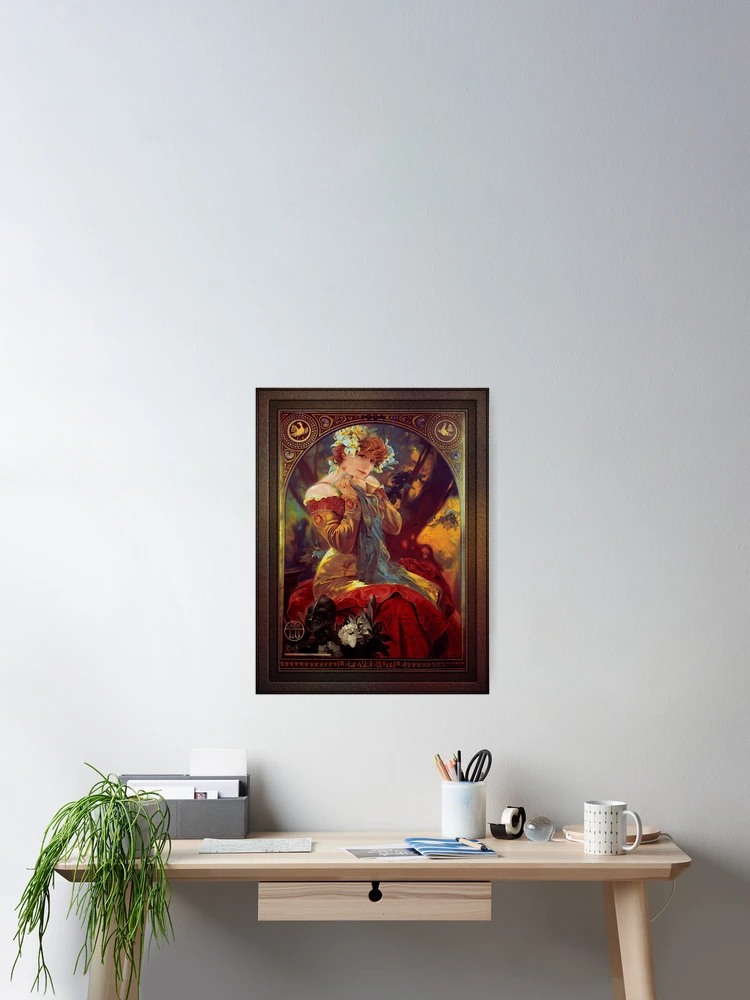
The main subject of the artwork is Sarah Bernhardt herself, depicted as the central figure of the piece, enveloped in opulence and grace. She is shown in a romantic pose, standing serenely against a background of soft, ethereal light that suggests a mythical or dreamlike setting. Bernhardt’s facial expression is one of gentle contemplation, with her hand lightly clutching a piece of fabric, which drapes over her shoulders. このポーズ, along with her elegantly dressed appearance, emphasizes her noble and otherworldly persona, drawing attention to her as both an actress and a symbol of femininity and beauty.
彼女の服装, a richly detailed gown, ソフトにレンダリングされます, 構図の流動性を高める流れるようなライン. ガウンの色は、主に金色の色合いに深い赤がアクセントとなり、描写に壮大さと洗練の感覚を加えています。, 劇中の王室または王女としての彼女の役割に合わせて. 彼女のドレス全体に織り込まれた花のモチーフは、美しさと自然の両方を暗示しています, 優雅さと優雅さのテーマをさらに強化. 花は作品の装飾要素の一部であるだけでなく、純粋さの象徴とも結びついています。, 美しさ, アートワークに浸透する女性らしさ.
Decorative and Symbolic Elements
サラ・ベルナールを取り囲むのは、詳細かつ慎重に構築された一連の装飾要素です。, ミュシャのアールヌーボー様式の特徴. The arches and rounded edges framing the piece create a sense of harmony and enclosure, focusing the viewer’s attention on Bernhardt. The flowing, curvilinear lines that move outward from the central figure evoke the organic, natural forms seen in Mucha’s signature style. These lines are accompanied by intricate, stylized floral patterns that fill the space, creating a sense of movement that contrasts with the stillness of Bernhardt herself.
At the top of the composition, we see two symbolic emblems, a bird and a crescent moon, both recurring motifs in Mucha’s work, representing themes of transcendence, 精神性, and the eternal. The bird may symbolize freedom or an ethereal connection, while the crescent moon often reflects the feminine and mystical aspects of the work. These symbols enhance the dreamlike quality of the scene, giving it an almost otherworldly atmosphere that elevates the portrayal of Bernhardt to a mythic status.
地形と背景
The background of the artwork is subtly painted, ソフトで, muted colors that contrast against the vivid detailing of the central figure and surrounding elements. The use of an organic, flowing backdrop with indistinct shapes suggests a natural environment, perhaps a garden or a distant landscape. While the background does not contain any hard, detailed elements that draw attention away from Bernhardt, it still serves to reinforce the overall mood of the piece, which is tranquil and reverent. The lack of detailed realism in the background contrasts with the detailed figure of the actress, allowing her to remain the focal point of the piece while the background softly recedes into abstraction.
スタイルと雰囲気
Mucha’s style in this artwork is quintessentially Art Nouveau, characterized by elegant curves, 流れるようなライン, and a sense of natural harmony. The fine detail of the clothing, the delicate patterns of the flowers, and the symmetrical framing all contribute to a sense of balance and beauty. 色, while rich and deep, are applied in a way that suggests softness rather than harsh contrast, reinforcing the graceful, dreamlike atmosphere of the image.
The mood of the artwork is one of reverence and ethereal beauty. The central figure of Bernhardt is not merely an actress but a figure elevated to the status of a princess, embodying qualities of nobility, 優雅, そして超越性. There is a calm and serene quality to the portrayal, with the actress seemingly existing in a moment of quiet contemplation. This tranquil mood, combined with the flowing design and symbolic elements, creates an atmosphere of romanticism and otherworldliness.
材料とテクニック
As was typical for Mucha’s commercial work, the poster would have been created using lithographic techniques, which allowed for mass production of the artwork. This method would have enabled the poster to be reproduced and distributed widely, ensuring its visibility in public spaces and its role in promoting the play. Despite the commercial nature of the piece, Mucha’s artistic approach ensures that the image remains a work of fine art. His use of color, 複雑な詳細, and symbolic motifs all contribute to the aesthetic beauty of the piece, making it a work that transcends its advertising purpose.
結論
“遠い王女c1904のサラ・ベルナール” ミュシャのアールヌーボー様式の典型的な例です, 複雑なデザインと、当時最も有名な女優の優雅な描写を融合させました。. 流れるようなラインを活かして, 象徴的な要素, 調和のとれたカラーパレット, 芸術作品は美意識を呼び起こす, 優雅, そして神秘主義. サラ・ベルナールの描写, 立派な人物の地位にまで昇進した, 女性らしさと魅力のアイコンとしての彼女の地位を強調. この作品は、ミュシャがアール ヌーボー様式を熟知し、商業芸術を美術のレベルにまで高める能力を示す重要な例として残っています。.
これは、パブリックドメインの画像のレタッチされたデジタルアートオールドマスターの複製です.
アーティスト略歴
以下の情報から Wikipedia.org
アルフォンス・マリア・ミュシャ7月 24, 1860 – 7月 14, 1939), アルフォンス・ミュシャとして国際的に知られていました. 彼は著名なチェコの画家でした, イラストレーター兼グラフィックアーティスト, アールヌーボー時代にパリに住んでいた, そして彼のはっきりと様式化された装飾的な劇場のポスターで最もよく知られています, 特にサラ・ベルナールのもの.
イラスト制作, 広告, 装飾パネル, とデザイン, 当時の最も有名な画像の1つになりました.
彼のキャリアの後半では, 歳の時に 43, 彼はオーストリアのボヘミア-モラビア地方の故郷に戻り、スラヴ叙事詩として知られる一連の20の記念碑的な帆布を描くことに専念しました。, 世界のすべてのスラブ人の歴史を描いています, 彼はその間に描いた 1912 そして 1926.
に 1928, チェコスロバキア独立10周年, 彼はチェコ国民にシリーズを発表しました. 彼はそれを彼の最も重要な仕事だと考えました. 現在プラハで展示されています.