

머나먼 공주의 사라 베른하르트
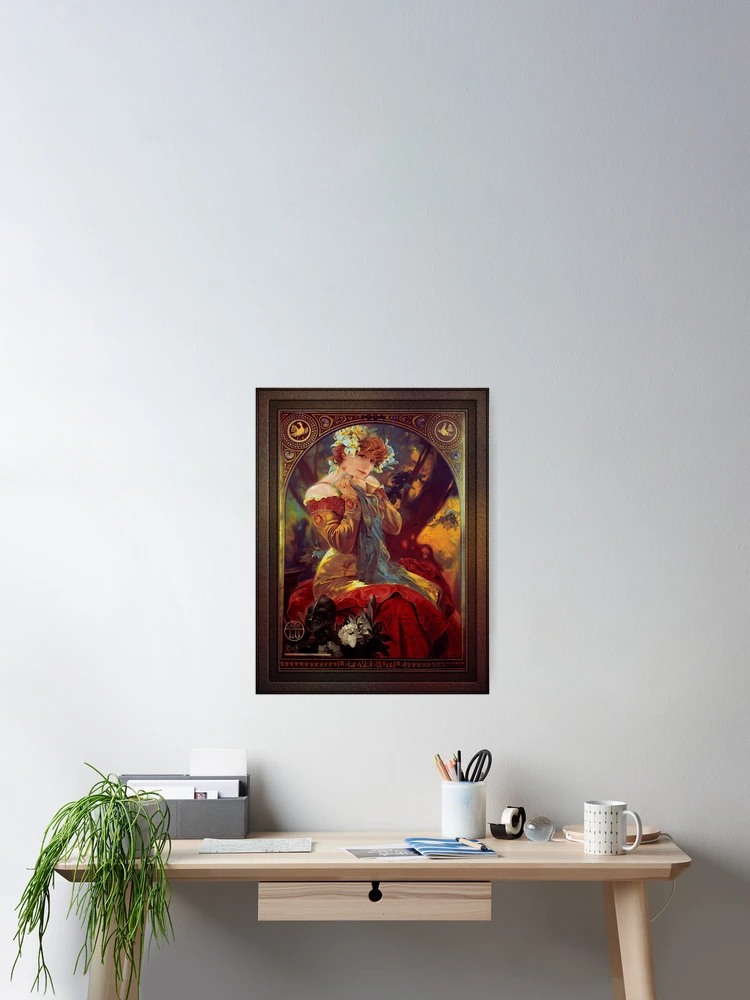
“<먼 공주>(1904년경)의 사라 베른하르트 – 르페브르-유용함” 체코 예술가가 만든 인상적인 포스터 작품입니다. 알폰스 무하 (1860 – 1939). 본 작품은 연극 홍보를 위해 제작되었습니다. “먼 공주,” 사라 베른하르트, 19세기 후반과 20세기 초반의 가장 유명한 여배우 중 한 명, 수행.
이 작품은 베른하르트의 우아함과 신비로움을 담고 있습니다., 드라마틱하면서도 우아하게 표현된, 그녀를 영묘하고 당당한 인물로 표현. 포스터, 다음에서 생성됨 1904, 무하의 독특한 아르누보 스타일을 보여주는 훌륭한 예입니다., 흐르는 듯한 라인이 특징, 복잡한 꽃무늬, 도형과 장식적 요소의 조화로운 균형. 이 작품은 상업 미술과 순수 미술을 혼합하는 무하의 능력을 시각적으로 보여주는 증거입니다., 그 시대의 예술과 여배우의 문화적 중요성을 모두 나타내는 상징적인 이미지를 창조합니다..
목차
주제: 사라 베른하르트 Sarah Bernhardt 머나먼 공주 역
작품의 주요 주제는 Sarah Bernhardt 자신입니다., 작품의 중심 인물로 묘사됨, 풍요와 은혜에 둘러싸여. 로맨틱한 포즈를 취하고 있는 그녀, 부드러운 배경을 배경으로 고요히 서 있는, 신화적이거나 꿈 같은 환경을 암시하는 천상의 빛. 베른하르트의 표정은 온화한 사색의 표정이다, 손으로 가볍게 천 조각을 쥐고, 그녀의 어깨 위로 드리워진 것. 이 포즈, 그녀의 우아한 옷차림과 함께, 그녀의 고귀하고 초자연적인 인물을 강조합니다., 여성미와 아름다움의 상징이자 배우로서 주목받고 있는 그녀.
그녀의 옷차림, 디테일이 풍부한 가운, 소프트하게 렌더링됩니다, 구성의 유동성을 향상시키는 흐르는 라인. 주로 황금색에 진한 빨간색으로 강조된 가운의 색상은 묘사에 웅장함과 세련미를 더해줍니다., 극중 왕족이나 공주로서의 역할에 맞춰. 그녀의 드레스 전체에 짜여진 꽃 모티브는 아름다움과 자연을 동시에 암시합니다., 우아함과 우아함이라는 주제를 더욱 강화합니다.. 꽃은 작품의 장식 요소일 뿐만 아니라 순수함의 상징이기도 합니다., 아름다움, 그리고 작품 전체에 스며드는 여성스러움.
장식적이고 상징적인 요소
Sarah Bernhardt 주변에는 세밀하고 세심하게 구성된 일련의 장식 요소가 있습니다., 무하의 아르누보 양식의 특징. 작품을 구성하는 아치와 둥근 모서리는 조화와 포위감을 만들어냅니다., 시청자의 관심을 Bernhardt에 집중. 흐르는, 중심 인물에서 바깥쪽으로 움직이는 곡선 라인은 유기적인 느낌을 불러일으킵니다., 무하의 시그니처 스타일에서 볼 수 있는 자연스러운 형태. 이 선들은 복잡한 수반을 동반합니다, 공간을 채우는 양식화된 꽃무늬, 베른하르트 자신의 고요함과 대조되는 움직임의 느낌을 만들어냅니다..
컴포지션 상단에, 우리는 두 개의 상징적인 상징을 봅니다, 새와 초승달, 무하의 작품에서 두 가지 반복되는 모티프, 초월의 주제를 표현, 영성, 그리고 영원한. 새는 자유나 천상의 연결을 상징할 수 있습니다., 초승달은 종종 작품의 여성적이고 신비로운 측면을 반영하는 반면. 이러한 기호는 장면의 꿈같은 품질을 향상시킵니다., 베른하르트의 묘사를 신화적인 지위로 끌어올리는 거의 초자연적인 분위기를 제공합니다..
지형과 배경
작품의 배경은 미묘하게 그려져 있습니다., 부드러운, 중앙 인물과 주변 요소의 생생한 디테일과 대비되는 차분한 색상. 유기농의 사용, 불분명한 형태의 흐르는 배경은 자연 환경을 암시합니다., 아마도 정원이나 먼 풍경. 배경에는 하드가 포함되어 있지 않지만, Bernhardt의 관심을 끄는 세부 요소, 여전히 작품의 전반적인 분위기를 강화하는 역할을 합니다., 조용하고 경건한 곳. 배경의 디테일한 사실성이 부족하여 배우의 디테일한 모습과 대조됩니다., 배경이 부드럽게 추상화되는 동안 그녀는 작품의 초점으로 남을 수 있습니다..
스타일과 분위기
이 작품에서 무하의 스타일은 본질적으로 아르누보이다., 우아한 곡선이 특징, 흐르는 선, 그리고 자연스러운 조화감. 옷의 섬세한 디테일, 섬세한 꽃무늬, 대칭적인 프레임은 모두 균형감과 아름다움에 기여합니다.. 색상, 풍부하고 깊으면서도, 거친 대비보다는 부드러움을 암시하는 방식으로 적용됩니다., 우아함을 강화하다, 몽환적인 분위기의 이미지.
예술 작품의 분위기는 경외심과 천상의 아름다움 중 하나입니다.. 베른하르트의 중심 인물은 단순한 여배우가 아닌 공주의 지위로 승격된 인물이다., 귀족의 자질을 구현, 우아, 그리고 초월. 차분하고 차분한 묘사가 특징입니다, 고요한 사색의 순간에 존재하는 듯한 여배우와 함께. 고요한 이 분위기, 흐르는 듯한 디자인과 상징적인 요소가 결합된, 낭만주의와 초자연적인 분위기를 조성합니다..
재료 및 기술
무하의 상업 작품에서 흔히 볼 수 있듯이, 포스터는 석판화 기술을 사용하여 제작되었을 것입니다., 작품의 대량생산을 가능하게 해준. 이 방법을 사용하면 포스터가 복제되어 널리 배포될 수 있었을 것입니다., 공공 장소에서의 가시성과 연극 홍보에 있어서의 역할을 보장합니다.. 작품의 상업적 성격에도 불구하고, 무하의 예술적 접근 방식은 이미지가 순수 예술 작품으로 남도록 보장합니다.. 그의 색상 사용, 복잡한 세부 사항, 그리고 상징적인 모티프는 모두 작품의 미학적 아름다움에 기여합니다., 광고 목적을 넘어서는 작품으로 만드는 것.
결론
“<먼 공주>(1904년경)의 사라 베른하르트” 무하 아르누보 양식의 전형적인 예이다., 당대 가장 유명한 여배우 중 한 사람의 우아한 묘사와 복잡한 디자인을 결합. 흐르는 라인을 활용하여, 상징적 요소, 그리고 조화로운 색상 팔레트, 예술 작품은 아름다움을 불러일으킨다, 우아, 그리고 신비주의. 사라 베른하르트의 묘사, 제왕의 지위로 승격, 여성성과 매력의 아이콘으로서의 그녀의 위상을 강조합니다.. 이 작품은 무하의 아르누보 스타일에 대한 숙달과 상업 예술을 순수 예술 수준으로 끌어올린 그의 능력을 보여주는 중요한 사례로 남아 있습니다..
이것은 공개 도메인 이미지의 수정 된 디지털 아트 오래된 마스터 복제입니다.
아티스트 약력
아래 정보 Wikipedia.org
알폰스 마리아 무하 24, 1860 – 칠월 14, 1939), 알폰스 무하(Alphonse Mucha)라는 이름으로 국제적으로 알려졌다.. 그는 저명한 체코 화가였습니다., 일러스트레이터이자 그래픽 아티스트, 아르누보 시대의 파리 생활, 뚜렷하게 양식화되고 장식적인 연극 포스터로 가장 잘 알려져 있습니다., 특히 사라 베른하르트.
그는 삽화를 제작했다, 광고, 장식 패널, 및 디자인, 그것은 그 시대의 가장 잘 알려진 이미지 중 하나가되었습니다..
그의 경력의 두 번째 부분에서, 세의 나이에 43, 그는 고향인 오스트리아의 보헤미아-모라비아 지역으로 돌아와 슬라브 서사시로 알려진 기념비적인 캔버스 시리즈 20점을 그리는 데 전념했습니다., 세계의 모든 슬라브 민족의 역사를 묘사, 그가 그 사이에 그린 1912 과 1926.
에 1928, 체코슬로바키아 독립 10주년을 맞아, 그는 체코 국가에 시리즈를 발표했습니다.. 그는 그것을 자신의 가장 중요한 일이라고 여겼습니다. 현재 프라하에서 전시 중입니다..