

Sarah Bernhardt w odległej księżniczce
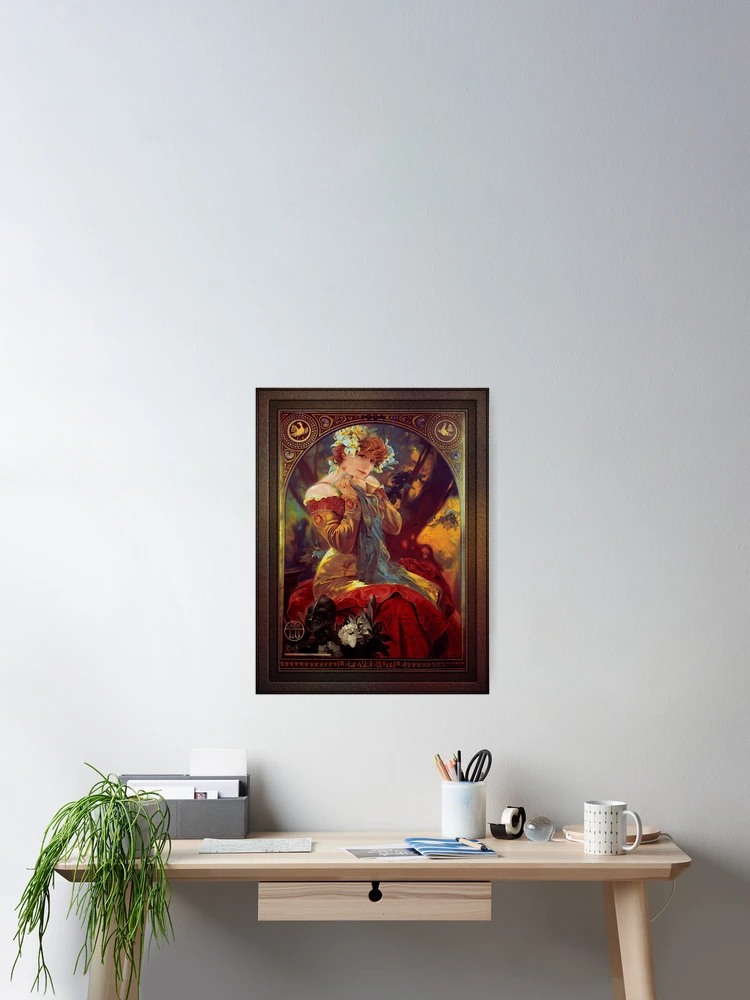
“Sarah Bernhardt w Odległej księżniczce c1904 – Lefevre-Przydatne” to efektowna grafika plakatowa stworzona przez czeskiego artystę Alphonse Mucha (1860 – 1939). Ta grafika powstała w celu promocji spektaklu “Odległa Księżniczka,” w którym Sarah Bernhardt, jedna z najwybitniejszych aktorek przełomu XIX i XX wieku, wykonane.
Utwór oddaje elegancję i tajemniczość Bernhardta, ukazany w sposób dramatyczny, ale pełen wdzięku, przedstawiając ją jako postać eteryczną i królewską. Plakat, stworzony w 1904, to mistrzowski przykład charakterystycznego stylu secesyjnego Muchy, charakteryzuje się płynnymi liniami, misterne wzory kwiatowe, oraz harmonijna równowaga pomiędzy figurą i elementami dekoracyjnymi. Praca jest wizualnym świadectwem umiejętności Muchy w łączeniu sztuki komercyjnej ze sztuką piękną, stworzenie ikonicznego wizerunku, który reprezentuje zarówno sztukę epoki, jak i kulturowe znaczenie aktorki.
Spis treści
Główny temat: Sarah Bernhardt as La Princesse Lointaine
The main subject of the artwork is Sarah Bernhardt herself, depicted as the central figure of the piece, enveloped in opulence and grace. She is shown in a romantic pose, standing serenely against a background of soft, ethereal light that suggests a mythical or dreamlike setting. Bernhardt’s facial expression is one of gentle contemplation, with her hand lightly clutching a piece of fabric, which drapes over her shoulders. This pose, along with her elegantly dressed appearance, emphasizes her noble and otherworldly persona, drawing attention to her as both an actress and a symbol of femininity and beauty.
Jej strój, a richly detailed gown, is rendered in soft, flowing lines that enhance the fluidity of the composition. The gown’s colors—primarily golden hues accented with deep reds—add a sense of grandeur and sophistication to the portrayal, aligning with her role as a royal or princess in the play. The floral motif woven throughout her gown suggests both beauty and nature, further reinforcing the themes of grace and elegance. The flowers are not only part of the decorative elements of the composition but also tie into the symbolism of purity, piękno, and femininity that pervades the artwork.
Decorative and Symbolic Elements
Surrounding Sarah Bernhardt are a series of detailed and carefully constructed decorative elements, characteristic of Mucha’s Art Nouveau style. The arches and rounded edges framing the piece create a sense of harmony and enclosure, focusing the viewer’s attention on Bernhardt. The flowing, curvilinear lines that move outward from the central figure evoke the organic, natural forms seen in Mucha’s signature style. These lines are accompanied by intricate, stylized floral patterns that fill the space, creating a sense of movement that contrasts with the stillness of Bernhardt herself.
At the top of the composition, we see two symbolic emblems, a bird and a crescent moon, both recurring motifs in Mucha’s work, representing themes of transcendence, spirituality, and the eternal. The bird may symbolize freedom or an ethereal connection, while the crescent moon often reflects the feminine and mystical aspects of the work. Symbole te zwiększają zjawiskową jakość sceny, nadając mu niemal nieziemską atmosferę, która podnosi wizerunek Bernhardta do rangi mitycznej.
Teren i tło
Tło grafiki zostało subtelnie zamalowane, z miękkim, stonowane kolory kontrastujące z żywymi detalami centralnej postaci i otaczających ją elementów. Zastosowanie organiczne, płynne tło o niewyraźnych kształtach sugeruje środowisko naturalne, być może ogród lub odległy krajobraz. Natomiast tło nie zawiera żadnych twardych, szczegółowe elementy, które odwracają uwagę od Bernhardta, nadal służy wzmocnieniu ogólnego nastroju utworu, który jest spokojny i pełen czci. Brak szczegółowego realizmu w tle kontrastuje ze szczegółową postacią aktorki, allowing her to remain the focal point of the piece while the background softly recedes into abstraction.
Styl i nastrój
Mucha’s style in this artwork is quintessentially Art Nouveau, characterized by elegant curves, płynne linie, and a sense of natural harmony. The fine detail of the clothing, the delicate patterns of the flowers, and the symmetrical framing all contribute to a sense of balance and beauty. The colors, while rich and deep, are applied in a way that suggests softness rather than harsh contrast, reinforcing the graceful, dreamlike atmosphere of the image.
The mood of the artwork is one of reverence and ethereal beauty. The central figure of Bernhardt is not merely an actress but a figure elevated to the status of a princess, embodying qualities of nobility, elegancja, i transcendencja. W tym obrazie panuje spokój i powaga, z aktorką pozornie trwającą w chwili cichej kontemplacji. Ten spokojny nastrój, w połączeniu z płynnym designem i elementami symbolicznymi, tworzy atmosferę romantyzmu i nieziemstwa.
Materiały i techniki
Typowe dla komercyjnej twórczości Muchy, plakat zostałby wykonany przy użyciu technik litograficznych, co pozwoliło na masową produkcję dzieła sztuki. Metoda ta umożliwiłaby reprodukcję i szeroką dystrybucję plakatu, zapewnienie jego widoczności w przestrzeni publicznej i jego roli w promocji spektaklu. Pomimo komercyjnego charakteru utworu, Artystyczne podejście Muchy sprawia, że obraz pozostaje dziełem sztuki. Jego użycie koloru, skomplikowane szczegóły, i symboliczne motywy przyczyniają się do estetycznego piękna dzieła, making it a work that transcends its advertising purpose.
Wniosek
“Sarah Bernhardt w Odległej księżniczce c1904” is a quintessential example of Mucha’s Art Nouveau style, blending intricate design with the graceful portrayal of one of the most famous actresses of the time. Poprzez zastosowanie płynnych linii, symbolic elements, and a harmonious color palette, the artwork evokes a sense of beauty, elegancja, and mysticism. The depiction of Sarah Bernhardt, elevated to the status of a regal figure, underscores her status as an icon of femininity and allure. This piece remains an important example of Mucha’s mastery of the Art Nouveau style and his ability to elevate commercial art to the level of fine art.
Jest to retuszowana reprodukcja starych mistrzów sztuki cyfrowej będąca własnością publiczną.
Biografia artysty
Informacje poniżej od Wikipedia.org
Alfons Maria Mucha Lipiec 24, 1860 – lipiec 14, 1939), był znany na całym świecie jako Alphonse Mucha. Był wybitnym czeskim malarzem, ilustrator i grafik, mieszkający w Paryżu w okresie secesji, i jest najbardziej znany ze swoich wyraźnie stylizowanych i dekoracyjnych plakatów teatralnych, szczególnie te Sarah Bernhardt.
Tworzył ilustracje, reklamy, panele dekoracyjne, i projekty, który stał się jednym z najbardziej znanych obrazów tego okresu.
W drugiej części swojej kariery, w wieku 43, wrócił do ojczyzny Czech i Moraw w Austrii i poświęcił się namalowaniu serii dwudziestu monumentalnych płócien znanych jako Epopeja słowiańska, przedstawiający historię wszystkich narodów słowiańskich świata, które namalował między 1912 i 1926.
W 1928, w 10. rocznicę niepodległości Czechosłowacji, przedstawił serię narodowi czeskiemu. Uważał to za swoje najważniejsze dzieło. Jest teraz na wystawie w Pradze.