

Satin Rose
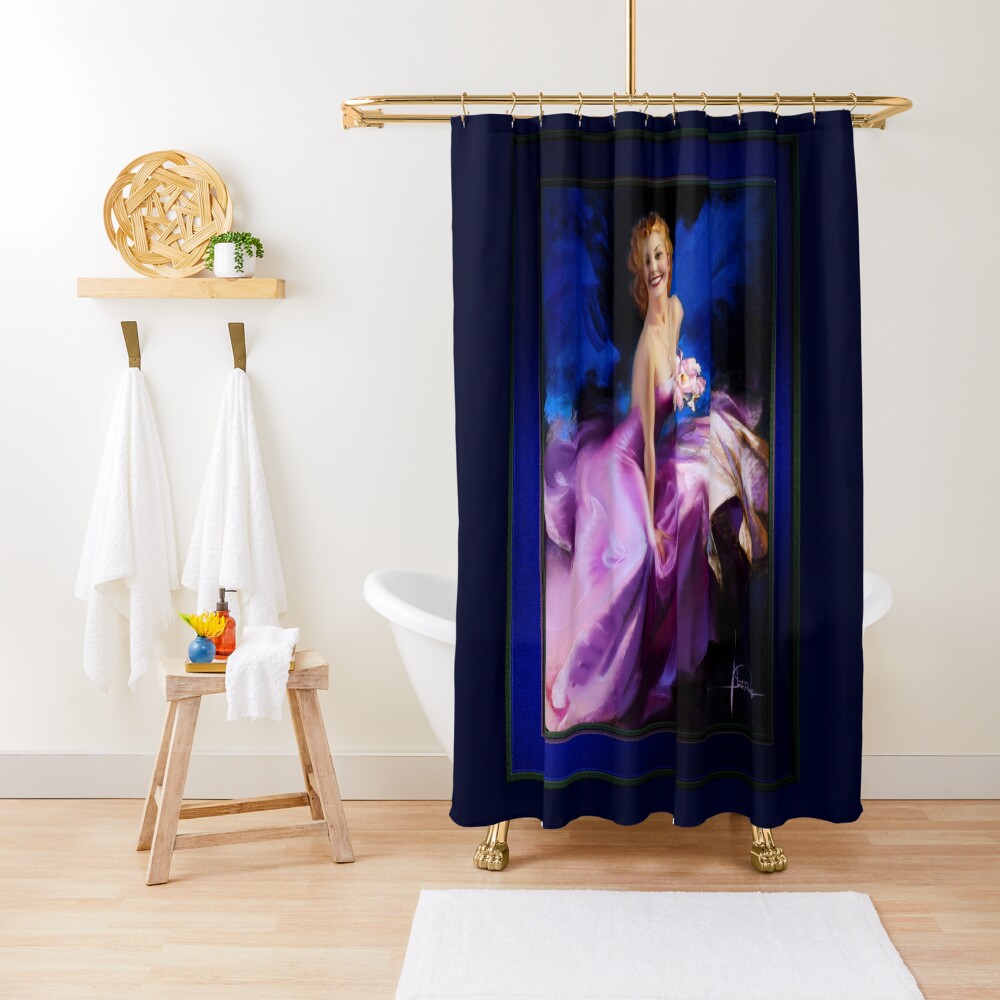
“Satin Rose” (1930), painted by the renowned American artist רולף ארמסטרונג (1889-1960), is an exemplary piece of early 20th-century American portraiture. Known for his luminous depictions of women in fashionable attire, Armstrong’s work captures a sense of beauty and elegance that resonates with the spirit of the Jazz Age and the Art Deco period. In this particular piece, Armstrong presents an image of femininity and grace, illustrating the intricate details of a woman in a soft, satin gown.
תוכן העניינים
הנושא המרכזי
“Satin Rose” is a young woman poised gracefully, her figure rendered with a delicate balance of light and shadow. She is the embodiment of youthful beauty, wearing a gown that flows and ripples around her in soft waves. השמלה, primarily a lavender satin, gleams in the light, its smooth fabric accentuated by folds and creases that give it a rich, almost tactile quality. Armstrong’s mastery of texture is evident in his treatment of the satin fabric, which shimmers with the soft sheen that is characteristic of this luxurious material.
סִגְנוֹן, טֶכנִיקָה, and Medium
The woman’s face is full of vitality, exuding joy and warmth. Her smile is subtle but confident, and her eyes are directed toward the viewer, establishing a sense of direct engagement. שלה הרך, wavy blonde hair frames her face in an effortless, yet elegant manner. The roses she holds in her right hand, delicately grasped, add a touch of romance and softness to the composition, their pale pink petals mirroring the delicate hues of the gown. Armstrong’s use of flowers is not just ornamental; they symbolize beauty, נָשִׁיוּת, וחסד, further emphasizing the overall theme of the painting.
The background of the piece is richly colored with abstract brushstrokes that suggest a dreamy, איכות כמעט אתרית. The deep blue tones of the background contrast with the soft, lighter shades of the woman’s gown, helping her figure to stand out as the central focus. This contrast between the warm lavender tones of the figure and the cool blues of the background creates a sense of depth and dimension, which enhances the realism of the portrait. The soft gradations of color contribute to the overall serene atmosphere of the work, where the light seems to caress the surface of the satin fabric, further enhancing the mood of elegance.
Objects and Composition
The composition is tightly focused on the figure, capturing her in a moment of serene joy. Armstrong’s decision to leave the background somewhat abstract and blurred directs the viewer’s attention entirely to the subject. This emphasis on the figure over the surroundings is a characteristic feature of many of Armstrong’s works, where the human form is celebrated in its natural beauty.
Armstrong’s style in “Satin Rose” exemplifies his signature technique of blending realism with a certain idealized quality. The portraiture is not merely a representation of a woman but rather an exploration of beauty, אֵלֶגַנטִיוּת, וחסד. The artist’s use of light and shadow is subtle yet effective, highlighting the contours of the woman’s face and the folds of her gown in a way that gives the painting a sense of dimensionality. Armstrong’s skill in capturing fabric, בִּפְרָט, is unparalleled, and the way the satin gown appears to catch and reflect the light gives it a fluid, almost living quality.
נושא ומצב רוח
הנושא של “Satin Rose” is deeply rooted in the early 20th century’s appreciation for beauty and fashion, reflecting the cultural preoccupations of the time. The 1930s was an era that celebrated glamour, תִחכּוּם, and modern femininity, and Armstrong’s work is an embodiment of these ideals. The use of satin fabric, the emphasis on luxurious textures, and the delicate portrayal of a young woman’s radiant beauty all speak to the high regard for elegance that permeated the social and artistic landscapes of the time.
The mood of the painting is one of warmth and serenity. The woman’s gentle smile, the soft folds of her gown, and the serene blue backdrop create an atmosphere of calm elegance. There is a sense of intimacy in the work, as if the viewer is being invited into a private moment with the subject, who stands before us in a poised yet approachable manner. The artist does not present her as an unattainable ideal but as a woman of grace and dignity, who radiates an inner beauty as much as the external qualities the painting depicts.
מַסְקָנָה
מבחינת חומרים, Armstrong employed traditional oil paints, using the medium to build up layers of color that add depth and texture to the scene. The painting’s surface, rich in color and form, highlights Armstrong’s ability to create smooth, almost luminescent textures, particularly in the depiction of fabric and skin. The piece is framed in a classical style, with a rich blue border that complements the tones of the background and further enhances the visual impact of the work.
Satin Rose is a remastered digital art old masters reproduction of a public domain image that is available as a canvas, אקריליק ו הדפס מתכת באינטרנט.
אמן ביו שמקורו Wikipedia.org
רולף ארמסטרונג נולד בג'ון סקוט ארמסטרונג בעיר ביי, מישיגן באפריל 21, 1889, לריצ'רד והרייט (סקוט) ארמסטרונג. אביו היה הבעלים של חברת בוי-ליין כיבוי סירות, שכלל שורה של ספינות נוסעים. חלקם נפרסו בשיקגו לשימוש ביריד העולמי של שיקגו שם 1893.
למרות זאת, העסק והמשפחה של האב נאבקו, ונחלת המשפחה אבדה לעיקול. ב 1899, המשפחה עברה לדטרויט, מישיגן. אביו של רולף מת ב 1903, ושנה לאחר מכן הוא ואמו עברו לסיאטל, וושינגטון, בעקבות אחיו הבכור, ויליאם, שעבר לשם שנה קודם לכן. כעת האינטרסים האמנותיים של רולף התגלגלו להנאה חלקית יותר.
הוא עבר לשיקגו ב 1908, שם למד מאוחר יותר במכון לאמנות. לאחר מכן המשיך לניו יורק, שם למד אצל רוברט אנרי. לאחר טיול בפריז ב 1919 ללמוד באקדמיה ג'וליאן, הוא חזר לניו יורק והקים סטודיו. ב 1921 הוא נסע למיניאפוליס כדי ללמוד הפקת לוח שנה בבראון & ביגלו.
במהלך שנות העשרים והשלושים, יצירתו הופיעה על קטעי מוזיקה רבים, כמו גם על שערים של מגזינים רבים, המפורסם ביותר במגזינים של מעריצי סרטים כמו פוטופליי וסקרינלנד. עבודתו מורכבת בעיקר מנשים; מרי פיקפורד, בי דניאלס, וגרטה גרבו הם רק כמה מתוך רבים שצייר.
עבודתו של ארמסטרונג עבור ה- Pictorial Review הייתה אחראית במידה רבה לכך שמגזין זה השיג תפוצה של יותר משני מיליון 1926. שנה אחרי, הוא היה אמן לוח השנה הנמכר ביותר בבראון & ביגלו. ב 1930, חברת RCA שכרה אותו לצייר פינ-אפים כדי לפרסם את המוצרים שלהם, ובתוך 1933 תומאס ד. חברת לוח השנה של מרפי חתמה עליו להפיק סדרת ציורים לקו שלהם.
במרץ 1940, פרחי תכשיט, ילדה מלומברטון, צפון קרוליינה, שלח תמונה שלה לארמסטרונג בתגובה לפרסומת שהציב בניו יורק טיימס. ארמסטרונג, 50 בזמן, התבסס מאז ב- Hotel des Artistes ברחוב ווסט 67 במנהטן 1939, וחיפשתי דגמים חדשים.
הוא הזמין את פרחים לראיון. במרץ 25, 1940, פרחים החלו לדגמן עבור ארמסטרונג. שיתוף הפעולה והידידות המקצועי שלהם נמשך שני עשורים. הציור הראשון, כותרת “מה שלומי?”, לפי הדיווחים כי פרחים, ללא שימוש בדוגמנות, שאל שוב ושוב את ארמסטרונג “מה שלומי?” במהלך מפגש הדוגמנות, פורסם לראשונה לאחר תחילת מלחמת העולם השנייה.
זה היה בראון & לוח השנה הנמכר ביותר של ביגלו עבור 1942 בתקופה בה החברה מכרה מיליוני לוחות שנה באמריקה, והיא הפכה לאחת התמונות המשוכפלות ביותר של ארמסטרונג. פרחים היה פופולרי בקרב אנשי שירות אמריקאים במהלך מלחמת העולם השנייה, חלקם שלחו לה מכתבים המציעים נישואין. לוחות השנה וצלליות הפרחים של ארמסטרונג הועתקו למפציצים ומטוסים אחרים כציור האף וציירו על צריחי טנקים.
היא התפרסמה כל כך במהלך המלחמה, אם כי יותר כפנים מפורסמות מאשר בשם, שמכתב של איש שירות פנה בפשטות כ “פרחי תכשיט, העיר ניו יורק” נמסר כמו שצריך. עבור אנשי שירות אמריקאים רבים בחו"ל, היא ייצגה את “למה אנחנו נלחמים” רוּחַ. לָנוּ. הנשיא פרנקלין ד. ממשלתו של רוזוולט גייסה אותה לסייע בקידום קשרי מלחמה.
ינואר 1, 1945 המהדורה של מגזין TIME כללה את זה של ארמסטרונג “טוסט של העיר” ציור של פרחים במאמר על אמנות לוח שנה. המאמר ציין כי לוחות שנה עם “ציורי ילדות” היו “נקנה בכבדות על ידי מפעלי יציקה, חנויות מכונות, סוחרי אספקת רכב.”
פרחים התחתנו ב 1946. היא ובעלה גרו במספר מקומות בזמן שניסה מספר מיזמים עסקיים, כולל חוף לגונה, קליפורניה, גרינוויל, דרום קרוליינה, רינו, נבאדה, שם עבדה על פי הדיווחים כסוחרת כרטיסים במשך זמן מה, וניו יורק. לדברי מייקל ווולדרידג ', מחבר שותף של Pin up Dreams: אמנות הזוהר של רולף ארמסטרונג, ארמסטרונג התקשר אליה מספר פעמים במהלך התקופה שבה עקבה אחר בעלה ממקום למקום, לנסות לשכנע אותה לחזור לניו יורק ולדגמן עבורו.
קריירת הדוגמנות שלה הסתיימה עם מותו של ארמסטרונג בשנת 1960. הוא השאיר חלק גדול מעושרו האישי לפרחים. בסך הכל, ארמסטרונג יצר כחמישים עד שישים יצירות תוך שימוש בפרחים כמודל.
רולף ארמסטרונג מת ב 1960 באי אוהו, הוואי כאחת הטובות ביותר “לתלות” אמנים במחצית הראשונה של המאה העשרים.