

näckros (Näckros)
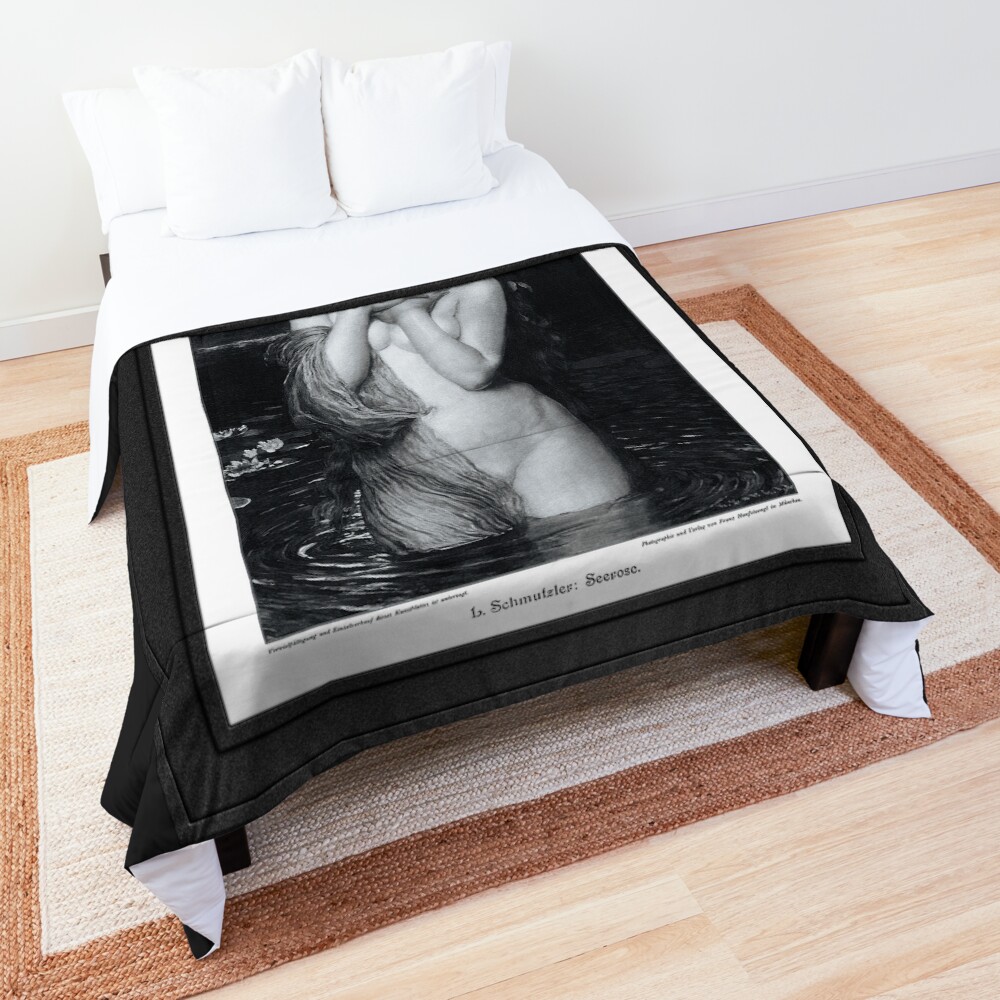
Leopold Schmutzler (1864 – 1940), a renowned German painter and engraver, skapad “näckros (Näckros)” i 1913. This artwork exemplifies the classical style of Schmutzler, renowned for his intricate engravings and portraits. I detta stycke, Schmutzler captures the ethereal grace of a female figure entwined with nature, blending both human form and botanical elements. The image evokes a sense of romanticism and sensuality, highlighting the painter’s expertise in portraying human beauty within a natural context. Titeln “näckros” refers to the water lily, a symbol of purity and serenity, which is reflected in the delicate balance between the subject and her surroundings.
Innehållsförteckning
Ämne och komposition
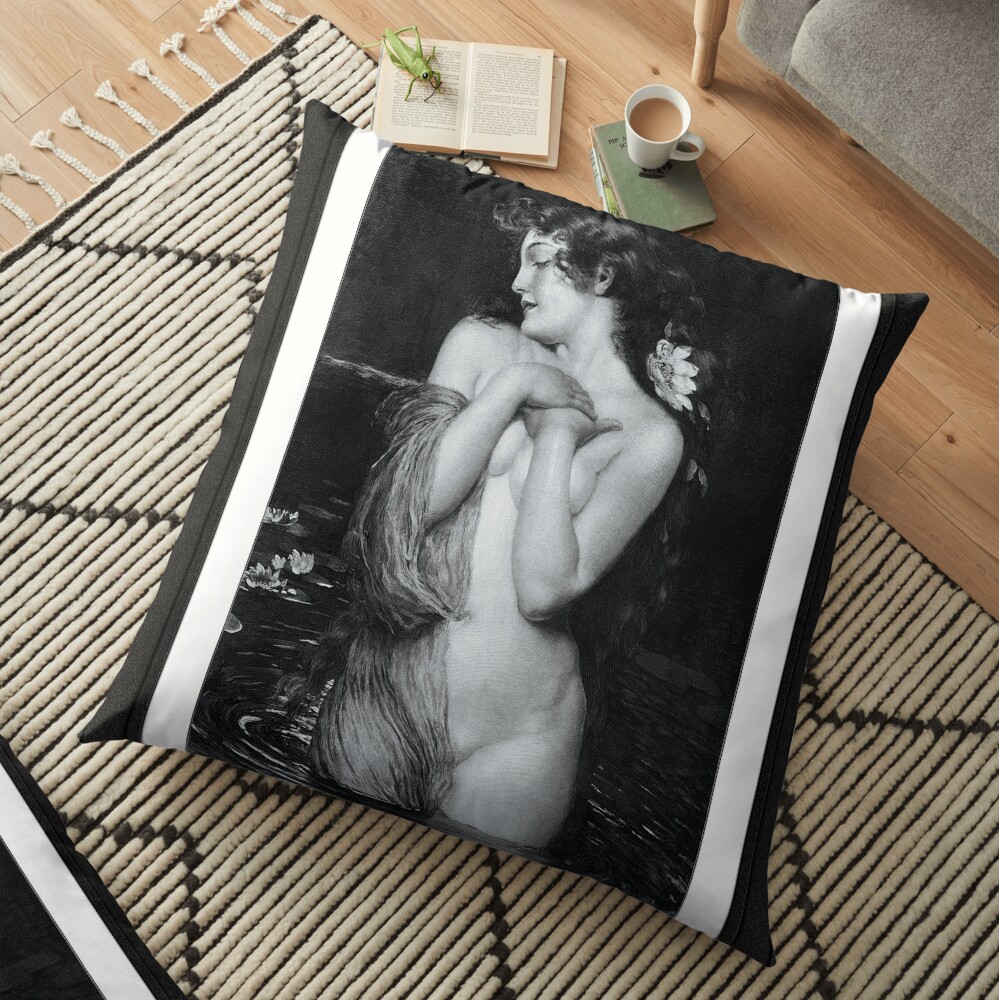
The focal point of “näckros (Näckros)” is a nude woman positioned gracefully amidst the calm waters of a pond. Her body is partially submerged, the soft curves of her figure gently rising above the water’s surface. The woman’s pose is one of serene contemplation, her arms crossed in front of her chest as though protecting her vulnerability, while her face is turned slightly toward the viewer, offering a profile of graceful beauty. Her expression is tranquil yet suggestive, conveying a sense of introspection. Schmutzler’s treatment of the female form is both tender and respectful, emphasizing its natural beauty without oversexualizing it.
The woman is adorned with a single water lily in her hair, adding a layer of symbolism to the image. Water lilies are often associated with purity, återfödelse, and the connection between the spiritual and physical realms. This subtle addition reinforces the serene and almost divine quality of the figure. The composition emphasizes her connection with nature, where the water lilies and their floating leaves echo the movement of the woman’s body. This symbiotic relationship between the human form and nature is a hallmark of Schmutzler’s work, where natural beauty and human vulnerability merge seamlessly.
Setting and Environment
The background of the engraving features the calm, reflective waters of a pond, creating a tranquil and timeless atmosphere. The water lilies float serenely on the surface, their delicate petals and leaves arranged in a harmonious pattern. The dark waters serve as a rich contrast to the pale skin of the woman, drawing attention to her form and the subtle textures of her hair, which cascades over her shoulders in soft waves. Schmutzler’s use of fine lines and shading in the engraving captures the texture of the water, lending it a sense of depth and movement. Krusningarna i vattnet, though gentle, suggest a world that is still yet alive, enhancing the mood of quiet introspection.
The overall ambiance is one of peace and solitude. The absence of any external figures or distractions focuses the viewer’s attention entirely on the subject and her surroundings. The simplicity of the composition allows for an intimate examination of both the woman and the water lilies, without competing elements. This deliberate choice of setting emphasizes the purity and fragility of the subject, placing her in a realm that feels both natural and timeless.
Konstnärlig stil och teknik
Schmutzler’s technique in this engraving is highly detailed, showcasing his mastery of the medium. The intricate line work captures the delicate features of the subject, from the soft folds of her hair to the subtle curvature of her body. The shading is carefully applied to create depth and texture, particularly in the rippling water and the soft folds of the woman’s body. The engraving technique allows for fine gradations of light and shadow, lending a realistic quality to the composition while maintaining an air of romantic idealization.
Schmutzler’s choice to depict the figure in black and white enhances the sense of timelessness and sophistication. The lack of color places greater emphasis on form and texture, elevating the engraving beyond a simple representation to a work of art that invites contemplation. The monochromatic palette also adds a certain moodiness to the piece, accentuating the serene yet melancholic atmosphere. The contrast between the pale skin of the figure and the dark water creates a striking visual dynamic, ensuring that the subject remains the focal point of the artwork.
Humör och känslomässig inverkan
Stämningen av “näckros (Näckros)” is one of quiet introspection and ethereal beauty. The calmness of the pond and the serene posture of the woman invite the viewer to reflect on themes of solitude, sårbarhet, och renhet. The engraving evokes a sense of tranquility, drawing the viewer into a meditative space where the beauty of the natural world and the human form coexist in harmony. There is a gentle sensuality to the piece, yet it is tempered by the peaceful environment and the delicate symbolism of the water lily. The woman is not merely a passive figure; snarare, she embodies a quiet strength, captured in a moment of profound stillness.
Detta arbete, with its subtle blend of natural beauty and human form, speaks to the interconnectedness of life and nature. The engraving’s quiet elegance and emotional depth invite the viewer to pause and contemplate the quiet beauty of the world, emphasizing the simplicity of being at peace within oneself and with nature. Schmutzler’s ability to evoke such emotions through engraving demonstrates his deep understanding of both the human form and the natural world.
Slutsats
Leopold Schmutzler’s “näckros (Näckros)” is a masterful example of early 20th-century engraving, demonstrating the artist’s ability to capture both the beauty of the human form and its connection with nature. The tranquil, intimate setting, combined with the careful portrayal of the female figure, creates an atmosphere of quiet introspection and natural harmony. Schmutzler’s technical skill in the medium enhances the emotional depth of the piece, making it not only a visual masterpiece but also an emotional experience for the viewer. In its timeless depiction of beauty, sårbarhet, och lugn, “näckros” remains a remarkable work of art.
Detta är en remastrad digital konst reproduktion av gamla mästare av en bild som är allmän egendom som är tillgänglig som canvastavla online.
Konstnärsbio
Info nedan härledd från Wikipedia.org
Leopold föddes som Mies, en stad i Tachov-distriktet i regionen Plzeň i Tjeckien.
Hans far var gästgivare och sadelmakare och försåg sin son med sina första ritlektioner, sedan från 1880 till 1882 han studerade vid Wiens konstakademi hos den tyske målaren Christian Griepenkerl (1839 – 1916); och senare vid Konsthögskolan i München, studerar under Otto Seitz (1846 – 1912).
Efter examen från Konsthögskolan i München i 1885 han bestämde sig för att bosätta sig i München, och vid sekelskiftet hade han blivit en av de mest eftertraktade porträttkonstnärerna i München; skapa konst för den bayerska kungafamiljen,, populära artister och dansare, bland annat ett porträtt av skådespelerskan Lili Marberg (1876 – 1962) i rollen som Salome.