

Sharing The News c1904
“ニュースを共有する,” に作成されました 1904 by the renowned Italian painter オイゲン・フォン・ブラース (1843 – 1931), is a captivating scene that masterfully combines realism with an emotional narrative. The painting is an exquisite example of Blaas’ skill in portraying everyday life, particularly the lives of women in the early 20th century. 細部への細心の注意を通して, vivid color palette, and masterful brushwork, he creates a scene full of life and warmth, filled with vibrant storytelling.
目次
主な主題と数字
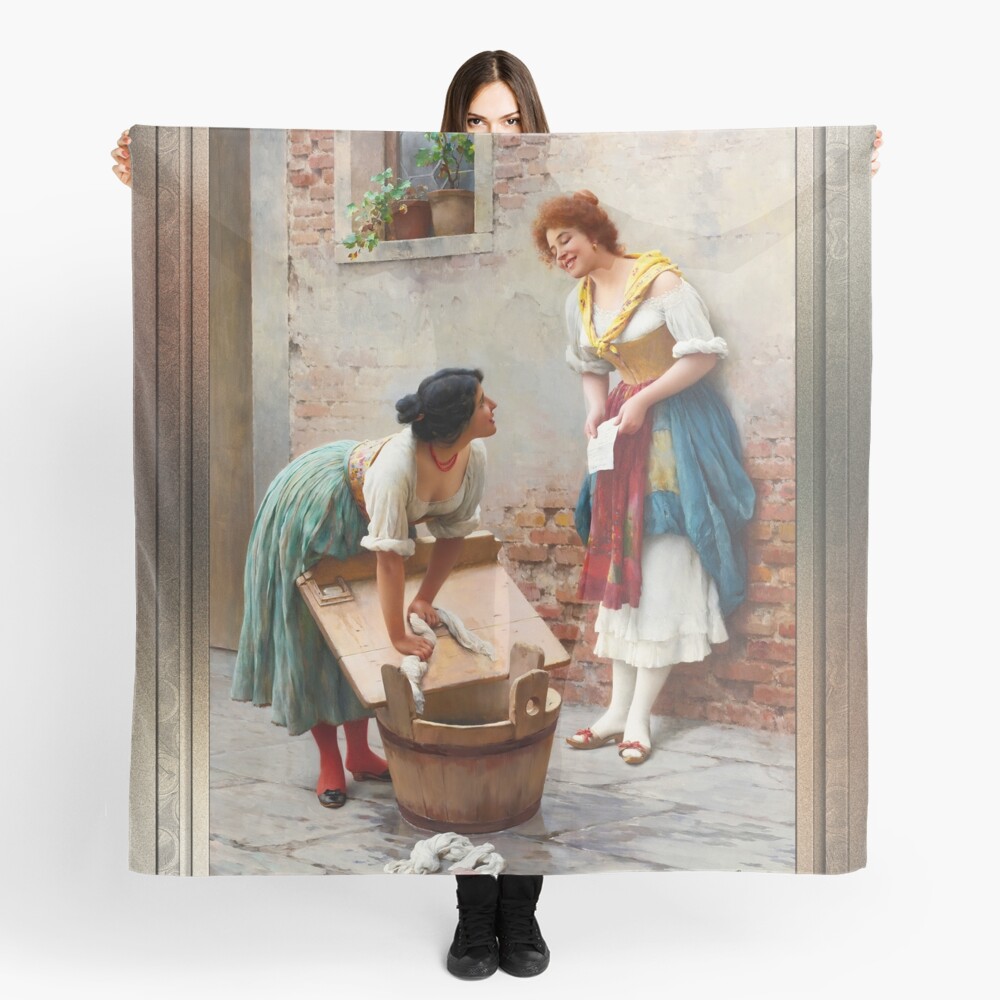
The central theme of the artwork revolves around two women in an intimate moment of conversation. One woman is bending over a large wooden tub, presumably to tend to laundry, while the other stands beside her with an expression of amusement or delight. The woman on the left, engaged in a domestic task, is depicted wearing a modest but vibrant dress with a loose blouse, typical of the time. Her dark hair is tied back, and her posture suggests a sense of modesty or perhaps humility in the act of doing chores. Her bare feet are planted firmly on the cobbled stone ground, adding to the realism of her portrayal.
The second woman, who stands on the right, is portrayed with a lively and spirited demeanor. She is dressed in an equally colorful outfit that reflects the vibrancy and dynamism of the era. The woman’s attire consists of a yellow shawl draped around her shoulders, paired with a flowing skirt that combines various colors including a deep red, 青い, そして白. Her lively expression, highlighted by her slightly tilted head and a broad smile, suggests that she is sharing some joyful news with the other woman. 彼女の手に, she holds a piece of paper, likely a letter or message, indicating that the news is being shared in a written form, adding an element of anticipation and curiosity.
The interaction between the two women is central to the composition, with the body language and facial expressions emphasizing the warmth and familiarity between them. The bent-over figure, who appears to be in the act of listening, engages with the storyteller in a way that conveys both attentiveness and joy. The scene captures the nuances of human emotion, offering a glimpse into the personal world of these women during this period.
オブジェクトと資料
The scene is set in a quaint outdoor courtyard, with rustic architectural elements that reinforce the sense of domestic life. A simple wooden tub, with laundry spilling out, occupies the foreground of the image. The tub is made from rough-hewn wood, suggesting the utilitarian nature of the objects involved. 近く, laundry is scattered across the stone floor, including long lengths of rope and a few garments. The women’s task is clearly connected to their domestic responsibilities, yet the inclusion of the letter and the casual atmosphere gives a sense of lightness and joy to the scene.
バックグラウンドで, a brick wall with small windows and a few scattered potted plants further grounds the setting in a traditional, rustic environment. The potted plants add a touch of life to the otherwise earthy and practical surroundings, helping to contrast with the more serious undertones of the labor-intensive task at hand. These potted plants, which are lush and green, further enhance the feeling of warmth and natural beauty, softening the more mundane aspects of the domestic chore.
地形と背景
The terrain in the artwork features a cobbled stone path, weathered and worn by use. The stones appear smooth, rounded, and uneven, creating a rustic charm that is typical of many rural or traditional European settings. The stone path is likely part of an open-air courtyard or alley that leads toward a larger structure, possibly a home or a communal area. The light filtering through the surrounding plants and the diffuse sunlight suggest a bright, clear day, which adds an overall feeling of positivity to the scene.
The background is dominated by the aged brick wall of the building, where a single window with a simple pot of green plants is framed neatly in the composition. The window provides a hint of depth to the scene, creating a sense of an enclosed space while also allowing the viewer to perceive the broader world outside. The bricks are rendered with a realistic touch, their textures and subtle color variations showing Blaas’ skill in capturing light and shadow, lending the wall a sense of history and weathering.
芸術的なスタイルとテクニック
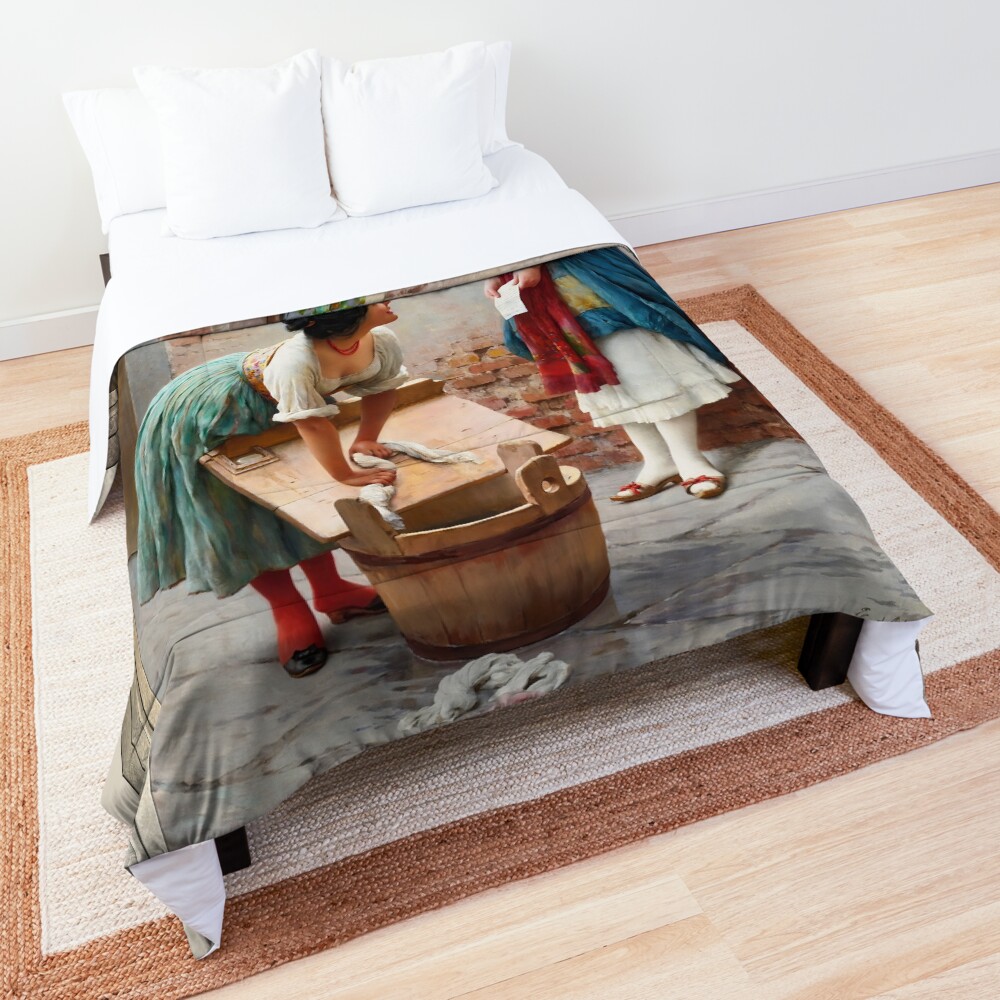
Eugen von Blaas’ painting style is deeply rooted in academic realism, そして、この作品も例外ではありません. The precise rendering of figures and objects, combined with his use of light and shadow, demonstrates his technical skill. Blaas was known for his ability to create lifelike textures, そしてここに, he employs his mastery in the depiction of fabric, スキントーン, そして自然の要素. The folds of the women’s garments are beautifully executed, capturing both the movement of the fabric and its tactile quality. 同様に, the laundry in the wooden tub is painted with great attention to detail, its white fabric contrasting against the rich colors of the women’s attire.
The warm palette used in the piece enhances its lighthearted, joyful atmosphere. The bright colors of the women’s dresses—yellow, 赤, blue—serve as a visual focal point that draws the viewer’s eye. These vivid colors are contrasted with the earthy tones of the stone ground and brick wall, grounding the composition in a more rustic, everyday setting. The background’s muted tones and the women’s dynamic, vibrant costumes contribute to a balanced composition.
The mood of the artwork is one of shared happiness, domestic intimacy, and camaraderie. It speaks to the close relationships women formed during the early 20th century, particularly in domestic settings where the act of sharing news—be it joyous or trivial—was an important part of social life. Blaas captures this moment of connection between the two figures, transforming an everyday chore into a narrative of friendship and community.
結論
“ニュースを共有する” by Eugen von Blaas stands as a testament to the artist’s ability to portray the subtleties of human interaction and domestic life. The scene is full of warmth, joy, and a sense of shared experience. Through his skilled technique, Blaas gives the viewer an intimate glimpse into a world of vibrant color, emotional connection, and traditional tasks, all while masterfully capturing the essence of early 20th-century life.
これは、パブリック ドメイン画像をリマスターしたデジタル アートの古いマスターの複製であり、キャンバス プリントを含むさまざまな素材形式でオンラインで購入できます。, アクリルプリント, メタルプリント, 木版, 額入りプリント, ポスター, そしてとして ロール状のキャンバスプリント からさまざまなサイズで 12 インチから 72 インチは、実際のアートワークのサイズと、アートを購入するために選択したオンデマンド プリント ショップによって異なります。.
アーティスト略歴
以下の情報から派生 Wikipedia.org
オイゲン・フォン・ブラースはアルバーノで生まれた, ローマの近く, チロリアンの父とイタリアの母に. 彼の父カール, 画家も, 彼の先生でした. 彼の母親, アグネシナアウダ, 裕福なローマの女性でした. カールがヴェネツィアアカデミーの教授になったとき、家族はヴェネツィアに引っ越しました. 彼はしばしばヴェネツィアのシーンを描いた, だけでなく、肖像画や宗教画.
彼の作品の中には、聖具室の婚姻形態があります; ヴェネツィアのカンピエロのビンゴ; 学校での人形劇; とラニネッタ. 美術評論家のルイージ・チルタニ, 絵画がヴェネツィアのモストラナツィオナーレディで展示されたとき, それを美しいと表現した, お世辞, かわいい, 愛撫, 掃除した, 磨かれた, 氏による絵画のlaundress. 膀胱, 偉大なベネチアの貴族のお気に入りの肖像画家, ガラサテンに身を包んだ, 輝く宝石, 金持ちの髪型.
ヴェネツィア社会の彼のカラフルでかなり劇場的な時代のイメージ, 例えば. バルコニーで (1877; プライベートコレクション), 繊細なパステルや中庭のエッチングとはかなり異なっていました, モダンなヴェネツィアのバルコニーと運河.
オイゲン・デ・ブラース’ 絵画は王立アカデミーに展示されました, 美術協会, ロンドンの新しいギャラリーとアーサートゥースアンドサンズギャラリー, リバプールのウォーカーアートギャラリーでも