

Shepherds Idyll
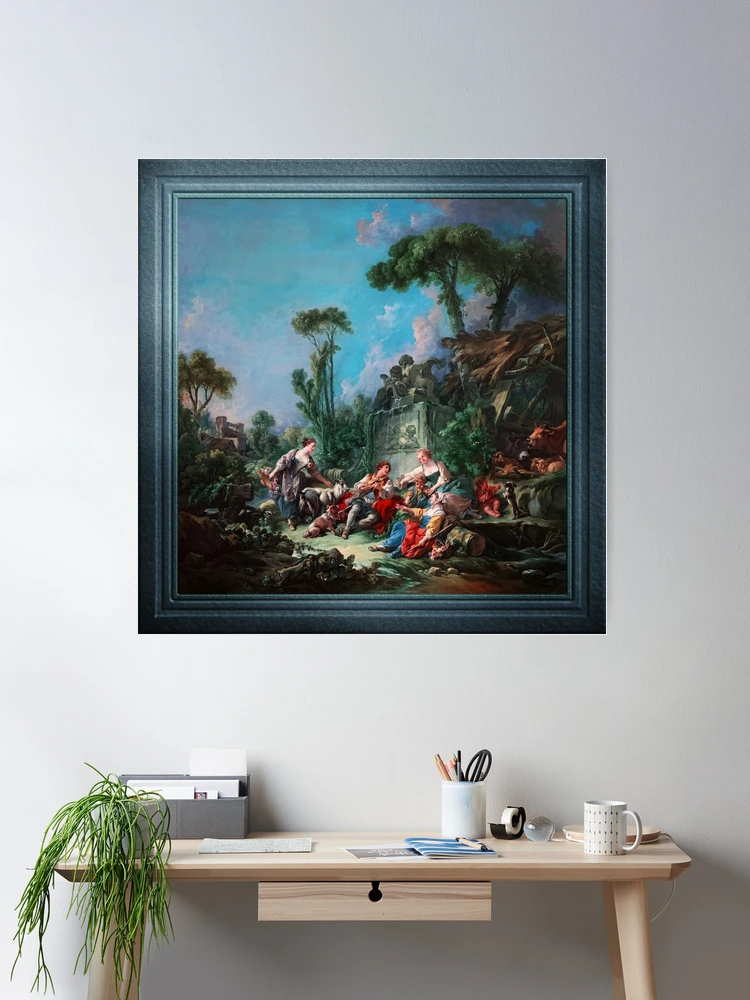
Shepherds Idyll c1768 by French Painter フランソワ・ブーシェ (1703 – 1770), 彼はまた、熟練した製図工であり、エッチでした. 彼はロココ スタイルで働き、牧歌的な古典的なテーマで知られています。, 田園風景と装飾的な寓話.
フランソワ・ブーシェ, one of the most influential French Rococo painters of the 18th century, created the exquisite work “Shepherd’s Idyll” その周り 1768. This painting encapsulates the light-hearted and pastoral spirit of the Rococo period, known for its playful, sensual, and idealized portrayal of nature and rural life. With soft, flowing lines and a romantic atmosphere, Boucher’s approach brings forth a harmonious blend of natural beauty, イノセンス, and intimacy.
目次
主な主題と構成
中心に “Shepherds Idyll” lies a group of shepherds and shepherdesses captured in an idyllic, pastoral scene. The composition is carefully structured, showcasing the innocence of rural life in a way that elevates it from mere rusticity to a realm of artful elegance. The scene is set in a lush, rolling landscape with a softly flowing stream. The shepherds, dressed in vibrant, yet soft-colored costumes typical of the period, are seated or reclining in a carefree manner. There is an easy, relaxed posture among the figures, creating a sense of tranquility and ease.
The group is mostly engaged in lighthearted activities — some play music, while others interact with animals. A young woman with a graceful, almost ethereal appearance is in the foreground, playing a flute, while a man, dressed in a richly colored red and gold jacket, is seated nearby, holding a shepherd’s crook. Some of the figures are in close conversation, others appear to be gazing into the distance, while a few are simply lost in their enjoyment of the natural surroundings.
バックグラウンドで, two horses graze near a fountain, while a goat and dog are positioned around the group of figures, further enriching the pastoral scene with the vitality of life. The figures themselves, while youthful, are imbued with an air of sophistication, making the pastoral setting seem almost like a stage for a private social gathering among the country gentry.
オブジェクトとシンボル
A striking feature of the painting is the natural elements, which are treated with delicate reverence. The foliage surrounding the group is lush and abundant, with grand, towering trees that fill the upper part of the canvas. The figures seem almost dwarfed by the massive trunks and sweeping branches that provide a sense of both protection and serenity. Their presence also speaks to the Rococo love of nature as a decorative and idealized space, meant to reflect human grace and beauty.
The fountain in the background, designed with classical motifs, symbolizes the theme of purity and the eternal flow of life. The gentle stream that flows from it winds its way through the scene, adding to the tranquil atmosphere. The animals, especially the goat and the cows on the right side of the painting, lend a touch of realism to the otherwise idealized scene. They are almost anthropomorphized, existing in harmony with the human figures. The goat, 特に, is a common symbol of fertility, while the dog signifies loyalty and companionship, subtle yet deliberate symbols that further enhance the narrative of simplicity and pastoral bliss.
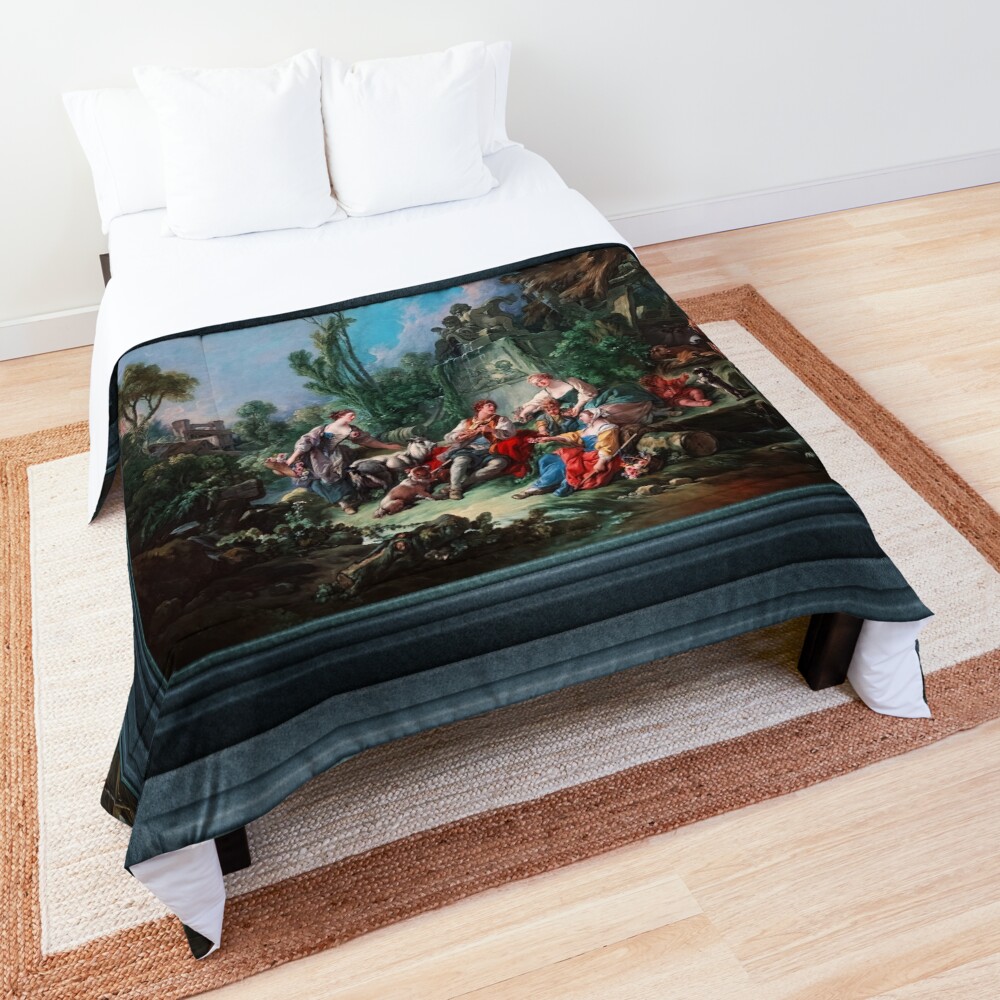
The shepherd’s crook, a tool of the pastoral life, is another symbol within the scene, symbolizing the connection of humanity to nature. The pastoral life is not merely an aesthetic experience in this context but one that is firmly rooted in the traditions and labors of the countryside.
Terrain and Background Details
The background of the painting is dominated by a mixture of lush greens and deep blues. The sky is painted with a soft, pastel blue that merges seamlessly into the rolling hills and trees in the distance. The light is diffused gently across the landscape, giving the entire scene a warm, harmonious glow. The figures in the foreground bask in this light, which creates a soft halo around them.
The trees and foliage are painted with a sense of romantic idealism, where nature is exaggerated to appear in its most serene and refined form. There are no sharp, harsh angles or barren spaces in the landscape. その代わり, the rolling hills, expansive sky, and dotted animals create a lush, fertile environment.
In contrast to the vibrancy of the figures and natural elements, the architecture in the background remains modest but significant. The distant ruins of a classical structure — perhaps a Roman-style temple or an overgrown villa — add a touch of antiquity to the work. 建物, though not the central focus, provide historical context to the otherwise timeless nature of the landscape, indicating that the scene could exist in any golden age of human civilization.
The Rococo Style
Boucher’s “Shepherd’s Idyll” is quintessentially Rococo, a style that arose in France in the early 18th century. Rococo is known for its lightness, 恵み, and delicate ornamentation, and these characteristics are evident throughout the work. ソフト, pastel palette employed by Boucher enhances the dreamlike, almost fairy-tale quality of the scene. The figures are depicted with soft, 丸みを帯びたフォルム, and the fluid brushstrokes give a sense of movement and fluidity to the scene.
The sensuality that pervades the Rococo style is also present in this painting, though it is more understated. 数字, although idealized, exude a softness and grace that suggests the easy pleasures of rural life — where love, 音楽, and beauty coexist in a world free of societal constraints. In many ways, Boucher’s use of light, 色, and subject matter elevates the pastoral to an art of fantasy, making it an escape from the rigid realities of court life.
気分と雰囲気
の気分 “Shepherd’s Idyll” 静けさの1つです, joy, and contentment. 数字’ relaxed postures and the gentle interplay between the humans and animals reflect an idyllic existence where human connection to nature is at its purest. The natural world around them, lush and vibrant, complements their youthful, carefree demeanor. There is no urgency in the painting; それよりも, it conveys a sense of eternal, peaceful enjoyment.
Boucher’s use of light, 色, and subject matter invites the viewer into a dreamlike world of pastoral bliss, where time slows, and the concerns of the outside world seem far away. The lush environment and the harmonious interactions of the figures suggest a utopian existence, where the beauty of nature and human companionship create a perfect balance.
結論
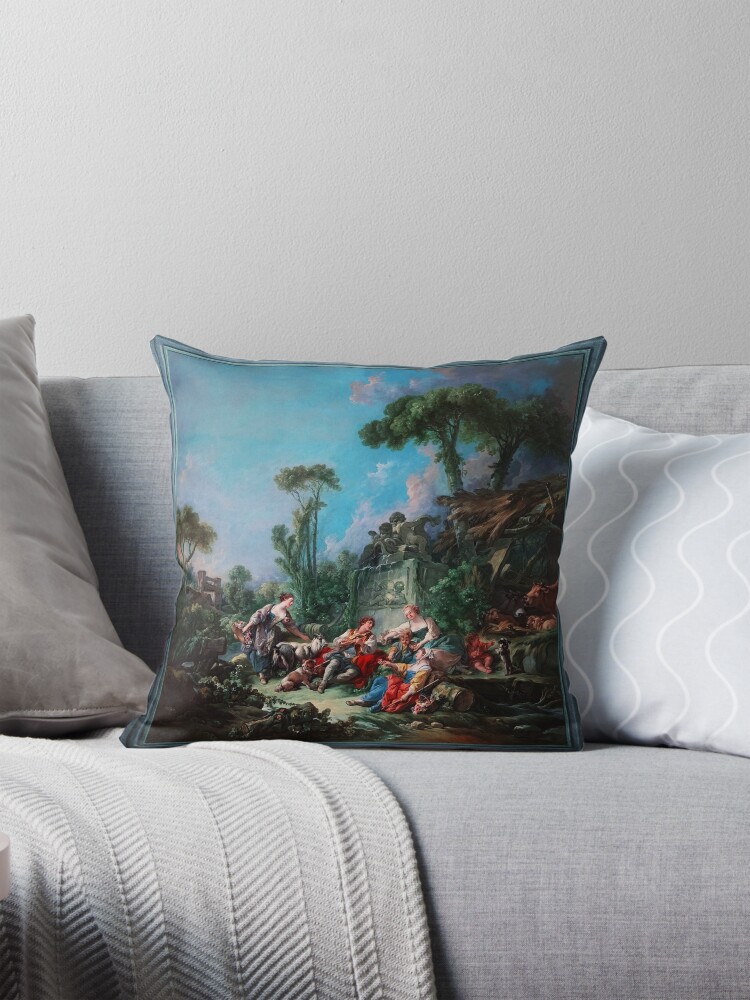
フランソワ・ブーシェ “Shepherd’s Idyll” encapsulates the charm and grace of the Rococo period through its serene portrayal of pastoral life. With its idyllic depiction of rural pleasures, the painting invites the viewer to escape into a world of beauty, シンプルさ, そして静けさ. The rich colors, delicate figures, and romanticized landscape create a timeless piece that remains a hallmark of the Rococo style.
Shepherd’s Idyll is a retouched digital art old masters reproduction of a public domain image.
アーティストについて
以下の情報から派生 Wikipedia.org
パリ出身, ブーシェはあまり知られていない画家ニコラスブーシェの息子でした, 彼に彼の最初の芸術的訓練を与えた人. 17歳で, ブーシェの絵画は、画家フランソワ・ルモワンに賞賛されました. Lemoyneは後にBoucherを彼の見習いとして任命しました, でもたった3ヶ月で, 彼は彫刻家ジャン=フランソワ・カーズのために働きに行きました.
に 1720, 彼は絵画でエリートローマグランプリを受賞しました, しかし、5年後までイタリアで勉強する結果的な機会をとらなかった, 王立絵画彫刻アカデミーの財政問題のため。[1] イタリアでの勉強から戻ったとき、彼は再建された王立絵画彫刻アカデミーに入学しました。 24 11月 1731. 彼のレセプションピース (レセプションピース) 彼のリナルドとアルミダは 1734.
ブーシェはマリージャンヌブゾーと結婚しました 1733. カップルには3人の子供がいました. Boucherはの教員になりました 1734 そして彼のキャリアはこの時点から加速し、彼は教授、そしてアカデミーの学長に昇進しました。, 王立ゴブラン製作所の検査官になり、ついに国王の筆頭画家になりました (王の最初の画家) に 1765. マリー=ルイーズ・オマーフィーの肖像c. 1752
ブーシェはで死んだ 30 5月 1770 彼の生まれ故郷のパリで. 彼の名前, 彼の常連客であるポンパドゥール夫人のそれと一緒に, フランスのロココ様式の代名詞になっていた, ゴンコート兄弟を率いて書く: “ブーシェは世紀の味を代表する男性の一人です, 表現する人, それを具体化して具体化します。”
ブーシェは自然が “緑が多すぎて照明が不十分” (緑が強すぎて照明が悪い).
ブーシェは宝石の彫刻家ジャック・ゲと関係がありました, 彼が描くことを教えた人. 彼はまた、モラヴィア・オーストリアの画家マーティン・フェルディナンド・クアダルと新古典主義の画家ジャック=ルイ・ダヴィッドを指導しました。 1767.[4] 後で, ブーシェは、ポンパドゥール夫人が彫刻し、好意的な廷臣に見事に綴じられた巻として配布した、グアイの一連の作品の素描を作成しました。