

Sendes i nød ud for en klippekyst
“Sendes i nød Off A Rocky Coast” is a remarkable piece of marine art created in 1667 by the German-born Dutch painter Ludolf Bakhuizen (1630 – 1708). Known for his seascapes, Bakhuizen’s works are a blend of technical mastery and emotive narrative, capturing the power and unpredictability of the sea. Dette maleri, executed in oil on canvas, showcases his signature style, which emphasizes dramatic weather conditions and the complex interplay of light, vand, and ships in perilous circumstances. The viewer is transported to a tumultuous moment in maritime history, evoking the treacherous environment that sailors often faced on the open sea.
Indholdsfortegnelse
Emne og komposition
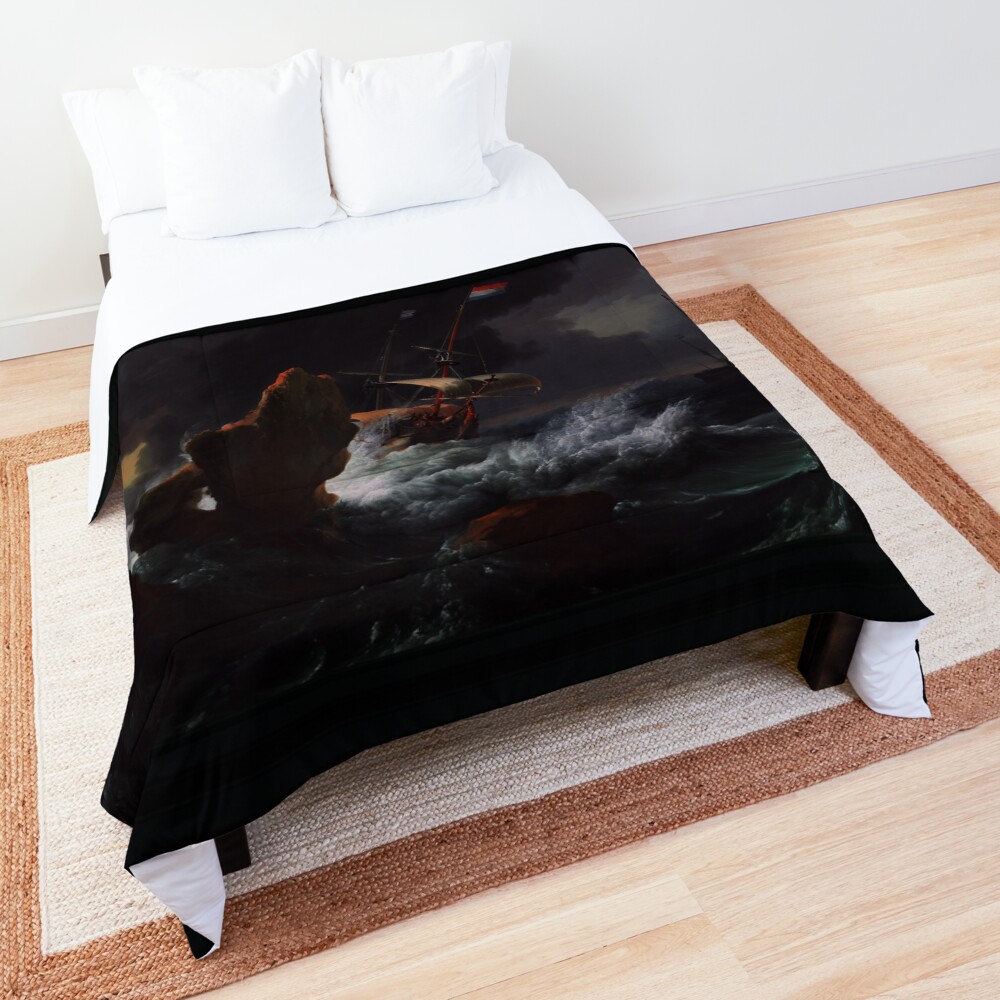
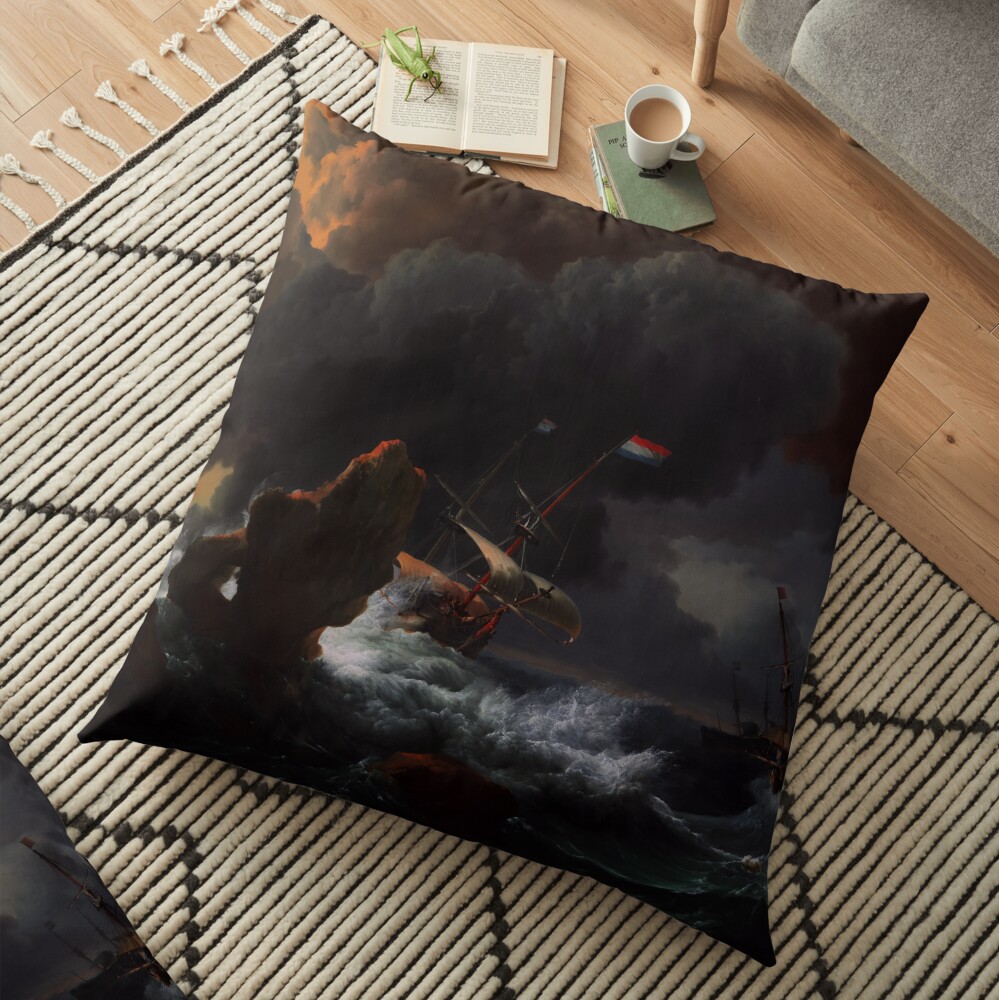
Det centrale tema for “Sendes i nød ud for en klippekyst” revolves around two ships caught in a violent storm. The ships, one seemingly in the process of sinking and the other struggling to remain afloat, are surrounded by sharp, jagged rocks that threaten to crush them. The rocky terrain on the coast serves as a stark contrast to the vast expanse of the wild ocean, and the fierce crashing waves create an immediate sense of chaos and danger. The distressed vessels are depicted in mid-crisis, their sails caught in the wind, and their fragile structures seem to be at the mercy of the waves.
I forgrunden, the artist captures a highly detailed depiction of the waves, with foam surging around the rocks and cascading down from the towering swells. The sea appears both beautiful and dangerous, its dark waters reflecting the turbulent skies above. The ships’ crew is not shown in detail, but their presence is implied through the dramatic actions of the vessels and the desperate atmosphere that permeates the scene.
Bakhuizen’s skillful use of perspective gives the viewer a sense of being an observer of this moment in time. The ships seem to be caught between the forces of nature and their imminent fate. The use of space within the painting makes the viewer feel small and insignificant in the face of the grandeur of the natural world. It is as though the viewer is witnessing a battle between human craftsmanship and the raw, untamable power of nature.
Mood and Atmosphere
The mood of the painting is one of impending doom and tension, underscored by the stormy atmosphere. The dark clouds that dominate the sky create a sense of foreboding, casting an almost apocalyptic tone over the scene. The intensity of the storm is conveyed not only through the movement of the waves and the ships but also through the deep contrasts of light and shadow that Bakhuizen employs. The violent winds and the threatening sea suggest a struggle between man and nature, an eternal theme that was particularly resonant in the age of exploration and naval power.
The dramatic lighting that Bakhuizen uses intensifies the emotional impact of the painting. While the skies remain heavily clouded, a faint light from an unseen source is evident in the reflections on the turbulent water. This subtle illumination serves to highlight the vulnerable nature of the ships and their precarious position against the power of the storm. It is as though the viewer is witnessing a moment frozen in time, a dramatic event unfolding before their eyes.
Stil og teknik
Bakhuizen’s style reflects the Baroque period’s emphasis on realism and dramatic contrasts. His technical skill in rendering the natural elements, such as the turbulent ocean and the billowing sails, demonstrates his ability to capture the dynamic qualities of the scene. The precision in his depiction of the waves and the jagged rocks shows his meticulous attention to detail, which was a hallmark of Dutch Golden Age painters. The texture of the painting, with its thick layers of paint in certain areas, adds to the sense of realism and depth, especially in the portrayal of the foamy waves crashing against the ships.
In addition to his meticulous attention to detail, Bakhuizen’s use of light and shadow is essential to the painting’s emotional depth. The contrast between the stormy sky and the illuminated water below enhances the feeling of drama, while the dark, ominous clouds overhead suggest that the situation is dire. This interplay of light and dark in the composition enhances the tumultuous mood of the painting and highlights the artist’s technical mastery.
The Importance of the Scene
“Sendes i nød ud for en klippekyst” is more than just a depiction of a storm at sea; it represents the vulnerability and struggle of the ships and their crews, as well as the power of nature that could overwhelm even the most skilled sailors and the most advanced ships of the time. In the 17th century, the Netherlands was a dominant naval power, and the painting reflects both the pride of the Dutch maritime industry and the ever-present dangers faced by those who worked at sea. I denne periode, sailors frequently encountered perilous storms and unpredictable seas, and Bakhuizen’s artwork captures this theme with both drama and realism.
desuden, the painting is a testament to the Baroque interest in dynamic compositions and emotional intensity. By depicting a moment of extreme distress, Bakhuizen emphasizes the power of nature and the fragility of human endeavors. The artwork serves as a reminder of the tumultuous nature of life during the Age of Sail, where danger was a constant companion on the high seas.
Konklusion
Ludolf Bakhuizen’s “Sendes i nød ud for en klippekyst” is an exemplary piece of 17th-century Dutch marine painting. Gennem hans mesterlige brug af lys, struktur, and dramatic composition, Bakhuizen invites the viewer to witness the turmoil of a storm at sea and the fragility of ships caught in its grip. The painting not only captures the beauty and danger of the natural world but also reflects the uncertainties and challenges faced by those who ventured into the ocean during the Golden Age of Dutch naval power.
Ships In Distress Off A Rocky Coast er en retoucheret digital kunst, gamle mestre reproduktion af et offentligt domæne billede, der er tilgængeligt online som en rullet print.
Denne digitale kunstskabelse, som med alt det kunstværk, der kan findes på Xzendor7-webstedet, er det tilgængeligt for køb online i en række materialeformater, herunder lærredstryk, akryltryk, metaltryk, trætryk, indrammede tryk, plakater, og som rullede lærred udskriver i forskellige størrelser fra 12 tommer til 72 tommer afhængigt af størrelsen på det faktiske kunstværk og den print-on-demand-butik, du vælger at købe kunsten fra.
Kunstværket er også tilgængeligt på en bred vifte af mænds og kvinders beklædning, krus, totes, tørklæder, notesbøger og journaler og mange boligindretningsprodukter.
Kunstner Bio
Info nedenfor fra Wikipedia.org
Ludolf Bakhuizen blev født i Emden, Østfriesland, og kom til Amsterdam ca. 1650, arbejder som købmand og kontorist.
Han opdagede et så stærkt geni til maleri, at han opgav forretningen og dedikerede sig til kunst fra slutningen af 1650'erne, oprindeligt i pentegninger.
Han studerede først under Allart van Everdingen og derefter under Hendrik Dubbels, datidens to fremtrædende mestre, og blev snart fejret for sine havstykker, som ofte havde hårdt hav.
Han var en ivrig naturelev, og udsatte sig ofte på havet i en åben båd for at studere virkningerne af storme.
Hans kompositioner, som er talrige, er næsten alle variationer af et emne, havet, og i en stil specielt hans egen, præget af intens realisme eller trofast efterligning af naturen.
I sine senere år anvendte Bakhuizen sine færdigheder i ætsning; han malede også et par eksempler hver af flere andre malerier, såsom portrætter, landskaber og genremalerier.
I løbet af sit liv fik Bakhuizen besøg af Cosimo III de’ Medici, Peter den Store og arbejdede også for forskellige tyske fyrster. I 1699 han åbnede et galleri på øverste etage på det berømte amsterdams rådhus. Efter et besøg i England døde han i Amsterdam den 17 november 1708.
Bakhuizen malede portrætter af sin store vennekreds. Disse er af mindre kunstnerisk værdi, men giver et indblik i hans gode forhold til samtidige forskere og litterære personer.