

Sketching the Ruins of Tintern Abbey
Sketching the Ruins of Tintern Abbey by British Painter Samuel Colman (1780 – 1845); ritrattista, maestro di disegno e pittore romantico, Biblical and Genre Scenes in which his faith was central to his artwork.
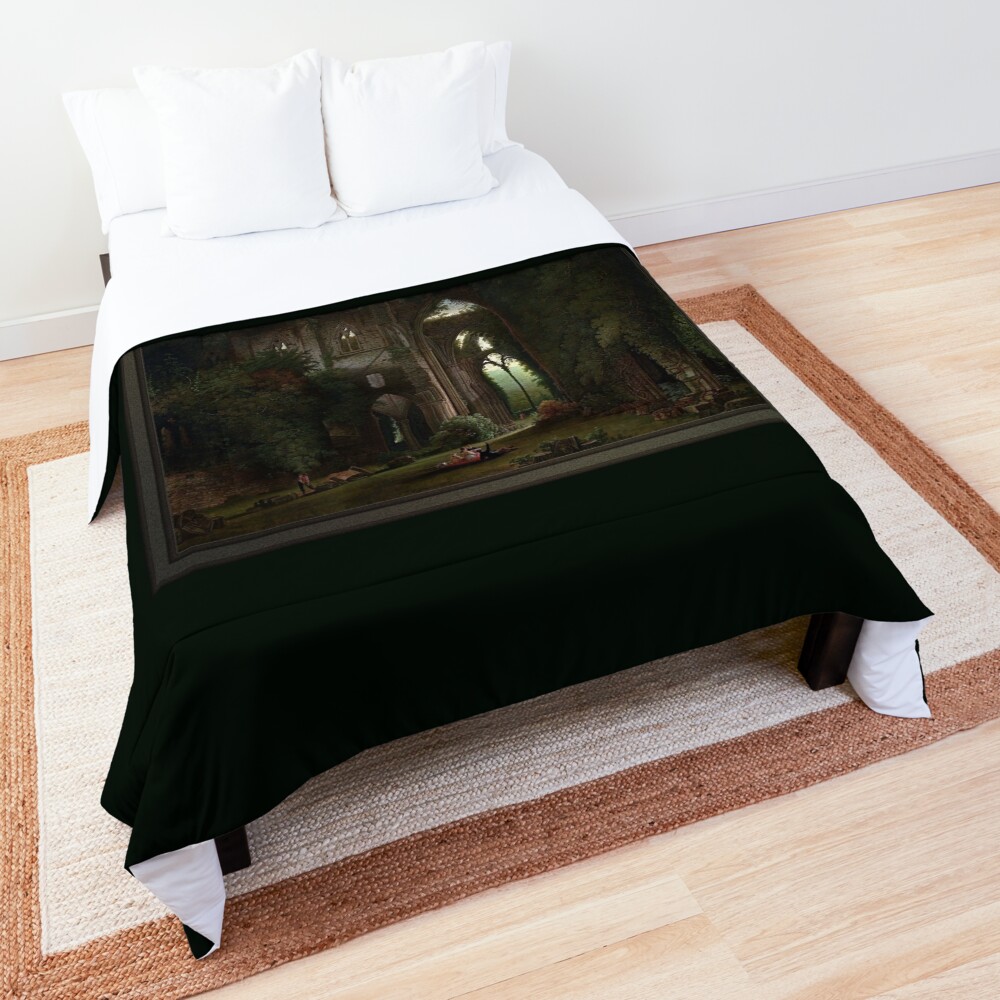
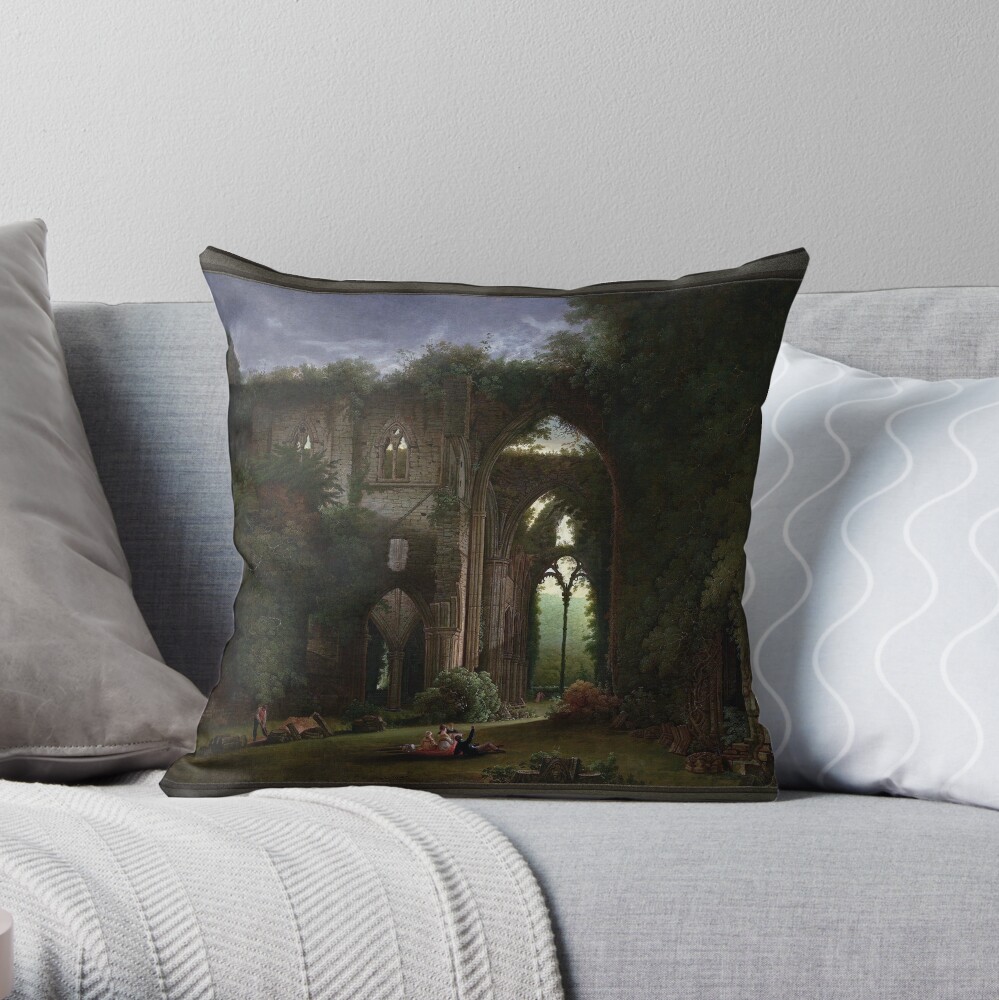
A beautiful landscape painting of the Ruins of Tintern Abbey as a family sits on the grass of the grounds having a picnic while a worker toils at up keeping the grounds and we can also see two other people far off strolling past an archway.
The image is lush with greenery and trees that are covering the ruins and the use of lighting and shading make for an ideal picturesque image.
Questa è una riproduzione di arte digitale ritoccata di vecchi maestri di un'immagine di pubblico dominio che è disponibile per l'acquisto come a stampa arrotolata.
Informazioni sotto da Wikipedia.org
Born in Portland, Maine, Colman moved to New York City with his family as a child. His father opened a bookstore, attracting a literate clientele that may have influenced Colman’s artistic development
Si crede che abbia studiato brevemente con il pittore della Hudson River School Asher Durand, ed ha esposto il suo primo lavoro alla National Academy of Design in 1850.
Di 1854 aveva aperto il suo studio a New York City. L'anno successivo fu eletto membro associato dell'Accademia Nazionale, con la piena adesione conferita a 1862.
I suoi dipinti di paesaggi negli anni 1850 e 1860 furono influenzati dalla Hudson River School, un esempio è Prati e fiori di campo a Conway (1856) now in the collection of the Frances Lehman Loeb Art Center at Vassar College.
He was also able to paint in a romantic style, which had become more fashionable after the Civil War. One of his best-known works, and one of the iconic images of Hudson River School art, is his Storm King on the Hudson (1866), now in the collection of the Smithsonian American Art Museum in Washington, DC.
Colman was an inveterate traveler, and many of his works depict scenes from foreign cities and ports. He made his first trip abroad to France and Spain in 1860–1861, and returned for a more extensive four-year European tour in the early 1870s in which he spent much time in Mediterranean locales.
Colman often depicted the architectural features he encountered on his travels: cityscapes, castles, bridges, archi, and aqueducts feature prominently in his paintings of foreign scenes. Nel 1870 and again in the 1880s he journeyed to the western United States, dipingere paesaggi occidentali paragonabili per portata e stile a quelli di Thomas Moran.
Le attività artistiche di Colman sono diventate ancora più diversificate in tarda età. Nel 1880 ha lavorato a lungo come interior designer, collaborando con il suo amico Louis Comfort Tiffany sul design di Samuel Clemens’ Hartford casa, e più tardi sulla Fifth Avenue, casa di Henry e Louisine Havemeyer.
Divenne anche un importante collezionista di oggetti decorativi asiatici, e ha scritto due libri sulla geometria e l'arte, uno dei quali era intitolato Nature's Harmonic Unity, l'altro che si intitolava Forma Proporzionale. Colman è morto a New York nel 1920.