

Sketching the Ruins of Tintern Abbey
Sketching the Ruins of Tintern Abbey by British Painter Samuel Colman (1780 – 1845); художник-портретист, мастер рисования и художник-романтик, Библейские и жанровые сцены, в которых его вера занимала центральное место в его работах.
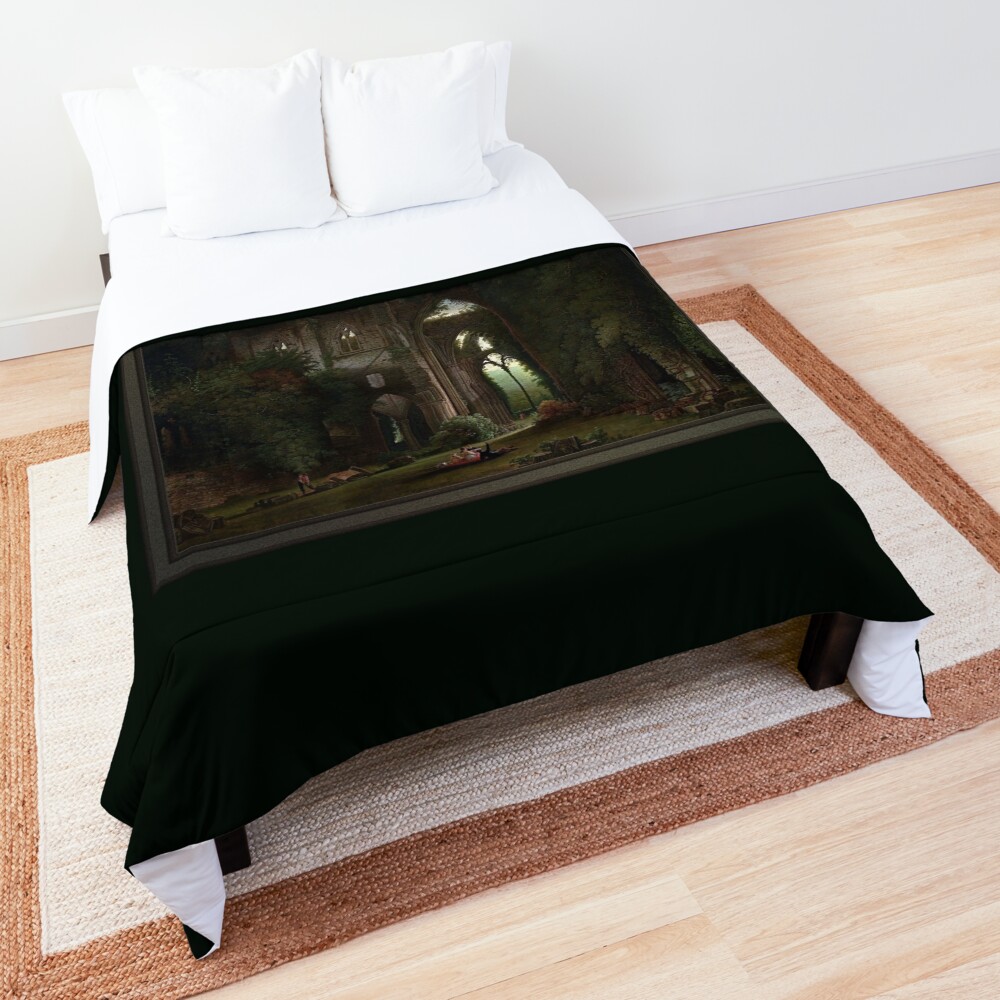
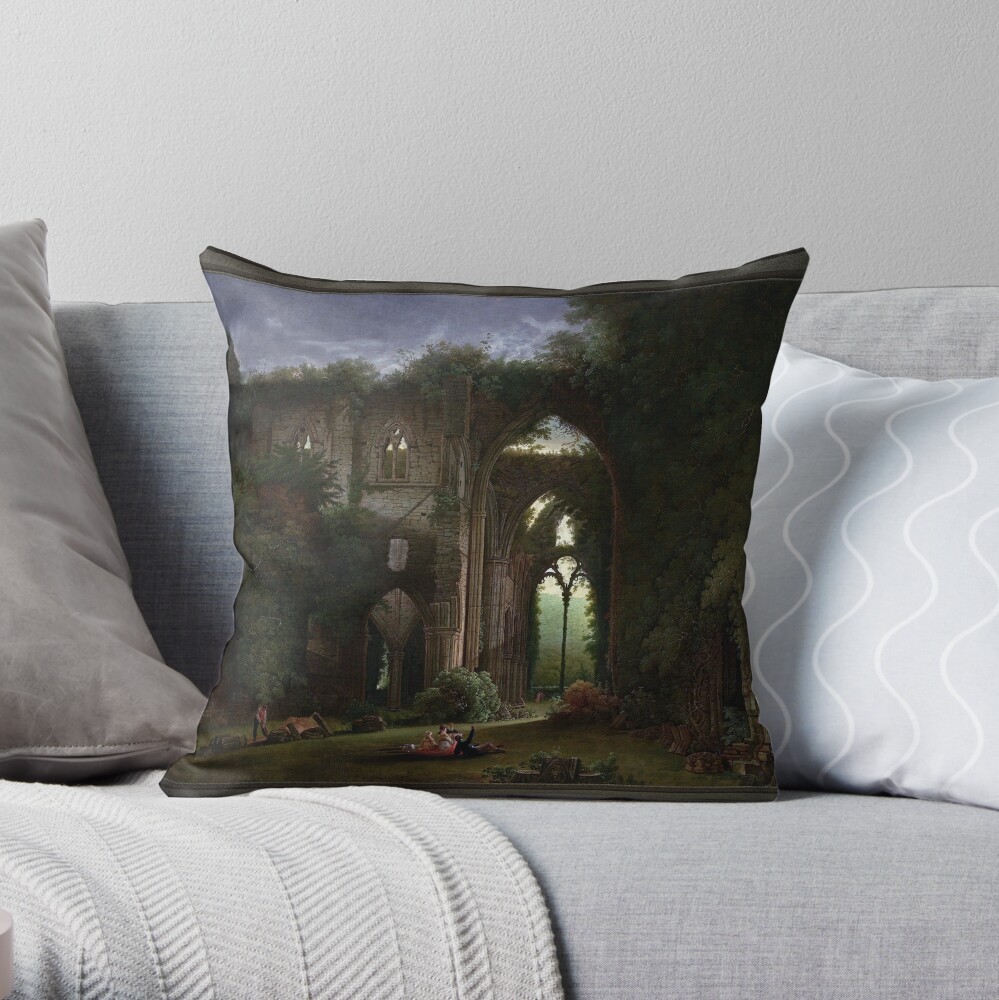
Красивая пейзажная картина Руины аббатства Тинтерн, когда семья сидит на траве на территории, устраивая пикник, в то время как рабочий трудится, ухаживая за территорией, и мы также можем видеть двух других людей, прогуливающихся далеко мимо арки.
Изображение пышное с зеленью и деревьями, покрывающими руины, а использование освещения и затенения создает идеальный живописный образ..
Смерть Сапфо рулонная печать.
Информация ниже от Wikipedia.org
Born in Portland, Мэн, Colman moved to New York City with his family as a child. His father opened a bookstore, attracting a literate clientele that may have influenced Colman’s artistic development
He is believed to have studied briefly under the Hudson River School painter Asher Durand, and he exhibited his first work at the National Academy of Design in 1850.
К 1854 he had opened his own New York City studio. The following year he was elected an associate member of the National Academy, with full membership bestowed in 1862.
His landscape paintings in the 1850s and 1860s were influenced by the Hudson River School, an example being Meadows and Wildflowers at Conway (1856) now in the collection of the Frances Lehman Loeb Art Center at Vassar College.
He was also able to paint in a romantic style, which had become more fashionable after the Civil War. One of his best-known works, and one of the iconic images of Hudson River School art, is his Storm King on the Hudson (1866), now in the collection of the Smithsonian American Art Museum in Washington, DC.
Colman was an inveterate traveler, and many of his works depict scenes from foreign cities and ports. He made his first trip abroad to France and Spain in 1860–1861, and returned for a more extensive four-year European tour in the early 1870s in which he spent much time in Mediterranean locales.
Colman often depicted the architectural features he encountered on his travels: cityscapes, castles, мосты, арки, and aqueducts feature prominently in his paintings of foreign scenes. В 1870 and again in the 1880s he journeyed to the western United States, painting western landscapes comparable in scope and style to those of Thomas Moran.
Colman’s artistic activities became even more diverse late in life. By the 1880s he worked extensively as an interior designer, collaborating with his friend Louis Comfort Tiffany on the design of Samuel Clemens’ Hartford home, and later on the Fifth Avenue home of Henry and Louisine Havemeyer.
He also became a major collector of Asian decorative objects, and wrote two books on geometry and art, one of which was entitled Nature’s Harmonic Unity, the other which was entitled Proportional Form. Colman died in New York City in 1920.