

Star Lit Glamour Girl
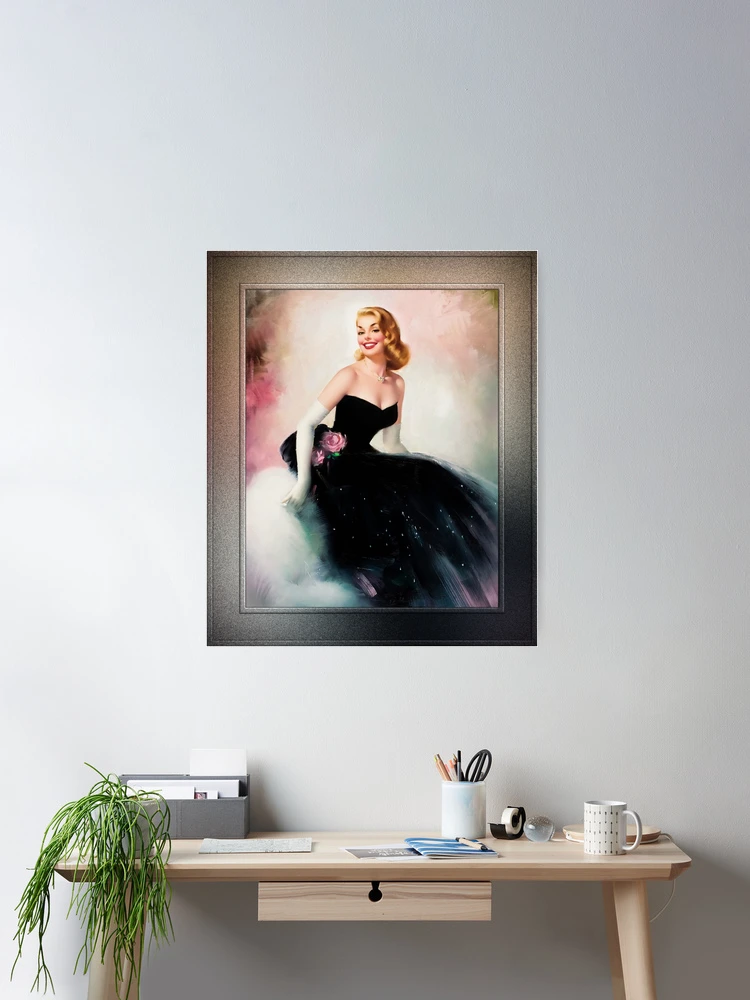
“Star Lit Glamour Girl” (um 1950), eftir ítalskættaðan bandarískan listamann Edward Runci (1921 – 1986), umlykur glamúr og glæsileika miðrar aldar tísku með sláandi andlitsmynd sinni af konu í fáguðum slopp. Meistaratækni Runci lyftir efnið upp, blanda rómantík og hátísku til að búa til listaverk sem finnst tímalaust. Þekktur fyrir hæfileika sína í að fanga kjarna glæsilegra kvenna, Runci notar ljós og skugga af fagmennsku til að leggja áherslu á glæsileika kvenkynsins á meðan viðheldur mýkt og jafnvægi.
Efnisyfirlit
Aðalviðfangsefnið og stíllinn
Aðalpersónan í þessu málverki er yfirveguð og glæsileg kona, sem gefur frá sér andrúmsloft náðar og aðdráttarafls. Hún er klædd í lúxus svartan slopp prýddan viðkvæmum smáatriðum. Umfangsmikið pils kjólsins er örlítið sveigt, vísbending um hreyfingu eða glæsilegt augnablik frosið í tíma. Bolurinn er uppbyggður, leggja áherslu á skuggamynd notandans. Efnið á kjólnum ljómar eins og kysst af mjúku, himneskt ljós, með keim af stjörnuryki eða glóandi áherslum á víð og dreif um neðri helming kjólsins. Þessi áhrif bæta dýpt við listaverkið, leyfa auga áhorfandans að ferðast frá fíngerðum fellingum sloppsins upp í fínt málað andlit hennar, sem er þungamiðjan í tónsmíðinni.
Notkun Runci á ríku, lifandi litbrigðum, með andstæðu djúpra svarta á móti ljósari hreim, brings a sense of realism, while the soft, pastel pink and muted lavender backdrop adds an ethereal quality. The artist employs classic portraiture techniques with a focus on the subject’s face, where the woman’s delicate features—rosy cheeks, fullar varir, and captivating eyes, are meticulously rendered to capture her youthful, glamorous charm. Hún mjúk, platinum blonde hair is styled in voluminous waves, and her expression is serene yet captivating, evoking a sense of mystery and elegance.
The style is representative of 1950s high fashion art, with its emphasis on feminine beauty, luxurious clothing, and a dreamy sense of timeless glamour. This period of art often sought to capture the idealized image of women and their clothing, and Runci’s work certainly adheres to that tradition. His mastery of light, shade, and texture creates a sense of reality, while still preserving a dreamlike quality in the way he idealizes the subject.
Hlutir og efni í samsetningunni
A beautiful touch of sophistication is added through the presence of a rose attached to the woman’s waist, which serves as both a personal accessory and a symbolic gesture of femininity. The flower’s soft pink hue contrasts subtly with the black dress, drawing attention to the model’s form and contributing to the overall harmonious color palette of the work. The inclusion of the rose reinforces the theme of beauty and grace, which are central to the portrait’s emotional impact.
Runci’s careful brushwork and use of soft transitions between light and dark areas add to the realism and drama of the piece. The woman’s skin is smooth, porcelain-like, glowing under the light, which suggests that she is the epitome of both youth and beauty. The white gloves she wears, classic and refined, lend an additional layer of refinement to her appearance, further enhancing the high-society aura that surrounds her.
Behind the subject, the background is almost abstract, washed with gentle swirls of soft pastels. The gradient tones fade seamlessly from soft pinks to hints of violet and pale green, creating a soft yet complex contrast against the darker figure in the foreground. This soft background highlights the subject and brings attention to the glamour of her attire, reinforcing her place in an idealized, cinematic world. The background does not compete with the figure but instead serves as a subtle framework, emphasizing her elegance.
Þema og stemning
Málverkið miðlar stemningu af lúxus æðruleysi, þar sem viðfangsefnið gefur frá sér hljóðlátt sjálfstraust og náð. Stjörnuljómi glamúrsins sem titillinn vísar til er áberandi í fíngerðum ljóma sloppsins og stjörnulíkum gæðum mjúku ljóssins á andliti konunnar.. Það er tilfinning um tímalausa fegurð hér, eins og konan hafi stigið út úr tímum klassísks Hollywood glamúrs.
Þemað kvenleika er einnig undirstrikað af tækni listamannsins. Sloppurinn, með sínu umfangsmikla, sópa línur, skapar tilfinningu fyrir hreyfingu sem er í fallegri andstæðu við kyrrðina í stellingu myndefnisins. Þetta jafnvægi milli hreyfingar og kyrrðar endurspeglar víðara menningarlegt samhengi, konur á fimmta áratugnum voru oft sýndar í myndlist sem bæði sterkar og viðkvæmar, virkur en samt í stakk búinn, embodying an ideal of feminine allure.
The subject’s confident yet serene expression, combined with the soft, delicate rendering of her figure, reinforces the notion of the perfect, unattainable woman, as seen in the advertising and fashion photography of the time. Her gaze and expression offer a sense of mystery, as if she is inviting the viewer into her world of high fashion and glamour.
Niðurstaða
“Star Lit Glamour Girl” stands as an exemplar of Edward Runci’s ability to capture the idealized woman of mid-century fashion art. His careful attention to detail, from the texture of the gown to the soft glow of the skin, creates a portrayal that feels at once realistic and dreamlike. The timeless elegance and glamour of the subject evoke a sense of nostalgia for the golden age of fashion and cinema. Runci’s work is a celebration of beauty and grace, offering a window into a world where every detail is meticulously crafted to perfection. It remains a testament to the allure and magic of the mid-20th century’s artistic vision of femininity.
Þetta er lagfærð stafræn list af gömlum meistara eftirgerð af mynd í almenningseign.
Listamaður Bio fenginn frá Wikipedia.org
Edward was born in Genoas Italy is most widely known for his work as a pin-up artist. Hann flutti frá Ítalíu til Bandaríkjanna ásamt fjölskyldu sinni 1930; og eyddi stórum hluta fullorðinsáranna í Los Angeles við að búa til listaverk af kynþokkafullum konum í afhjúpandi stellingum, sem og glæsilegur fatnaður fyrir dagatals- og auglýsingafyrirtæki.
Hann málaði líka venjulegar portrettmyndir, Ameríkumyndir, portrett af frægu fólki, landslagsmálverk og trúarmálverk.