

수잔나와 장로들 (Suzanna and the Elders) c1820
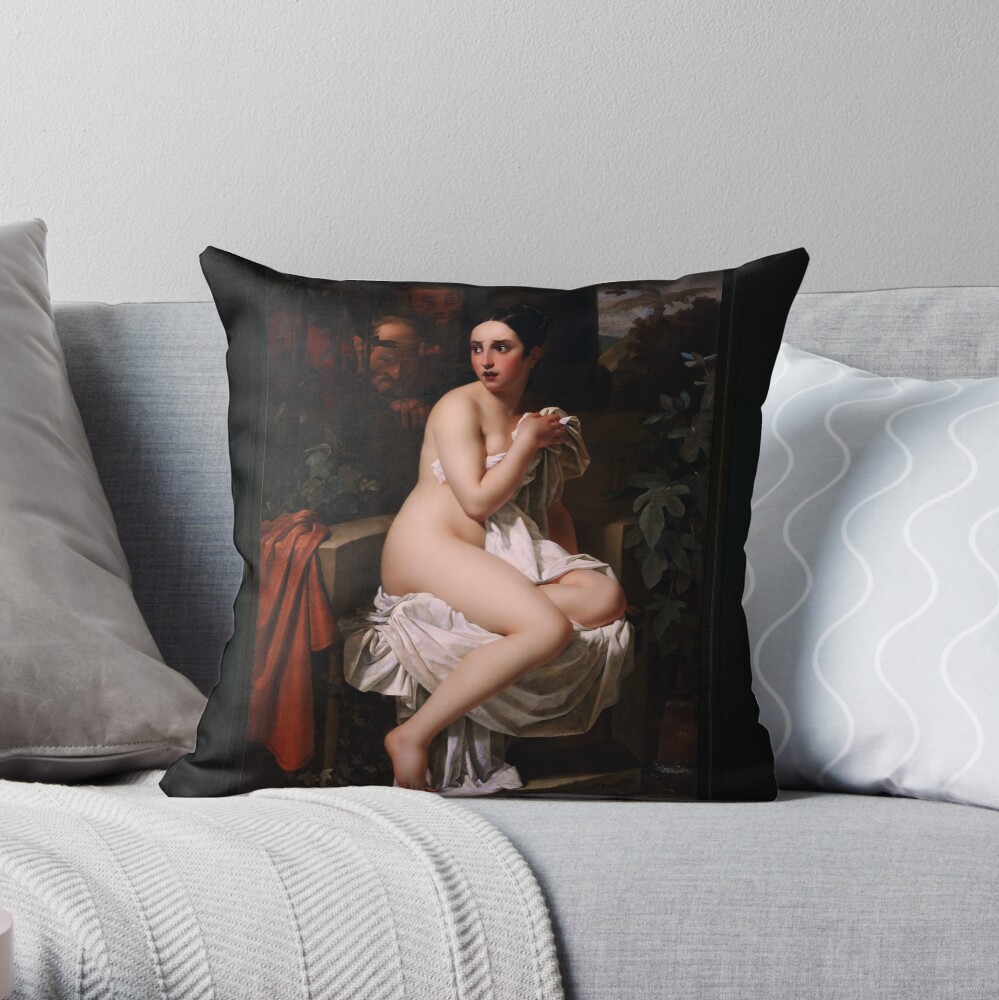
“수잔나와 장로들” (Suzanna and the Elders), 다음에서 생성됨 1820 by Belgian painter Pierre van Hanselaere (1786 – 1862), is a remarkable piece of neoclassical art. The work draws its inspiration from the biblical story of Susanna and the Elders, found in the Book of Daniel. This piece explores themes of virtue, temptation, and voyeurism, encapsulating an emotional and narrative tension that speaks to the human condition. The artist presents the viewer with a composition that blends classical ideals with dramatic storytelling, marking a significant moment in both the artist’s career and the wider neoclassical movement.
목차
주제
At the heart of the painting is Susanna, the central female figure, portrayed in a moment of vulnerability and distress. She is depicted as a young woman seated on a stone structure, draped in a white cloth. 그녀의 몸은 부드럽게 렌더링됩니다., 신고전주의 인물화의 전형적인 섬세한 부드러움, 그녀의 젊은 아름다움과 우아함을 강조. Susanna의 시선은 시청자를 향합니다., 놀라움과 불편함이 공존하는 그녀의 표정, 마치 누군가가 지켜보는 순간에 사로잡힌 것처럼. 이 묘사는 그녀의 결백함과 임박한 위협에 대한 감각을 불러일으킵니다..
흰 천, 그녀가 가슴에 꼭 안고 있는 것, 그녀와 배경에 있는 두 장로의 관음증적인 눈 사이에 상징적인 장벽 역할을 합니다.. 예술가는 수잔나의 피부색을 세심하게 그렸습니다., 좀 더 차분한 배경과 극명한 대조를 이루는 자연주의적인 모습을 보여줍니다.. 그녀의 신체 배치와 표현력이 풍부한 얼굴은 그녀가 직면한 내면의 혼란과 도덕적 딜레마를 전달합니다..
The Elders
The two male figures lurking in the background are the elders, WHO, in the biblical narrative, attempt to blackmail Susanna after spying on her while she bathes. 이 작업에서, they are partially hidden, obscured by foliage and shadow. This visual concealment adds to their sinister nature and reinforces the voyeuristic theme. One of the men has an almost comical appearance, with exaggerated facial features that suggest malice and lecherous intent. His beady eyes, peering from behind the thick leaves, emphasize the power dynamic between the vulnerable woman and these corrupt figures of authority. The other elder is less visible but equally ominous, his posture suggesting he’s complicit in the illicit act.
Their position in the painting, in the shadows, plays a crucial role in highlighting their morally dubious actions. While Susanna is illuminated and placed centrally in the foreground, the elders are subtly hidden within the darker recesses of the scene, creating a visual contrast between purity and corruption.
물체와 재료
The physical elements of the painting, from the stone bench Susanna sits on to the soft folds of her cloth, contribute to the sense of realism that is characteristic of neoclassical art. The stone is painted with a careful attention to texture, giving it a cold and unyielding feel, contrasting sharply with the softness of Susanna’s form. The cloth she holds is depicted in a flowing, almost ethereal manner, giving a sense of movement that contrasts with the stillness of the stone structure.
백그라운드에서, foliage and trees frame the scene, their dark green tones creating a lush, almost suffocating atmosphere. These elements add to the sense of entrapment, with nature itself becoming a part of the voyeuristic drama unfolding. The elder’s presence behind the foliage reinforces the notion that Susanna’s sanctity is being encroached upon by a corrupt and secretive force.
지형과 설정
의 지형 “수잔나와 장로들” is set in a lush, 푸르른 정원, 어느, 아름답지만, also conveys a sense of confinement and entrapment. The use of foliage and the setting against an enclosed space creates a mood of isolation for Susanna. This makes her an object of desire, trapped not just physically in the scene, but also morally and emotionally, caught between her virtue and the predatory elders.
The setting speaks to the neoclassical interest in combining natural beauty with human emotion, where the surroundings are not just decorative, but integral to the narrative. The mix of light and shadow across the scene evokes the emotional complexity of the moment, as Susanna is both exposed to the viewer and surrounded by the shadows of the two elders.
분위기와 테마
The mood of the painting is one of tension and vulnerability. Susanna’s exposure, both physically and emotionally, becomes a powerful symbol of virtue under threat. The presence of the elders in the shadows adds a dark, unsettling quality to the work. The voyeuristic gaze of the elders, as well as their attempt to manipulate Susanna’s virtue for their own gain, serves as a critique of power dynamics and the objectification of women. The theme of moral and physical vulnerability is starkly portrayed through the interplay of light, 그림자, and the placement of the figures.
The neoclassical style, 합리성을 강조하면서, 명쾌함, 그리고 감정적 억제, 죄와 미덕에 대한 이야기를 높이는 데 사용됩니다, 단순한 성경적 서술에서 인간 본성에 대한 심오한 해설로 변형. 수산나, 순수함의 구현으로서, 약탈적인 장로들과 극명하게 대조되는 모습을 보여줍니다., 그녀의 완고한 도덕적 입장이 배경의 사악한 인물들에 의해 위협을 받는 가운데.
전체적인 분위기는 드라마틱한 긴장감, 단지 그림의 이야기 때문이 아니라, 그러나 Hanselaere는 능숙한 방법으로 Susanna의 순수함과 숨겨진, 그녀를 둘러싼 사악한 세력. 장면의 긴장감은 시청자의 관심을 사로잡고 도덕성 주제에 대한 성찰을 불러일으킵니다., 힘, 그리고 사회에서 여성의 취약성.
결론
“수잔나와 장로들” is a masterful example of Pierre van Hanselaere’s ability to combine classical ideals with dramatic narrative. Through his careful attention to detail and composition, he brings the biblical story to life with an emotional depth that invites the viewer to contemplate not only the figures in the painting but also the broader themes of human vulnerability, 힘, and moral righteousness. The contrast between the illuminated figure of Susanna and the dark, shadowy figures of the elders underscores the timeless nature of the story, and the painting continues to resonate with modern viewers for its evocative portrayal of virtue under threat.
Suzanna and the Elders c1820 벨기에 화가 Pierre van Hanselaere (1786 – 1862); 초상화 전문, 종교 및 역사적 작품.
이 리마스터링된 고전 예술 디지털 레크리에이션은, Xzendor7 웹사이트에서 찾을 수 있는 모든 예술 작품과 마찬가지로 캔버스 인쇄를 포함한 다양한 재료 형식으로 온라인에서 구매할 수 있습니다., 아크릴 프린트, 금속 지문, 목판화, 액자 인쇄, 포스터, 그리고 압연 캔버스 인쇄 부터 다양한 사이즈로 12 인치에 72 실제 작품의 크기와 작품을 구매하기로 선택한 주문형 인쇄소에 따라 인치.