

A 'mionnachadh de fernando vii mar phrionnsa asturias
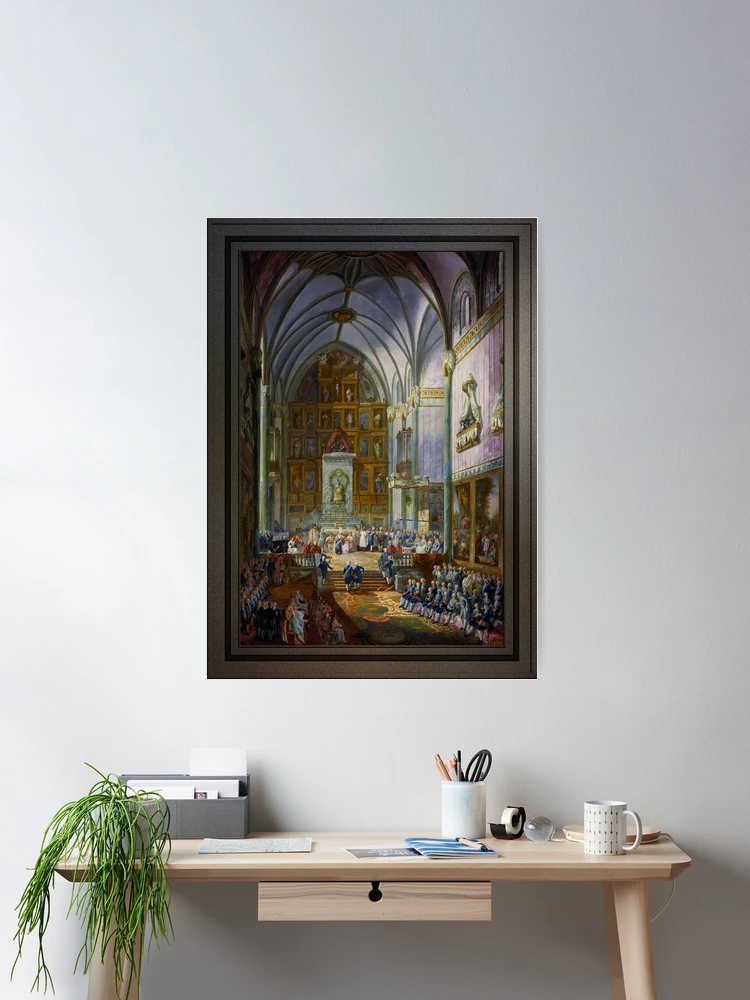
An dealbh leis an tiotal A 'mionnachadh de fernando vii mar phrionnsa asturias (Mionn Ferdinand VII Mar Phrionnsa Asturias), air a chruthachadh timcheall 1791 le peantair na Spàinnteach luis paret y Alcázar (1746 – 1799), a 'glacadh mionaid eachdraidheil cudromach ann an Cùirt Rìoghail na Spàinn. Tha an obair-ealain seo neo-àraidh a 'chuirm far a bheil Fernando vii a' mionnachadh ùmhlachd mar phrionnsa Asturias, tachartas a tha riatanach do eachdraidh monarcachd na Spàinne agus an leantainneachd.
Clàr-innse
Dòigh-obrach stoidhle agus ealanta
Luis paret agus alcazar, neach-ealain follaiseach ann an deireadh an 18mh linn, bha e ainmeil airson a chuid obraichean mhionaideach is beòtharanaich a bha a 'cothromachadh spoir le lasair airson a bhith a' glacadh eintision agus mòrachd beatha cùirt. Tha an stoidhle shònraichte aige air a chomharrachadh le sùil gheur airson mion-fhiosrachadh toinnte agus paileas dath sòlaimte, a tha gu soilleir follaiseach san obair ealain seo.
Cothlamadh na dealbhan taisbeanaidh an dà chuid mòrachd an-dràsta agus mion-fhiosrachadh eireachdail mun àrainneachd, leithid ailtireachd sgeadaichte, aodach luchd-obrach nan uaislean, agus na h-àireamhan air an rèiteachadh gu faiceallach a bhios a 'toirt faireachdainn de chuirm agus urram.
Tha an dealbh a 'leantainn stoidhle rococo, le fòcas air aotromachd, eireachdas, agus lavisness Life Life. Na lùban sguabadh agus mion-fhiosrachadh toinnte an ailtireachd, còmhla ris an t-solas bog, Cruthaich mothachadh air gach cuid gluasad agus seasmhachd.
Cleachdadh parat de bhog, Ach beairteach, dathan, leithid na ràithean beothail, blues, agus òr, a 'cur ri mothachadh greadhnachas uaislean. Na h-aodach rìoghail, leis an obair-ghrèis toinnte aca, agus na h-eileamaidean sgeadachaidh air a 'chùl, leithid frèamaichean gluasadach agus colbhan, comharraich beairteas agus cumhachd monarcachd na Spàinne aig an àm.
Am prìomh chuspair agus prìomh fhigearan
Ann am meadhan an t-suidheachaidh tha Fernando vii, air a riochdachadh mar dhuine òg a 'toirt a' bhòid aige mar Phrionnsa Asturias. Tha e air fhaicinn na sheasamh gu sòlaimte ron altair, Chaidh a làmh dheas a thogail ann am bòid, Fhad 's a tha an làmh chlì aige a' laighe air a 'Bhìoball deas-ghnàthach. An suidheachadh aige agus an abairt a chuir seachad grabhataidh a 'mhionaid, Le feartan òige a 'toirt a-steach cuideam dleastanais tha e an impis a ghualainn.
Tha am prionnsa air a sgeadachadh ann an èideadh deas-ghnàthach, including a richly decorated coat, velvet breeches, and a sash, reflecting the formal nature of the occasion and his elevated status in the Spanish royal family.
The figures surrounding Fernando VII represent various members of the royal court and nobility, as well as clergy who would have been present for such a significant occasion. They are all depicted in fine detail, showcasing a range of richly adorned clothing, including embroidered coats, wigs, and ruffled collars, all common attire for the Spanish elite during the period.
The men in the scene, from the bishops to the courtiers, seem to be in various states of attentiveness, emphasizing the solemnity of the event. Some of the individuals look directly at the prince, while others observe the scene in a more detached manner, is dòcha a 'nochdadh na dreuchdan sòisealta aca fa leth.
Bidh làthaireachd boireannaich ris an raon-cùil a 'cur sreath a bharrachd air co-theacsa chun deas-ghnàth, Mar a choimheadas iad an tachartas bho astar, A 'seasamh air leth bho na figearan fireann a tha nas dualtaiche. Na boireannaich sin, an aon dòigh air a sgeadachadh ann an gùn elabrate agus aodach beairteach, tuilleadh a 'cur ri mothachadh uaislean agus inbhe a tha a' dol an-obraiche an obair ealain.
Eileamaidean ailtireachd agus stuthan
Tha suidheachadh a 'pheanaidh na thalla toinnte agus sgeadaichte, dualtach taobh a-staigh lùchairt rìoghail no togalach mòr coltach, le mullaichean àrda àrd, colbhan toinnte, agus Gràsanas Sgoilteanaichte agus Dealbhan air na ballachan. Bidh an ailtireachd a 'cruthachadh faireachdainn de dh' iongnadh, a sheinnneach a 'gluasad cumhachd a' mhonarcachd agus cuideam an deas-ghnàth a thathas a 'sealltainn.
Tha an àite air a thoirt seachad gu faiceallach, with a focus on the quality of the materials: the gilded woodwork, marble floors, and lavish tapestries that decorate the walls of the room. Paret’s attention to the textures of these materials, such as the smoothness of the marble, the richness of the velvet fabrics, and the shimmer of the gold leaf, adds depth to the scene and invites the viewer to appreciate the opulence surrounding the figures.
Air a 'chùl, we can see a towering altarpiece, with a religious figure depicted at the center, likely symbolizing divine oversight over the ceremony. This placement reinforces the idea that Fernando VII’s ascension is not only a political act but also one with religious significance. The reverence of the event is underlined by the elaborate altarpiece, while the architecture itself appears to be a manifestation of the divine and royal authority that the prince will soon inherit.
Cuspair agus mood
The theme of the painting revolves around the transition of power and the formal recognition of Fernando VII as the rightful heir to the Spanish throne. This ceremonial moment, full of ritual and solemnity, reflects the political and social order of the time, where the monarchy was the central figure of Spanish authority.
The mood of the painting is both serious and grand, as the subjects are depicted with solemn expressions and in a setting that evokes respect and awe. The placement of the figures, their postures, and the overall composition of the scene create a sense of harmony, highlighting the importance of the occasion.
Despite the solemn nature of the event, the painting is also one of celebration and pride. The intricate details and vibrant colors imbue the work with a sense of joy and hope, as the prince swears his allegiance to the kingdom and to the future of Spain. The juxtaposition of reverence and elegance creates a mood that is both reflective and celebratory, emphasizing the significance of the event for the future of the monarchy.
Co-dhùnadh
Luis Paret y Alcázar’s A 'mionnachadh de fernando vii mar phrionnsa asturias is a remarkable depiction of a pivotal moment in Spanish history. Leis an aire mhionaideach aige gu mion-fhiosrachadh, the artist brings to life not only the grandeur of the event but also the gravity of the political and religious significance of the ceremony. An co-sgrìobhadh, with its rich colors, intricate architecture, and dignified figures, captures both the ceremonial nature of the occasion and the larger-than-life presence of the Spanish monarchy at the time.
The artwork offers a glimpse into the political and cultural life of late 18th-century Spain, while also showcasing Paret’s masterful technique and his ability to portray both the emotional weight and the aesthetic beauty of the moment. The painting stands as both a historical record and a work of art, combining storytelling with visual elegance to immortalize a defining moment in the Spanish royal lineage.
Obair-ealain cùl-taic
This is a painting of Ferdinand VII (1784 – 1833) taking the oath as the future Prince of Asturias as it was held in the Church of the Royal Monastery of San Jerónimo de Madrid, Spain on September 23, 1789; will all the nobility and aristocracy in attendance.
Swearing In Of Fernando VII is a retouched digital art old masters reproduction of a public domain image that is available as a custom canvas print online.
Artist Backstory Is Derived From Wikipedia.org
Luis was a Spanish painter of the Late Baroque or Rococo Period who began his artistic training Antonio González Velázquez (1723 -1793) as well as attending the Academia Real de San Fernando, located on the Calle de Alcalá in the heart of Madrid, An Spainn.
While at the Academy during 1760 he won second prize in a painting contest, and then 6 years later garnered first prize.
He would later work at the studio of the French painter Charles de la Traverse (1726 – 1787), who worked for the Marchese of Ossun, the ambassador of France in Spain.
Ann an 1779 he became an instructor at the Academia Real de San Fernando and was also a royal commission artist, doing paintings and engraving vistas of ports.