

Tamoto
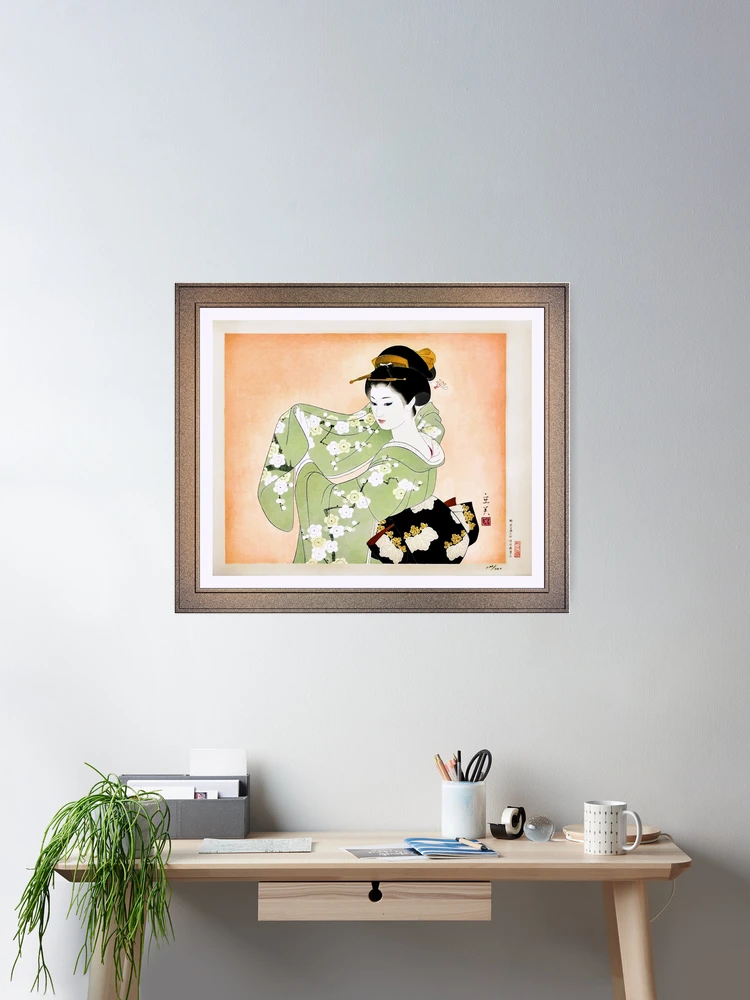
Tamoto (Sleeves), created by the Japanese malíř Tatsumi Shimura (1907 – 1980), is a remarkable example of Japanese art that delves into the intricate beauty and grace of traditional Japanese culture. The artwork presents a delicate portrayal of a female figure, embodying the essence of Japanese femininity through the art of kimono-wearing, as captured by Shimura’s meticulous and elegant brushstrokes. This piece reflects not only the aesthetic appeal of the subject but also offers insight into the culture, the importance of tradition, and the quiet contemplation that often accompanies the act of donning the kimono.
Obsah
Hlavní předmět: The Woman in Kimono
V srdci Tamoto (Sleeves) stands a graceful woman wearing an exquisite kimono. Her posture is one of elegance and serenity as she slightly tilts her head downward, suggesting a moment of reflection or repose. The woman is depicted with her left hand holding the sleeves of her kimono, allowing the viewer to appreciate the fine detailing of the floral pattern that adorns the garment.
This act of holding the sleeves, referred to as “tamoto” in Japanese, is symbolic in traditional culture, signifying both the beauty of the garment and the delicate, almost ethereal nature of the woman who wears it. Dlouhé, flowing sleeves of the kimono seem to be gently resting, embodying the woman’s grace as she stands against a soft, peach-colored background. The subtle, almost dreamlike expression on her face, combined with the muted tones of her clothing, further enhances the contemplative atmosphere of the piece.
The Kimono: A Masterpiece of Craftsmanship
The kimono worn by the woman in this painting is a focal point of the artwork, highlighted through the elaborate design of the floral motifs embroidered across its fabric. These delicate white flowers, possibly representing the symbolic cherry blossoms or other traditional floral elements of Japanese culture, are set against a calming green backdrop, which enhances their visual contrast.
The kimono itself is a masterful display of craftsmanship, and the depiction of its texture and intricate design is rendered with extraordinary attention to detail, reflecting the artist’s admiration for traditional Japanese attire and culture. The choice of soft, natural colors, particularly the green of the kimono, imbues the figure with an aura of tranquility, while also allowing the viewer to appreciate the beauty of the woman in relation to her garment.
The kimono serves as a powerful visual metaphor in the piece, representing not only the external beauty of the woman but also the rich cultural traditions associated with the wearing of such garments in Japanese society. Through this attire, the subject is not merely a person but a representation of cultural identity and grace.
Background and Setting: The Quiet Serenity
The background of Tamoto (Sleeves) is a soft, light peach hue that creates a tranquil atmosphere. The simplicity of the background allows the viewer’s focus to remain on the woman and her kimono, while the gentle gradient of color evokes a sense of calmness and peace.
This minimalistic approach to the background is characteristic of much Japanese art, where the interplay between subject and background often emphasizes the serenity of the scene rather than distracting from it. The artist has intentionally avoided busy or complex backgrounds, ensuring that the viewer remains anchored to the subject, allowing the delicate expressions and gestures of the figure to take center stage.
This sense of quietude is reinforced by the woman’s subdued expression and the soft brushwork of the piece, which creates an almost ethereal quality. The absence of strong, sharp lines lends a gentle, flowing sense of motion to the piece, as if the subject herself is a part of the tranquil landscape.
Umělecký styl a technika: Traditional and Refined
Tatsumi Shimura, in creating Tamoto (Sleeves), employed the traditional Japanese painting style, which emphasizes delicate brushwork and harmonious color palettes. Shimura was known for his precise yet flowing lines, capturing not just the external appearance of his subjects but also their inner essence and emotions.
The style of the painting draws from nihonga, the traditional Japanese painting style that integrates natural materials such as mineral pigments, ground shells, and gold leaf. Although the medium used by the artist in this piece remains unspecified, the finely tuned details of the floral design and the soft shading of the woman’s features suggest that Shimura’s techniques were rooted in the classic methods of nihonga, which prioritize refined beauty, naturalismus, and deep symbolism.
The artist’s use of clean, unembellished lines complements the restrained mood of the painting. The brushwork in the figure’s face is tender and smooth, evoking a sense of realism while preserving the ethereal quality of the subject. The floral design on the kimono is rendered with the utmost care, allowing each petal and leaf to come alive with the gentleness that defines Shimura’s style. His mastery of space and balance within the composition emphasizes the refined simplicity of the subject and her surroundings, aligning with the Japanese aesthetic of “wabi-sabi,” which appreciates the beauty in imperfection and quiet elegance.
Cultural and Symbolic Themes: The Timeless Grace of the Kimono
v Tamoto (Sleeves), Shimura explores themes of beauty, milost, and femininity within the context of traditional Japanese culture. The depiction of the woman in her kimono is a reflection of the timeless nature of Japanese customs, where clothing and appearance carry deep cultural and emotional significance. The act of holding the kimono’s sleeves is a symbol of modesty and refinement, suggesting that the woman is not only adhering to cultural norms but also embodying the essence of Japanese femininity. This serene portrayal of the woman suggests that her role within the piece is to represent the quiet strength, elegance, and grace that the kimono embodies in the larger cultural context.
Navíc, the artwork can be seen as a tribute to traditional Japanese customs, in which women often wore kimonos as symbols of their status, krása, a milost. The painter’s choice to focus on a single moment in time—capturing the woman in her moment of reverie—allows the viewer to reflect on the deeper cultural significance of the kimono and the role of women in Japanese society.
Závěr: A Reflection of Tradition and Beauty
Tamoto (Sleeves) by Tatsumi Shimura is a captivating portrayal of both the beauty of the kimono and the quiet, graceful demeanor of the woman who wears it. Through careful use of color, složení, a texturou, Shimura’s painting invites the viewer to pause and contemplate the refined elegance that pervades traditional Japanese culture. This work serves as a tribute to the timeless tradition of the kimono, and by extension, the role of women in preserving and embodying these cultural values. Shimura’s masterful rendering of the subject and her attire showcases the enduring legacy of Japanese art and the deep respect for tradition that it continues to inspire.
Toto je remasterovaná reprodukce starých mistrů digitálního umění obrázku ve veřejné doméně, který je dostupný jako a tisk na plátno online.
Životopis umělce
Tatsumi Shimura was born in Takasaki in Gunma prefecture Japan in 1907, with the given name os Sentaro. When he was about 14 years old he began studing art with the Japanese Bijin-ga Illustrator Yamakawa Saiho and then three years later with is son Yamakawa Shuho (1898 – 1944), who was also a Bijin-ga artist.
In his younger years as with many young artist of the time Tatsumi worked as an illustrator for newspapers and magazine, most notably for the Japanese magazine “Woman’s world” (Fujokai); and also worked as a painter in the Bijin-ga style; which is an art genre that depicts beautiful women.
Later in his when he was about 60 years of age Tatsumi devoted all his artistic energies to the style of Japanese painting termed Nihonga or traditional Japanese painting; which date back to about 1900 Kupředu, and are created in accordance with traditional Japanese artistic conventions, techniques and materials.