

Kuuluisuuden ja historian allegoria
Kuuluisuuden ja historian allegoria: Yksityiskohtainen tarkastus
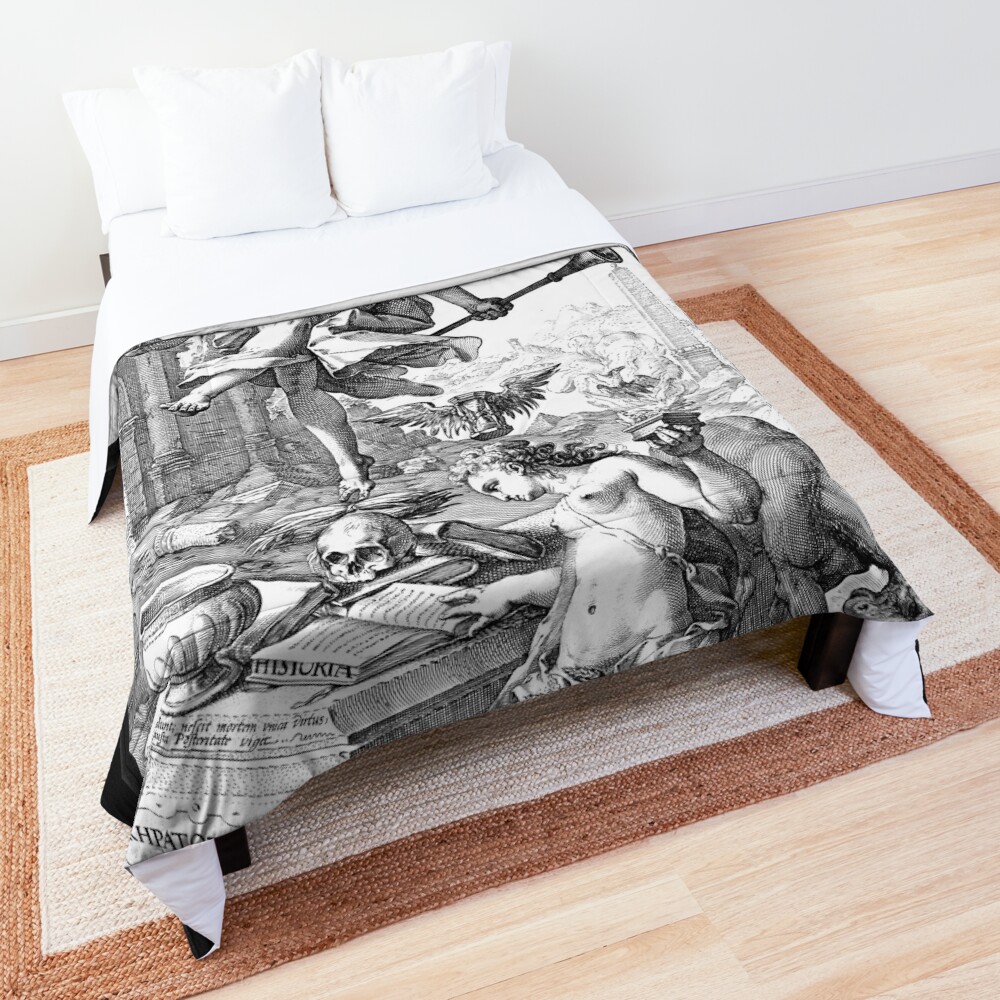
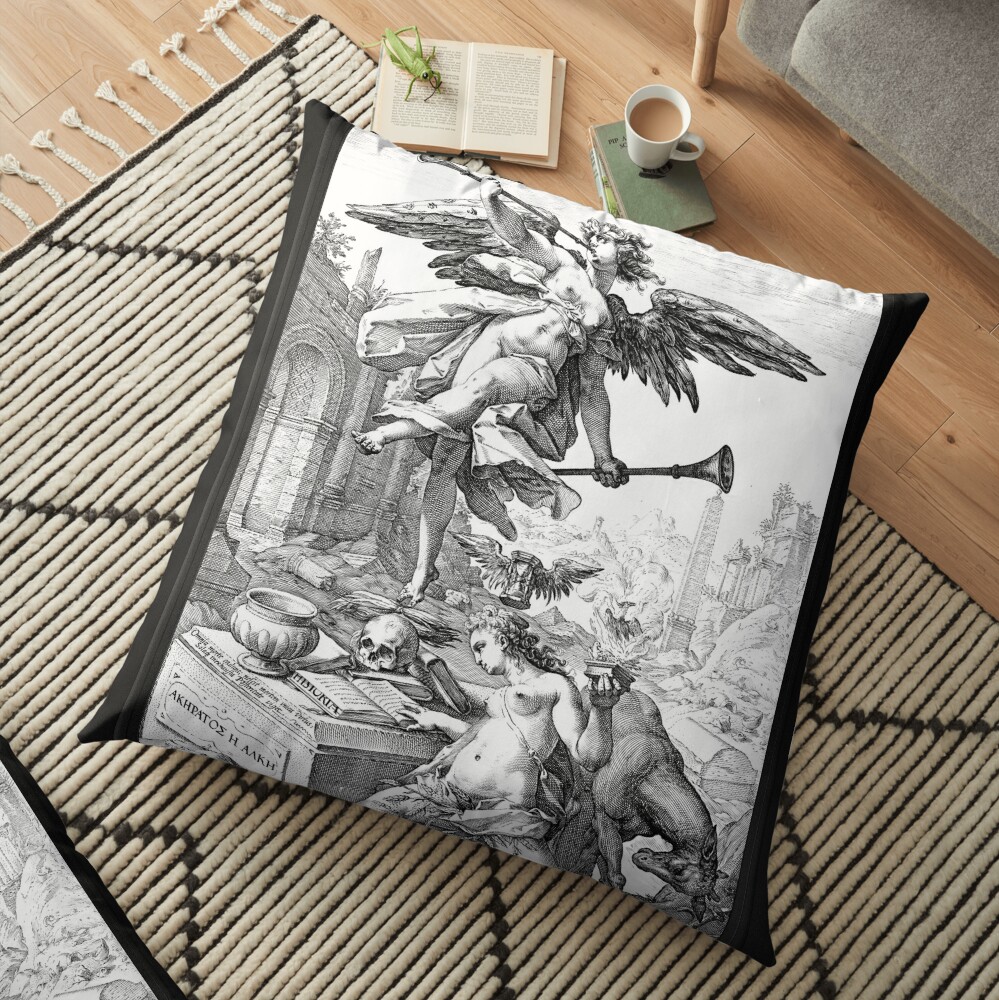
Hendrick Goltzius's kaiverrus, Kuuluisuuden ja historian allegoria, luotu ympäri 1586, on monimutkainen ja huolellisesti tehty teos, joka on esimerkki 1500-luvun lopun Alankomaissa vallitsevasta manieristisesta tyylistä. Tämä teos ei ole vain esimerkki; se on visuaalinen tutkielma ihmisen ponnistelun lyhytaikaisesta luonteesta ja historiallisten asiakirjojen kestävästä voimasta. Kaiverruksen vahvuus ei piile vain sen teknisessä virtuoosisuudessa, vaan myös sen kerroksellisessa symboliikassa, hyödyntää klassista mytologiaa ja humanistisia ihanteita välittääkseen syvällisen viestin perinnöstä ja muistamisesta.
Sisällysluettelo
Koostumusrakenne & Tekninen taito
The composition is densely packed with figures and objects arranged within a theatrical architectural setting. Goltzius demonstrates exceptional mastery of line work, using varying degrees of pressure to create dramatic contrasts in light and shadow – a hallmark of Mannerist engraving. The perspective is somewhat distorted, characteristic of the style, contributing to a sense of dynamism and visual complexity rather than strict realism. Kokonaisvaikutus on hallittua kaaosta; a carefully orchestrated arrangement that draws the viewer’s eye across the scene.
Central Figures: Fame & History
At the apex of the composition floats the figure of Fame, depicted as an angelic being with expansive wings. She holds aloft a trumpet, its sound seemingly reverberating throughout the scene. Her posture is dynamic and graceful, suggesting movement and proclamation. Below her, a female figure representing History reclines upon a stone plinth. She is draped in flowing robes and supports a book – the repository of recorded events – while gazing intently at Fame’s announcement. The contrast between Fame’s ethereal flight and History’s grounded presence underscores their distinct roles: one delivering news, the other preserving it for posterity.
Supporting Figures & Symbolic Objects
The scene is populated by several supporting figures that contribute to the allegorical narrative. A satyr-like creature, half-human and half-goat, lies prostrate at History’s feet, symbolizing the fleeting nature of earthly pleasures and desires. An owl, perched atop a skull, vahvistaa entisestään tätä kuolevaisuuden ja rappeutumisen väistämättömyyden teemaa. Pata on lähellä, mahdollisesti edustaa alkemiaa tai transformaatiota – ehkä viittaa prosessiin, jolla tapahtumat muuttuvat historiallisiksi kertomuksiksi. Tabletti, jossa on sanat “AKME DE HAAH” (hiusten korkeus/huippu) on sijoitettu lähelle kattilaa; sen merkitys on avoin tulkinnalle, mutta se liittyy todennäköisesti saavutuksen tai tunnustuksen huippuun.
Architectural Backdrop & Tunnelma
Taustalla on mureneva arkkitehtoninen rakenne, mahdollisesti edustaa raunioita tai rappeutuvaa palatsia. Tämä toimii visuaalisena metaforana maallisen voiman ja kirkkauden ohimenevyydestä. Yleinen ilmapiiri on dramaattinen jännitys ja juhlallinen pohdiskelu. Goltzius’s use of chiaroscuro – the interplay of light and dark – intensifies the emotional impact of the scene, highlighting key figures and objects while shrouding others in shadow.
Mannerist Characteristics & Vaikutteet
Kuuluisuuden ja historian allegoria exemplifies several characteristics of the Mannerist style. The elongated figures, distorted perspective, and complex composition are all hallmarks of this artistic movement, which emerged as a reaction against the High Renaissance’s emphasis on balance and harmony. Goltzius was influenced by Italian Mannerists such as Parmigianino and Bronzino, evident in his elegant poses and refined line work. The engraving also reflects the humanist intellectual climate of the time, with its focus on classical mythology and philosophical themes.
Textual Elements & Tulkinta
Beneath the image, Goltzius includes a lengthy Latin inscription that provides further context for the allegory. While a full translation is beyond the scope of this description, it’s clear that the text elaborates on the relationship between Fame and History, emphasizing the importance of recording events accurately and impartially to ensure their lasting significance. The inscription serves as an integral part of the artwork, enriching its meaning and inviting viewers to engage with its intellectual depth.
Johtopäätös
Hendrick Goltzius’s Kuuluisuuden ja historian allegoria is a remarkable achievement in engraving that showcases his technical skill and artistic vision. Through its complex composition, symbolic imagery, and humanist themes, the work offers a profound meditation on the nature of fame, historia, and the enduring human desire to leave a lasting legacy. It remains a significant example of Mannerist art and a testament to Goltzius’s mastery of his craft.
Taiteilija Bio on johdettu Wikipedia.org
Hendrick was born near Venlo in Bracht or Millebrecht, a village then in the Duchy of Julich, his family moved to Duisburg when he was 3 years old and when he came of age studied painting on glass under his father for a number of years.
He then study under the Dutch Polymath Dirck Volckertszoon Coornhert (1522 – 1590), with whom he studied engraving.
Sisään 1577 he then moved with Coornhert to Haarlem in the Dutch Republic, where he would remain for the rest of his life; and for a while in Haarlem he would work with Philip Galle (1537 – 1612), to engrave a set of prints of the history of Lucretia.
Sivuhuomautus: Lucretia; anglicized as Lucrece, was a noblewoman in ancient Rome, whose rape by Sextus Tarquinius (Tarquin) and subsequent suicide precipitated a rebellion that overthrew the Roman monarchy and led to the transition of Roman government from a kingdom to a republic.
Due to a fire injury to his right hand, that Hendrick suffered as a baby causing it to be malformed, he became adept due to this injury to holding the burin (sharp engraving tool) as he was forced to to draw with the large muscles of his arm and shoulder.
Hendrick was a master of the “swelling line” and also a pioneer of the “dot and lozenge” technique, where dots are placed in the middle of lozenge shaped spaces created by cross-hatching to further refine tonal shading.
The Allegory of Fame and History on remasteroitu digitaalisen taiteen vanhojen mestareiden kopio julkisessa käytössä olevasta kuvasta, joka on saatavilla kanvastulostus verkossa.