

The Allegory of Fame and History
The Allegory of Fame and History: A Detailed Examination
Hendrick Goltzius’s engraving, The Allegory of Fame and History, erstallt ronderëm 1586, is a complex and meticulously rendered work that exemplifies the Mannerist style prevalent in late 16th-century Netherlands. This piece isn’t merely an illustration; it’s a visual treatise on the ephemeral nature of human endeavor and the enduring power of historical record. The engraving’s strength lies not only in its technical virtuosity but also in its layered symbolism, drawing upon classical mythology and humanist ideals to convey a profound message about legacy and remembrance.
Inhaltsverzeechnes
Kompositiounsstruktur & Technesch Fäegkeet
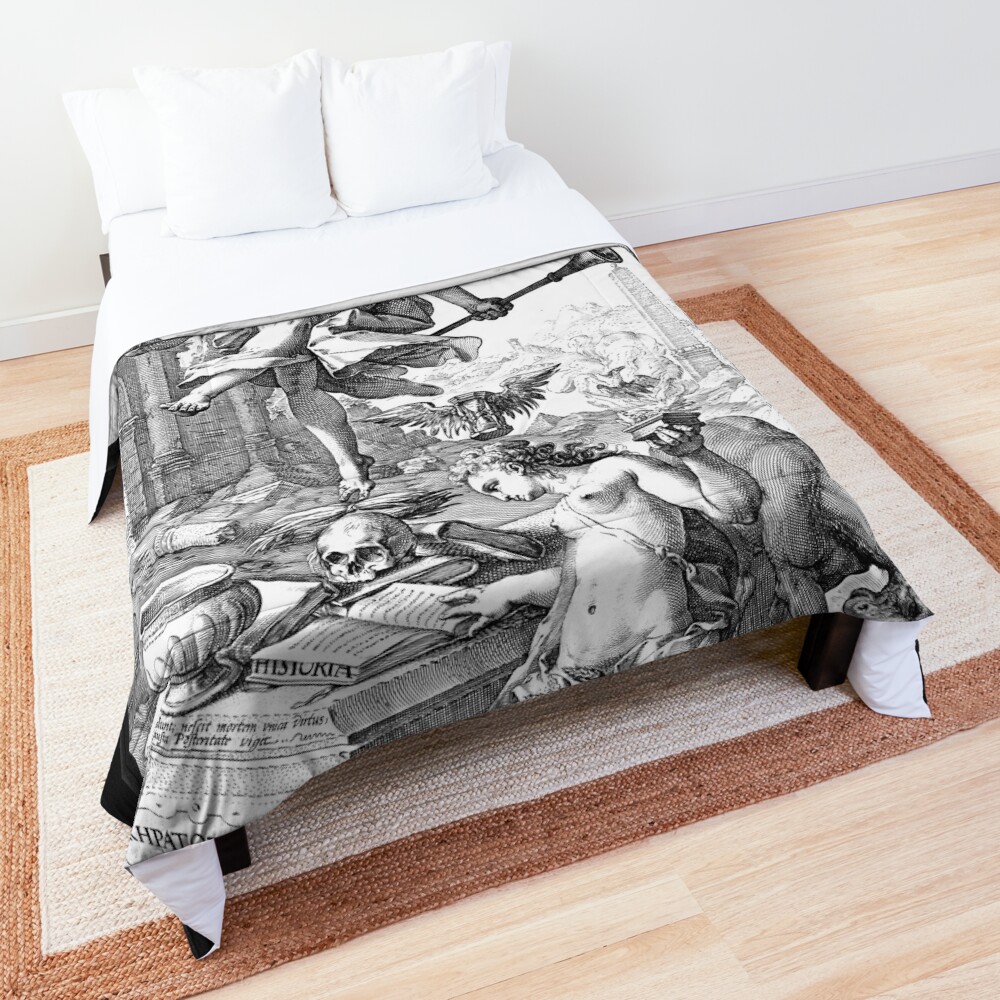
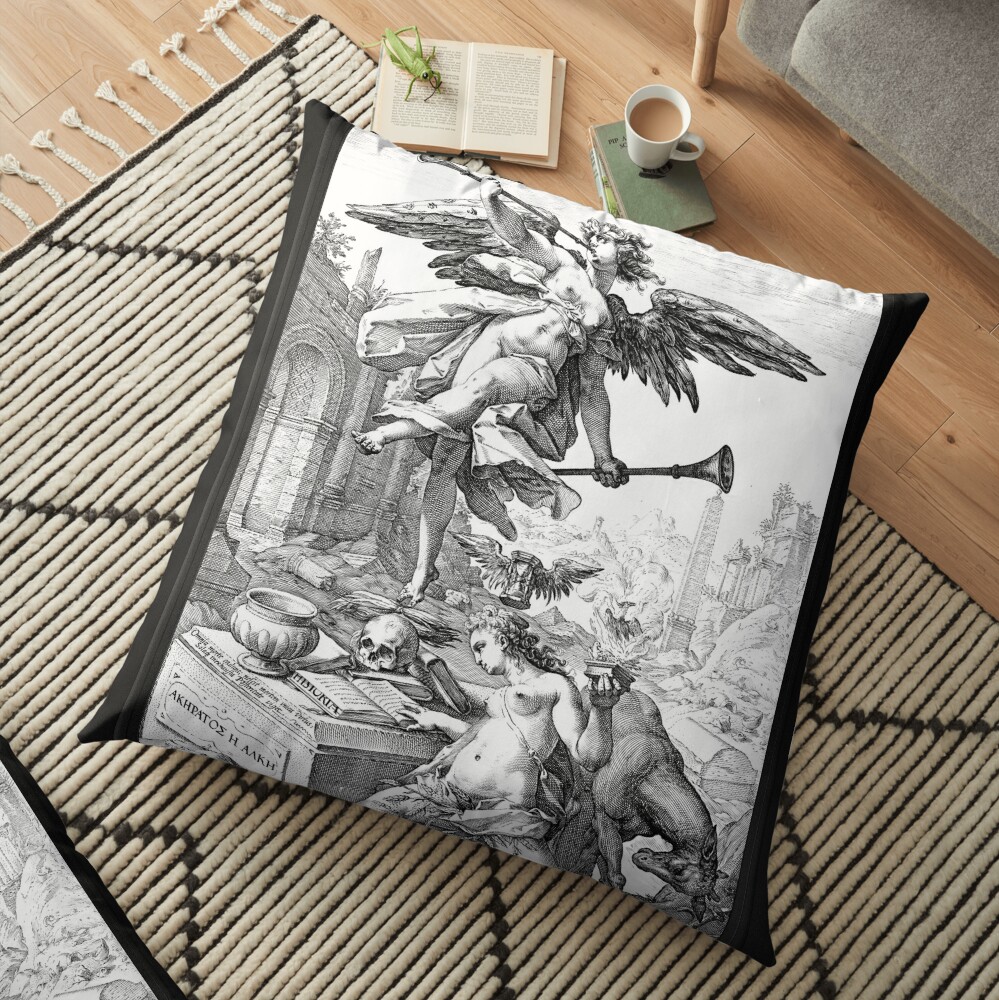
The composition is densely packed with figures and objects arranged within a theatrical architectural setting. Goltzius demonstrates exceptional mastery of line work, using varying degrees of pressure to create dramatic contrasts in light and shadow – a hallmark of Mannerist engraving. The perspective is somewhat distorted, characteristic of the style, contributing to a sense of dynamism and visual complexity rather than strict realism. De Gesamteffekt ass ee vu kontrolléierte Chaos; a carefully orchestrated arrangement that draws the viewer’s eye across the scene.
Central Figures: Fame & History
At the apex of the composition floats the figure of Fame, depicted as an angelic being with expansive wings. She holds aloft a trumpet, its sound seemingly reverberating throughout the scene. Her posture is dynamic and graceful, suggesting movement and proclamation. Below her, a female figure representing History reclines upon a stone plinth. She is draped in flowing robes and supports a book – the repository of recorded events – while gazing intently at Fame’s announcement. The contrast between Fame’s ethereal flight and History’s grounded presence underscores their distinct roles: one delivering news, the other preserving it for posterity.
Supporting Figures & Symbolic Objects
The scene is populated by several supporting figures that contribute to the allegorical narrative. A satyr-like creature, half-human and half-goat, lies prostrate at History’s feet, symbolizing the fleeting nature of earthly pleasures and desires. An owl, perched atop a skull, further reinforces this theme of mortality and the inevitability of decay. A cauldron sits nearby, possibly representing alchemy or transformation – perhaps alluding to the process by which events are transformed into historical narratives. A tablet inscribed with the words “AKME DE HAAH” (the height/peak of the hair) is placed near the cauldron; its meaning remains open to interpretation but likely relates to the pinnacle of achievement or recognition.
Architektonesch Kuliss & Atmosphär
The background features a crumbling architectural structure, possibly representing ruins or a decaying palace. This serves as a visual metaphor for the transience of earthly power and glory. The overall atmosphere is one of dramatic tension and solemn reflection. Goltzius’s use of chiaroscuro – the interplay of light and dark – intensifies the emotional impact of the scene, highlighting key figures and objects while shrouding others in shadow.
Mannerist Characteristics & Afloss
The Allegory of Fame and History exemplifies several characteristics of the Mannerist style. The elongated figures, distorted perspective, and complex composition are all hallmarks of this artistic movement, which emerged as a reaction against the High Renaissance’s emphasis on balance and harmony. Goltzius was influenced by Italian Mannerists such as Parmigianino and Bronzino, evident in his elegant poses and refined line work. The engraving also reflects the humanist intellectual climate of the time, with its focus on classical mythology and philosophical themes.
Textual Elements & Interpetatioun
Beneath the image, Goltzius includes a lengthy Latin inscription that provides further context for the allegory. While a full translation is beyond the scope of this description, it’s clear that the text elaborates on the relationship between Fame and History, emphasizing the importance of recording events accurately and impartially to ensure their lasting significance. The inscription serves as an integral part of the artwork, enriching its meaning and inviting viewers to engage with its intellectual depth.
Conclusioun
Hendrick Goltzius’s The Allegory of Fame and History is a remarkable achievement in engraving that showcases his technical skill and artistic vision. Through its complex composition, symbolic imagery, and humanist themes, the work offers a profound meditation on the nature of fame, Geschicht, and the enduring human desire to leave a lasting legacy. It remains a significant example of Mannerist art and a testament to Goltzius’s mastery of his craft.
Kënschtler Bio ofgeleet vun Wikipedia.org
Hendrick was born near Venlo in Bracht or Millebrecht, en Duerf dann am Herzogtum vum Jullich, seng Famill ass op Duisburg geplënnert wéi hie war 3 Joer al a wéi hien am Alter vu mëttlere Mudderen am Glas ënner sengem Papp ass fir e puer Joer.
Hien studéiert dann ënner den hollännesche Polymathie Dirck Volkkkartzoon Chornhert (1522 – 1590), mat wiem hie gäre gravéiert huet.
An 1577 Hien huet duerno mam Chôner op Harlem an der hollännescher Republik geplënnert, wou hie fir de Rescht vu sengem Liewen bleift; a fir eng Zäit zu Haarlem géif hien mam Philip Galler schaffen (1537 – 1612), Fir e Set vun Drécker vun der Geschicht vu Luvretien ze joen.
Heich Notiz: Latargia; als Lucource, war en nobelwoman an antike Roum, deem seng Vergewaltegung vum Sextus tarquinius (Tarquin) an pafolgende Suizid huet eng Rebellioun ofgesat, deen de Réimesche Monarchie ugedriwwen huet an zum Iwwergang vu réimesche Regierungsregierung gefouert huet.
Wéinst enger Feierverletzung zu senger rietser Hand, datt den Hendrick als Puppelchen gelidden huet, verursaacht datt et falsch geformt gëtt, Hie gouf entsteet wéinst dëser Verletzung fir d'Burin ze halen (schaarf Graving Tool) Wéi hie gezwongen ass fir mat de grousse Muskelen vun hirem Aarm an d'Schëller ze zéien.
Hewrick war e Master vun der “Schwellungslinn” an och e Pionéier vun der “dot a lästeg” Tocikuen, wou Punkten an der Mëtt vum lästegen geformte Raum geluecht ginn, erstallt duerch Kräiz-Hatching fir weider Zaldot ze ginn.
The Allegory of Fame and History is a remastered digital art old masters reproduction of a public domain image that is available as a Leinwandprint online.