

The Art Gallery of Jan Gildemeester Jansz c1794-95
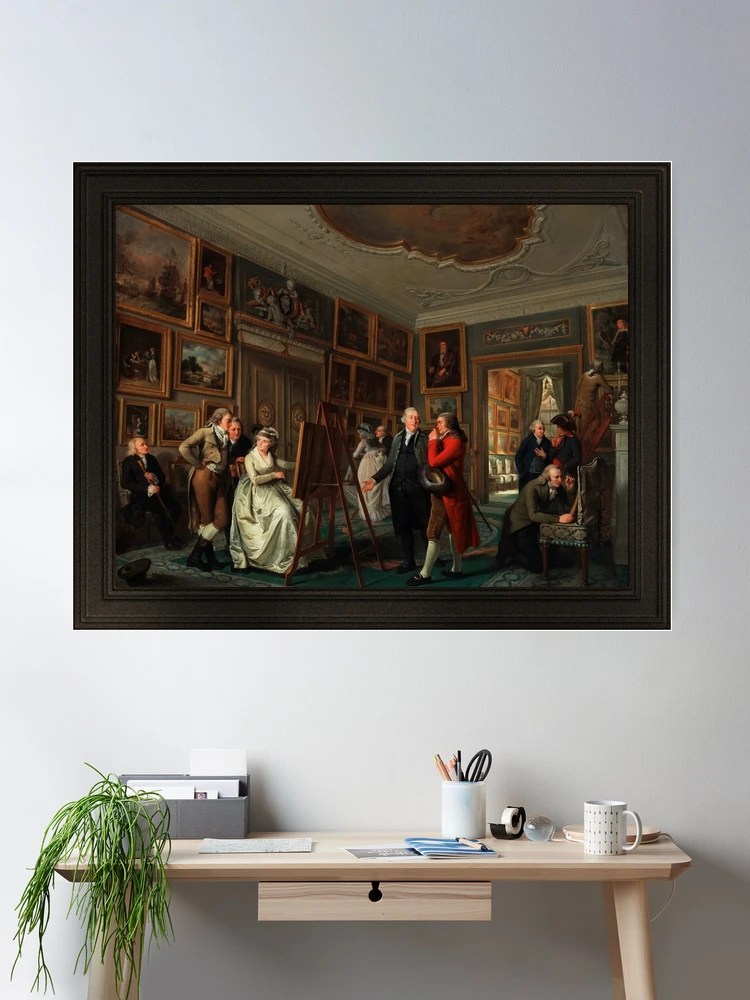
Dutch Painter Adriaan de Lelie’s (1755 – 1820), The Art Gallery of Jan Gildemeester Jansz tik 1794-95 offers a meticulously composed portrayal of a gathering inside an elegant Dutch art gallery. The painting captures a pivotal moment in time, an intellectual and artistic assembly where individuals of varying backgrounds converge to admire art.
De Lelie, an esteemed Dutch portrait and genre painter, is celebrated for his capacity to evoke both grandeur and intimate detail. This masterpiece stands as a perfect example of the neoclassical style, embracing an academic approach to composition while highlighting a sense of personal engagement with the art and its viewers.
The gallery is set in a refined interior, reflecting the opulence of the late 18th century. Hormak obra klasiko eta garaikideen bilduma aberatsez hornituta daude, ikusleari garaiko bildumagintzaren kulturari begirada bat eskainiz.
Eszena espazio handi baten barruan kokatzen da, non sabai altuak, moldura landuak, eta urrezko ertzek aberastasun eta fintasun giroa ematen dute. Leihoetatik ateratzen den argiak eta margolanaren gaiak argitzeak berotasun eta aberastasun orekatua ematen dio eszenari, arkitektura landuak ematen dituen itzal sakonagoekin kontraste leuna sortuz.
Edukien taula
Gai nagusia: Miresleen Topaketa
Eszenaren muinean Jan Gildemeester Jansz-en inguruan bildutako figurak daude, zeinaren presentzia nabarmenak galerian pertsonaia zentral gisa duen arte-biltzaile gisa duen papera iradokitzen du, patroia, eta, beharbada, arte saltzailea. The figures surrounding him display an assortment of expressions, some pensive, others animated as they discuss the works on display. These individuals appear to be of varying social ranks, but they are united by their shared appreciation of art. The men are dressed in the typical late 18th-century fashion, with powdered wigs, tailored coats, and vests in rich, dark colors, symbols of the societal elite. The women, aitzitik, wear exquisite gowns with lace and flowing fabrics, their poses elegant and dignified.
De Lelie conveys a sense of intellectual exchange among the figures. One man is depicted engaged in a lively conversation with another, their body language suggesting deep contemplation of a work of art. At the center, an artist is seen capturing the likeness of a young woman on a canvas, drawing attention to the act of creation and artistic skill. This highlights the process of art as both a visual and intellectual endeavor, showcasing not only the artwork being viewed but the creation of art itself.
Objektuak, Lurra, eta Materialak
The gallery’s interior is rich with details, reflecting both the physical and symbolic significance of the space. The floor is covered in a luxurious, intricate carpet, which contrasts with the marble steps leading up to a higher level of the gallery. Behind the seated figures, the walls are densely filled with paintings, including classical landscapes, erretratuak, and maritime scenes, each contributing to the atmosphere of cultured refinement. These works are framed in gold, enhancing the opulence of the environment and serving as a metaphor for the status and wealth associated with art collecting.
A large mirror in the far corner of the room subtly reflects the figures, adding a layer of depth to the space and highlighting the interconnectedness of the viewers with the art they observe. This mirror also serves as a visual cue, suggesting that the boundaries between the viewer and the work of art are fluid, inviting the audience to see themselves in the context of the scene.
At the foreground, an artist’s easel stands prominently, with a man working on a portrait of a woman. This not only references the process of art creation but also invites reflection on the theme of artistic vision and how the creator interprets the world around them. Materials in the scene, from the rich tapestries adorning the walls to the fine clothes worn by the figures, reinforce the theme of art as an object of prestige and a marker of cultural sophistication.
Estilo, Gai, eta umorea
The painting is unmistakably neoclassical in style. The neoclassical approach emphasizes clarity, ordena, and reason, qualities that were deeply admired during the Age of Enlightenment. The clean lines of the figures, the balanced composition, and the formal treatment of light and shadow all suggest an adherence to the principles of classical antiquity. The figures are painted with precision, their expressions conveying intellectual engagement rather than emotional turmoil, indicative of the rationalism that dominated the period.
Gaia The Art Gallery of Jan Gildemeester Jansz is rooted in the celebration of art and the intellectual culture of the late 18th century. The mood is one of sophistication and contemplation. Irudiak ez dira artearen behatzaile pasibo gisa azaltzen, obrarekin elkarrizketan parte-hartzaile aktibo gisa baizik, diskurtso intelektualaren eta estimu artistikoaren bat egiten dutela irudikatuz. De Lelie-ren irudiak eta ezarpenak arretaz interpretatzeak harmonia sentsazioa iradokitzen du, bai koadroen edertasun estetikoari dagokionez, bai galeriaren espazioko gizabanakoen elkarrekintza harmoniatsuari dagokionez..
Eszenak artearekiko partekatutako ilusio sentimendua sorrarazten du, denbora eta espazioa gainditzen dituena, galeriaren ideia azpimarratuz artea eta adimena bat egiten duten leku gisa. Ikusleak gonbidatzen ditu erakusten den arteaz gain, arteak gizartean duen esanahi zabalagoaz hausnartzera, kultura eratzeko duen eginkizuna, nortasun pertsonala islatuz, eta hazkunde intelektuala sustatzea. The gallery is a space of reflection, literalak zein metaforikoak, where the viewer is encouraged to look inward as much as outward.
Bukaera
The Art Gallery of Jan Gildemeester Jansz is a masterful depiction of an intellectual gathering that blends the worlds of art, kultura, and social interaction. Through his use of rich materials, precise figures, and a compelling composition, Adriaan de Lelie creates a timeless portrait of the 18th-century elite engaged in the celebration of the visual arts. The painting is not just a reflection of the physical space but an exploration of the deeper intellectual and cultural currents that define the era. It speaks to the power of art to unite, inspire, and provoke thought, making it a pivotal piece within the context of Dutch neoclassical painting.
Artelana Atzealdeko istorioa
This genre painting shows the gallery of the art collector and merchant Jan Gildemeester Jansz (1744 – 1799), who converted two large rooms in his home into an picture gallery; with Gildemeester standing in the middle of the front room wearing a grey coat and blue pants and vest, conversing with one of his guest who is wearing a red coat.
The room is decorated with paintings by Jacob de Wit, Rembrandt, Rubens and other masters and the guest in attendance include Pieter Fouquet, C.R.T. Krayenhoff, the painters Adriaan de Lelie (kneeling on the right in the foreground), Jurriaan Andriessen, andrea. Marianne Dull-Dohrman and Bernardus de Bosch Jeronimosz.
Hau arte digitala ukituta dagoen domeinu publikoko irudi baten erreprodukzioa da.