

La Galleria d'arte di Jan Gildemeester Jansz c1794-95
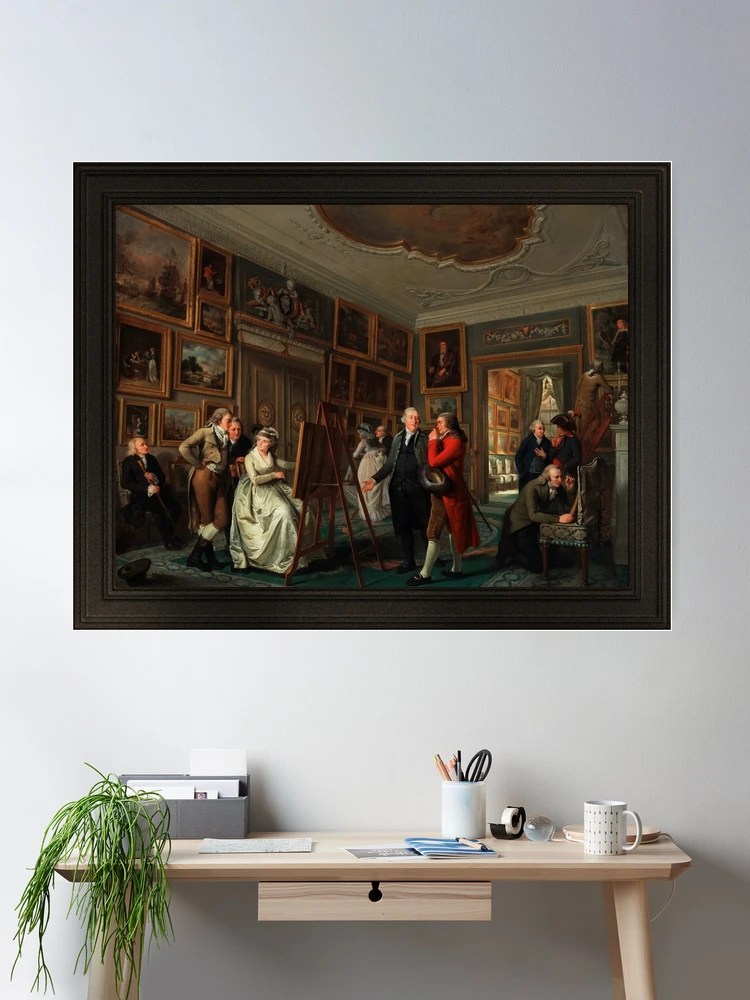
Del pittore olandese Adriaan de Lelie (1755 – 1820), La Galleria d'arte di Jan Gildemeester Jansz a partire dal 1794-95 offre un ritratto meticolosamente composto di un incontro all'interno di un'elegante galleria d'arte olandese. Il dipinto cattura un momento cruciale nel tempo, un'assemblea intellettuale e artistica in cui individui di diversa estrazione convergono per ammirare l'arte.
Il Giglio, uno stimato ritrattista e pittore di genere olandese, è celebrato per la sua capacità di evocare sia grandiosità che dettagli intimi. Questo capolavoro è un perfetto esempio dello stile neoclassico, abbracciando un approccio accademico alla composizione evidenziando un senso di coinvolgimento personale con l'arte e i suoi spettatori.
Il galleria è ambientato in un interno raffinato, riflettendo l'opulenza della fine del XVIII secolo. Le pareti sono rivestite da una ricca collezione di opere classiche e contemporanee, offrendo allo spettatore uno sguardo sulla cultura collezionistica dell'epoca.
La scena è incorniciata in uno spazio grandioso, dove soffitti alti, modanature elaborate, e i bordi dorati conferiscono un'atmosfera di ricchezza e raffinatezza. La luce che filtra dalle finestre e illumina i soggetti del dipinto conferisce alla scena un equilibrato calore e ricchezza, creando un delicato contrasto con le ombre più profonde proiettate dall'architettura elaborata.
Sommario
Argomento principale: Il raduno degli ammiratori
Al centro della scena ci sono le figure raccolte attorno a Jan Gildemeester Jansz, la cui presenza di spicco come figura centrale nella galleria suggerisce il suo ruolo di collezionista d'arte, patrono, e forse un mercante d'arte. Le figure che lo circondano mostrano un assortimento di espressioni, alcuni pensierosi, altri si animano mentre discutono delle opere esposte. Questi individui sembrano appartenere a diversi ranghi sociali, ma sono uniti dal comune apprezzamento dell’arte. Gli uomini sono vestiti secondo la tipica moda della fine del XVIII secolo, con parrucche incipriate, cappotti su misura, e veste ricco, colori scuri, simboli dell'élite sociale. Le donne, al contrario, indossare abiti squisiti con pizzi e tessuti fluidi, le loro pose eleganti e dignitose.
De Lelie trasmette un senso di scambio intellettuale tra le figure. Un uomo è raffigurato impegnato in una vivace conversazione con un altro, il loro linguaggio del corpo suggerisce una profonda contemplazione di un'opera d'arte. Al centro, si vede un artista catturare le sembianze di una giovane donna su una tela, drawing attention to the act of creation and artistic skill. This highlights the process of art as both a visual and intellectual endeavor, showcasing not only the artwork being viewed but the creation of art itself.
Oggetti, Terreno, e materiali
The gallery’s interior is rich with details, reflecting both the physical and symbolic significance of the space. The floor is covered in a luxurious, intricate carpet, which contrasts with the marble steps leading up to a higher level of the gallery. Behind the seated figures, the walls are densely filled with paintings, including classical landscapes, ritratti, and maritime scenes, each contributing to the atmosphere of cultured refinement. These works are framed in gold, enhancing the opulence of the environment and serving as a metaphor for the status and wealth associated with art collecting.
A large mirror in the far corner of the room subtly reflects the figures, adding a layer of depth to the space and highlighting the interconnectedness of the viewers with the art they observe. This mirror also serves as a visual cue, suggesting that the boundaries between the viewer and the work of art are fluid, inviting the audience to see themselves in the context of the scene.
At the foreground, an artist’s easel stands prominently, with a man working on a portrait of a woman. This not only references the process of art creation but also invites reflection on the theme of artistic vision and how the creator interprets the world around them. Materials in the scene, from the rich tapestries adorning the walls to the fine clothes worn by the figures, reinforce the theme of art as an object of prestige and a marker of cultural sophistication.
Stile, Tema, e umore
The painting is unmistakably neoclassical in style. The neoclassical approach emphasizes clarity, ordine, and reason, qualities that were deeply admired during the Age of Enlightenment. The clean lines of the figures, the balanced composition, and the formal treatment of light and shadow all suggest an adherence to the principles of classical antiquity. The figures are painted with precision, their expressions conveying intellectual engagement rather than emotional turmoil, indicative of the rationalism that dominated the period.
Il tema di La Galleria d'arte di Jan Gildemeester Jansz is rooted in the celebration of art and the intellectual culture of the late 18th century. The mood is one of sophistication and contemplation. The figures are not portrayed as passive observers of art but as active participants in a dialogue with the work, representing the confluence of intellectual discourse and artistic appreciation. De Lelie’s careful rendering of the figures and setting suggests a sense of harmony, both in terms of the aesthetic beauty of the paintings and the harmonious interaction of the individuals within the gallery space.
The scene evokes a feeling of shared enthusiasm for art, which transcends time and space, emphasizing the idea of the gallery as a place where art and intellect converge. It invites viewers to ponder not only the art being displayed but also the broader significance of art within society, its role in shaping culture, reflecting personal identity, and fostering intellectual growth. The gallery is a space of reflection, both literal and metaphorical, where the viewer is encouraged to look inward as much as outward.
Conclusione
La Galleria d'arte di Jan Gildemeester Jansz is a masterful depiction of an intellectual gathering that blends the worlds of art, cultura, and social interaction. Through his use of rich materials, precise figures, and a compelling composition, Adriaan de Lelie creates a timeless portrait of the 18th-century elite engaged in the celebration of the visual arts. The painting is not just a reflection of the physical space but an exploration of the deeper intellectual and cultural currents that define the era. It speaks to the power of art to unite, inspire, and provoke thought, making it a pivotal piece within the context of Dutch neoclassical painting.
Retroscena dell'opera d'arte
Questo dipinto di genere mostra la galleria del collezionista d'arte e mercante Jan Gildemeester Jansz (1744 – 1799), che ha trasformato due grandi stanze della sua casa in una pinacoteca; con Gildemeester in piedi al centro della stanza davanti con indosso un cappotto grigio e pantaloni e canottiera blu, conversando con un suo ospite che indossa un cappotto rosso.
La stanza è decorata con dipinti di Jacob de Wit, Rembrandt, Rubens e altri maestri e l'ospite presente includono Pieter Fouquet, C.R.T. krayenhoff, i pittori Adriaan de Lelie (inginocchiato a destra in primo piano), Jurriaan Andriessen, Sig.ra. Marianne Dull-Dohrman e Bernardus de Bosch Jeronimosz.
Questa è una riproduzione ritoccata di arte digitale dei vecchi maestri di un'immagine di pubblico dominio.