

Konstnärens modell
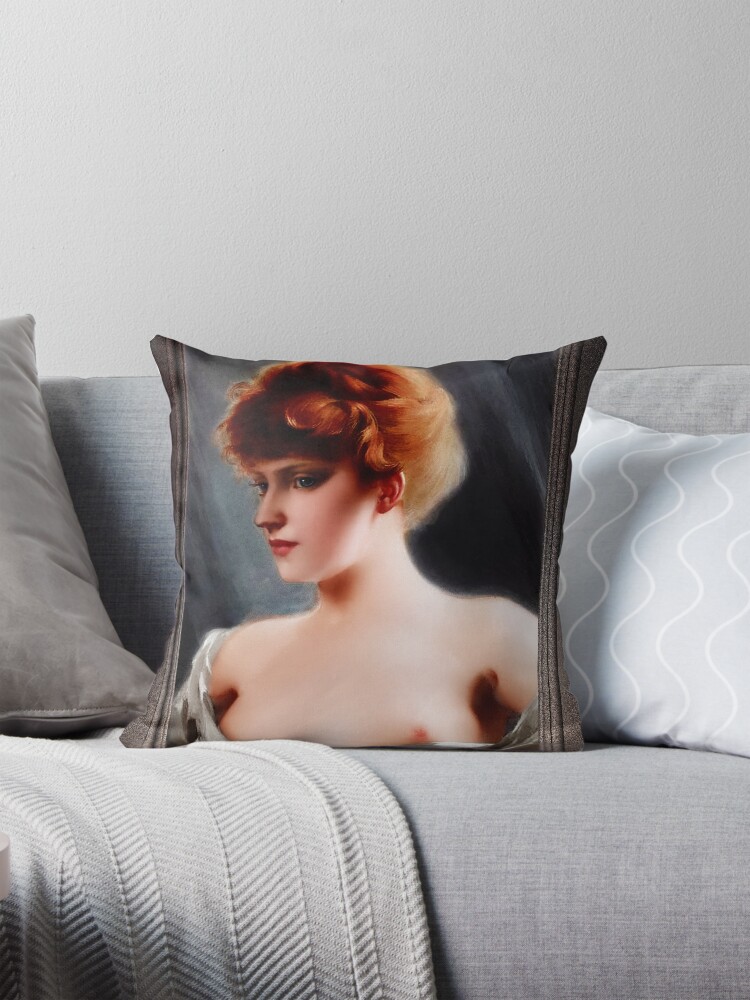
Luis Ricardo Falero, en berömd spansk målare verksam på 1800-talet, skapade sitt mästerverk “Konstnärens modell” i slutet av 1800-talet. Född i 1851 och går bort i 1896, Falero var känd för sin skickliga skildring av kvinnor, ofta mot rika bakgrunder som blandade klassiska teman med sensuella undertoner. Denna målning, som många av hans verk, porträtterar en kvinnlig modell som utstrålar både elegans och lockelse, fångar essensen av de klassiska och romantiska skönhetsidealen. Ämnet presenteras som symbolen för nåd, driva, och eterisk närvaro. Faleros intrikata förståelse av människans anatomi och hans nyanserade användning av ljus och skugga väcker föremålet för konstverket till liv på ett nästan påtagligt sätt.
Innehållsförteckning
The Subject and Her Presentation
The central subject of “Konstnärens modell” is a woman who gazes slightly off to the side, her expression one of quiet contemplation. She is positioned in profile, offering an intimate yet restrained portrait of her beauty. Her face is delicate and composed, with strikingly detailed features. The artist’s depiction of her hair, a rich reddish hue, is meticulously styled with soft, voluminous curls that frame her face and cascade down her back. Denna uppmärksamhet på hennes hår är inte bara ett konstnärligt val utan också en ode till tidens idealiserade skönhetsstandarder.
Kvinnans klädsel är minimal, fokuserar främst på hennes figur. Tyget som hon bär draperar över kroppen på ett nästan flytande sätt, dess mjukhet bidrar till målningens taktila känsla. Det halvtransparenta tyget gör att den graciösa kurvan på hennes axel och konturerna av hennes bröst syns, subtilt antyder hennes form samtidigt som hon bibehåller en aura av blygsamhet. Valet av mjuka vita och gråa färger för tyget står i kontrast till hennes hudton, som är strålande och slät, ger henne ett nästan överjordiskt utseende.
The Composition and Mood
Sammansättningen av målningen är medveten och sammansatt, emphasizing the delicate balance between the subject and her surroundings. The backdrop is somewhat muted, återges i mjukt, indistinct tones that allow the model to be the focal point. There is a play of light and shadow on her face and shoulders, suggesting a warm light source from the left. This light serves to highlight her features in a soft glow, giving her an almost ethereal presence. The use of shadow is also significant; it gently outlines her profile, adding depth to the overall composition and guiding the viewer’s gaze from her delicate face down to the curves of her body.
Falero’s ability to convey a sense of quiet sensuality is central to the mood of the painting. There is an air of mystery in her gaze, as though she is both the object of desire and yet removed from it. The contemplative nature of her expression, combined with the softness of her figure, evokes a sense of timeless beauty and purity. The mood of the painting can be described as serene, intimate, and slightly melancholic, as if the subject is both a muse and a woman trapped in a moment of stillness.
Material och teknik
Falero’s technique is evident in his masterful application of oil paint. The colors used in the painting are warm and muted, with a predominance of earth tones and soft highlights. The richness of the hues, particularly in the woman’s red hair, contrasts with the darker shadows and the neutral tones of her skin and background. The fluidity of the fabric and the softness of her skin are rendered in exquisite detail, showcasing the artist’s expertise in handling light and texture. The contrast between the smoothness of her skin and the textured brushwork used for the fabric creates a dynamic visual interest.
One of the key features of Falero’s work is his use of light to highlight specific aspects of his subjects. I denna målning, the subtle play of light across the model’s skin and hair gives a sense of volume and depth. The artist has captured the sheen of her skin and the fine texture of her hair with a technique that enhances their lifelike quality, making them seem almost tangible. The interplay of light and shadow on the fabric further enriches the painting, giving it an added layer of realism.
Thematic Elements and Style
The thematic elements of “Konstnärens modell” are rooted in the classical tradition, yet there is also an evident sensuality that Falero often imbued in his works. The depiction of the female form was central to many academic painters of the time, and in this piece, the model can be seen as both a subject of admiration and a symbol of beauty. There is a tension between the model’s modest pose and the visible sensuality of her form. This delicate balance speaks to the theme of the objectification of women in art, while simultaneously celebrating their strength and grace.
Falero’s style, which combined elements of realism with romanticism, is evident in the finely executed details of the model’s face and figure. The artist’s deep understanding of classical art and his ability to blend it with a romantic, nästan drömlik kvalitet resulterar i en målning som känns både förankrad i den verkliga världen och upphöjd till en nästan mytisk värld. Modellen, trots hennes till synes blygsamma presentation, förkroppsligar det skönhetsideal som var så framträdande på 1800-talet, ändå presenteras hon på ett sätt som också väcker kontemplation av hennes mänsklighet.
Slutsats
Sammanfattningsvis, “Konstnärens modell” av Luis Ricardo Falero fångar den kvinnliga formens dualitet som både ett begärsobjekt och en nådsfigur. Genom sin noggranna teknik och förståelse för människans anatomi, Falero genomsyrar motivet med en känsla av elegans och tidlös skönhet. Den mjuka belysningen, ömtåliga tyger, och kontemplativa uttryck bidrar alla till stämningen i målningen, som förblir en stilla lockelse och sensualitet. Genom att slå samman klassiska ideal med romantiska inslag, Falero creates a work that is both a celebration of beauty and a reflection on the nature of artistic representation.
Detta är en retuscherad digital konst gammal mästare reproduktion av en public domain image.
Artist Bio Derived Wikipedia.org
Falero föddes i Granada och bedrev ursprungligen en karriär i den spanska marinen, men gav upp till sina föräldrars besvikelse; när han bestämde sig för att resa till Paris, där han studerade konst, kemi och maskinteknik.
Under är studier i kemi och maskinteknik; han ansåg de experiment som han var tvungna att göra för farliga, vilket ledde honom att fokusera sin uppmärksamhet på att måla ensam.
Som ett resultat blev han elev av den franska porträttmålaren och orientalisten Gabriel-Joseph-Marie-Augustin Ferrier (1847 – 1914). Efter Paris, han flyttade till London, där han fortsatte sina studier, och så småningom bosatte sig.
Falero hade ett särskilt intresse för astronomi och införlivade himmelska konstellationer i många av hans verk, Till exempel “En komets äktenskap” och “Twin Stars”. Hans intresse och kunskap om astronomi fick honom också att illustrera Camille Flammarions verk.
I 1896, året för hans död, Maud Harvey stämde Falero för faderskap. Dräkten påstod att Falero förförde Harvey när hon var 17, först fungerade som sin hembiträde, och sedan hans modell. När han upptäckte att hon var gravid, han avskedade henne.
Hon vann ärendet och tilldelades fem shilling per vecka till stöd för sitt barn. Falero dog på University College Hospital, London, vid en ålder av 45