

The Baptism of Vajk c1875
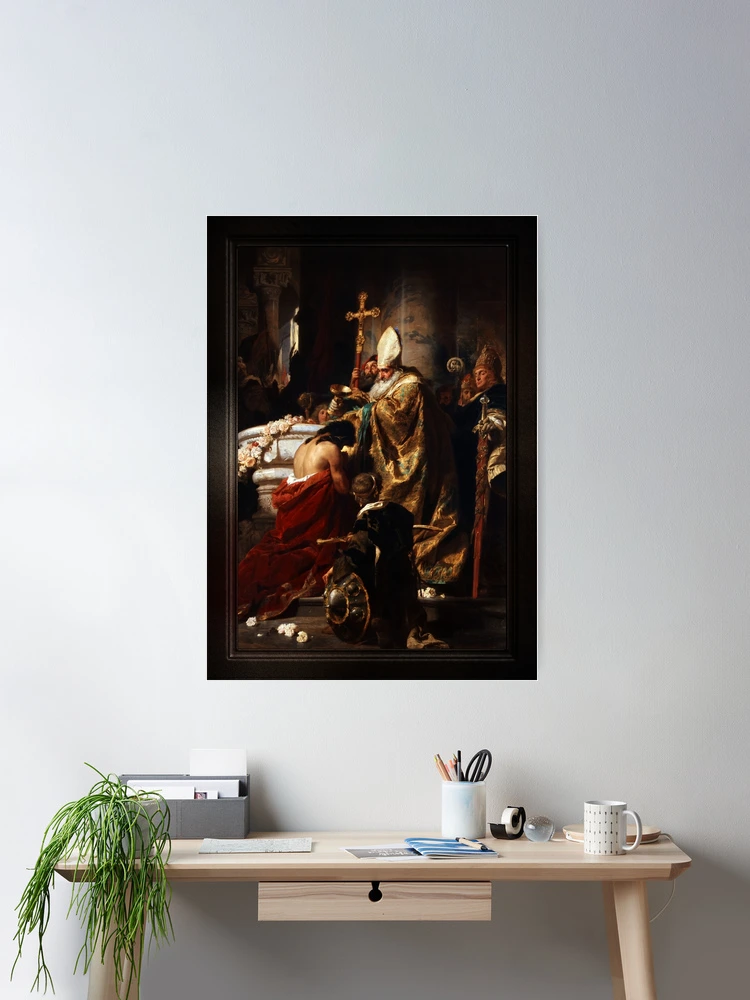
“The Baptism of Vajk,” に作成されました 1875 by the Hungarian artist ジュラ・ベンチュル (1844 – 1920), is a remarkable portrayal of a significant moment in Hungarian history. The scene captures the baptism of Vajk, the future King Stephen I of Hungary or King Saint Stephen (975 – 1038), a pivotal event that heralded the conversion of the Hungarian people to Christianity. This monumental work of art reflects the blend of historical, 宗教的, and national themes, masterfully rendered with Benczúr’s characteristic precision and grandeur. Through his use of color, 構成, と象徴性, Benczúr elevates the scene to a moment of profound spiritual and political significance.
目次
Composition and Subject Matter
The central theme of the painting is the baptism of Vajk, WHO, as a young man, kneels before a high-ranking ecclesiastical figure. The solemnity of the moment is enhanced by the dramatic lighting and the positioning of figures, creating a clear sense of hierarchy. The solemnity of the sacrament is emphasized by the detailed depiction of Vajk’s posture, as he bows his head in humble submission, accepting his faith and a destiny that will shape the future of Hungary.
The religious leader performing the baptism is a figure of great authority, wearing a ceremonial bishop’s vestments adorned in rich gold and red. The bishop’s position, standing over Vajk, gives the impression of his spiritual dominance, overseeing the transformation of the young ruler. 対照的に, Vajk’s attire, simple, しかし、象徴的です, consists of a red cloth that symbolizes the sacrifice and blood of Christ, marking the significant shift in his life.
Surrounding this core religious act are several onlookers, dressed in opulent, period-specific clothing, who represent the political and religious elites present to witness this momentous event. These figures are carefully placed, their expressions a mix of reverence and awe, reflecting the historical importance of the baptism not just as a religious act, but as a state affair that would solidify Vajk’s position as the ruler of Hungary.
材料, テクニック, とスタイル
Benczúr’s use of oil paints is evident in the deep richness of the colors and the fine detailing of textures. The use of light and shadow throughout the painting gives it a sense of depth and grandeur, imbuing the scene with an almost theatrical quality. 数字, particularly the bishop and Vajk, are painted with a high level of realism, their faces and gestures vividly conveying the emotional weight of the moment. Benczúr’s meticulous attention to detail, particularly in the fabrics and the textures of the armor and robes, demonstrates his technical prowess.
The painter’s style is firmly rooted in academic realism, a movement that sought to depict subjects in a truthful and highly detailed manner. The composition follows traditional narrative conventions, with clear hierarchies between figures and a focus on the central moment of the baptism. This realism, しかしながら, is balanced with a sense of idealization, creating an image that elevates the historical event to the realm of the divine.
Setting and Atmosphere
The setting for the baptism is an interior, likely a church or a cathedral, where the spiritual transformation is taking place. The architecture in the background, with its towering columns and arches, is grand and imposing, contributing to the sense of ceremony. The stained glass windows, though not explicitly visible in the scene, are suggested through the play of light, which filters through the space and highlights the key figures. This careful attention to the lighting adds an ethereal quality to the scene, symbolizing the divine presence during the sacrament.
The mood of the painting is solemn and reverential. The dim lighting, combined with the rich textures of the robes and the golden chalice held by the bishop, conveys a sense of sacredness. The figures in the painting are not merely spectators but are participants in a moment that is both spiritually transformative and politically significant. Benczúr masterfully evokes this duality, religious and national, through his composition, where the spiritual act is portrayed as a moment of profound historical change.
Symbolism and Historical Significance
“The Baptism of Vajk” is steeped in symbolism, much of which relates to the historical context of Hungary during the time of King Stephen I. The baptism itself is not just a religious conversion; it marks the beginning of Hungary’s Christianization, an event that would play a central role in the formation of the Hungarian state. By depicting this moment, Benczúr highlights the critical intersection of faith and governance, illustrating how religion and politics are intertwined in the formation of national identity.
Vajk’s transformation into Stephen I, the first Christian king of Hungary, is symbolized through his kneeling position and the sacred act being performed by the bishop. The imagery of the chalice held by the bishop represents both the sacred blood of Christ and the power of the Christian Church, which was pivotal in shaping the political landscape of Hungary.
The presence of other nobles and bishops further emphasizes the political dimension of the baptism. Their respectful gazes and regal attire demonstrate the gravity of the occasion, where the king’s conversion to Christianity would not only affect his personal faith but also the future of Hungary. The scene encapsulates the moment when religious and political spheres united in the establishment of a Christian Hungarian kingdom.
結論
Gyula Benczúr’s “The Baptism of Vajk” (1875) is a striking example of historical realism, combining deep religious significance with a masterful narrative technique. The composition and the careful attention to detail allow the viewer to step back into a pivotal moment in Hungarian history, one that was not just about faith but also about the future direction of a nation. 光の使用を通じて, 色, とテクスチャー, Benczúr brings to life a moment that is both historically and spiritually profound, inviting the viewer to reflect on the historical and religious forces that shaped Hungary’s future.
Vajk の洗礼は、パブリック ドメインの画像を修正したデジタル アートの古いマスターの複製です。.
アーティスト略歴
以下の情報から Wikipedia.org
ジュラがまだ幼い頃、家族はカッサに移住し、彼は早くから絵を描く才能を示しました。. 彼はで勉強を始めました 1861 ヘルマン・アンシュッツ、ヨハン・ゲオルク・ヒルテンスペルガーと (1806–1890). から 1865 に 1869, 彼はカール・フォン・ピロティに師事した.
彼は国際的な成功を収めた 1870 ハンガリーの歴史絵画コンクールでイシュトヴァーン王の洗礼を描いた作品で優勝したとき. その後、ピロティのミュンヘンのマクシミリアネウムと市庁舎のフレスコ画や、ドイツの偉大な作家の挿絵の制作を手伝いました。, フリードリヒ・シラー. バイエルン王ルートヴィヒ2世は彼にいくつかの任務を与えた.
彼は美術アカデミーの教授に任命されました, ミュンヘン, に 1875. その後すぐに, 彼はシュタルンベルク湖畔のアンバッハに家を建てた; 弟のベラがデザインした. に 1883, 彼はハンガリーに戻った, そこで彼は美術教師を続けた. 彼の最も優れた生徒の一人は、スイス生まれのアメリカ人画家、アドルフォ・ミュラー・ユーリーでした。. ベンチュルは後にハンガリーの上流階級の間で人気となった, 王や貴族の肖像画を数多く描く. 彼は宗教的な作品もいくつか作成しました; 特に聖人の祭壇画. 聖イシュトヴァーン大聖堂とブダ城.
彼はハンガリー科学アカデミーの名誉会員でした。. バラサジャルマットの通りには彼の名前が付けられています, バラトンケネーゼ, ベレッティオウジファル, あなたのお尻, ブダペスト, デブレツェン, ヤスベレニ, ホップ, ペーチ, 無料宿泊, セゲドとコシツェ. 彼の娘たちオルガ (1875–1962) そしてアイダ (1876–1970年) 有名なアーティストにもなりました.